China Is Punishing Japan Over Taiwan. Its Robot Companies Got a Pass.
Beijing has hit Japan's tourism, seafood, and rare-earth trade over Taiwan, but Chinese service-robot makers OrionStar, Pudu, Keenon, and Unitree keep expanding in Japan unimpeded, a carve-out that tracks whose revenue is at stake, not diplomatic symbolism.


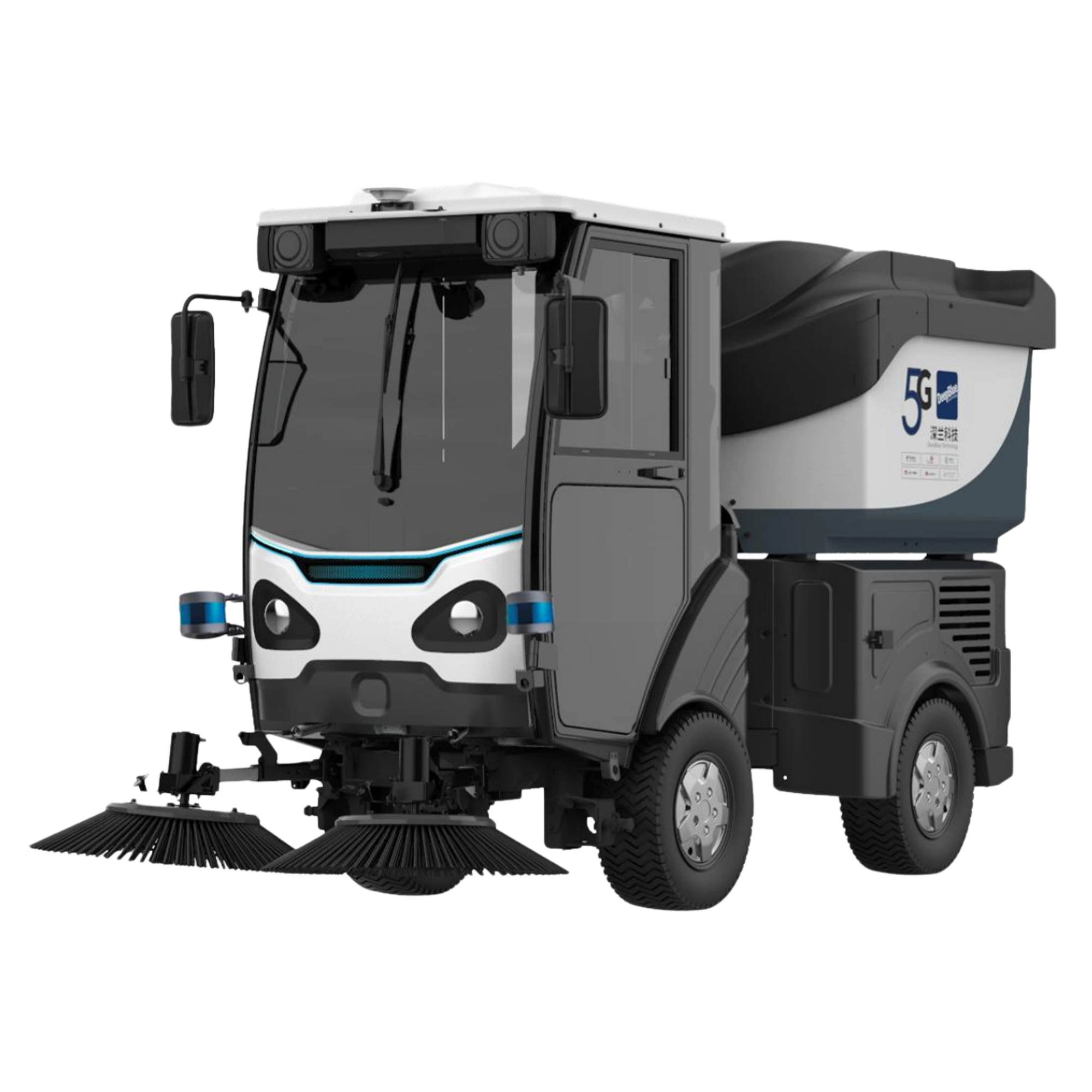
Beijing has spent a year punishing Tokyo. Tourists were told to stay home. Rare-earth shipments slowed. Dual-use exports were cut off entirely. And through all of it, a Chinese company called OrionStar spent three days this week running live cleaning-robot demonstrations at a trade show inside Tokyo Big Sight, pitching Japanese facilities managers on a product built for narrow aisles and awkward corners, with nobody in either government treating that as a contradiction worth mentioning.
That is the actual story in the China-Japan rift, and it is not the one most coverage of the dispute tells. The relationship has been frozen since Prime Minister Sanae Takaichi told parliament in November 2025 that a Chinese use of force against Taiwan could be a "survival-threatening situation" for Japan. China's Foreign Ministry restated its demand that Japan "correct the erroneous words and deeds on the Taiwan question" as recently as November 6 this year, more than a year into a dispute that shows no sign of thawing. Tourism cratered. Export controls on dual-use goods and rare-earth categories came down hard. None of that touched the market where Chinese robot companies sell finished machines directly to Japanese buyers. That market got busier.
The freeze has a shape, and the shape tracks revenue, not sector sensitivity.
Start with what actually got cut. Beijing's travel advisory against Japan, issued in the days after Takaichi's remarks, hit hard enough that one Tokyo tour operator reportedly lost 80% of its remaining-year bookings within days, and Nomura Research Institute put the annual cost to Japan's economy at roughly US$14.2 billion. China also suspended Japanese seafood imports and tightened export licensing on dual-use items and rare-earth categories bound for Japan, a restriction serious enough that Japan has spent the year working to lock down alternative heavy rare-earth supply rather than wait out the dispute. As of mid-November, independent analysis still describes the relationship as frozen, with Beijing's position unchanged and no breakthrough expected from the East Asia Summit.
Every one of those measures is a flow running out of Japan toward China, or a flow China controls the supply side of and can simply throttle. None of them is a flow that depends on a Chinese company's own revenue arriving from a Japanese customer's wallet. That is the distinction that explains everything else.
Three companies, one country, zero disruption
OrionStar's booth at Building Maintenance & Clean Expo 2026 was not an isolated gesture. The company has shipped more than 60,000 service robots to over 20,000 customers in 60-plus countries since its 2016 founding, by its own account, and Japan's labor-starved cleaning and facilities sector is exactly the kind of buyer it has spent a decade courting elsewhere.
It has company. Pudu Robotics, through its SoftBank Robotics distribution partnership, has built a position its own Japan general manager described late last year as holding more than 80% share of the country's food-and-beverage service-robot segment, part of a global footprint the company puts at over 130,000 units shipped across 80-plus countries. Keenon Robotics, after early stumbles with hardware sized for American and European floor plans, now runs more than 200 service sites in Japan through the same SoftBank Robotics channel. And Unitree, whose humanoid and quadruped platforms have become the default booth attraction at Japanese robotics trade shows, is distributed locally through Techshare and has reportedly had its machines tested in a Haneda Airport cargo-handling trial and put to work pulling drink-serving duty in a GMO-run bar demo this year. At the Humanoids Summit Tokyo in May, Chinese systems reportedly outnumbered Japanese ones by roughly three to one on the show floor.
None of that reads like a trade relationship under political strain. It reads like a growth market.
Why coercion skips the robots
The tempting explanation is that Beijing is deliberately carving out robotics as a strategic exception, protecting a sector where Chinese firms hold a manufacturing lead too valuable to sacrifice for a diplomatic point. Maybe. But a simpler mechanism fits the facts without requiring anyone in Beijing to have made that calculation on purpose: every lever China has actually pulled against Japan this year is one that costs a Chinese company nothing to pull. Advising tourists not to travel doesn't cost a Chinese airline or a Chinese exporter a Japanese customer; it costs a Japanese hotel one. Licensing rare-earth exports more slowly doesn't cost the supplying firm a sale it wanted to make to Japan specifically; the mineral still gets priced and sold somewhere. Letting OrionStar, Pudu, Keenon, and Unitree keep signing Japanese distribution deals costs those companies nothing, and stopping them would cost Chinese firms real revenue in a market three of them are actively winning.
Put differently: Beijing's trade coercion has been aimed at flows that hurt the target without hurting the coercer's own exporters. That is not the same thing as sparing a sector out of strategic restraint, and treating it that way would be an intent claim the public record doesn't support. It is a filter that happens to let robotics through because robotics, in this specific relationship, is Chinese companies selling to Japan, not the other way around.
The asymmetry cuts the other way too
Japan's own industrial robot makers are not treating China as risk-free. Fanuc is building a roughly US$90 million plant in Michigan. Yaskawa's quarterly results show revenue increasingly driven by AI-infrastructure demand rather than its traditional robot arms business, even as its robot-segment profit has fallen sharply. Kawasaki Heavy Industries has partnered with Nvidia on a US physical-AI hub rather than expand its China-facing manufacturing footprint. None of those decisions were made because of the Taiwan dispute specifically, but they reflect the same underlying logic in mirror image: a Japanese company's own capital decisions now weigh exposure to Chinese-linked supply chains as a real cost, even while Japan's own consumer and service market keeps welcoming finished Chinese hardware with no comparable hesitation.
The number to track in 2027
A procurement team or a Japanese facilities operator reading the diplomatic headlines and wondering whether robotics deals are at risk is asking the wrong question. The right one is narrower: does the flow run through a Chinese exporter's own revenue line, or does it run through a Japanese one? Tourism, seafood, rare earths, and dual-use licensing all sit on the Japanese-cost side of that line, and all four have been hit. Service robots sit on the Chinese-revenue side, and none of them have.
That line will not hold forever. If Washington tightens the entity list that already constrains some Chinese robotics exports, or if Tokyo decides political symbolism matters more than its own facilities operators' labor shortage, the robot carve-out could close overnight, and it would close by Japanese or American decision, not Chinese restraint. Until then, the companies with the most accurate read on this relationship are not the foreign ministries issuing statements. They are the Chinese robot makers signing Japanese distribution contracts in the middle of a diplomatic freeze, because they have already done the math on which flows are actually at risk.
Disclaimer: This column reflects the author's own analysis and opinion, based on publicly available information, and does not constitute investment, financial, legal, or professional advice. Readers should conduct their own due diligence before making business decisions based on the information presented. Hero image: Unitree Robotics, official press photo distributed via PR Newswire.