Maxinsights Raises US$30 Million to Turn Human Chores Into Robot Training Data
Maxinsights raised a US$30 million seed round led by PeakXV to expand its network of paid human demonstrators whose footage trains robot manipulation policies, and says it already serves more than 30 AI lab customers.

Maxinsights Raises US$30 Million to Turn Human Chores Into Robot Training Data
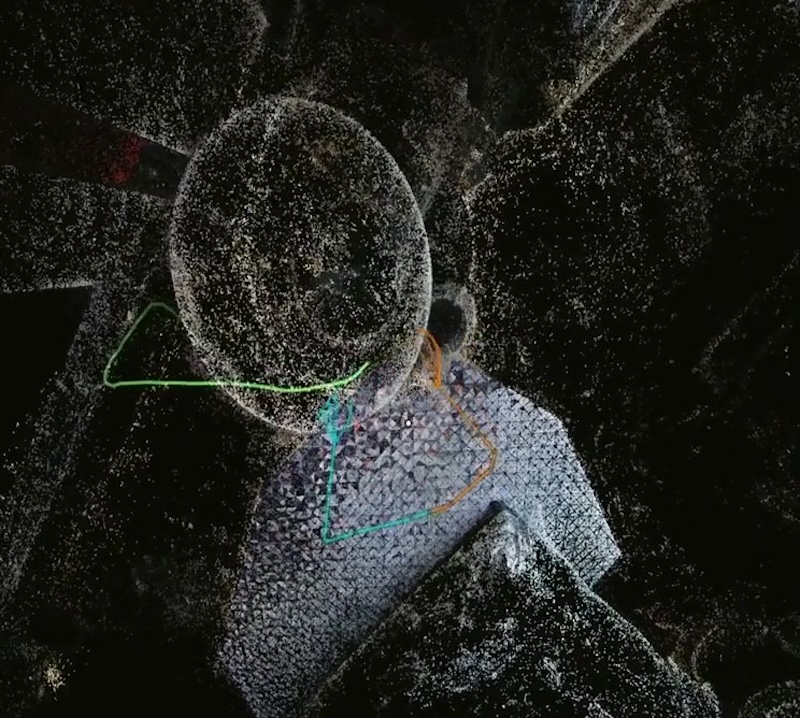
Maxinsights, a startup that pays people to record themselves cooking, cleaning and performing other everyday household and workplace activities, raised a US$30 million seed round led by PeakXV, with Tola Capital, South Park Commons, INCE Capital and Alumni Ventures also participating. The company has not disclosed its headquarters, but it was founded by chief executive YG Yuan and builds what it calls a global collection network: operators recruited to perform ordinary tasks while wearing instrumented capture equipment, producing footage and sensor data that robot and AI-model developers can license to train manipulation policies on situations too varied and unpredictable to stage in a lab.
The company reports a library exceeding 2 million hours of recorded human activity, with 1.5 million of those hours classified as model-ready, cleaned, labeled and structured for training use, and that it already serves more than 30 customers spanning AI labs and foundation-model developers. Those figures put Maxinsights' seed round, sizable for a company at this stage, in the context of a broader funding wave behind the infrastructure layer of physical AI: the data, tools and pipelines that sit underneath the robot policies and foundation models getting most of the industry's public attention.
Betting That Quality Control Is an Engineering Problem, Not a Staffing Cost
The clearest articulation of Maxinsights' pitch comes from its lead investor rather than the company itself. "Maxinsights is the only one that treated quality control as an engineering problem rather than a staffing cost," said Rohit Agarwal, managing director at PeakXV, in comments the company shared around the raise. That framing points at a real operational weakness in how most human-demonstration data has historically been collected for robotics: a large contracted workforce recording footage with inconsistent technique, inconsistent equipment and inconsistent review produces a dataset whose usefulness for training is only as good as its weakest contributor, a problem that scales badly as a company tries to grow its capture network.
Maxinsights' answer is a system called MaxLoop, which the company describes as an AI layer that reviews incoming footage as it arrives, scores its quality, and feeds feedback back to the operator who captured it, rather than relying on a separate human review team to catch problems after the fact. For a buyer evaluating physical-AI training data as an input to its own robot development program, that distinction is the one worth pressing a vendor on directly: whether quality control happens automatically and at the point of capture, or whether it is a manual review process bolted onto the back end of a data pipeline. The former scales with the size of the capture network; the latter becomes a bottleneck precisely when a company most needs to grow fast.
The Edge-Case Argument, and Why It Matters for Buyers
"Edge cases are the job, and the only way to get them is to record real work in real homes," Yuan said, articulating the company's central bet against the alternative approaches to generating robot training data: simulation, which can generate unlimited data cheaply but struggles to capture the physical unpredictability of real materials, real lighting and real human behavior, and scripted lab demonstrations, which are controllable and clean but structurally miss the messy variation that makes real-world deployment hard. A robot that has only ever seen a clean, lab-recorded version of "load a dishwasher" or "fold a shirt" tends to fail precisely when the real version of that task deviates from the script, whether that is a bent fork, an oddly shaped garment or an unexpected obstruction.
Maxinsights is also building MaxGlove, a sensor glove under development jointly with Genesis AI, designed to capture touch data such as grip force and slip, the kind of tactile signal that video alone cannot record but that matters enormously for any manipulation task involving delicate or unpredictable objects. "Robots need to learn from the complexity and variation of everyday life, and carefully controlled datasets alone cannot capture that," said Johnson Wang, cofounder of Genesis AI, a complementary framing that makes clear why a foundation-model developer would license data of this kind rather than, or in addition to, generating it through simulation or in-house capture.
What the Customer Base Says About Market Validation
More than 30 customers, spanning AI labs and foundation-model developers, is a meaningful early customer count for a company at the seed stage, and it suggests Maxinsights has already found commercial traction rather than raising purely on a narrative about future demand. For a buyer in the robotics or physical-AI supply chain trying to judge whether human-demonstration data licensing is a durable business model or a transitional phase the industry will move past once simulation and synthetic data improve, the customer count is a more useful signal than the funding amount itself: real AI labs paying for the data today are making a bet, with their own budgets, that this category of training data has value simulation cannot yet fully replace.
That said, a buyer should treat the "model-ready" distinction in Maxinsights' own figures carefully. The gap between 2 million hours captured and 1.5 million hours model-ready, a quarter of the raw footage filtered out before it reaches a customer, is itself a useful data point about how much of any raw human-activity capture ends up usable after quality review, regardless of how automated that review process is. A buyer evaluating a competing data vendor's raw-hours claim should ask for the equivalent model-ready figure before treating the headline hour count as a measure of the vendor's actual deliverable.
The Funding Climate Behind the Round
Maxinsights' raise lands inside a funding environment that has grown markedly more active for the infrastructure layer underneath physical AI over the past several months, as investors who missed the earliest humanoid and manipulation-policy funding rounds look for adjacent bets with lower hardware risk and faster paths to recurring revenue. A data licensing business, unlike a robot hardware company, does not carry the capital intensity of manufacturing, assembly and field support, which makes it a structurally different investment than most of the headline-grabbing humanoid funding rounds of the past year, even though both categories sit inside the same broad physical-AI investment theme.
For a corporate buyer or robotics integrator watching this part of the market, the practical question Maxinsights' round raises is whether licensing third-party human-demonstration data becomes a standard input to manipulation-policy development the way licensed image and text datasets became standard inputs to earlier generations of AI models, or whether leading robot makers instead choose to build proprietary capture operations in-house to avoid depending on an external vendor for a capability this central to their product. Both paths are plausible, and Maxinsights' early customer list, more than 30 AI labs and foundation-model developers choosing to license rather than build, is early evidence for the former, though not yet conclusive proof that the largest robot makers will make the same choice as they scale.
What Comes Next
The clearest near-term signal to watch is whether Maxinsights' customer list grows to include named robot manufacturers and humanoid developers directly, rather than only AI labs and foundation-model developers building general-purpose models, since that would indicate the data is proving useful not just for research-stage policy development but for the kind of production-grade manipulation systems that actually ship to customers. A second signal is whether MaxGlove reaches commercial deployment on the timeline the Genesis AI partnership implies, since tactile data is the harder technical problem of the two capture modalities Maxinsights is building around, and its success or delay will say a great deal about how quickly the company can expand beyond video-based capture into the sensor modalities that manipulation policies increasingly depend on.
A third dimension worth tracking is geographic and task-category diversity inside the capture network itself. Maxinsights describes a "global collection network," but the value of that breadth for a buyer depends on whether the captured tasks actually match the deployment environments a given robot maker cares about: a dataset weighted heavily toward North American kitchens and living rooms, for instance, would be less directly useful to a manufacturer building robots for warehouse, healthcare or industrial settings than one with comparable depth across those verticals. A buyer evaluating a data license should ask Maxinsights, or any competing vendor, for a breakdown of captured hours by task category and geography rather than accepting the aggregate hour count as evidence the dataset covers their specific use case.
The round also arrives as scrutiny of how physical-AI data vendors source and compensate their human operators has become a live question across the industry, following earlier controversies at other data-labeling and teleoperation companies over pay, working conditions and consent around how captured footage gets used. Maxinsights has not published details of its operator compensation model or consent framework in connection with this raise, and a buyer with its own reputational exposure to consider, particularly one selling to regulated industries or consumer-facing markets, should request that information directly rather than assume a well-funded seed round implies those practices are already settled to an acceptable standard.
This account draws on Maxinsights' own public statements and comments from PeakXV and Genesis AI shared around the funding announcement.
This article is provided for general information purposes only and does not constitute investment, procurement, legal, or engineering advice. Figures reflect company disclosures at the time of writing and may change.