Europe's Biggest Tech Show Is Building a Catwalk for Humanoids, and Chinese Robots Get the Runway
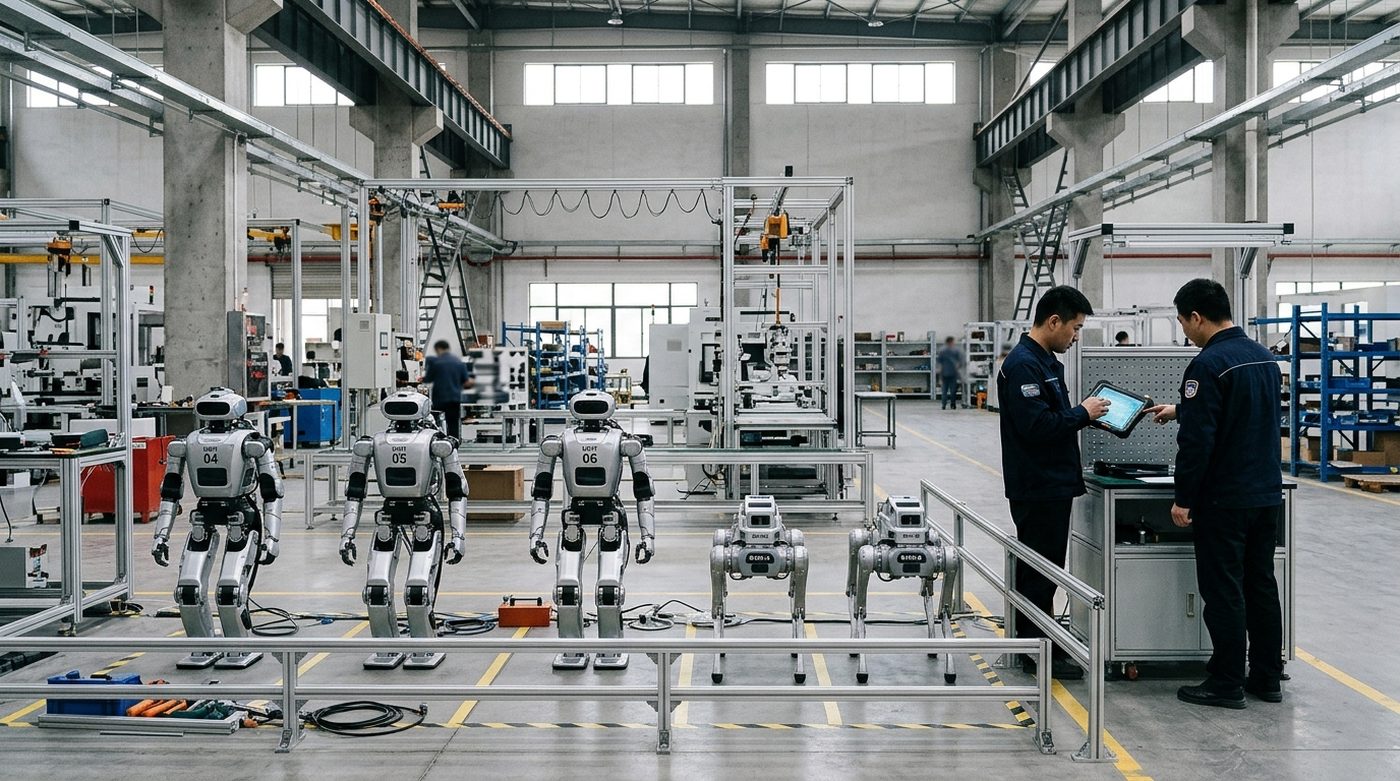
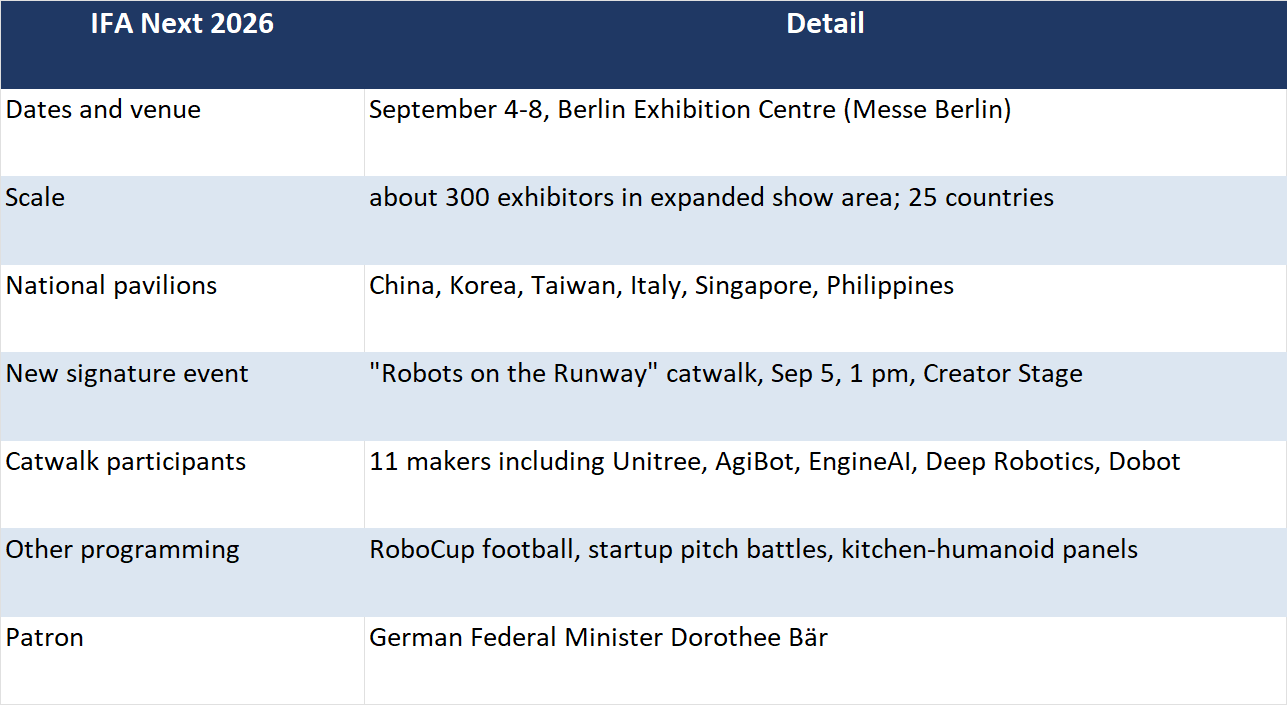
IFA Berlin announced on July 27-28 that its IFA Next innovation zone will host the event's largest-ever humanoid showcase this September 4-8, with around 300 exhibitors from 25 countries and a first-ever "Robots on the Runway" catwalk. The exhibitor list is dominated by Chinese makers, including Unitree, AgiBot, Galbot, and Deep Robotics, days after Washington banned their newest models.
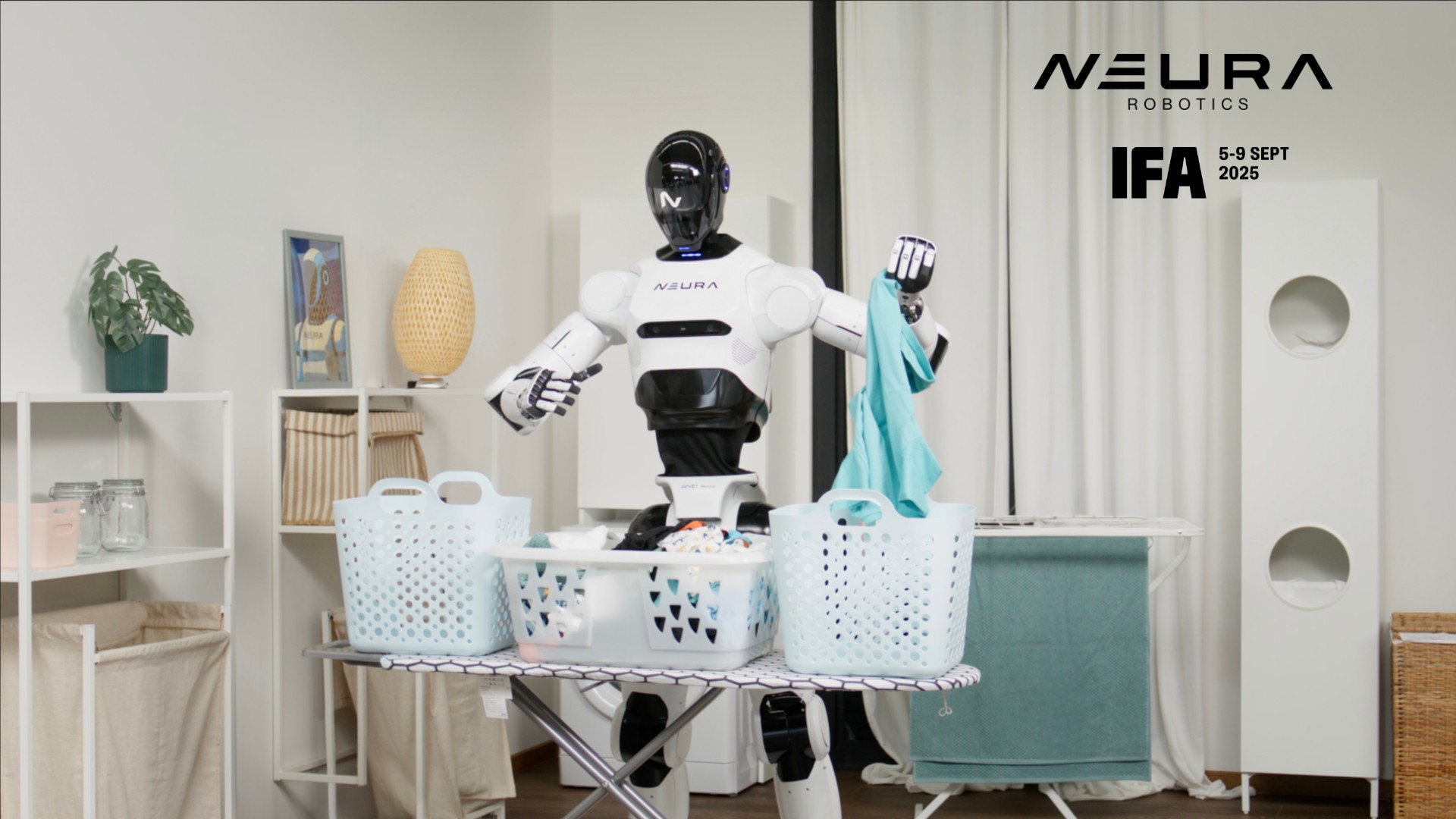
The world's oldest consumer electronics show has decided this is the year the humanoid stops being a demo and starts being merchandise. Internationale Funkausstellung Berlin ("IFA Berlin") which dates back to 1924 from a radio exhbition will provide an innovation zone to showcase the biggest humanoid robots show when it opens on September 4-8 at the Berlin Exhibition Centre. Around 300 exhibitors are expected in the IFA Next Show Area. Twenty-five countries are already confirmed. And for the first time, there will be a robot fashion show.
IFA Next 2026 will place a special focus on humanoid robots and robotic applications, which the organizer says are "moving ever closer to practical use in the home, the service sector, healthcare and industry." The headline event is "Robots on the Runway" on September 5 at 1 pm on the Creator Stage, where humanoid robots will walk a catwalk in what IFA bills as a merger of technology, movement, and entertainment. The announced exhibitor roster includes Unitree, MagicLab, Zeroth, UniX AI, Galbot, Pudu Robotics, Hengbot, Deep Robotics, Astrall Dynamics, AgiBot, and Cozio Robotic. Wearable exoskeleton makers Kenqing and Head Robotic round out the robotics section.
Read that list twice and the real story surfaces. It is overwhelmingly Chinese. Europe's flagship technology exhibition is giving its most prominent new stage to the same robot makers whose newest models Washington barred from the American market this very week. The FCC placed new Chinese humanoids and quadrupeds on its Covered List on July 28, effective immediately. Six weeks later, those companies' machines will strut, literally, through Berlin.
A Catwalk Is a Strange and Perfect Choice
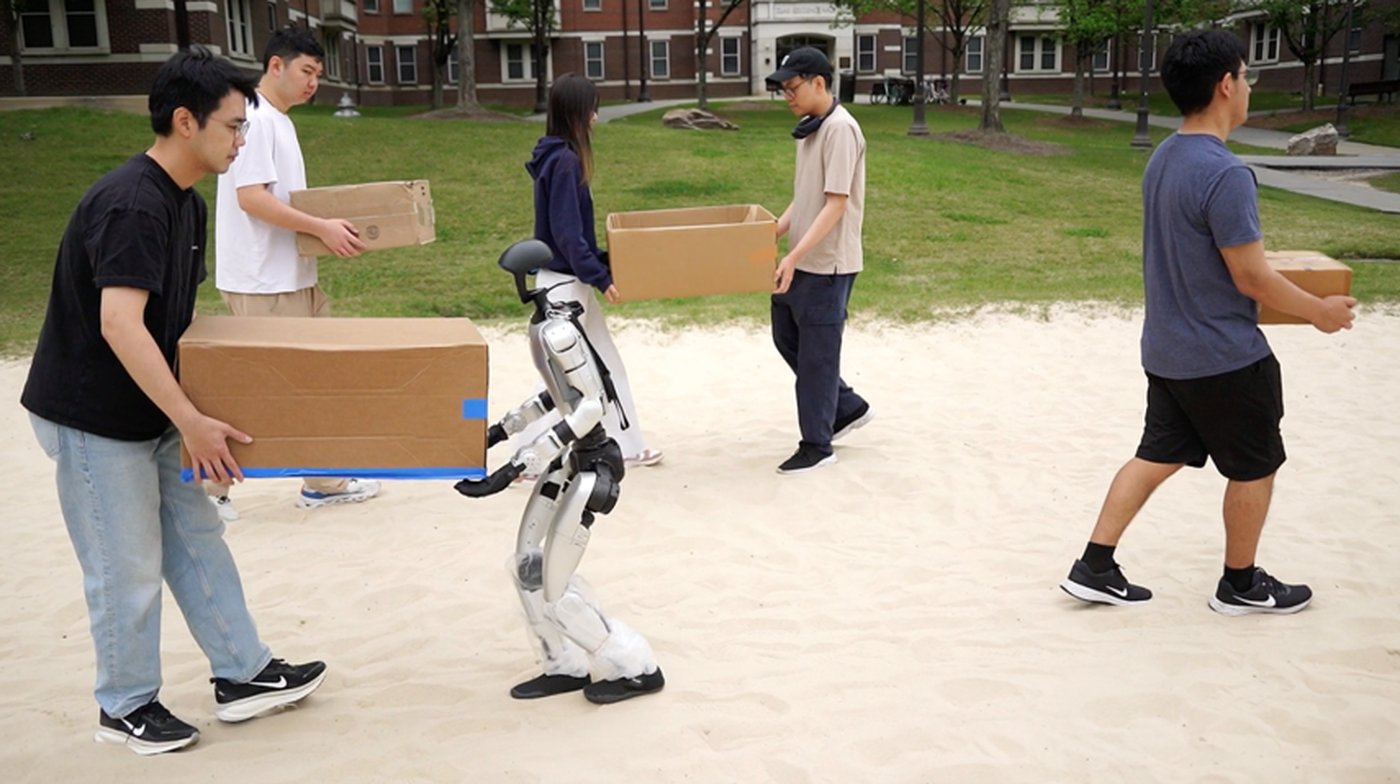
"Robots on the Runway" sounds like a gimmick until you consider what a catwalk actually tests. Fashion runways exist to show how a product moves on a body. In front of a skeptical crowd. Under hot lights. With no second take. For humanoids, walking is still the product. A machine that can stride a catwalk unassisted, turn, and exit without a handler's tether makes a stronger engineering statement than most conference keynotes. Eleven companies signed up for that risk. Per the official release, the runway participants are Primebot Robots, EngineAI, Cozio Robotics, Dobot Robot, Deep Robotics, AgiBot, Unitree, ZBy - Mind with Heart, Ollobot, Astrall Dynamics, and AIMOGA.
IFA Management CEO Leif Lindner framed the expansion in adoption terms. "IFA Next shows where technology is really heading. This year, we're seeing more humanoid robots at IFA than ever before. This is more than just a showpiece. It shows that robotics, AI and new interfaces are becoming an increasingly integral part of people's everyday lives." The show carries the patronage of Dorothee Bär, Germany's Federal Minister for Research, Technology and Space. Berlin's government, in other words, sees the robot wave as industrial policy, not just spectacle.
The programming around the catwalk supports the everyday-life thesis. RoboCup football matches with Team Berlin United from Humboldt University of Berlin run all five days. The Dream Stage in Hall 25 hosts startup pitch battles organized with the German Startup Association, with semi-finals on September 4 and 5 and a final on the Creator Stage on September 6. A panel on kitchen and home robots pairs The Verge's smart-home editor Jennifer Pattison Tuohy with Posha co-founder and CEO Raghav Gupta. This is the consumer-electronics industry doing what it did to televisions, smartphones, and smart speakers. It is building the retail narrative before the retail moment.
IFA has been here before as a kingmaker. The compact cassette debuted there in 1963. European retail first embraced flat panels, smartphones, and robot vacuums in those same halls. The robot-vacuum category quietly built the distribution channels Chinese robotics firms now reuse. Pudu Robotics and Deep Robotics, both on this year's list, follow a path Ecovacs and Roborock paved through Berlin a decade ago. Enter Europe through the appliance aisle, not the industrial catalog.
The Scale Behind the Spectacle
The 300 exhibitors are expected across startups, scale-ups, established companies, research organizations, and international country pavilions. The confirmed national pavilions include Italy, Korea, Taiwan, Singapore, the Philippines, and China. Beyond robotics, the zone adds smart glasses, AI wearables, PetTech, and smart living exhibitors, a spread that positions the humanoid as one more household device among many.
The exhibitor economics tell a quieter story about who needs whom. For Chinese makers facing an American wall, Europe's roughly 450 million consumers are no longer one market among several. They are the addressable Western market. That concentration cuts both ways. IFA gets its most newsworthy edition in years. Berlin gets to host the robot moment. But the exhibitors get pricing power over nothing. A dozen Chinese humanoid brands sharing one hall means European buyers will compare spec sheets side by side. The price war that hollowed out robot-vacuum margins could arrive in the humanoid category before its first mass-market Christmas. Unitree's sub-US$6,000 R1 already set the anchor. Every rival on that catwalk will be asked about it.
Berlin Opens as Washington Closes
The timing turns a trade-show press release into a geopolitical document. One day after IFA's July 27 announcement, the FCC barred new Chinese humanoid and quadruped robots from US equipment authorization. Unitree launched European commercial sales on July 22 and has now lost its planned American launch window. In Berlin it will find exactly what it lost in California. A wealthy consumer market. Government patronage. A stage.
The skeptical read deserves its paragraph. Trade shows sell booths, and "biggest showcase to date" is what every show says about its growth category. Three hundred exhibitors in the IFA Next zone does not mean 300 humanoid companies. Many machines on that catwalk will still be teleoperated, tethered, or carefully stage-managed in ways the audience never sees. Europe's openness is also not policy. The EU has no equivalent of the Covered List today. But the same security arguments Washington deployed are already circulating in Brussels. One well-publicized incident involving a Chinese robot in a European home could redraw the welcome mat quickly.
For the makers on IFA's list, Berlin in September is no longer just a marketing stop. It is the biggest open door left in the West, and everyone on that catwalk knows it. September will answer one question. European households will watch a robot walk a runway six weeks after Washington called its siblings a security risk, and they will decide whether the machine looks more like the future or more like the argument.
This article is for informational purposes only and does not constitute investment, legal, or professional advice. Figures are drawn from the cited sources and were accurate as of publication.