Agile Robots Brings 12 Exhibits to China's Industrial Expo in Shanghai
Agile Robots used the 26th China International Industrial Fair to show that its durable commercial position rests on industrial deployment and research infrastructure, not humanoid spectacle.

Twelve exhibits, five thematic zones, and roughly 40,000 cumulative robot deliveries across more than 60 countries: that is the scale Agile Robots brought to the National Exhibition and Convention Center in Shanghai this week for the 26th China International Industrial Fair, running October 12 through 16, and the exhibit list reveals less about any single product than about where embodied-AI commercialization has actually landed after two years of demo-driven hype. Agile Robots, a Munich-headquartered robotics company founded in 2018 that builds force-controlled robotic arms, dexterous end effectors, and the software stack that coordinates them, has grown to more than 3,500 employees on the strength of industrial deployments rather than consumer-facing humanoid spectacle, and its booth this week was organized not around a single flagship robot but around five distinct commercial use cases: embodied intelligence research tools, embodied foundation models, a research ecosystem, consumer-facing applications, and industrial deployment. That structure is itself the story. A company confident enough in its industrial revenue to spend a majority of its trade-show floor space on research tooling and ecosystem partnerships, rather than headline product reveals, is making a specific claim about where the embodied-AI market's near-term money actually sits.
The clearest evidence for that claim is Agile Robots' choice to anchor its exhibit around a dual-arm mobile research platform, the Mobile FR3 Duo, built by its partner Franka Robotics and serving as the unified test rig for a new embodied bimanual manipulation competition that drew 119 teams from around the world this year. A company selling finished industrial robots does not typically dedicate its highest-visibility booth real estate to a benchmark platform used by outside research teams, unless it has concluded that owning the evaluation standard other companies' robots get measured against is worth more, strategically, than any single product demonstration. Agile Robots is betting that infrastructure position is worth more than another dexterous-hand headline, and the bet reflects a broader pattern now visible across China's embodied-AI sector: as the market has moved past the phase where any humanoid demo generated coverage, the companies with durable commercial positions are the ones building the tools, benchmarks, and operating systems that other companies' robots depend on, rather than only the robots themselves.
Industrial Deployment Has Quietly Become the Profitable Half of the Business
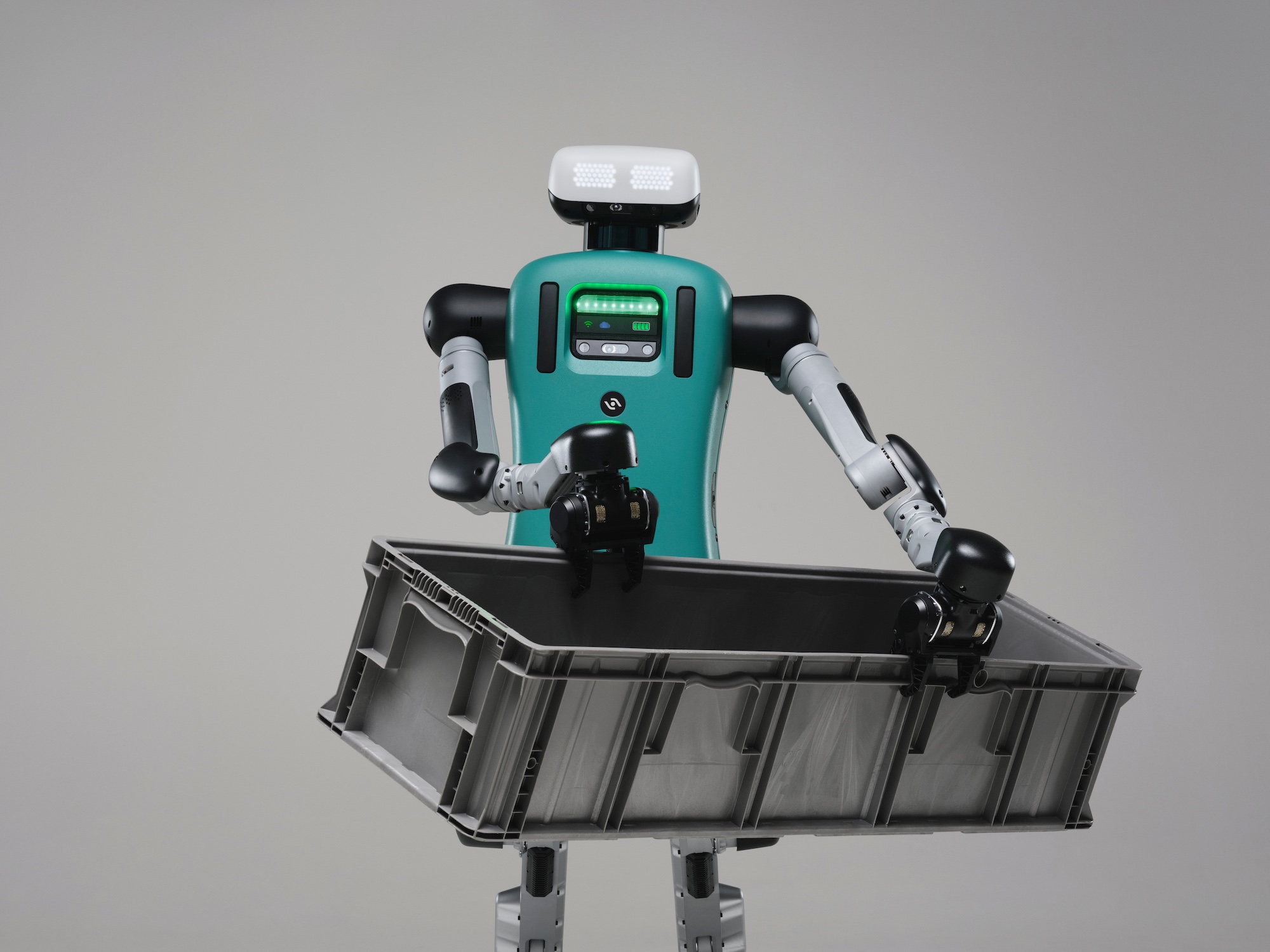
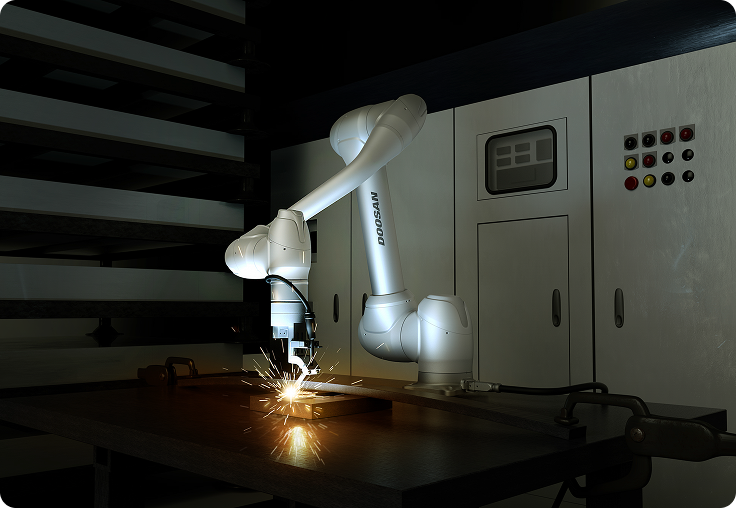
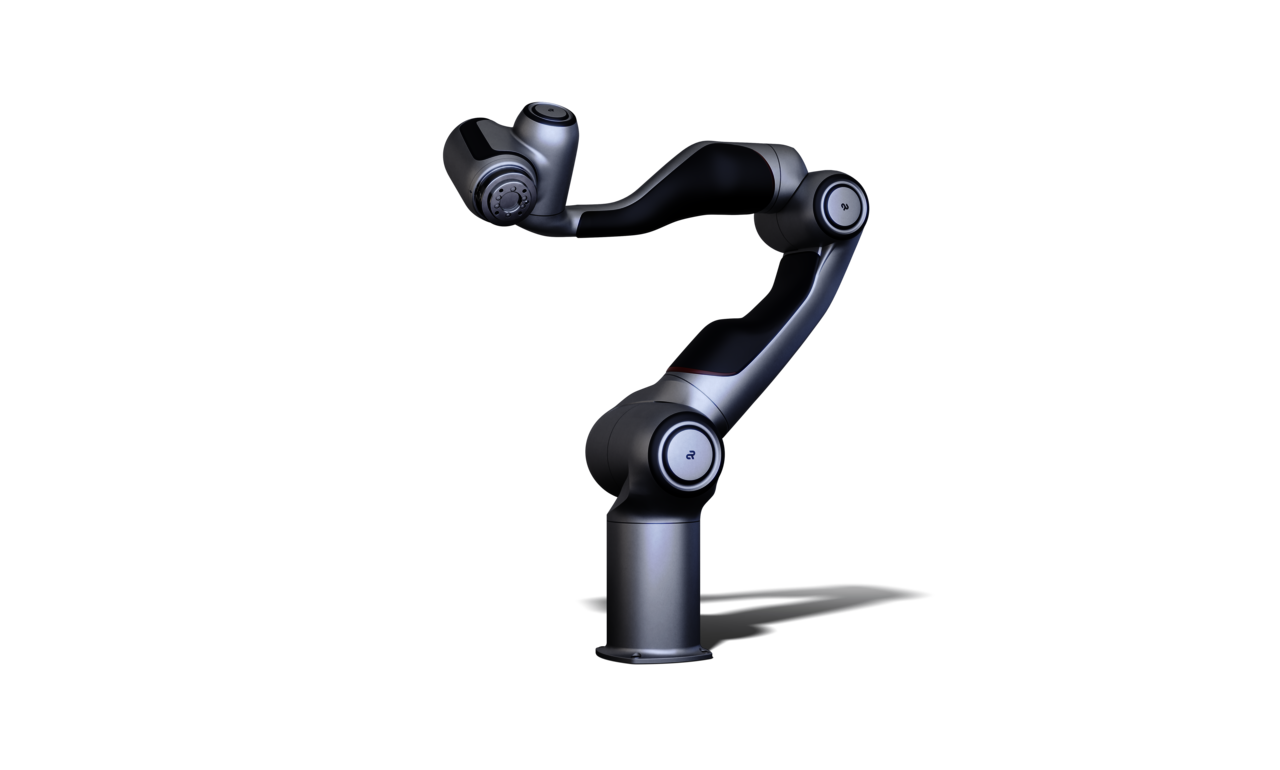
Set against the research-platform narrative, the industrial side of Agile Robots' booth told a more conventional but commercially more significant story. The company showed a wire-harness routing solution built around its Diana 3 Duo arm for automotive parts production, with a changeover time of roughly 15 minutes between part variants, a specification that matters far more to an automotive procurement team than any headline about humanoid dexterity, since changeover time directly determines how many different part configurations a single robotic cell can run profitably across a shift. It also demonstrated a sorting system pairing its own Agile Core robot operating system with a visual-tactile sensor called VT10-G, combining computer vision with physical touch feedback to sort items a camera-only system would misclassify, and a high-precision force-feedback teleoperation rig built on its newer Diana 7 arm, capable of millisecond-level bidirectional force feedback between a remote human operator and the robot's physical grip.
None of those three products will generate the social-media attention a humanoid backflip earns, and that gap between commercial relevance and public attention is precisely the dynamic that has made China's embodied-AI sector harder to read correctly from outside the country over the past year. Automotive wire-harness routing and industrial sorting are unglamorous, repetitive tasks, but they are also exactly the categories of work that already justify a robot's purchase price against a human laborer's wage in a Chinese manufacturing context, which is why Agile Robots chose to display them at an industrial trade fair rather than reserving them for a closed-door customer meeting. A procurement team evaluating force-controlled robotic arms for automotive or electronics assembly now has a concrete, checkable changeover-time specification to benchmark against competing vendors, rather than having to infer commercial readiness from a company's marketing material alone.
The Consumer and Wellness Exhibits Are a Hedge, Not a Pivot
Agile Robots also displayed two consumer-facing applications that sit furthest from its industrial core: an AI-driven physiotherapy and wellness robot offering five switchable treatment modes backed by a cloud library of more than 100 standard courses, and a camera-operating robot that generates smooth cinematographic camera movements from user-set keyframes and supports automatic subject tracking. Read in isolation, either product could look like a company drifting from its industrial strengths toward consumer novelty. Read alongside the rest of the booth, they look more like a hedge: both applications reuse the same underlying force-control and motion-planning technology the company sells into automotive and electronics manufacturing, repackaged for markets, consumer wellness and media production, where unit economics and sales cycles differ from industrial contracts but where the underlying hardware investment has already been made. A force-controlled arm that can safely apply graduated pressure during physiotherapy is solving a close technical cousin of the same problem as an arm applying consistent clamping force during wire-harness assembly, which means Agile Robots can pursue both markets without duplicating its core research-and-development spend.
That diversification instinct matters more in China's current embodied-AI market than it would have eighteen months ago, when investor enthusiasm rewarded narrow, headline-grabbing humanoid bets almost regardless of near-term commercial path. Several well-funded Chinese humanoid programs have since struggled to convert demo-stage capability into repeatable factory orders, a gap between demo performance and deployment reality that has made investors and corporate customers alike considerably more skeptical of single-product robotics pitches than they were during the sector's earlier funding peak. A company arriving at a major industrial fair with revenue-generating industrial products, an emerging consumer diversification, and an infrastructure play around a benchmark competition is presenting a materially lower-risk commercial profile than a competitor still betting its entire narrative on one humanoid platform reaching general-purpose capability on an undisclosed timeline.
The Five-Fingered Hand Is the Clearest Signal of Where the Technology Still Lags
Among the research-oriented exhibits, Agile Robots showed its Agile Hand, a five-fingered dexterous end effector expandable to 16 degrees of freedom, alongside an anti-interference demonstration built on what the company calls its WAM model and three separate collaboration demonstrations run on Franka Robotics hardware. The dexterous-hand category remains the most closely watched, and most technically unresolved, component of the entire embodied-AI stack: a robot's arm and mobility base have matured faster than its end effector, because replicating the human hand's combination of fine motor control, variable grip force, and tactile feedback across a wide range of object shapes and materials remains substantially harder than building a repeatable industrial arm. Agile Robots' decision to show the Agile Hand alongside its already-commercial industrial arms, rather than presenting it as a standalone finished product, is an honest signal about where the company itself believes the dexterous-manipulation technology currently sits: promising enough to exhibit and to use as a research tool, not yet mature enough to anchor a standalone commercial pitch the way its wire-harness and sorting solutions already do.
What the Industrial Expo Confirms About China's Embodied-AI Market
Taken as a whole, Agile Robots' presence at this year's Industrial Expo is a useful corrective to the narrative, still common outside China, that the country's embodied-AI sector is primarily a humanoid-robot story driven by headline-generating demos and national-champion funding rounds. The companies with durable commercial positions inside China's industrial-automation market, Agile Robots among them, are building revenue around unglamorous, high-volume industrial tasks, automotive wire-harness routing, visual-tactile sorting, teleoperated precision work, while treating humanoid-adjacent research, dexterous hands, foundation models, benchmark competitions, as a longer-horizon investment rather than the core of their near-term business. For a procurement team or investor trying to separate durable embodied-AI commercial positions from headline-driven ones, the more reliable diligence question is not which company has shown the most impressive humanoid demo this year, but which one can produce a changeover-time specification, a named automotive customer, or a repeatable sorting accuracy figure on request. Agile Robots came to Shanghai this week able to answer that question with a product on the floor rather than a promise on a slide, and that gap, between companies that can show a specification and those that can only show a demo, is now the clearest line separating China's embodied-AI survivors from the rest of the field.
The organizers' own plans reinforce that reading. The bimanual-manipulation competition Agile Robots sponsors and supplies hardware for is scheduled to move into a beta phase in 2027 with an expanded scale, meaning the infrastructure Agile Robots is building this year, the benchmark platform, the research ecosystem, the shared evaluation standard, is designed to compound in strategic value over the following year rather than deliver a one-time trade-show marketing boost. A competitor evaluating whether to challenge Agile Robots' position in force-controlled industrial manipulation over the next eighteen months is not just competing against the company's current product line; it is competing against an evaluation ecosystem that more outside research teams will be building around by the time that competitor's own platform reaches market. That compounding advantage, more than any single specification sheet, is the real strategic asset Agile Robots carried into Shanghai this week, and it is the reason the company's calmest, least headline-friendly exhibits, the research platform and the benchmark competition, are likely to matter more to its competitive position over time than the two consumer products crowds actually stopped to watch.
This account synthesizes company exhibits and statements reported from the 26th China International Industrial Fair in Shanghai. It is for general information purposes only and does not constitute investment advice.