NEO Was Built to Live in Your House. 1X's Biggest Deal Yet Puts It in a Warehouse Instead.
A year after 1X Technologies opened preorders for its US$20,000 home humanoid NEO, the company's largest confirmed deployment commitment is not a living room: up to 10,000 units bound for the industrial portfolio companies of investor EQT. NEO's own product page shows teleoperated humans still fill the gaps behind its "autonomous by default" pitch, and this column argues the EQT deal is the clearest evidence yet that privacy, not battery life or dexterity, is what kept the home humanoid out of the home.

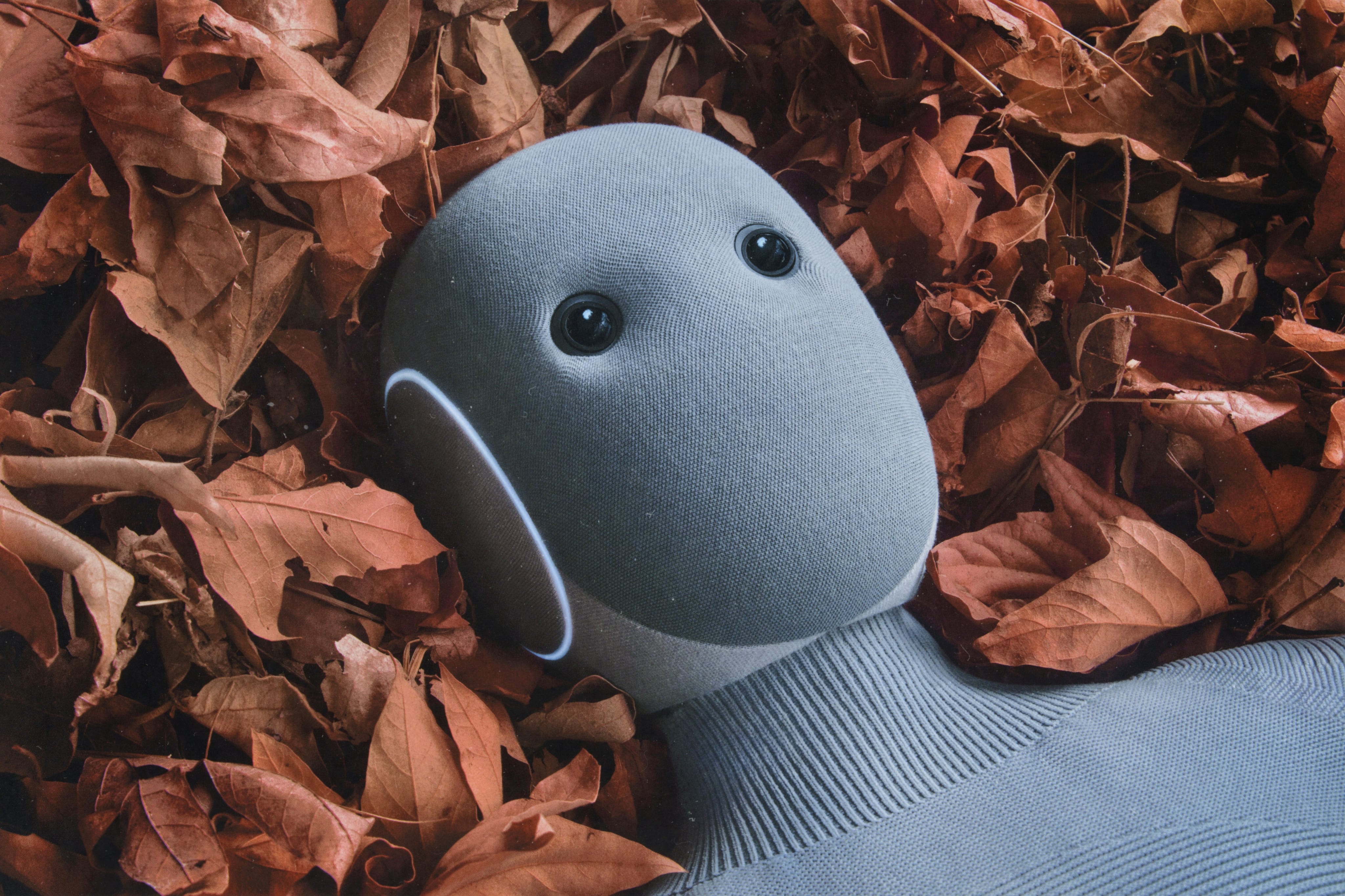
A year ago this month, 1X Technologies opened preorders for NEO, a US$20,000 humanoid built, in the company's own words, to fold your laundry and tidy your kitchen while you are still in the room. The pitch was specific and intimate: a robot for the one space every other humanoid vendor had avoided, the home, where the cameras watch children instead of conveyor belts and the "user" is a family, not a shift supervisor. A year later, 1X's largest confirmed deployment commitment to date is not a living room. It is up to 10,000 units bound for the industrial portfolio companies of EQT, a private equity firm, to work in manufacturing, warehousing, and logistics.
Nobody at 1X announced a retreat from the home. But a company does not need a press release titled "we were wrong about the house" for its own order book to say so. My thesis: the EQT deal is the clearest evidence yet that the obstacle standing between a teleoperated humanoid and the home was never battery life or dexterity. It was trust, and trust turned out to be a harder problem to price than a robot arm.
What "Autonomous by Default" Actually Means
1X's own product page states that NEO "works autonomously by default." Read the next sentence before you believe the first one: "For any chore it doesn't know, you can schedule a 1X Expert to guide it." A third line removes any ambiguity about who that Expert is: an owner can "pilot your NEO from anywhere in the world through your Mobile App & VR device."
That is three claims stacked in careful order, and the order is the tell. Autonomous by default describes the easy chores. Everything a household actually struggles with, the unfamiliar task, the awkward object, the thing that goes wrong, routes to a human being wearing a VR headset somewhere else in the world, looking out through NEO's cameras at your kitchen. 1X has never published what share of a typical session runs on that human channel rather than the autonomous one. Independent estimates put it well above a quarter of total task time at launch. The company's own marketing language is built to let a reader assume the smaller number without 1X ever stating it.
A robot that "works autonomously by default" is not the same promise as a robot that works autonomously.
The Customer Nobody Priced For
Here is the part a hardware roadmap cannot fix. A warehouse buyer evaluating a teleoperated humanoid asks about cycle time, uptime, and liability insurance. A household buyer asks a different question entirely: who, specifically, is the person who might be looking through this robot's eyes at my bathroom door, and what happens to that footage. 1X's answer, that operators can only take control with owner permission and that scheduling happens through an app, is a real control. It is also a control that asks a family to trust a company's internal access policy the same way they trust a bank with their account, except nobody has spent decades building the equivalent of deposit insurance for a robot that walks through your hallway at 2 a.m.
Industrial buyers never had to clear that bar. A warehouse already assumes someone is watching: badge logs, security cameras, a supervisor on the floor. Teleoperation does not introduce a new category of exposure there. It introduces one in a bedroom.
Competitors reading the same signal have not all pulled back. Tau Robotics launched a San Francisco home-cleaning service this year, built on a different teleoperated humanoid platform, at roughly US$30 an hour, betting that pricing transparency and a narrower task list (cleaning only, scheduled visits, not a general-purpose live-in robot) can clear the trust bar NEO's broader pitch could not. That bet has not been tested at 1X's scale. It is a smaller, more legible promise, and legibility may be worth more than capability when the room in question is someone's home.
Then, in December, the Warehouse Called
1X announced the EQT agreement in December 2025, two months after NEO's home preorders opened. The structure is telling on its own: up to 10,000 Neo units available over roughly five years, offered to EQT's portfolio companies individually rather than sold as one bulk order, aimed squarely at manufacturing, warehousing, and logistics work. The same robot, the same teleoperation stack, the same 1X Expert fallback, now pointed at a buyer who does not need to be convinced that a remote operator watching through a camera is an acceptable risk. Industrial buyers price that risk in dollars. Household buyers price it in dread.
One caveat belongs here, not buried in a footnote: EQT Ventures is also one of 1X's own backers, so this is not pure proof of arm's-length industrial demand. A friendly investor steering its portfolio companies toward a company it has funded is still a real commercial commitment, with real delivery dates and a real unit count attached, but it is a weaker signal than a cold industrial buyer choosing NEO over a rival on performance alone.
This is not 1X abandoning its home ambitions on paper. NEO is still listed for sale, still priced at that same US$20,000, or US$499 a month on a lease that undercuts outright purchase for anyone unsure they want this specific experiment in their kitchen. The company's Hayward, California factory is still reportedly scaling toward a stated target of 100,000 units a year by the end of 2027. But capital allocation tells the truth that a roadmap slide does not: the deal with a committed, named timeline and a five-figure unit count went to warehouses, not households.
Every Humanoid Company Keeps Finding the Same Exit
1X is not unusual here; it is simply the clearest single data point. Figure built its first viable commercial contracts on an automaker's factory floor, not a customer's home, and has spent its most visible capital (a US$1 billion-plus bet on crowdsourced training data) on improving performance for exactly that kind of structured, badge-logged environment. Boston Dynamics, Agility, and every Chinese humanoid vendor shipping units this year sell first into logistics, manufacturing, or controlled industrial pilots. Not one leading humanoid company has a home deployment at anything near its industrial unit count, more than two years into the current funding boom.
That convergence is the real story, and it is a quieter one than any single company's pivot. The humanoid industry's marketing keeps selling a future where the robot lives with you. Its actual order books keep landing in the one place that was never going to ask the robot to earn trust it has not built: a facility that already assumed surveillance, already carries liability insurance for exactly this kind of machine, and already has a legal department that signs contracts like EQT's for a living.
What I'm Watching From an ASEAN Seat
Running a platform that tracks where robots actually end up, rather than where a press release says they will, teaches you to treat a company's own sales mix as the most honest document it produces. For a region like mine, where manufacturing capacity is exactly the kind of EQT-style portfolio-company environment this deal describes, that mix matters more than any home-robot demo video ever will. The humanoids headed to Southeast Asian factory floors over the next five years will arrive looking like industrial equipment with a service contract, not like a companion with a face, because that is the version of this technology every maker's own numbers say actually sells.
I will be watching two things from here. First, whether 1X discloses a real household shipment count once NEO deliveries begin later this year, rather than letting preorder enthusiasm stand in for it. Second, whether any humanoid company reaches home-deployment volumes that rival its industrial contracts before 2028. If neither happens, the home humanoid stays what it has mostly been so far: the pitch that opens the funding round, not the deployment that pays for it.
This analysis draws on 1X Technologies' own published NEO product page (1x.tech), public reporting on 1X's December 2025 agreement with EQT and its portfolio companies, and prior house reporting on Figure AI's industrial data program. It is for general information purposes only and does not constitute investment, financial, or professional advice.
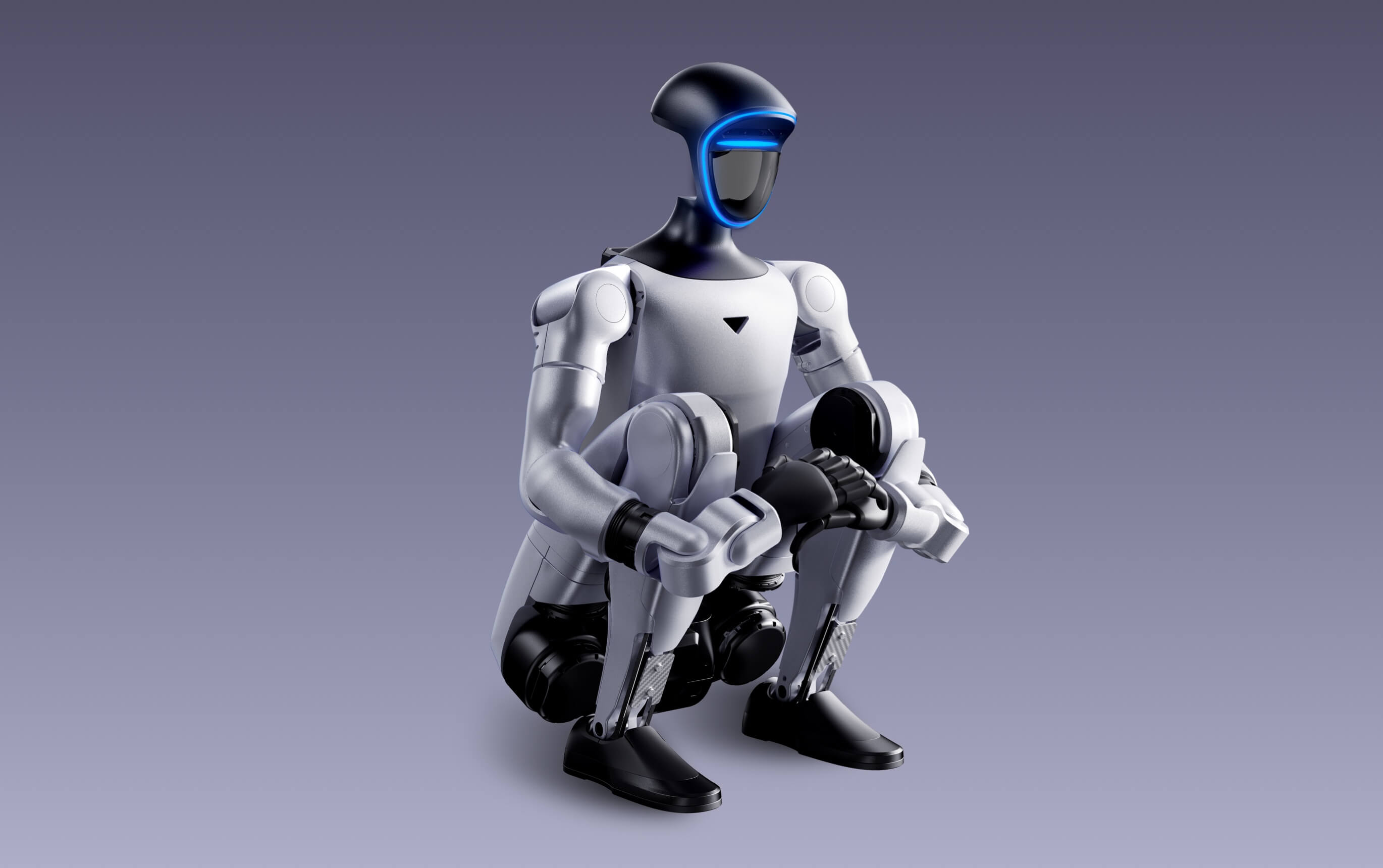
Hero image credit: 1X Technologies, official NEO product photography (1x.tech).