DESCRIPTION
PEER 100 is a Mobile-Robots from GROUND. It is built for Intralogistics, Material-Handling, Picking. Key figures: 60 kg, 480 min runtime, 100 kg payload.
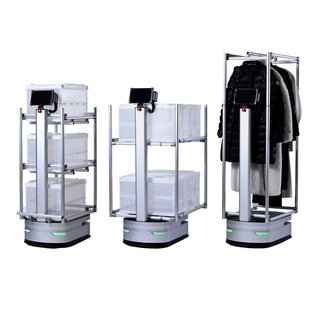
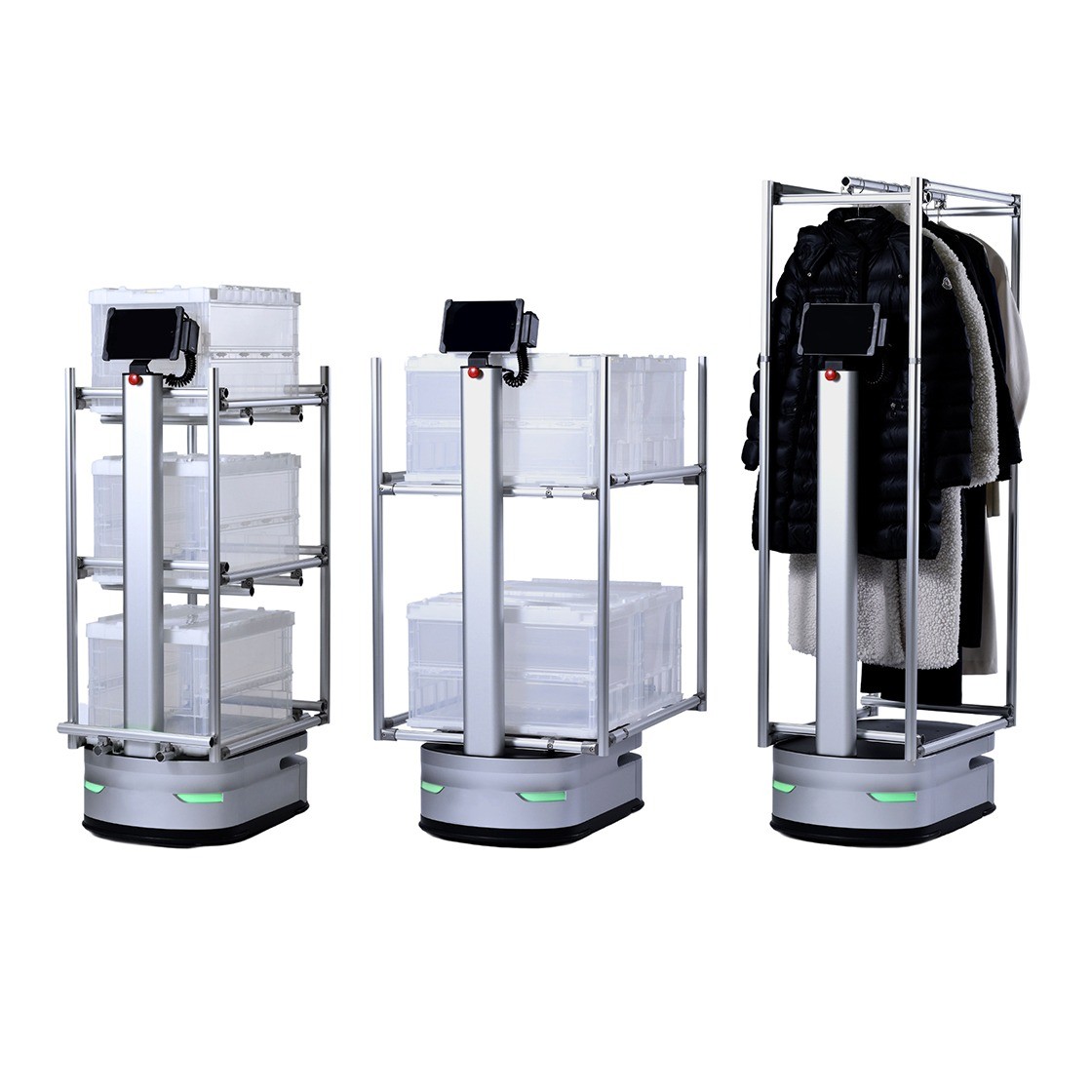
PEER 100 extends the carrying capacity of GROUND's PEER ST autonomous collaborative picking robot to 100 kg with a larger body and load space, for warehouses with many items per order - including B2B orders of ten or more lines and heavy goods such as metal parts. Its racks and baskets can be customised, and it supports multi-order picking with several orders handled per robot. It is offered as Robot as a Service and returns automatically to its charging station. PEER 100 measures 722 x 492 x 1,387 mm, weighs 60 kg with its battery and travels at up to 1.4 m/s. It needs aisles of 0.9 m one-way, 1.1 m with turning and 1.8 m for two robots to pass, handles 3-degree slopes and 3 mm steps, runs 8 hours unloaded (8-10 hours per GROUND's current page) and recharges in 2 hours. At Autobacs Seven's East Japan Logistics Centre seven PEER 100s, each carrying six 25-litre containers, roughly doubled e-commerce picking productivity from September 2024, and Nippon Express uses three in its 'warehouse kind to everyone' accessibility project. Like the rest of the PEER series it navigates by SLAM, fusing camera and laser data to localise itself in real time and choose an obstacle-free route without magnetic tape, guide rails or dedicated shelving, so it can be added to a running warehouse without layout changes. A tablet on the robot shows the picking instructions, the robots can be linked to a WMS (or started from a QR-coded pick list with the optional SHOT&GO reader), and GROUND offers a simulator to size the fleet before a trial.
FEATURES
- Payload 100 kg
- customisable racks and baskets
- Multi-order picking
- 722 x 492 x 1,387 mm, 60 kg with battery
- Up to 1.4 m/s
- Aisles from 0.9 m (one-way)
- 3-degree slopes, 3 mm steps
- 8 h unloaded (8-10 h per current page)
- 2 h charge
- auto-docking
- SLAM with camera and LiDAR
- real-time obstacle avoidance
- Tablet pick display
- WMS/WES integration
- Offered as Robot as a Service
- Deployed at Autobacs Seven (7 units) and Nippon Express (3 units)
TECHNICAL SPECIFICATIONS
Verified| Physical | |
| Weight | 60 kg |
|---|---|
| Dimensions | L 722 mm × W 492 mm × H 1.39 m |
| Payload | 100 kg |
| Mobility | |
| Movement Type | Wheeled |
| Speed | 5.04 km/h |
| Environment | Indoor warehouses and fulfilment centres; aisles from 0.8-0.9 m |
| Power | |
| Battery Life | 480 min |
ROBOT FORUMS
Loading forums...
TECHNICAL SPECIFICATIONS
Verified| Physical | |
| Weight | 60 kg |
|---|---|
| Dimensions | L 722 mm × W 492 mm × H 1.39 m |
| Payload | 100 kg |
| Mobility | |
| Movement Type | Wheeled |
| Speed | 5.04 km/h |
| Environment | Indoor warehouses and fulfilment centres; aisles from 0.8-0.9 m |
| Power | |
| Battery Life | 480 min |
Images
 martti

Image Contributions
Videos
ROBOT FORUMS
Loading forums...
RATINGS
FREQUENTLY ASKED QUESTIONS
What is the PEER 100?
PEER 100 extends the carrying capacity of GROUND's PEER ST autonomous collaborative picking robot to 100 kg with a larger body and load space, for warehouses with many items per order - including B2B orders of ten or more lines and heavy goods such as metal parts.
Who makes the PEER 100?
The PEER 100 is made by GROUND, a robotics company based in Japan.
How much does the PEER 100 cost?
GROUND has not publicly announced pricing for the PEER 100. You can enquire through RobotAIGeek for current pricing.
What is the PEER 100 used for?
The PEER 100 is designed for intralogistics, material-handling, picking, and transport. It is used in warehouse & logistics and retail settings.
What is the payload capacity of the PEER 100?
The PEER 100 has a payload capacity of 100 kg.
How much does the PEER 100 weigh?
The PEER 100 weighs 60 kg.
How fast is the PEER 100?
The PEER 100 can move at speeds of up to 5.04 km/h.
What is the battery life of the PEER 100?
The PEER 100 runs for about 480 minutes on a charge.
COMPARE WITH SIMILAR ROBOTS
See how this robot stacks up against its closest alternatives
- PEER 100 vs Open Shuttle 50/100
- PEER 100 vs M200C
- PEER 100 vs SAFELOG XS1 core
- PEER 100 vs NarGo100
- PEER 100 vs MOBOT AGV eRunner