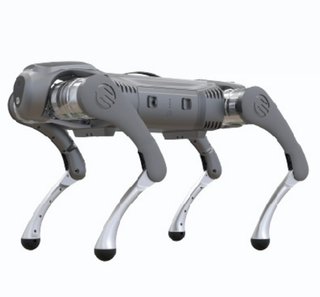

DESCRIPTION
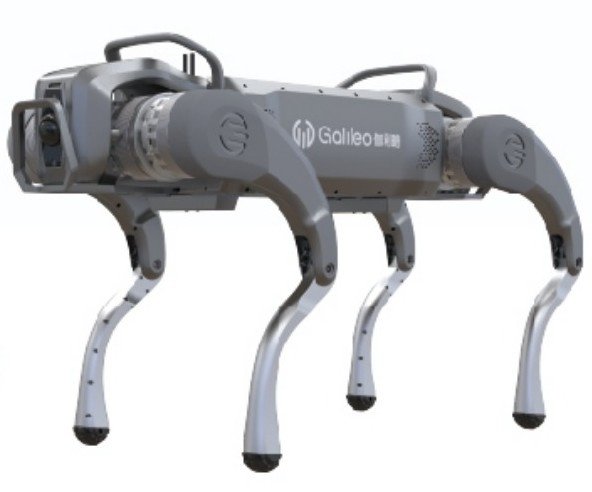
Galileo C1 is an Industrial-Robot from Galileo Technology. It is built for Inspection, Monitoring, Transport. Key figures: 22 kg, 180 min runtime, 12 kg payload.
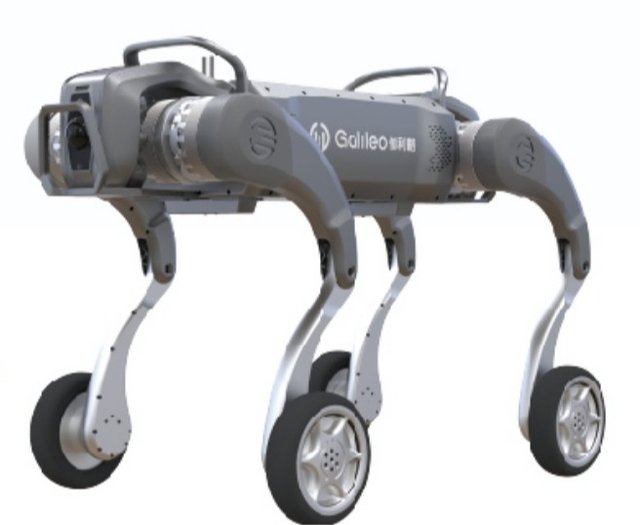
The Galileo C1 is the entry point to the company's bionic quadruped family — 765 mm long and just 22 kg, small enough to be carried to site by one person, and rated small-scale industrial or consumer grade. It walks at up to 3 m/s, climbs slopes of 30 degrees and continuous 20 cm steps, and covers more than 10 km on a 20 Ah pack, running three hours under payload or five unloaded. It carries 12 kg as a working payload with a 15 kg maximum. What makes the family coherent is that the C1 shares its whole support stack with its larger siblings: the same IP67 sealing, the same -20 to 55 degree operating range, the same domestic ARM compute, and the same expandable payload interfaces that take gimbals, radar, robotic arms or cargo. LiDAR is optional here rather than standard, which is the main sensing difference from the medium and large grades.
FEATURES
- Smallest and lightest machine in the Galileo bionic quadruped family at 22 kg
- 765 x 410 x 475 mm standing at 22 kg
- Motion speed adjustable from 0 to 3.0 m/s
- 12 kg rated payload capacity with a 15 kg maximum load
- Maximum climbable slope of 30 degrees or more
- continuous steps of 20 cm or more
- 20 Ah (960 Wh), 48 V battery giving 3 hours under payload and 5 hours unloaded, with a range of >10 km
- LiDAR: Optional
- Domestic ARM-based low-power high-performance CPU with 8 cores and 8 threads, 8 GB RAM and 64 GB solid-state storage
- WiFi 6 wireless networking with optional 4G and 5G
- communication bandwidth of 6 Mbps or less
- 1920 x 1080 camera at 25 fps, 2 megapixels
- IP67 protection
- Operating temperature from -20 to 55 degrees Celsius
- Removable battery supporting automatic charging at up to 960 W
- Charger input 100-240 V
- Optional voice interaction
- supplied with a remote-control handle
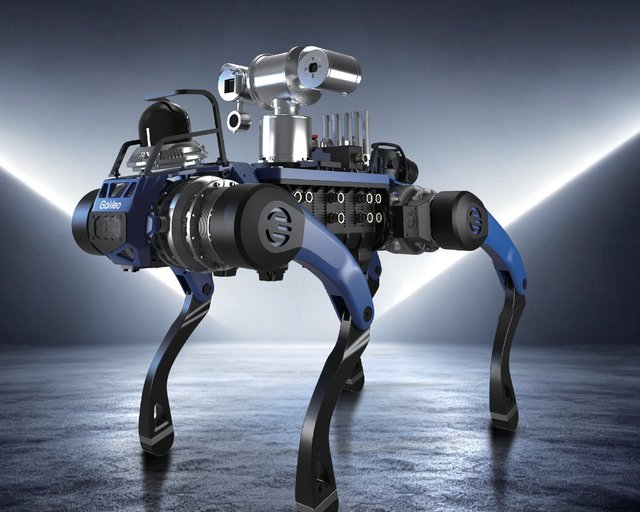
- Customisable payloads including dual-spectrum gimbals, 4G/5G and BeiDou/GPS/RTK modules, robotic arms, compact radar, cargo carriers, demolition tools and explosion-proof equipment
- Low-power standby mode of 365 days or more with remote wake-up support
- Lithium battery with autonomous charging supported
- Secondary development supported
TECHNICAL SPECIFICATIONS
Verified| Physical | |
| Weight | 22 kg |
|---|---|
| Dimensions | L 765 mm × W 410 mm × H 475 mm |
| Payload | 12 kg |
| Mobility | |
| Movement Type | Quadruped |
| Speed | 10.8 km/h |
| Environment | All-weather industrial and outdoor use; IP67; -20 to 55 degrees Celsius, -20°C to 55°C |
| Actuators | Bionic quadruped with articulated legs |
| Power | |
| Battery Life | 3-5 h |
| Sensing & Compute | |
| Sensors | LiDAR, 1920x1080 camera at 25 fps |
| Connectivity | WiFi 6, optional 4G and 5G; Ethernet, USB and RS485 external interfaces |
| Software / AI | Autonomous navigation and obstacle avoidance with multi-sensor fusion |
ROBOT FORUMS
Loading forums...
TECHNICAL SPECIFICATIONS
Verified| Physical | |
| Weight | 22 kg |
|---|---|
| Dimensions | L 765 mm × W 410 mm × H 475 mm |
| Payload | 12 kg |
| Mobility | |
| Movement Type | Quadruped |
| Speed | 10.8 km/h |
| Environment | All-weather industrial and outdoor use; IP67; -20 to 55 degrees Celsius, -20°C to 55°C |
| Actuators | Bionic quadruped with articulated legs |
| Power | |
| Battery Life | 3-5 h |
| Sensing & Compute | |
| Sensors | LiDAR, 1920x1080 camera at 25 fps |
| Connectivity | WiFi 6, optional 4G and 5G; Ethernet, USB and RS485 external interfaces |
| Software / AI | Autonomous navigation and obstacle avoidance with multi-sensor fusion |
Images
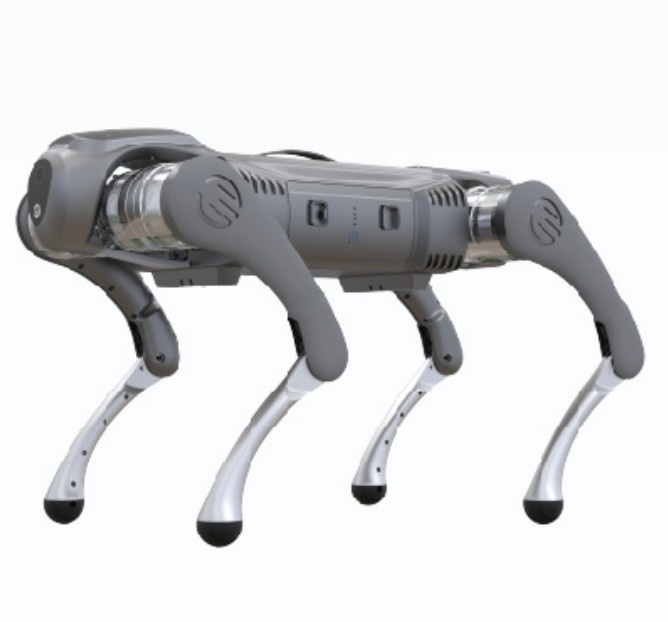
 martti
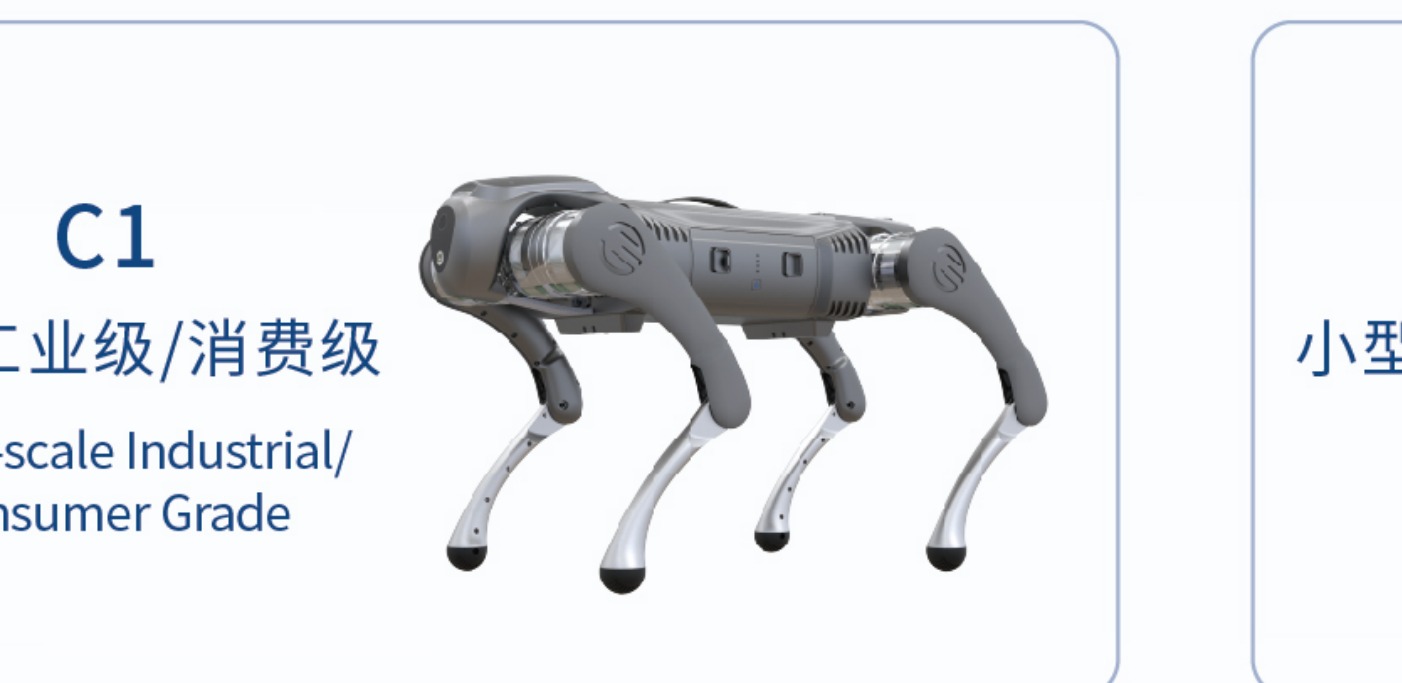 martti
Image Contributions
Videos
ROBOT FORUMS
Loading forums...
RATINGS
FREQUENTLY ASKED QUESTIONS
What is the Galileo C1?
The Galileo C1 is the entry point to the company's bionic quadruped family — 765 mm long and just 22 kg, small enough to be carried to site by one person, and rated small-scale industrial or consumer grade.
Who makes the Galileo C1?
The Galileo C1 is made by Galileo Technology, a robotics company based in China.
How much does the Galileo C1 cost?
Galileo Technology has not publicly announced pricing for the Galileo C1. You can enquire through RobotAIGeek for current pricing.
What is the Galileo C1 used for?
The Galileo C1 is designed for inspection, monitoring, transport, and industrial inspection in toxic, hazardous and high-risk workplaces. It is used in energy, research, manufacturing, and security & patrol settings.
What is the payload capacity of the Galileo C1?
The Galileo C1 has a payload capacity of 12 kg.
How much does the Galileo C1 weigh?
The Galileo C1 weighs 22 kg.
How fast is the Galileo C1?
The Galileo C1 can move at speeds of up to 10.8 km/h.
What is the battery life of the Galileo C1?
The Galileo C1 runs for 3-5 h on a charge.
COMPARE WITH SIMILAR ROBOTS
See how this robot stacks up against its closest alternatives
- Galileo C1 vs Strider M3
- Galileo C1 vs Galileo C1-W
- Galileo C1 vs MagicDog Y1
- Galileo C1 vs Galileo E1
- Galileo C1 vs Galileo E1-W