XTEND Secures US$27 Million in Defense Orders and Advances in US$1 Billion Drone Program
XTEND has secured over US$27 million in defense orders since February 2026 and advanced to Gauntlet II of the US$1 billion Drone Dominance Program. The company, which provides the XOS operating system for tactical drones deployed across 30+ countries and 5 combat zones, is preparing for a Q3 2026 NYSE listing under the ticker XTND following its business combination with JFB Construction Holdings. With a US$500 million active pipeline and 12,500+ systems already deployed, XTEND is positioning itself as a foundational layer of allied autonomous defense infrastructure.
Accelerating Defense Procurement
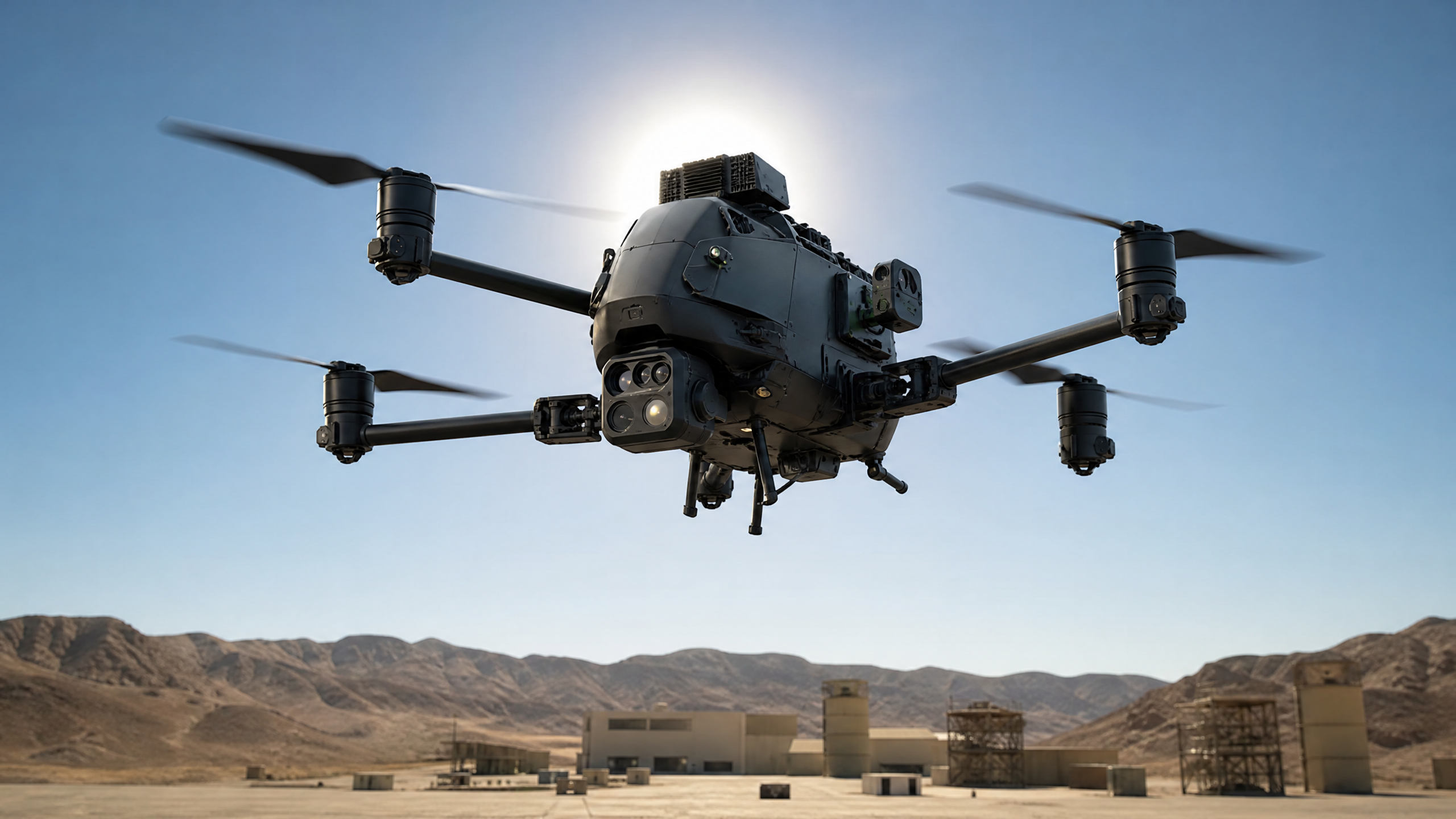
The adoption of autonomous tactical drone systems by global defense forces is accelerating at an unprecedented pace, driven by lessons learned from recent conflicts that have demonstrated the decisive impact of low-cost, mass-deployed unmanned systems. On July 30, 2026, XTEND, alongside its merger partner JFB Construction Holdings, announced a consolidated commercial update highlighting significant momentum in its defense contracting pipeline.
The company confirmed it has secured over US$27 million in new defense orders since the announcement of its business combination in February 2026. This represents a substantial acceleration in revenue generation, reflecting growing military reliance on XTEND's core technology: the XOS (XTEND Operating System), which enables operators to control multiple drones and robotic systems simultaneously through an intuitive interface requiring minimal training.
Beyond the confirmed orders, XTEND reports an active pipeline exceeding US$500 million in potential contracts across multiple allied nations. This pipeline reflects the company's positioning as a software-defined platform provider rather than a single-hardware vendor, allowing it to integrate with various third-party drone airframes and payloads to meet the specific requirements of different military customers.
The US$1 Billion Drone Dominance Program
The most significant catalyst for XTEND's future growth is its advancement to Gauntlet II of the US Drone Dominance Program. This massive procurement initiative, valued at approximately US$1 billion, aims to acquire up to 60,000 autonomous drone systems for the United States military. The program represents one of the largest single autonomous systems procurements in US defense history and signals a fundamental shift in how the Pentagon views unmanned systems, moving from niche capabilities to core warfighting infrastructure.
XTEND is one of 19 companies selected to advance to this critical evaluation phase, having successfully demonstrated its capabilities in the initial Gauntlet I assessment. Success in Gauntlet II would transition XTEND from providing specialized tactical solutions to becoming a primary supplier for a program of record, fundamentally altering the company's revenue trajectory and establishing a long-term recurring revenue stream with the Department of Defense.
The scale of the Drone Dominance Program, 60,000 systems, underscores the Pentagon's strategic shift toward mass-deployed, expendable autonomous platforms rather than small numbers of expensive, exquisite systems. XTEND's XOS platform, designed from the outset for multi-drone orchestration where a single operator can manage swarms of systems, is architecturally well-suited to this mass-deployment concept of operations.
Operational Track Record and Global Footprint
XTEND's technology is not theoretical or limited to controlled demonstrations. The company reports that over 12,500 XOS-enabled systems are currently deployed across more than 30 countries, including active operational use in five distinct combat zones. This extensive real-world deployment history provides XTEND with a significant competitive advantage in government procurement processes, where proven combat performance and operational reliability are weighted heavily over laboratory demonstrations.
Recent validation by the British Army during Exercise RHINO BIZZ further cements XOS as a viable standard for NATO-aligned forces. The exercise demonstrated XTEND's ability to integrate its platform with existing British military communications and command structures, a critical requirement for allied interoperability in coalition operations.
The company was originally founded in Tel Aviv, Israel, and is now headquartered in Tampa, Florida, reflecting its strategic pivot toward the US defense market. XTEND maintains a geographically distributed manufacturing footprint spanning the United States, the United Kingdom, Singapore, Israel, and Latvia. This diversified supply chain ensures strict compliance with the National Defense Authorization Act, a prerequisite for US government contracts, while also positioning XTEND favorably for domestic procurement programs in multiple allied nations that have their own domestic content requirements.
Competitor Comparison: Autonomous Defense Systems

The defense autonomy market is dominated by highly valued private companies, as detailed in the comparison table. Anduril Industries, valued at over US$14 billion, offers the Lattice operating system for autonomous defense systems and has secured multiple programs of record with the Department of Defense. Shield AI, valued at approximately US$2.8 billion, provides the Hivemind platform for autonomous aircraft, including fighter jets and drones. Skydio, valued at US$2.2 billion, focuses on autonomous reconnaissance drones and is approved under the DoD Blue sUAS program.
XTEND differentiates itself through its focus on the operator experience and multi-system orchestration. While competitors often emphasize full autonomy with minimal human involvement, XTEND's XOS platform is designed to keep a human operator in the loop while dramatically reducing the cognitive load of managing multiple systems simultaneously. This human-in-the-loop approach aligns with current Rules of Engagement requirements for most allied militaries, which still mandate human decision-making authority for lethal actions.
Furthermore, XTEND is taking a different financial path than its private-market peers. Through its business combination with JFB Construction Holdings, XTEND is preparing for a public listing on the New York Stock Exchange under the ticker symbol XTND, expected to close in the third quarter of 2026. This public listing will provide XTEND with a distinct currency for acquisitions and capital raising compared to its private-market competitors and will subject the company to the transparency and governance requirements of public markets.
Strategic Implications and Outlook
For defense procurement officials across allied nations, XTEND's momentum underscores the irreversible shift away from hardware-centric purchasing toward software-defined capabilities. The XOS platform's ability to integrate with various third-party hardware platforms allows militaries to upgrade their capabilities via software updates rather than replacing entire fleets of drones, significantly reducing lifecycle costs and accelerating the pace at which new capabilities can be fielded.
The combination of a US$500 million-plus pipeline, advancement in the Drone Dominance Program, and an imminent public listing creates a convergence of catalysts that will determine XTEND's trajectory over the next 12 months. For the broader defense technology sector, XTEND's progress validates the thesis that software-defined autonomous platforms, rather than proprietary hardware ecosystems, will dominate the next generation of military procurement across the allied world.
The NDAA-compliant, multi-nation manufacturing footprint also positions XTEND as a potential standard platform for allied interoperability, where coalition forces need to share autonomous capabilities across national boundaries without compromising sensitive national security information or violating export control regulations.
Transaction Structure and NYSE Listing
The business combination between XTEND and JFB Construction Holdings is structured as a reverse merger, allowing XTEND to access the public markets without the traditional IPO process. JFB, a publicly traded special purpose acquisition company, will merge with XTEND, with the combined entity trading on the New York Stock Exchange under the ticker symbol XTND. The transaction is expected to close in the third quarter of 2026, subject to shareholder approval and customary regulatory conditions.
For investors, the public listing provides the first opportunity to gain direct equity exposure to a pure-play tactical drone autonomy company at scale. Unlike competitors Anduril and Shield AI, which remain private and accessible only to institutional venture capital investors, XTEND's public listing will allow retail and institutional investors alike to participate in the defense autonomy sector's growth trajectory. The listing also provides XTEND with a public currency for potential future acquisitions as the defense drone market consolidates.
The company's Tampa, Florida headquarters positions it within the US Central Command region, facilitating close relationships with Special Operations Command and other key defense customers. This geographic proximity to decision-makers, combined with the manufacturing footprint across five countries, creates a robust operational foundation for scaling defense deliveries as orders from the Drone Dominance Program and allied nations materialize.
The convergence of a proven combat track record, a clear regulatory pathway through NDAA compliance, and imminent public market access positions XTEND uniquely among defense autonomy companies. As allied nations accelerate their autonomous systems procurement in response to evolving threat environments, XTEND's software-defined approach and multi-national manufacturing base provide the scalability and interoperability that modern coalition warfare demands.
Disclaimer: This article is for informational purposes only and does not constitute financial, investment, or technical advice. Readers should conduct their own due diligence before making procurement or investment decisions based on this information.