Xingyuanzhi Robot Secures 200M RMB Angel Round for Universal Embodied Brain
Xingyuanzhi Robot (星源智机器人), an embodied AI startup incubated by the Beijing Academy of Artificial Intelligence (BAAI), has surfaced in mid-2026 coverage following its 200 million RMB Angel funding round. Backed by ZhongKe Chuangxing, Hillhouse Capital, and others, the company is developing a 'universal embodied brain' for physical world interactions, signalling a critical shift in venture capital from hardware assembly toward foundational cognitive architectures.
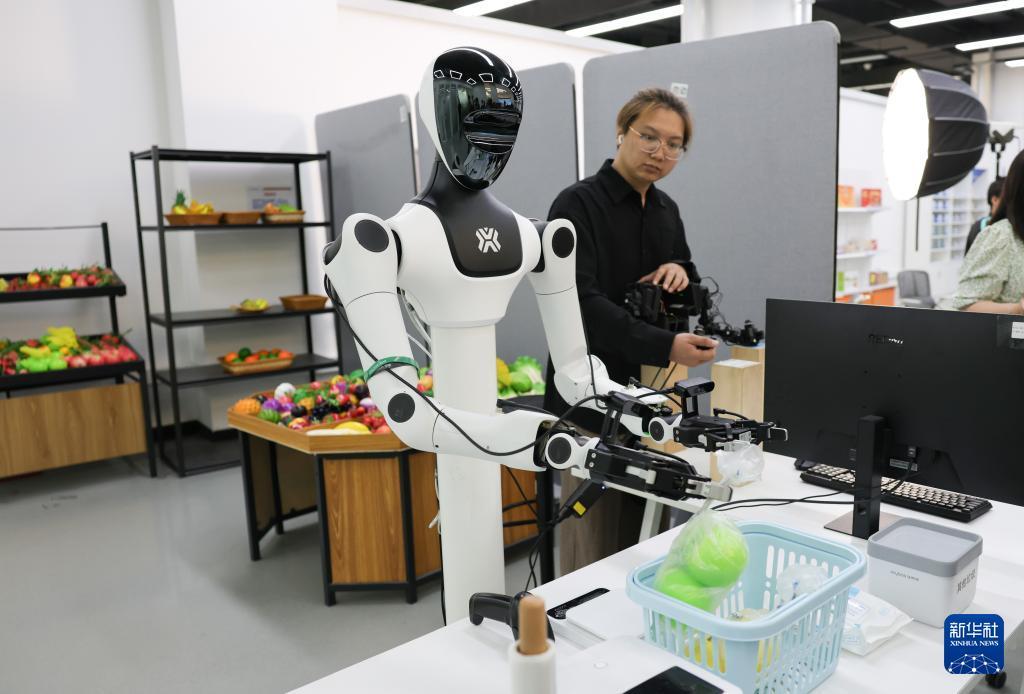
Xingyuanzhi Robot (星源智机器人), an embodied AI developer incubated by the Beijing Academy of Artificial Intelligence (BAAI), has secured a 200 million RMB (approximately $28 million USD) Angel funding round. The investment consortium features heavyweights including ZhongKe Chuangxing, Hillhouse Capital, Yuanhe Yuandian, and Yuansheng Ventures, alongside strategic participation from Zhiyuan Robot, Xinlian Capital, Guoqi Investment, and Zhongli Shiqiao. Originally announced in late 2025, the funding has resurfaced in June 2026 coverage as the company approaches its Pre-A milestone, highlighting sustained institutional interest in its technology.
Unlike the crowded field of startups rushing to build bipedal humanoid hardware, Xingyuanzhi is focused squarely on the cognitive infrastructure of robotics. The company's core mission is the development of a 'universal embodied brain', a multimodal spatial intelligence system capable of bridging the gap between large language models and the low-level execution required by robotic actuators. This software-first approach addresses one of the most significant bottlenecks in the current embodied AI ecosystem: the lack of generalized control models that can operate across different hardware platforms.
The Flow of Capital into Cognitive Infrastructure
The substantial early-stage capital injected into Xingyuanzhi underscores a structural shift in China's robotics investment landscape. Over the past 24 months, capital has flowed aggressively into hardware manufacturing, resulting in a proliferation of humanoid prototypes. However, investors are increasingly recognizing that hardware commoditization is inevitable, and the true value capture will occur at the software and cognitive layer. By funding companies like Xingyuanzhi, institutions are placing bets on the 'brain' rather than the 'body,' anticipating that a dominant embodied AI model could become the operating system for a fragmented hardware market.
The BAAI Incubation Advantage
Xingyuanzhi's incubation within BAAI provides it with a formidable structural advantage. BAAI has been at the forefront of China's foundational AI model research, offering its incubated startups access to top-tier talent, compute resources, and advanced algorithmic frameworks. This pedigree lends credibility to Xingyuanzhi's ambitious goal of building a universal embodied brain, a task that requires immense computational power and deep expertise in multimodal learning. The startup's ability to leverage BAAI's ecosystem may prove critical in accelerating its research and development timeline.
The Bigger Signal for the Robotics Ecosystem
The sustained attention on Xingyuanzhi's funding and its Pre-A trajectory indicates that the Chinese embodied AI market is maturing. The initial hype cycle focused on physical demonstrations of bipedal walking is giving way to a more pragmatic focus on useful, generalizable intelligence. If Xingyuanzhi can successfully deploy a universal embodied brain that integrates seamlessly with third-party hardware, it could fundamentally alter the competitive dynamics of the industry, enabling hardware manufacturers to accelerate deployment without needing to build proprietary cognitive models from scratch.
RobotAIGeek's read: The 200M RMB Angel round for Xingyuanzhi highlights a shift in venture capital focus from hardware-first humanoid startups to the 'brain' infrastructure layer. With BAAI's backing, Xingyuanzhi is positioned to be a key supplier of cognitive models for the fragmented Chinese robotics hardware market. The real test will be whether their universal brain can adapt to the diverse kinematic constraints of different robotic bodies in real-world environments.
Primary Sources:
1. IT Juzi (IT桔子) — Xingyuanzhi Robot Funding Alert (June 18, 2026)
3. Pandaily — Xingyuanzhi raises ¥1B in 10 months (Jun 12, 2026)
Disclaimer: All editorial content is independently written by RobotAIGeek based on publicly available Chinese and English-language sources. Quoted material is attributed to its original publisher and not independently verified by RobotAIGeek.