Quic Robot Deploys on L'Oréal's Production Line in 30 Days: How Lightweight VLA Is Rewriting Industrial Robot Timelines
Chinese embodied AI startup Quic Robot has completed deployment on L'Oréal's Suzhou production facility in 30 days — compared to the industry standard of three to six months. The deployment, powered by Quic's EVO-1 lightweight VLA model, demonstrates that the gap between robotics capability and commercial deployment is closing faster than most analysts expected.
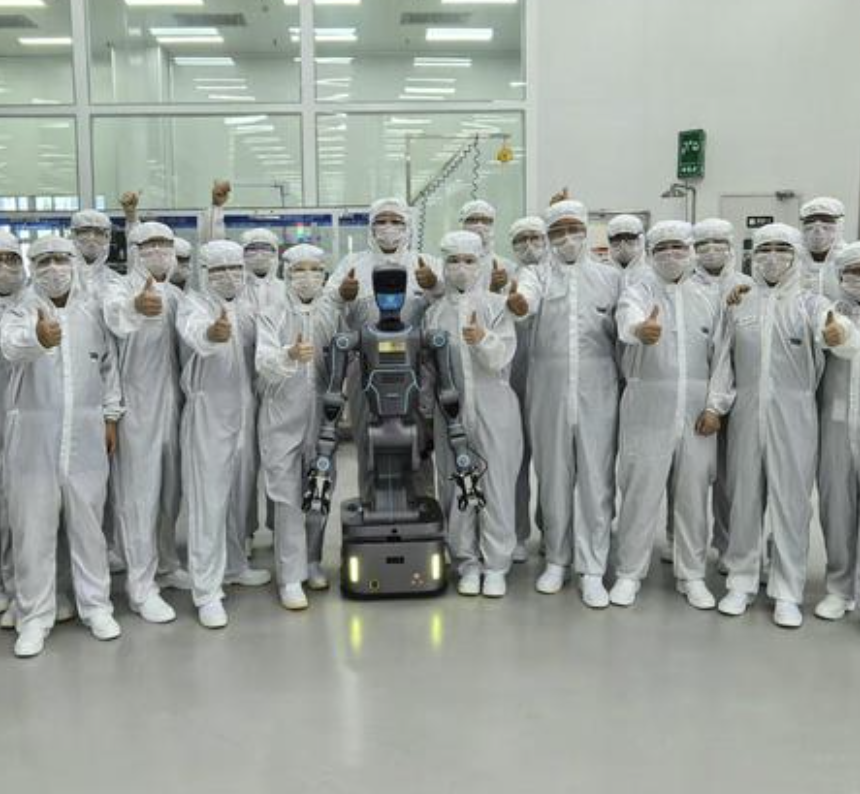
The standard timeline for deploying an industrial robot in a complex manufacturing environment has long been three to six months. Custom programming, hardware modifications, fixture design, and iterative testing consume time and capital before a single unit enters production. Quic Robot's deployment at L'Oréal's Suzhou facility; completed in 30 days, is a direct challenge to that assumption.
The technical foundation is Quic's EVO-1 model, a lightweight Vision-Language-Action (VLA) system with 0.8 billion parameters. The model is end-to-end: it takes multimodal inputs; visual, linguistic, sensor data and generates continuous action sequences directly, without the separate perception, planning, and control modules that characterize traditional industrial automation. This architecture eliminates the need for custom programming for each new task or product variant.
The L'Oréal Suzhou facility is not a simple test environment. As a global strategic production base for L'Oréal's supply chain, the factory handles a wide range of cosmetic product types with varying material forms, precise handling requirements, and dynamic production conditions. The facility's responsible manager noted that Quic's delivery capability and scene-specific technical depth were the deciding factors in the partnership.
In practice, the deployment covered dynamic restocking, precision picking, flexible sorting, and mixed multi-SKU finished product handling, tasks that traditional fixed-program automation systems struggle to accommodate. Quic's system required only small-sample data collection from the actual production environment for incremental model adaptation, bypassing the extensive scene modeling and hardware modification cycles that conventional approaches demand.
The implications extend beyond a single deployment. The 30-day timeline is a commercial argument as much as a technical one. For manufacturers evaluating automation investments, the difference between a 30-day and a 180-day deployment cycle changes the return-on-investment calculation fundamentally. It also reduces the risk premium associated with deploying robots in environments where product lines change frequently.
Quic Robot's broader positioning is in logistics warehousing and general industrial manufacturing, using wheeled dual-arm humanoid robots as its primary platform. The EVO-1 model's 0.8B parameter count is a deliberate design choice: lightweight enough to run on standard edge compute hardware without specialized accelerators, reducing the hardware cost barrier for deployment at scale.
The L'Oréal partnership is described as the beginning of a deeper strategic collaboration, with plans to extend the lightweight VLA solution to additional production and warehousing scenarios across L'Oréal's operations.
Primary Sources:
1. Sina Finance — Quic Robot 30-Day Deployment on L'Oréal Production Line (June 18, 2026)
2. Quic Robot Official Press Release (June 18, 2026)
Disclaimer: All editorial content is independently written by RobotAIGeek based on publicly available Chinese and English-language sources. Quoted material is attributed to its original publisher and claims have not been independently verified by RobotAIGeek.