Qualcomm’s 700 TOPS Dragonwing IQ10 Robotics Platform Debuts with Spectacular On-Stage Failure
Qualcomm’s Computex 2026 keynote in Taipei featured the launch of the Dragonwing IQ10, a 700 TOPS robotics reference design positioned as a production-ready brain for humanoid robots. The presentation became one of the most discussed tech demos of the year when NEURA Robotics’ 4NE-1 humanoid, powered by the chip, collapsed on stage seconds after delivering a demonstration payload. Qualcomm says the robot performed its designed “safe-collapse” sequence after a communication glitch.
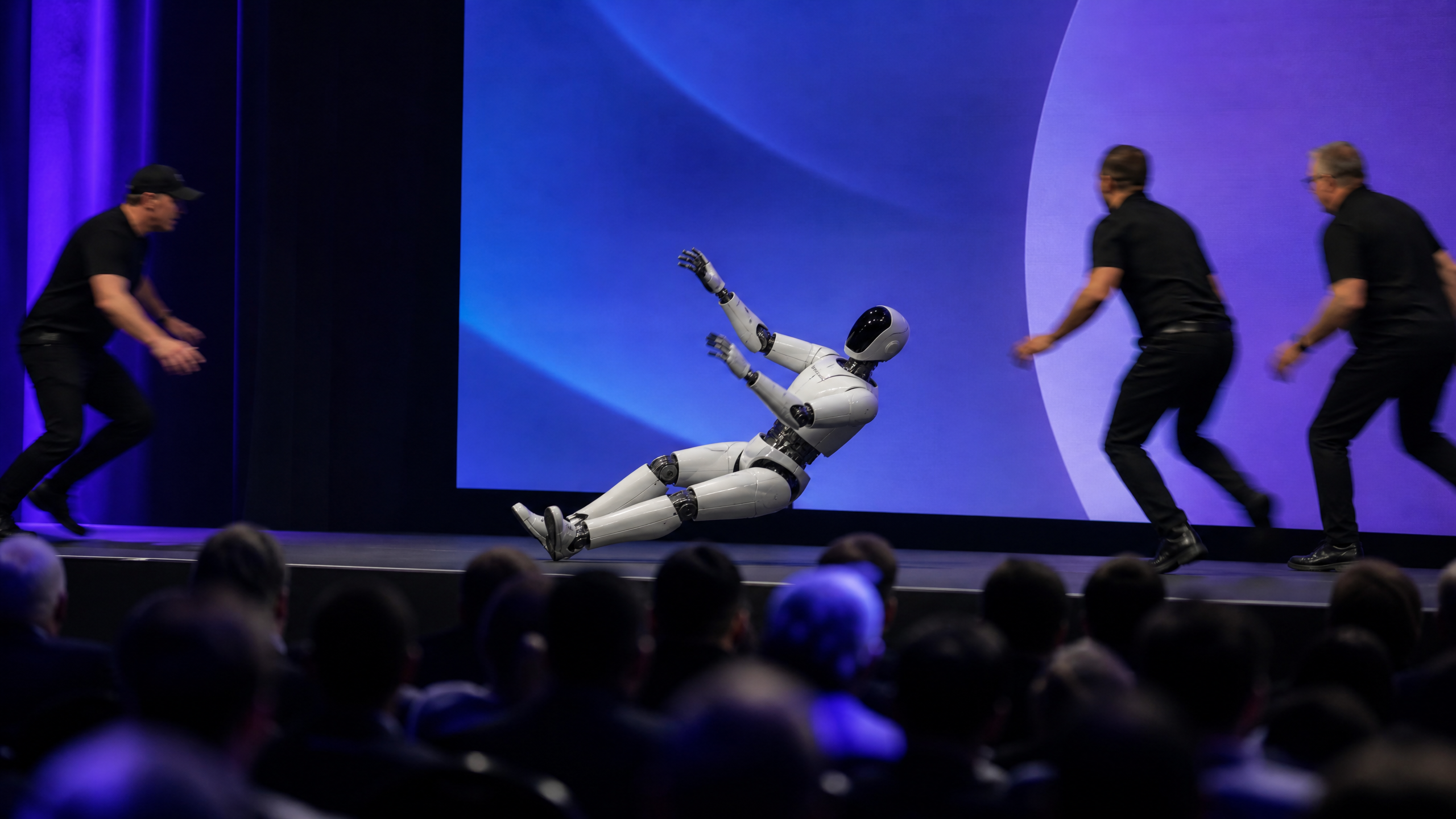
Technology demonstrations carry inherent risk, but few have generated as much attention as the moment during Qualcomm’s Computex 2026 keynote in Taipei when a humanoid robot powered by the company’s new Dragonwing IQ10 chip collapsed spectacularly on stage. The incident, which occurred on July 31, 2026, simultaneously highlighted both the ambition of Qualcomm’s push into robotics computing and the significant engineering challenges that remain before humanoid robots can operate reliably in uncontrolled environments.
The Dragonwing IQ10 represents Qualcomm’s most powerful robotics-specific computing platform, delivering 700 TOPS (trillion operations per second) of AI processing capability. Positioned as a production-ready reference design for humanoid robot manufacturers, the platform is intended to provide the computational backbone for perception, planning, and motor control in next-generation robots.
The Demonstration
During the Computex keynote, NEURA Robotics’ 4NE-1 humanoid robot was tasked with walking on stage carrying a platter with a Dragonwing IQ10 reference design board. The robot’s movement was notably slow and deliberate, walking with what observers described as a cautious shuffling gait. After reaching the presenter, the robot successfully delivered the platter, and the Qualcomm executive displayed the chip to the audience.
As applause subsided and the presenter turned to continue his script, the 4NE-1 suddenly and noisily collapsed backward. After resting momentarily in what observers described as a “terminal backbend,” one robot hand raised briefly in what appeared to be a futile gesture before the system went fully inert. The glass tray that had carried the demonstration hardware did not shatter.
Stage crew, dressed in black and appearing well-prepared for the contingency, quickly covered the fallen robot with purple silk cloths before carrying it off stage. The speed and coordination of the response led many observers to comment that the possibility of failure had been anticipated.
Qualcomm’s Response
A Qualcomm spokesperson issued the following statement: “Live demos involve risk. At Computex in Taipei, a brief communication glitch triggered a fault in the prototype humanoid and initiated a controlled shutdown. The robot performed its designed ‘safe-collapse’ sequence, lowering itself to its knees to protect the environment around it. The safety systems worked as intended. The incident also provided valuable real-world data that is helping to further strengthen system reliability and accelerate development of safer, more resilient robotics.”
The statement frames the collapse as a safety feature rather than a failure, noting that the robot executed a controlled descent rather than falling uncontrolled. This interpretation aligns with safety engineering principles in robotics, where systems are designed to fail gracefully rather than catastrophically.
The Dragonwing IQ10 Platform
Beyond the viral moment, the Dragonwing IQ10 represents a significant entry in the emerging market for robotics-specific computing hardware. The platform’s specifications position it as one of the most powerful edge computing solutions designed specifically for humanoid robots.
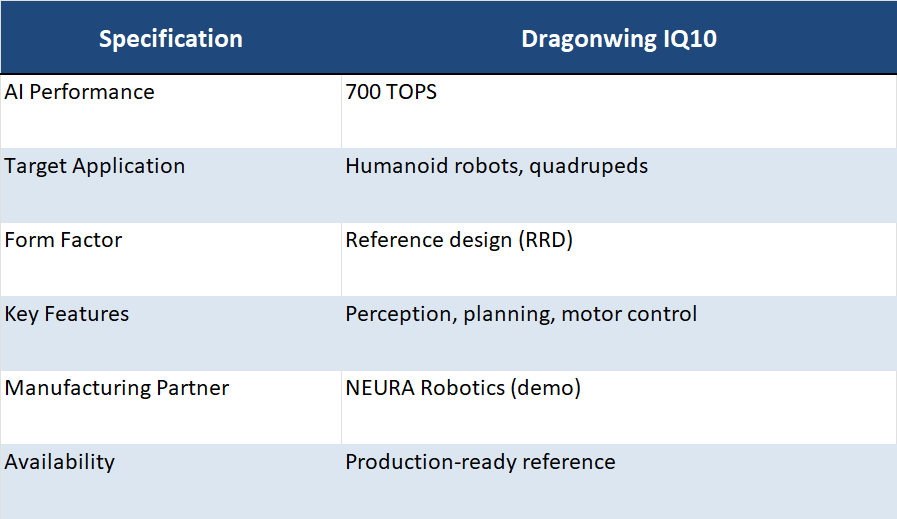
The 700 TOPS figure places the Dragonwing IQ10 in competition with NVIDIA’s Jetson Thor platform (targeting 800 TOPS for humanoid robots) and various custom silicon approaches being developed by companies like Tesla for its Optimus program.
NEURA Robotics and the 4NE-1
NEURA Robotics, headquartered in Metzingen, Germany, develops cognitive robots designed to work alongside humans. The 4NE-1 is the company’s humanoid platform, designed to leverage advanced AI processing for autonomous operation. The company has positioned itself as a hardware partner for chip manufacturers seeking to demonstrate robotics capabilities.
The incident highlights a broader challenge in the humanoid robotics industry: the gap between controlled laboratory demonstrations and reliable real-world operation. Even with 700 TOPS of computing power, the integration of perception, balance control, and motor coordination in a bipedal robot remains an unsolved engineering challenge under real-world conditions.
Competitive Context in Robotics Computing
The robotics computing market is attracting major semiconductor companies as humanoid robots transition from research to commercial deployment.
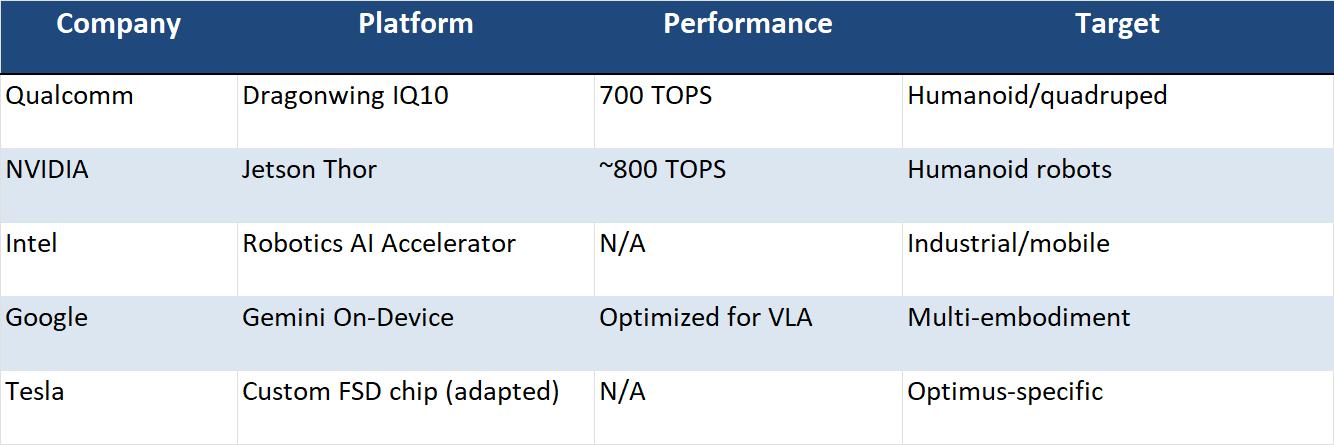
The competition to provide the “brain” for humanoid robots mirrors the smartphone chip wars of the previous decade, where Qualcomm’s Snapdragon platform competed against Apple’s custom silicon and MediaTek’s offerings. In robotics, the stakes may be even higher, as the platform that achieves widespread adoption could establish a dominant position in a market projected to reach tens of billions of dollars.
Industry Implications
The Computex incident, while embarrassing for both Qualcomm and NEURA Robotics, provides a useful reality check for an industry prone to optimistic demonstrations. The fact that a 700 TOPS computing platform could not prevent a communication glitch from disabling the robot underscores that raw computing power alone does not solve the reliability challenges of bipedal locomotion.
The event also demonstrates the importance of safety systems in humanoid robots. If the “safe-collapse” sequence worked as Qualcomm describes, it suggests that the industry is taking seriously the need for graceful failure modes in robots that operate near humans. A robot that collapses in a controlled manner is significantly safer than one that falls unpredictably.
For potential customers evaluating humanoid robot platforms, the incident reinforces that live demonstrations remain the most honest test of system maturity. Carefully edited videos and controlled laboratory environments can obscure reliability issues that become immediately apparent in real-world conditions.
Disclaimer: This article is for informational purposes only and does not constitute investment or professional advice. Readers should conduct their own research and consult qualified professionals before making decisions based on this content.