Procore Acquires DroneDeploy for US$845 Million to Integrate Visual AI in Construction
Construction management software giant Procore Technologies (NYSE: PCOR) has agreed to acquire reality capture and robotics platform DroneDeploy for US$845 million in cash. The acquisition integrates DroneDeploy's 20 trillion square feet of visual data across 3 million jobsites in 180 countries with Procore's project management platform serving over 400 million photos and 126 million drawings. Goldman Sachs advised Procore; Citi advised DroneDeploy. The deal is expected to close later in 2026.
A Landmark Consolidation in Construction Technology
In one of the largest construction technology acquisitions of the year, Procore Technologies (NYSE: PCOR) announced on July 29, 2026, that it has entered into a definitive agreement to acquire DroneDeploy for US$845 million in an all-cash transaction. The definitive agreement was signed on July 27 and the deal is expected to close later in 2026, subject to customary regulatory approvals.
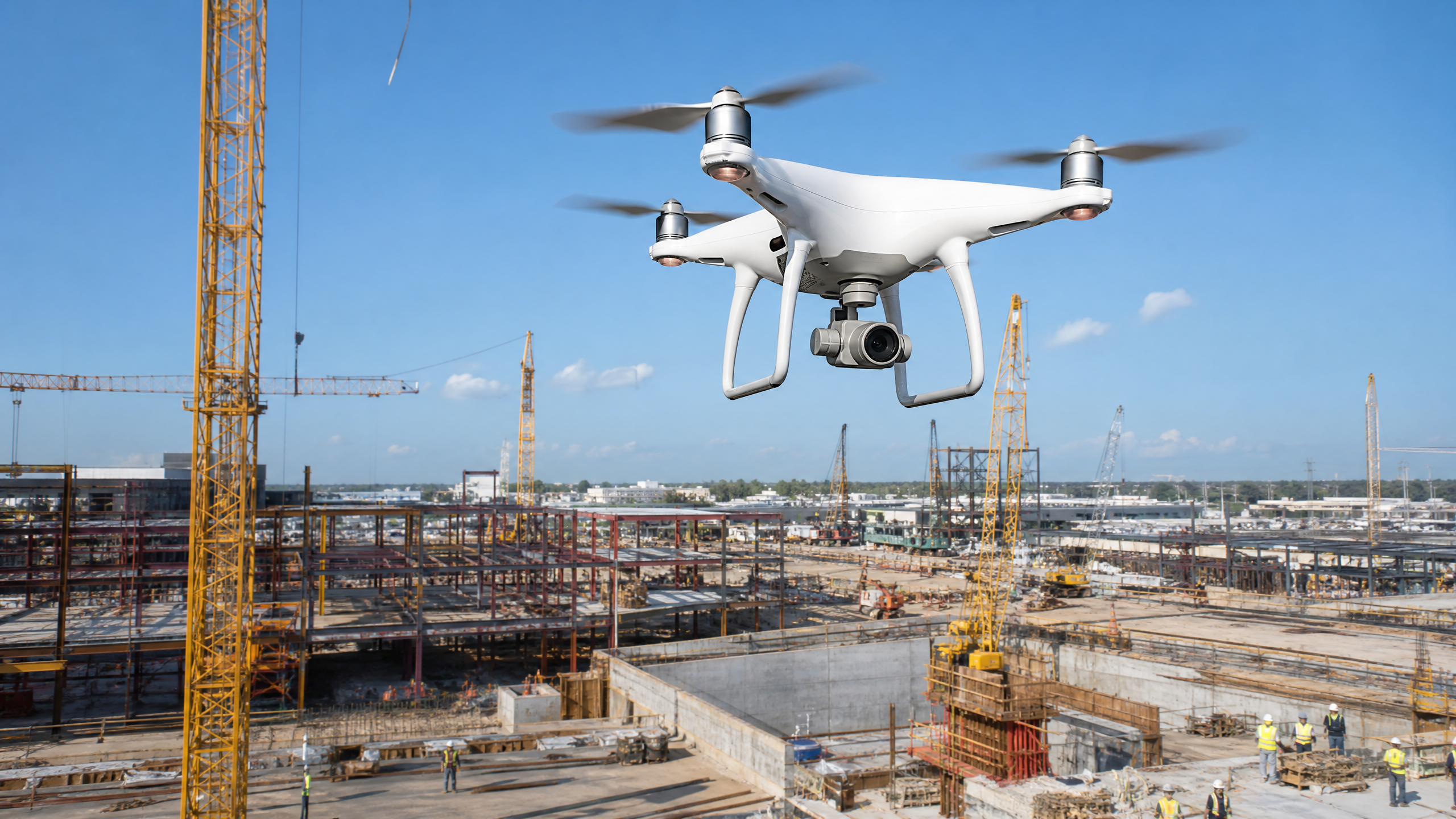
DroneDeploy is a leader in reality capture and visual AI, providing a platform that processes data from drones, ground robots (including Boston Dynamics' Spot), and 360-degree cameras to create highly accurate digital twins of construction sites. The acquisition represents a strategic move by Procore to embed physical AI and automated data collection directly into its ubiquitous construction management software, transforming it from a project documentation tool into an intelligent, spatially-aware platform.
Goldman Sachs is advising Procore on the transaction, while Citi is serving as financial advisor to DroneDeploy. The involvement of bulge-bracket investment banks on both sides underscores the strategic significance of the deal for the broader construction technology sector.
The Scale of the Combined Data Platform
The combination of the two platforms creates an unprecedented repository of construction data that no competitor currently matches. DroneDeploy brings visual data covering over 20 trillion square feet of job sites across 180 countries, utilized across more than 3 million individual projects. This data includes high-resolution orthomosaic maps, 3D point clouds, thermal imagery, elevation models, and progress-tracking time series that document how sites evolve over weeks and months.
Procore, the incumbent leader in construction management software, currently houses over 400 million site photos, 126 million architectural drawings, and 10 million Requests for Information within its platform. By merging DroneDeploy's automated, high-fidelity visual capture with Procore's project management workflows, the combined entity aims to eliminate the persistent disconnect between physical site conditions and digital project schedules that plagues the construction industry.
Procore CEO Ajei Gopal and DroneDeploy CEO Mike Winn emphasized that the integration will allow project managers to instantly verify as-built conditions against design models, automatically track construction progress against the baseline schedule, and identify potential rework or safety hazards before they impact the critical path or cause injuries. This capability, often called 'automated progress monitoring,' has been a holy grail for construction technology but has required separate, poorly integrated tools until now.
The Shift to Automated Reality Capture
Historically, documenting a construction site required project engineers to physically walk the site with clipboards, tape measures, and cameras, a time-consuming, error-prone, and often dangerous process that consumed significant labor hours on every project. DroneDeploy revolutionized this workflow by automating the flight paths of commercial drones and the navigation routes of ground robots to capture comprehensive site data autonomously, on a recurring schedule, without requiring specialized pilot skills or dedicated personnel.
The acquisition signals that automated reality capture is no longer viewed as a specialized add-on tool for large infrastructure megaprojects, but rather as a core, non-negotiable feature of enterprise construction management across all project types and sizes. As labor shortages continue to plague the construction industry globally, with the US alone facing a shortfall of hundreds of thousands of skilled workers, the ability to automate data collection and analysis is becoming a critical competitive advantage for general contractors, owners, and developers.
The timing is also significant from a regulatory perspective. As construction projects grow in complexity and regulatory requirements around documentation, safety compliance, and environmental monitoring intensify, the demand for automated, auditable, timestamped site records is increasing. DroneDeploy's platform provides a geospatially accurate record of site conditions that can serve as evidence in dispute resolution, insurance claims, regulatory compliance audits, and legal proceedings.
Competitor Comparison: Construction Reality Capture

The acquisition significantly alters the competitive landscape in construction technology, as detailed in the comparison table. Procore now possesses an integrated reality capture engine that rivals the capabilities of major incumbents like Autodesk and Trimble, both of which rely heavily on partner ecosystems or proprietary hardware for site data collection rather than owning the full software stack from capture through analysis to project management.
The move also puts significant competitive pressure on independent reality capture specialists, such as OpenSpace, which focuses on 360-camera documentation using hardhat-mounted cameras carried by workers during their normal site walks. By bringing DroneDeploy in-house, Procore can offer a unified commercial package that bundles project management, financial controls, quality management, and reality capture under a single license, potentially squeezing out standalone software providers that require separate procurement, integration, and training efforts.
For Autodesk and Trimble, the acquisition may accelerate their own M&A strategies in the reality capture and construction AI space, as the competitive pressure to offer integrated visual AI capabilities intensifies across the construction software market. The era of best-of-breed, loosely integrated construction tools may be giving way to consolidated platform plays.
Market Impact and Strategic Outlook
For construction firms, this consolidation promises streamlined workflows, reduced integration complexity, and a single vendor relationship for critical site intelligence. However, it also raises legitimate questions about data lock-in and vendor dependency. As Procore deepens its ecosystem, contractors will need to evaluate whether the benefits of a single, integrated platform outweigh the flexibility of choosing best-in-class independent tools for specific tasks.
The US$845 million valuation also sets a benchmark for the construction robotics and AI sector, signaling to investors and founders that construction technology companies with significant data moats and recurring revenue can command premium valuations even in a challenging M&A environment. This may encourage further investment in adjacent areas such as autonomous heavy equipment, robotic rebar tying, AI-powered scheduling optimization, and automated quality inspection.
For the robotics industry more broadly, the deal validates the thesis that the value in construction automation lies not in the hardware (the drones and ground robots are increasingly commoditized) but in the software platform that processes, analyzes, and integrates the captured data into actionable workflows. DroneDeploy's US$845 million valuation is fundamentally a valuation of its software, its 20-trillion-square-foot data moat, and its customer relationships across 180 countries, not of the drones themselves.
Integration Roadmap and Customer Impact
The integration of DroneDeploy's capabilities into Procore's platform is expected to unfold over the next 12 to 18 months following the transaction's close. In the near term, DroneDeploy will continue to operate as a standalone product available to its existing customer base, ensuring continuity for the thousands of construction firms that rely on its reality capture workflows daily. Over time, deeper integrations will embed DroneDeploy's visual AI directly into Procore's project management interface, allowing project managers to access site imagery, progress analytics, and deviation alerts without leaving their primary workflow tool.
For existing DroneDeploy customers who do not use Procore, the acquisition raises legitimate questions about long-term platform independence and pricing. Historically, acquisitions of this nature have eventually led to preferential integration with the parent platform, potentially disadvantaging customers who use competing project management systems. DroneDeploy's management has stated that the platform will remain open and accessible to all customers regardless of their project management software choice, though the depth of integration will naturally be greatest within the Procore ecosystem.
The combined entity will serve an addressable market that includes virtually every commercial construction project globally, from residential developments and commercial office buildings to massive infrastructure projects like highways, bridges, airports, and energy facilities. The construction industry represents approximately US$13 trillion in annual global spending, yet remains one of the least digitized sectors of the global economy, suggesting enormous headroom for technology adoption.
The construction industry's digital transformation is entering a new phase where passive documentation gives way to active intelligence. The Procore-DroneDeploy combination represents the first major platform consolidation that unifies project management workflows with autonomous reality capture at enterprise scale, setting the template for how construction technology will evolve over the coming decade.
Disclaimer: This article is for informational purposes only and does not constitute financial, investment, or technical advice. Readers should conduct their own due diligence before making procurement or investment decisions based on this information.