Galbot Opens Pre-Orders for Self-Learning ET1 Humanoid
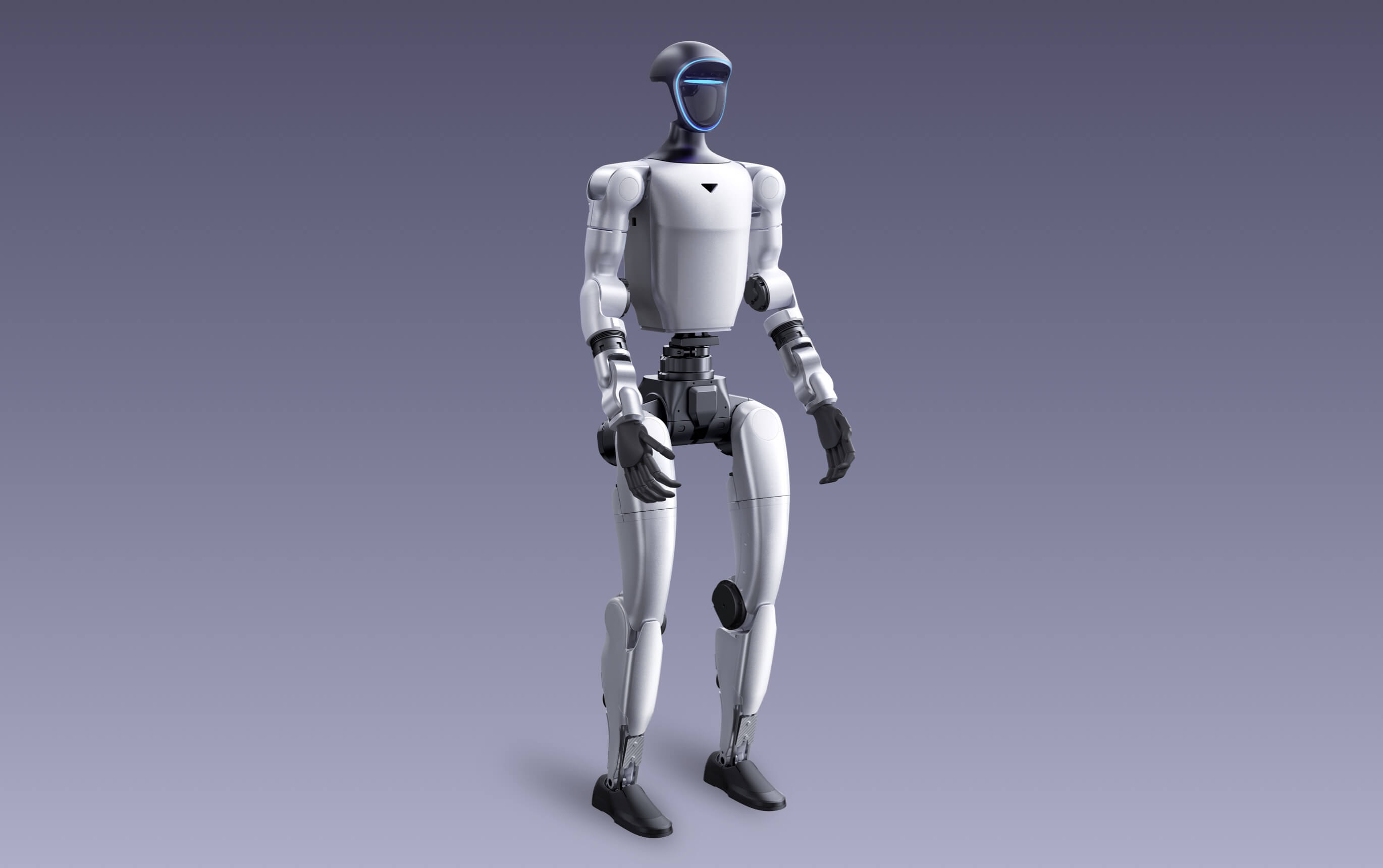
Galbot opened pre-orders for its ET1 humanoid, a bipedal robot the Beijing startup calls the first self-learning, native agentic AI system, two weeks after its WRC 2026 tennis debut.

Galbot opened pre-orders on Thursday for the ET1, the bipedal humanoid robot it has nicknamed "Galaxy Star Kid," marking the transition of a machine that debuted as a tennis-playing stage demonstration two weeks earlier into a commercial product buyers can actually order. The Beijing-based company, formally known as Galaxy General Robotics, calls the ET1 the world's first "native agentic" humanoid, a robot whose control software is built from the ground up to learn new physical tasks in real time rather than execute routines a human programmed in advance.
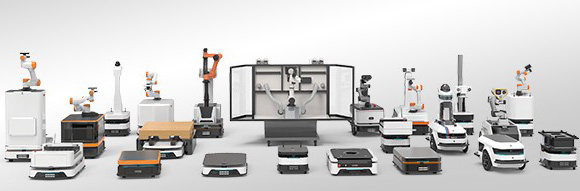
Galbot is a Beijing-headquartered embodied artificial intelligence (AI) startup that has built its business on a family of robots, including the wheeled G1 manipulation platform and the industrial-payload S1, unified under a single foundation model the company calls AstraBrain. The ET1 is Galbot's first bipedal humanoid and the first product built specifically for consumer and entertainment settings rather than the warehouse and pharmacy-shelving deployments that have defined the company's commercial track record to date.
From Demo Stage to Purchase Order in Two Weeks
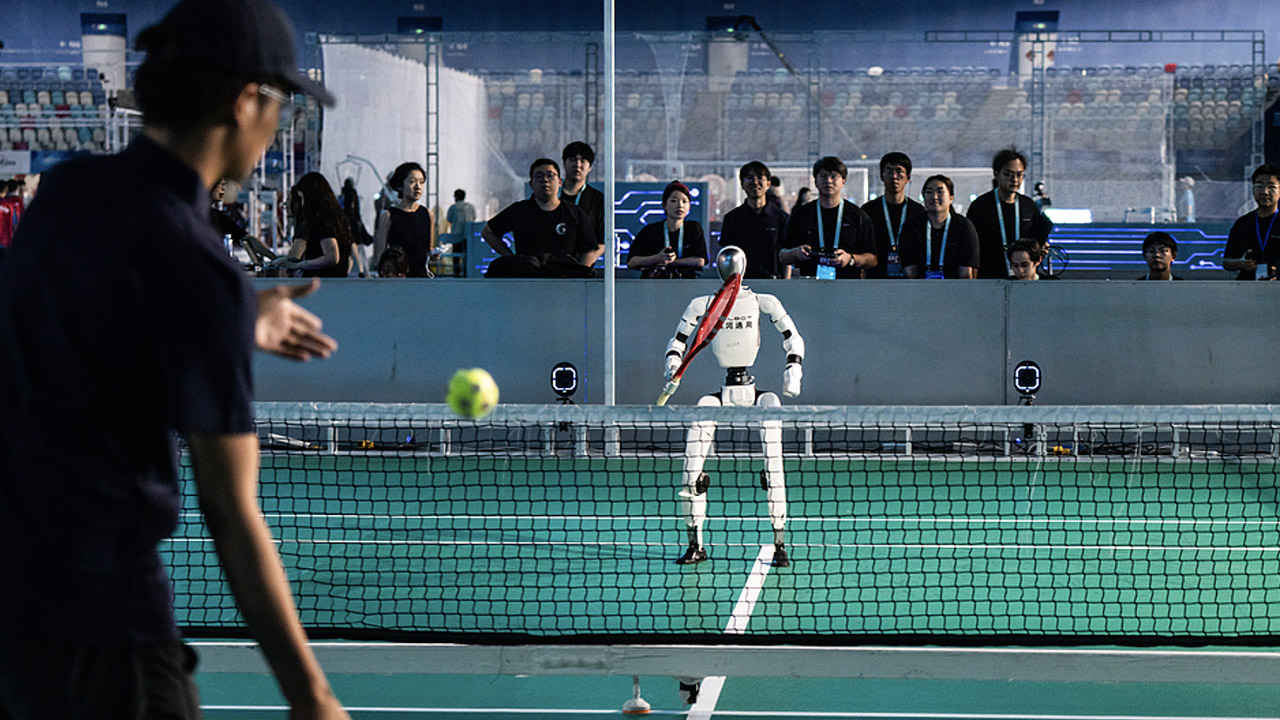
The ET1 first appeared publicly at the World Robot Conference in Beijing in August, where it played more than 100 consecutive tennis rallies against a former professional player, standing roughly 173 centimeters tall and weighing about 65 kilograms inside an aluminum-alloy frame covered in a white polymer shell. That demonstration was built to showcase reaction speed and full-body coordination rather than to sell units, and Galbot gave no indication at the time of how soon the robot would reach a purchase page.
Two weeks later, it has one. The company's own newsroom confirmed pre-orders opened this week, directing buyers to a dedicated listing rather than treating the announcement as a teaser for a future date. Galbot has not disclosed a deposit amount, a delivery timeline, or a final consumer price, details that would normally anchor a product launch story but that the company is withholding even as it opens the order book, a sequencing choice that suggests Galbot is testing demand before committing to manufacturing volumes rather than the reverse.
What "Native Agentic" Actually Means Inside the Hardware
The technical claim behind the ET1 is that it does not need a human to demonstrate a task before performing it. Galbot's AstraBrain architecture combines what the company calls a World-Action Model, a system trained on more than 100,000 hours of human motion data blending motion capture and video, with a real-time perception and planning layer the company brands AstraBrain-Agent. In practice, that means the robot can watch a movement it has never seen, extract the underlying motion trajectory, and reproduce a version of it without a programmer writing new code or capturing new training data for that specific action.
Galbot's technical leadership has framed this as the industry's answer to a question every humanoid robotics company is currently trying to solve differently: what does an embodied-AI equivalent of the "ChatGPT moment" look like, a point where a robot generalizes to new tasks the way a language model generalizes to new prompts rather than requiring bespoke training for each one. The company's pitch is that a single foundation model should be able to drive a bipedal humanoid, a wheeled manipulation arm, and a heavy-payload industrial platform without hardware-specific retraining, a claim that, if it holds up under independent testing, would separate Galbot's approach from humanoid rivals that still tune a distinct model for each robot body they sell.
A Company Already Running Robots at Scale Before This Launch
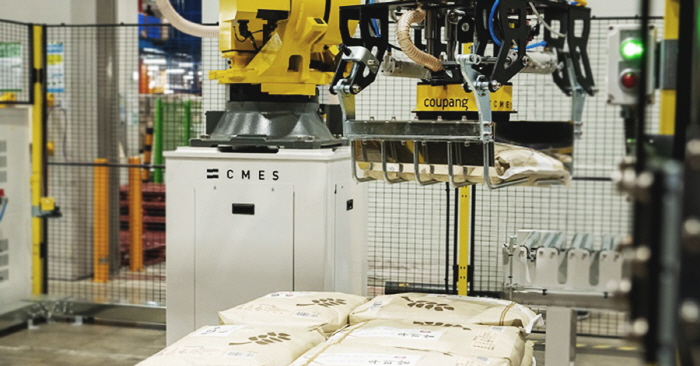
The ET1 pre-order is not Galbot's first commercial test. The company's S1 platform, a dual-arm industrial robot with a 50-kilogram payload rating built on the same AstraBrain foundation model, has been running in roughly 100 smart-pharmacy warehouses across Chinese cities and operating around the clock on at least one production line for battery maker CATL. That existing deployment base matters for how buyers should read the ET1 announcement: Galbot is not asking customers to trust an unproven foundation model attached to a new humanoid form factor, it is asking them to trust a foundation model that already runs continuous industrial shifts, now packaged into a smaller, consumer-facing body.
The tennis demonstration that introduced the ET1 to the public was, in that light, closer to a capability proof than a product reveal, a way of showing full-body reaction speed before the company had to answer harder commercial questions about pricing, manufacturing capacity, and after-sales support for a machine operating in homes and public venues rather than fenced-off industrial floors.
A Retail Push That Predates the Pre-Order by Two Days
The ET1 pre-order is the second Galbot commercialization move inside a single week. On Monday, the company opened its first three retail outlets outside mainland China, wheeled-robot-staffed convenience stores in Hong Kong's Hung Hom waterfront, Wan Chai waterfront, and Kai Tak Sports Park, where customers place an order on a touchscreen and a robot retrieves and hands over the item after payment by card or mobile wallet. The stores mark Galbot's first commercial footprint beyond mainland China and its first consumer-facing retail format, distinct from the industrial pharmacy and manufacturing deployments that built the company's revenue base.
Read together, the Hong Kong stores and the ET1 pre-order describe a company moving on two commercialization fronts at once: proving a wheeled-robot retail format can operate unattended in a public setting, while opening a purchase channel for a bipedal humanoid built for entertainment and companionship settings the wheeled platform cannot serve. Both moves lean on the same underlying AstraBrain foundation model, and both are early enough that Galbot has not yet published operating data, whether the Hong Kong stores are running profitably or how many ET1 pre-orders the company has logged, that would let outside observers judge whether either push is working.
The Competitive Pressure Behind an Unpriced Launch
Galbot is opening pre-orders into a Chinese humanoid market where rivals are already competing hard on both capability and price. Competing humanoid makers have recently turned to rental and leasing models specifically because outright sale prices for capable humanoids have remained a barrier for most commercial buyers, and AGIBOT's push to put production-line robots directly into competitive showcases reflects the same pressure to prove commercial readiness rather than lab performance alone. Galbot's decision to open an unpriced pre-order queue, rather than waiting until manufacturing and pricing were finalized, reads as an attempt to claim mindshare and gauge demand before committing capital to a production run, a lower-risk move than a fully priced launch but one that leaves genuine buyers unable to make a purchase decision today.
The unanswered questions here are the ones that will determine whether the ET1 becomes a real commercial product or another widely covered demonstration. Galbot has not said how many units it can build in a given quarter, what the final price will land at once a deposit converts to a firm order, or which markets outside China will see the robot first. Buyers evaluating a Star Kid pre-order, and rivals watching to see whether Galbot can convert a viral tennis clip into shipped hardware, will be looking at the same signal over the coming weeks: whether Galbot follows this pre-order announcement with a disclosed price and delivery date, or whether the queue stays open indefinitely while the company works through the harder manufacturing problem a bipedal humanoid poses compared with the wheeled and stationary robots it has shipped at scale until now.
Betting on Software Where Rivals Bet on Hardware
Galbot's public positioning draws a deliberate contrast with the humanoid maker that has dominated headlines in China this year. Unitree, whose Shanghai listing and IPO debut coincided almost exactly with the ET1's own public unveiling, has built its reputation on motion control and mechanical engineering, robots that move with unusual fluidity because of how their joints and actuators are tuned. Galbot's pitch is that mechanical polish matters less over time than the software layer deciding what a robot does next, and the company has staked its commercial identity on AstraBrain being able to drive multiple robot bodies, a bipedal humanoid, a wheeled arm, and an industrial platform, off one shared model rather than tuning a separate control system for each.
That is a harder claim to verify than a specification sheet, since it depends on how well AstraBrain actually generalizes once thousands of ET1 units are running outside controlled demonstrations rather than a WRC stage or a curated video. Galbot's existing S1 deployments in pharmacy warehouses and on a CATL production line give the company real operating data to point to, but a dual-arm industrial robot repeating scripted-adjacent tasks in a warehouse is a different test than a bipedal humanoid navigating unpredictable homes, retail floors, and entertainment venues where the ET1 is meant to work. The pre-order queue Galbot opened this week is, in effect, the company inviting the market to help fund that harder test.
This analysis synthesizes Galbot's own product and newsroom disclosures, World Robot Conference coverage, and specialist robotics-industry reporting as of September 3, 2026.
This article is provided for general information purposes only and does not constitute investment, procurement, legal, or engineering advice.