AGIBOT Tops World Humanoid Robot Games With Production Robots
AGIBOT topped the medal table at the 2nd World Humanoid Robot Games in Beijing, winning 46 medals including 18 golds with its shipping OmniHand, X2, A3, and G2 product lines rather than one-off competition prototypes, a signal procurement teams can use when shortlisting Chinese humanoid vendors.

AGIBOT Tops the Medal Table With Robots Already on Factory Floors
AGIBOT swept the 2nd World Humanoid Robot Games in Beijing this week, finishing with 18 gold, 16 silver, and 12 bronze medals, a total of 46 across athletics, martial arts, dance, hotel services, library operations, emergency response, and industrial-application categories, enough to rank first in both gold-medal count and overall standings. The Shanghai-based company, formally AgiBot Inc. and known in China as Zhiyuan Robotics, was founded in 2023 by Peng Zhihui, a former Huawei engineer whose home-built robotics projects made him a minor celebrity before he left to start the company, and has grown into one of the more closely watched humanoid developers on the mainland, reaching Series B funding with roughly 184 employees and a product line spanning industrial, commercial, service, and research humanoids.
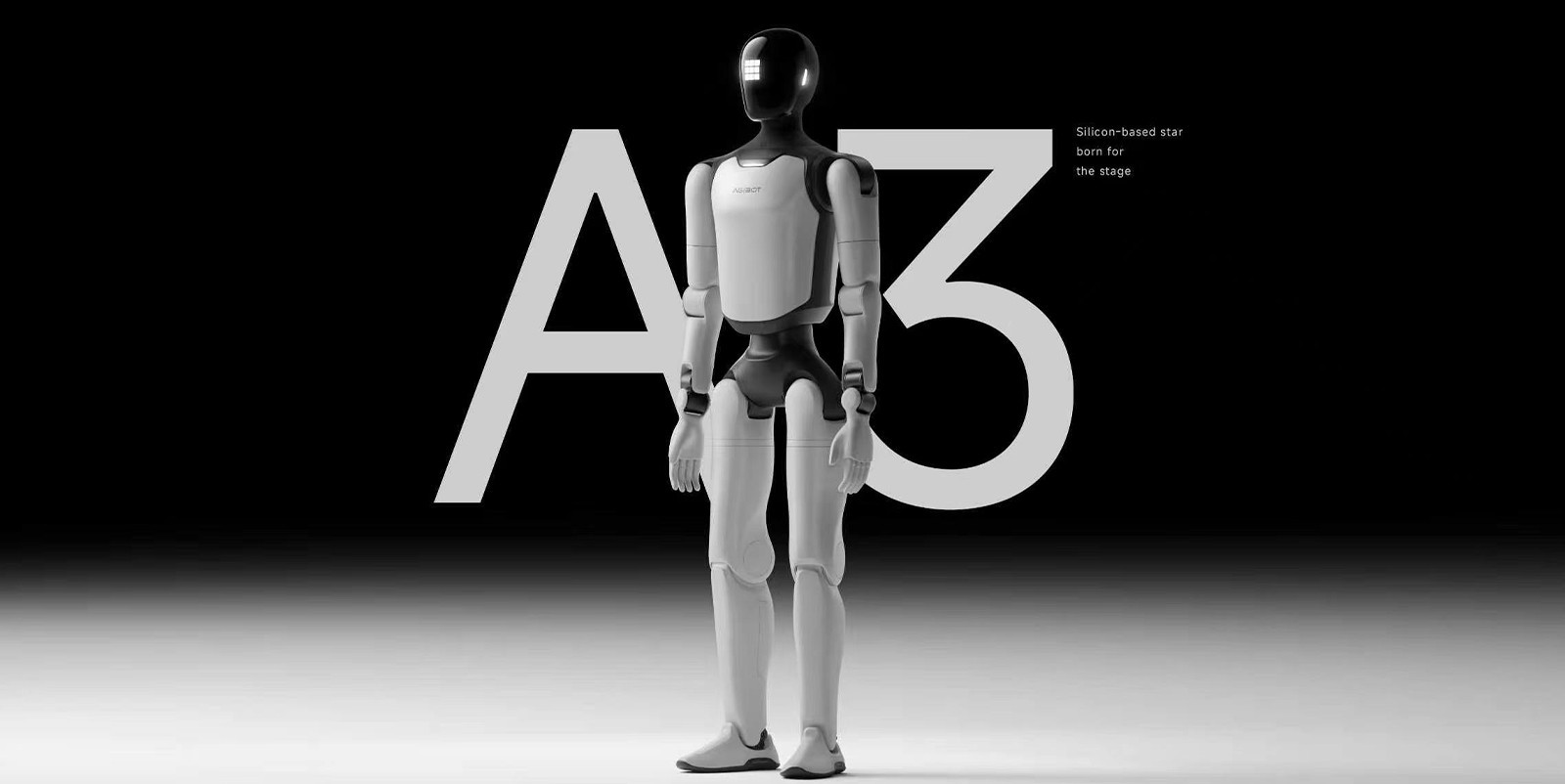
What separates AGIBOT's result from a typical trade-show demo reel is that the robots competing were not one-off prototypes tuned for a stage. The four models that carried the medal count, OmniHand, X2, A3, and G2, are the company's existing commercial and near-commercial product lines, the same units AGIBOT sells or pilots with industrial and service customers rather than machines built specifically to win a competition. That distinction matters more than the medal count itself for anyone evaluating humanoid vendors: a robot that performs well because engineers spent months hand-tuning it for a fixed set of tasks tells a buyer very little about how it will behave on a warehouse floor next month, while a robot that performs well using its standard, shipping configuration is a much more useful signal of deployable capability.
Four Product Lines, Four Different Capability Claims
OmniHand, AGIBOT's dexterous-manipulation hand, won seven of the eight dexterous-hand events at the Games, a result that speaks directly to the hardest unsolved problem in humanoid robotics: fine manipulation. Most humanoid platforms on the market today can walk, balance, and perform coarse pick-and-place tasks reasonably well, but dexterous manipulation, the kind of fine motor control needed to handle irregular objects, operate tools, or manage delicate assembly work, remains the capability gap that separates a robot that can work alongside humans from one that can only replace a fixed automation cell. Sweeping seven of eight hand-specific events against competing platforms is a stronger data point than any marketing claim AGIBOT could make about manipulation performance in isolation.
X2 took gold in the 100-meter obstacle race, a locomotion and dynamic-balance test that stresses a humanoid's ability to cross uneven or cluttered terrain at speed rather than the controlled, flat-floor environments most warehouse and factory demonstrations use. A3, AGIBOT's platform built around fluid, human-like motion control, won the Tai Chi competition, a category that rewards smooth joint coordination and balance under slow, continuous movement rather than the burst-speed athleticism the obstacle race demands, and the two golds together suggest the company has built out both ends of the motion-control spectrum rather than optimizing narrowly for one. G2, positioned as AGIBOT's scenario-based deployment platform, won five golds across hotel services, library operations, emergency response, and industrial-application tasks, categories designed to simulate specific commercial environments rather than generic athletic ability.
Reading the Games as a Procurement Signal, Not a Spectacle
For a buyer evaluating humanoid vendors, competition results are only useful if they map onto categories that resemble the tasks a robot will actually perform in a facility, and the World Humanoid Robot Games' scenario-based categories, hotel services, library operations, emergency response, are deliberately structured to do that rather than reward pure athleticism. A robot winning a sprint says something about locomotion engineering but little about whether it can restock a shelf or move safely through a cluttered service corridor. AGIBOT's spread across both dynamic-locomotion events and scenario-based service tasks is a more complete signal than a single-category win would be, because it demonstrates the underlying platform holds up across different demand profiles rather than having been over-optimized for one narrow use case.
That breadth also matters because of how China's humanoid industry has scaled production over the past year. Government data released earlier this year showed tens of thousands of humanoid units produced domestically in the first half of 2026 alone, with output continuing to climb toward six figures annually, and the competitive question for buyers has shifted from whether a company can build a working humanoid prototype to which companies can build one that performs consistently at production volume. A medal table populated by shipping product lines rather than one-off show units is a rough but genuine proxy for that second, harder question, since a robot that has to perform reliably across dozens of units fielded by a real competition roster cannot rely on the kind of individual hand-tuning that a single hero unit built for a keynote demo can.
The Competitive Field Beyond AGIBOT
AGIBOT did not compete alone, and the Games drew entries from across China's humanoid sector, spanning companies building everything from general-purpose service platforms to specialized industrial arms retrofitted with bipedal mobility. What the overall medal count signals is not that AGIBOT has definitively solved humanoid robotics ahead of its domestic rivals, competition results are a narrower and more gameable metric than sustained commercial deployment data, but that the company's four-model product spread is currently performing at or near the top of a field that includes some of the best-funded and most technically ambitious humanoid developers in the world's largest robotics manufacturing base. For a procurement team building a vendor shortlist, that is a meaningfully different starting point than a company with a single flagship model and a narrower demonstrated capability range.
The categories AGIBOT did not medal in, or medaled in without winning gold, are also worth a buyer's attention, since a company's public messaging around a strong showing like this one will understandably emphasize the golds and understate the silvers and the events where it placed lower. A vendor that swept seven of eight hand-dexterity events but did not dominate every locomotion or endurance category has a specific, identifiable capability profile rather than a uniformly best-in-class one, and buyers evaluating AGIBOT against competitors should ask the company directly which of its four platforms is optimized for which commercial use case rather than assuming Games performance translates evenly across every possible deployment scenario.
What the Result Changes for Buyers Evaluating Chinese Humanoid Vendors
International procurement teams have historically treated Chinese humanoid vendors with more caution than domestic buyers, partly on capability grounds and partly on the practical difficulty of due diligence across language and regulatory barriers. A results table built on shipping product lines, competing head-to-head against domestic rivals under standardized conditions, is one of the more legible data points available to an overseas buyer who cannot easily visit a Shanghai factory floor or run an independent capability audit. It does not replace a pilot deployment or a reference-customer conversation, but it narrows the initial vendor list in a way that generic marketing claims cannot, because the categories are fixed, the competing units are the same models a customer could actually order, and the outcome was determined against other vendors rather than self-reported.
That narrowing effect matters more for AGIBOT specifically than for a larger, better-capitalized rival, because the company is still a Series B-stage business with roughly 184 employees rather than one of the mainland's heavily backed later-stage humanoid platforms. A smaller vendor asking a foreign buyer to commit to a pilot program carries more execution risk on paper, since the company has a thinner bench to absorb a bad quarter, a supply-chain disruption, or a slower-than-planned production ramp. A medal count built on the company's actual shipping hardware, rather than investor materials or a single controlled demo, is exactly the kind of independent evidence that can offset some of that perceived risk during an initial vendor screen, even though it cannot substitute for the financial and operational diligence a serious pilot commitment still requires.
The Founder Detail That Shapes How the Company Is Read at Home
AGIBOT's public profile in China is inseparable from Peng Zhihui, the company's founder, whose earlier career built a small following well before AgiBot existed. Peng left a prior post at a major Chinese technology company after gaining attention for building working robots largely on his own, a background that gives AGIBOT a founder-engineer narrative that resonates strongly with domestic media and investors and that the company has leaned into as part of its public identity. That narrative does not change what the robots can or cannot do, but it is part of the context a buyer researching the company will encounter quickly, and it helps explain why AGIBOT's Games result generated outsized domestic coverage relative to a company of its size and funding stage.
Reading Past the Headline Number
AGIBOT's next test is not another competition but whether the same four product lines maintain this performance profile once fielded at the volumes China's humanoid manufacturers are now targeting, since consistency across thousands of units in real operating environments is a materially harder bar than consistency across a fixed competition roster over a few days in Beijing. Government data released earlier this year already shows domestic humanoid output climbing toward six figures annually, which means the companies that matter twelve months from now will be the ones that can hold Games-level performance steady across mass production, not merely the ones that won gold on a single set of competition units this week.
The company's medal count is real evidence of current capability, not a guarantee of deployment-scale reliability, and buyers should treat the Games result as a strong initial signal to shortlist AGIBOT for a pilot evaluation rather than as a substitute for one. The clearest next data point to watch is not another awards ceremony but AGIBOT's own production and delivery numbers over the next two quarters, since that is the metric that will show whether a 46-medal haul built on shipping hardware translates into the kind of consistent, at-scale performance a real facility deployment actually demands.
Disclaimer: This article is for general information purposes only and does not constitute investment, legal, or procurement advice. Readers should verify details with primary sources before making business decisions.