Fraunhofer Opens Humanoid Test Lab in Lemgo
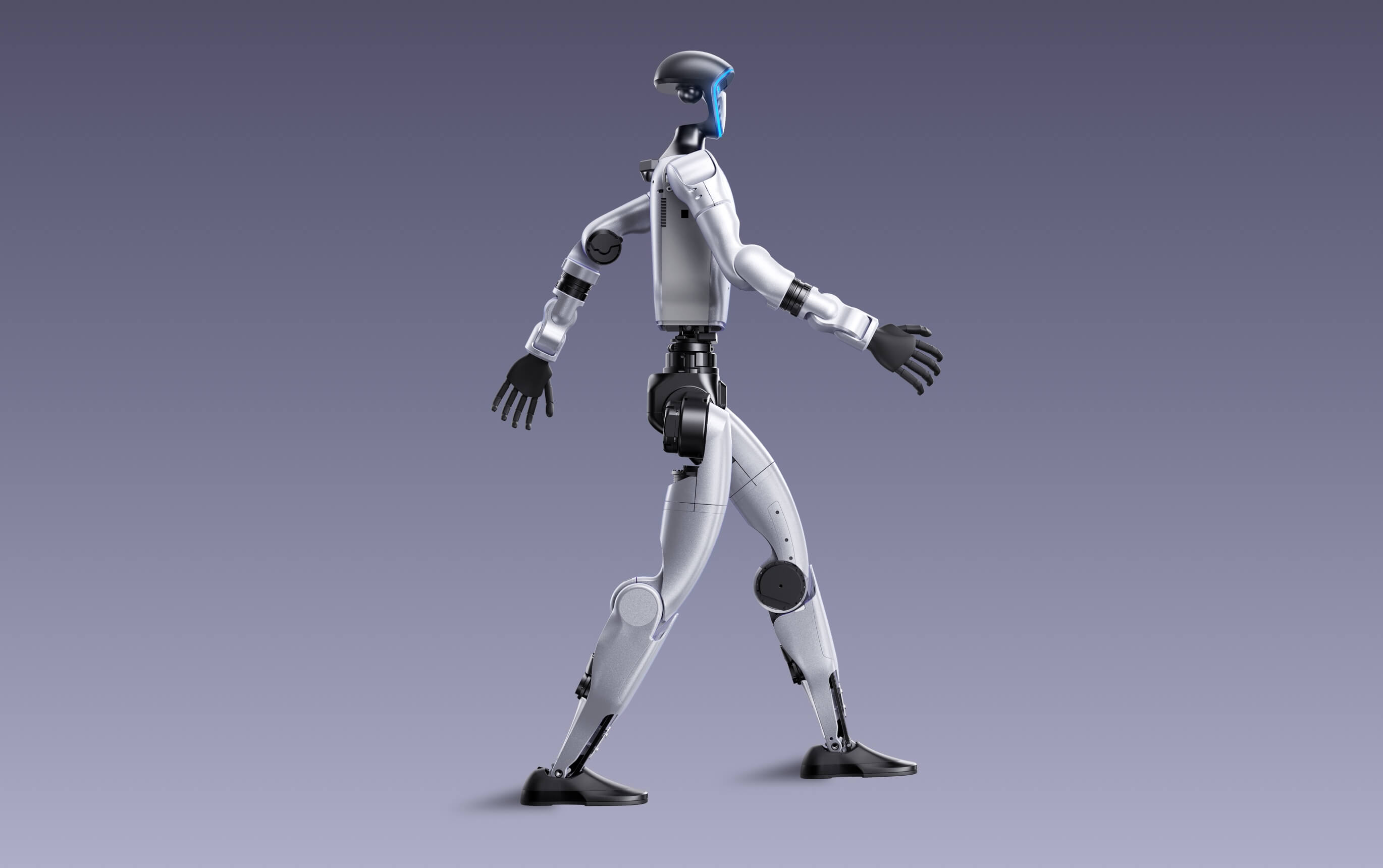
Fraunhofer IOSB opened its Humanoid Robots Experience Lab at SmartFactoryOWL in Lemgo, giving manufacturers a sold-out, test-before-invest floor for humanoid handling trials rather than another product demo.

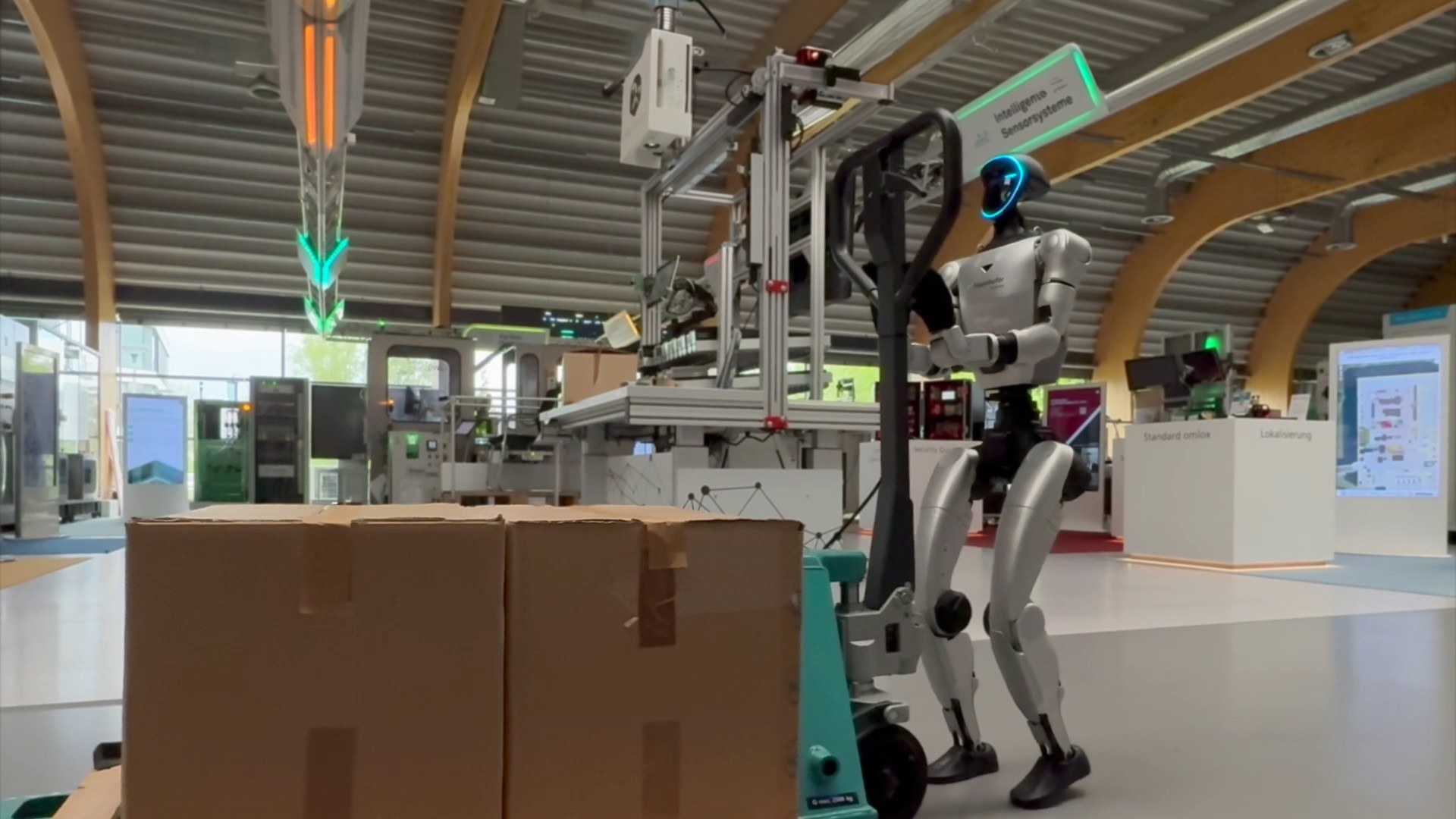
On 23 September 2026, the Fraunhofer Institute of Optronics, System Technologies and Image Exploitation (IOSB) opened its Lemgo Humanoid Robots Experience Lab at SmartFactoryOWL on Campusallee 3. The free 10:00 to 16:00 event was sold out. Factories can trial humanoid handling there before they buy.
The institute is not launching a product. Humanoid Robots Experience Lab (HREL) is a three-site test-before-invest platform for manufacturers, small and medium-sized enterprises (SMEs), trades, municipalities, emergency services, and security users. Lemgo is the industrial node. Karlsruhe covers civil security, defence, and construction. Ilmenau covers agriculture, municipal services, and critical infrastructure. Humanoid hardware and accessories sit at each site as development, integration, and demonstration platforms.
That distinction matters more than the ribbon. Most humanoid news this month has been a summit, a funding round, or a factory-capacity claim. Lemgo is a different artefact: a public research institute putting a humanoid next to a working machine, then inviting a plant engineer to ask whether the robot can assemble, disassemble, or handle parts without blowing a safety case. The event programme was built around that question. Welcome and introduction at 10:00. Three keynotes from market and science at 10:15. A panel at 11:30. Lunch at 12:00. A humanoid robotics marketplace at 13:00. A World Café on industrial use cases at 14:00. Wrap-up and networking from 15:30.
SmartFactoryOWL is ten years old in 2026, which is why Lemgo hosted the first opening. The site is a real-world factory laboratory run with Technische Hochschule Ostwestfalen-Lippe (TH OWL) and Fraunhofer IOSB-INA, the industrial automation branch of IOSB. The HREL at Lemgo is led by Prof. Dr. rer. nat. Klaus Neumann, group manager for Cognitive Automation at Fraunhofer IOSB-INA. The stated focus is object manipulation and handling in production-related environments, with assembly and disassembly named as the first tasks. Learning methods listed on the lab page include reinforcement learning, imitation learning, human-in-the-loop learning, and hybrid approaches. Training is described as running in highly realistic physical simulations, including NVIDIA Isaac Sim and MuJoCo, then transferring to real systems.
If you buy robots for a living, that stack is familiar. The unusual part is the commercial offer wrapped around it. Lemgo is not selling a branded humanoid. It is selling concept studies, workshops, feasibility analyses, and application-oriented development services to manufacturing companies, with SMEs named as the priority customer. The local page is even more blunt. Companies can register for an entry programme that moves from DISCOVER (use-case definition) to EXPLORE (joint trials on lab infrastructure) to IMPLEMENT (transfer into the company). The questions posted for visitors are the ones a plant manager actually asks: which safety aspects must be considered, what the technological limits are, which applications can already be implemented, how a humanoid would sit inside existing norms and information technology (IT) structures, how a vendor documents software and artificial intelligence (AI) model changes, and where edge cases can be tested in a protected environment.
Those questions are the story. A humanoid is easy to photograph. A change-control process for a learning model on a live line is not. Fraunhofer IOSB-INA also lists planar drive systems for matrix production, low-cost robotics for SMEs, interoperable localisation using the omlox standard, geo-fencing for mobile robots, and 5G industrial radio. That mix tells you how the institute wants the humanoid to enter a German factory: as one more node in an already instrumented cell, not as a walking mascot that replaces a cell.
The institute itself is not a startup. Fraunhofer IOSB is headquartered at Fraunhoferstrasse 1 in Karlsruhe and specialises in optronics, system technology, image exploitation, sensing, autonomy, and human-machine interaction. Institute director Prof. Dr.-Ing. habil. Jürgen Beyerer framed the lab in July as a way to make physical AI experiencable, testable, and designable in environments that are not perfectly prepared, in situations that remain ambiguous, and in teams where people still hold responsibility. The July 9, 2026 press note already named 23 September in Lemgo as the opening date. Today’s event is therefore the first public operating day of a programme that was scoped in summer, not a same-day invention.
Karlsruhe and Ilmenau are not ceremonial extras. In Karlsruhe, Dr.-Ing. Michael Voit (AI and Robotics spokesperson) and Dr.-Ing. Janko Petereit (Autonomous Robotic Systems) are the named contacts. The Karlsruhe brief covers inspection, reconnaissance, surveillance, manipulation, logistical support, infantry support, remote operation, and work in urban or construction-like settings, with hybrid teams of humans and mixed robots. In Ilmenau, Prof. Dr.-Ing. Andreas Wenzel leads Embedded Intelligent Systems at the Advanced System Technologies branch (IOSB-AST). The Ilmenau brief covers assistance, inspection, and manipulation in agriculture, municipal public services, and critical infrastructure, with interconnection to sensor, infrastructure, and control-centre systems plus simulation-based development and sim-to-real transfer. All three sites say they keep a running watch on new vendors and platforms so they can judge which systems are usable for research, transfer, and industry.
Compare that with the other humanoid rooms open this week and the buyer difference is obvious. Humanoids Summit Seoul, running 22 to 23 September at COEX, is a commercial and policy conference with live demos from ROBOTIS, NVIDIA, Unitree, and component vendors. It is useful for mapping a supply base. It is not a place to hang a payload, time a cycle, or write a risk assessment against a German machine-safety file. Hyundai Motor Group’s Robotics Metaplant Application Center in Savannah is a private original equipment manufacturer (OEM) training hall for Atlas on automotive parts. It is a closed production bet. Arrive AI’s investor showcase in Fishers, Indiana, also dated 23 September, is a listed logistics company showing autonomous mobile robot (AMR) and drone handoffs at Arrive Points. That is last-metre delivery infrastructure, not factory humanoids. Lemgo sits in a fourth category: a public lab that lets a third-party plant try a humanoid on its own parts without first becoming a vendor’s lighthouse customer.
The competitive set for a German buyer is still mostly not humanoid. FANUC, Yaskawa, KUKA, ABB, and Universal Robots already sell arms, cobots, and mobile manipulators that can be CE-marked, taught, and maintained against known standards. A humanoid only wins if the task needs mobility plus human-like grasping in a space that was built for people, and if the extra degrees of freedom do not destroy uptime. Fraunhofer’s own language admits that limit. The lab page says the focus is not visions but realistic possibilities, limitations, and safety issues, from brainstorming to stepwise pilots. That is a polite way of saying many requested jobs will fail the first trial.
Think of the lab as a crash-test facility for a new vehicle class. Nobody expects the first afternoon to produce a fleet order. The value is a scored run: can the robot pick a known part, place it, recover from a slip, stop safely when a person enters the cell, and leave a log that a safety officer can read. If it cannot, the plant keeps the existing arm. If it can, the next conversation is about cycle time, payload, changeover, spare parts, and who owns the skill model after the trial.
Most coverage of European humanoids still treats a sold-out opening as proof of demand. It is not. It is proof of curiosity under labour shortage. Germany’s Mittelstand has watched Chinese and Korean humanoid footage for two years and still lacks a local room where a 50-person machine shop can put a robot on a fixture without signing a seven-figure memorandum. HREL is trying to be that room. The waitlist on the IOSB-INA page, which asks for name, company, and function by email to the SmartFactoryOWL office, is the more honest demand signal than the keynote list. Follow-on information events and workshops are already promised for the coming months because today’s session could not absorb the overflow.
Procurement should treat Lemgo as a filter, not a forecast. Ask for the robot model on the floor, the payload and reach actually demonstrated, whether the task was teleoperated, imitation-learned, or autonomous, and whether the safety case used speed-and-separation monitoring, power-and-force limiting, or a fenced cell. Ask how a skill trained in Isaac Sim is versioned when the real gripper, lighting, or part mix changes. Ask who holds the data from your parts. None of those answers were published as a results table on opening day, and they should not be invented. The public record today is the opening itself, the three-site mandate, the named leads, the sold-out status, and the test-before-invest offer.
For a sourcing manager comparing 2026 humanoid options, that record is still useful. China is shipping units and listing companies. Korea is packing a first national humanoid summit into two days in Seoul. The United States is tying humanoids to automotive OEMs and defence-adjacent labs. Germany just opened a shared bench. If you need a walking demo, go to a trade fair. If you need to know whether a humanoid can earn a station in a variable German cell, the address is Campusallee 3, and the first public hours were today.
The analysis synthesizes company statements and public market activity.
This article is for informational purposes only and does not constitute investment, procurement, or operational advice. Readers should verify all claims against primary documents and their own technical due diligence before making decisions.