China's National Humanoid Robotics Center Puts Real-World Data Infrastructure at the Center of Deployment
The National Humanoid Robotics Center emphasizes real-world data collection for embodied artificial intelligence (AI), featuring a Huawei training-field demonstration site and Shanghai pilot-testing finance product.

What infrastructure is China placing around real-world humanoid deployment?
The National and Local Co-Built Humanoid Robotics Innovation Center co-organized a forum at the World Artificial Intelligence Conference (WAIC) on July 19, 2026, focused on real-world data collection. The agenda includes the release of an embodied artificial intelligence (AI) training-field demonstration site with Huawei, alongside a Shanghai pilot-testing and finance product.
The transition from controlled laboratory environments to unpredictable real-world applications remains a significant hurdle for embodied artificial intelligence. The National and Local Co-Built Humanoid Robotics Innovation Center (National Humanoid Robotics Center), a major Chinese institution focused on advancing humanoid robotics and embodied AI from laboratory research to industrial application, has recognized that overcoming this barrier requires a fundamental shift in how data is collected, validated, and integrated into the deployment pipeline. The official agenda for the WAIC 2026 Humanoid Robotics and Embodied Intelligence Development Forum places real-world data infrastructure at the core of the scheduled program. The forum agenda features signings with partners for embodied AI scenario applications, infrastructure construction, data applications, and supply chain ecosystems.
This focus on physical-world data acquisition acknowledges the limitations of existing methodologies. High-fidelity real-machine interaction provides the necessary ground truth for intricate task execution, but it comes with a high acquisition threshold and significant annotation costs. The Center's approach seeks to balance these trade-offs by establishing standardized testing and data collection frameworks, thereby lowering the barriers to entry for ecosystem partners and accelerating the path to viable commercial deployment. The focus is on the transition of humanoid robots from demonstration capable to truly useful. This requires high-quality real-world data collection and large-scale application to improve model generalization and support stable execution of intricate tasks in manufacturing, logistics, and service scenarios.
Huawei Training-Field Demonstration Site and Standardizing Data Collection
A key agenda item is the scheduled release of the Huawei training-field demonstration site. The official forum record associates the item with training fields, data governance, and cross-domain sharing. It does not verify completed construction, operating capacity, benchmark procedures, or measured performance. Those details must remain open until the organizers or operators publish implementation evidence.
If implemented as scheduled, a shared training field could give participating organizations a common place for pilot testing and data collection. Its value would depend on disclosed protocols, access rules, dataset governance, and reproducible evaluation methods. The agenda itself does not establish that these operating conditions are already in place. Physical AI data factories and training infrastructure provide useful context for why those implementation details matter.
The scheduled site is presented as a bridge between simulation and real-machine testing. If the project publishes consistent protocols and representative operating conditions, developers could use it to compare results and examine failure modes before wider deployment. The official agenda does not yet provide enough detail to judge safety coverage, environment diversity, throughput, or test repeatability.
Shanghai Pilot-Testing Finance Product and Accelerating Commercialization
The agenda also lists the release of a Shanghai embodied AI pilot-testing and finance product, together with a signing ceremony for the first batch of strategic cooperation and insured pilot-testing projects. This identifies a proposed financial mechanism around field trials, but it does not verify the product's final terms, availability, risk coverage, eligibility, or completed transactions.
Pilot testing can require resources before a buyer commits to commercial deployment. A finance or insurance mechanism may help allocate some of that risk, depending on its eventual structure. The official record does not say that direct funding has been provided. The China humanoid robotics capital cycle offers context for the broader capital environment, while the specific Shanghai product still requires a published term sheet or equivalent documentation.
The practical effect of the listed product cannot be assessed from the agenda alone. Coverage limits, premiums, counterparties, approval criteria, payment triggers, and the relationship between finance and insurance remain undisclosed. Until those facts are public, the item is best treated as a commercialization signal rather than evidence of delivered capital or reduced project risk.
Application Partner Signings and Building a Collaborative Ecosystem
The WAIC 2026 agenda schedules partner signings for scenario applications, infrastructure construction, data applications, and supply-chain ecosystems. The signings indicate an effort to align several roles around pilot activity. The source does not verify completed projects, customer acceptance, deployment scale, or commercial revenue arising from those agreements.
The categories named in the agenda span applications, infrastructure, data, and supply chains. That breadth suggests the organizers view deployment as a coordination problem rather than a model-only problem. Whether the scheduled partnerships produce shared standards, usable datasets, repeatable pilots, or purchase commitments will require later first-party evidence.
In addition, these partnerships play a crucial role in ensuring that the resulting robotic systems are aligned with market demand. By engaging with end users early in the development process, technology developers can gain valuable insights into the specific requirements and constraints of different applications. This user-centric approach helps to ensure that the resulting systems are not only technically capable but also practically viable, increasing the likelihood of successful commercial deployment.
Evaluating Data Acquisition Approaches
The Center's focus on real-world data infrastructure highlights the critical importance of data acquisition in embodied AI development. However, there is no single best approach to data collection; each methodology has its own unique advantages and trade-offs. The forum discusses new paths for data collection, including simulation, human-in-the-loop, and real-machine interaction, to build a low-cost data closed loop. The following table provides a comparison of the primary data acquisition approaches, outlining their respective roles in the development pipeline.
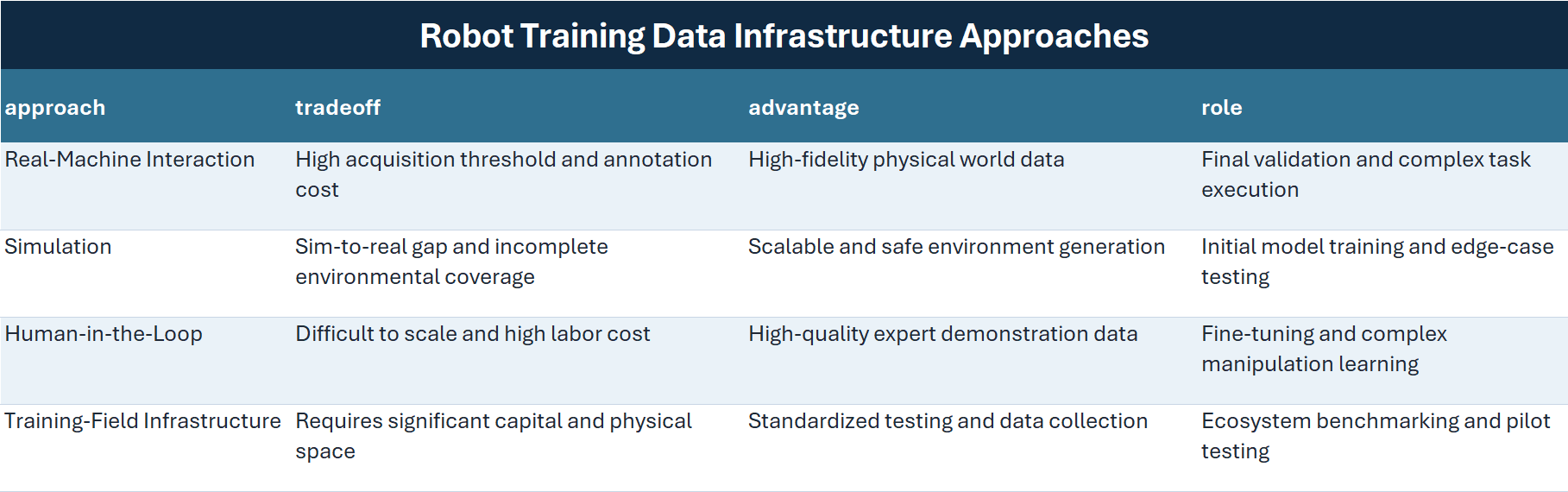
The table organizes officially listed approaches and implementation trade-offs. It does not claim that scheduled releases were completed.
As the table illustrates, the agenda presents simulation, human-in-the-loop methods, training-field infrastructure, and real-machine interaction as distinct parts of a data-collection discussion. The scheduled Huawei site is positioned as a possible testing and data-collection setting, not as a proven operating benchmark. The official record does not publish comparative performance results for the four approaches.
The agenda combines several data-acquisition methods with infrastructure and partnership items. If the scheduled programs are implemented with clear governance and repeatable procedures, they could support a broader development pipeline. That outcome remains a prospective adoption signal rather than a verified result.
Integration Dependencies and Failure Modes
The deployment of humanoid robots is not merely a matter of collecting sufficient data; it also requires addressing the intricate integration dependencies and potential failure modes associated with these systems. Humanoid robots are highly intricate, tightly coupled systems, where the failure of a single component can have cascading effects on overall performance. The Center's focus on real-world testing and validation is essential for identifying and mitigating these risks.
A deployment program must coordinate perception, planning, control, and physical execution. The official agenda does not specify a sensor list, control architecture, latency target, or failure threshold. Those engineering details should be evaluated only when the Center or participating companies publish technical documentation and test results.
Physical hardware also needs evidence from representative operating conditions. The scheduled Huawei item may create a setting for that work, but the agenda does not verify which components will be tested, how durability will be measured, or whether results will be available to outside participants.
Addressing the Sim-to-Real Gap
The sim-to-real gap remains a central reason to collect data from physical machines. Simulation cannot reproduce every condition or interaction that may arise during operation. The forum's focus on real-machine data reflects that limitation, but the official record does not identify particular environmental variables or quantify failure rates.
The agenda links real-world data infrastructure to the transition from demonstrations toward useful systems. It presents physical-world data as an input for model improvement and stable task execution. The record does not establish that the scheduled infrastructure has already produced datasets, improved a model, or closed a measured sim-to-real gap.
If it becomes operational as described, the Huawei training-field demonstration site could support structured testing between simulation and wider deployment. Its contribution will depend on published access conditions, scenario coverage, data rights, and evaluation protocols. The source provides no basis for claiming that it has already improved efficiency or reduced failures.
The Role of Human-in-the-Loop Systems
While the goal of embodied AI is full autonomy, human-in-the-loop systems remain a critical component of the development process. These systems allow human operators to provide real-time guidance and corrections, generating high-quality expert demonstration data that is invaluable for training intricate manipulation tasks. The Center's strategy recognizes the importance of this approach, acknowledging its role in fine-tuning and intricate manipulation learning.
However, as noted in the comparison table, human-in-the-loop approaches are difficult to scale and incur high labor costs. The challenge, therefore, is to utilize these systems strategically, focusing on tasks where human expertise is most critical and leveraging other data acquisition methods, such as simulation and real-machine interaction, for more routine tasks. The Center's comprehensive approach to data infrastructure provides the necessary framework for integrating these different methodologies, ensuring that human-in-the-loop systems are used effectively and efficiently.
In addition, the data generated by human-in-the-loop systems can be used to improve the performance of autonomous models, gradually reducing the need for human intervention over time. This iterative process of human-guided learning and autonomous refinement is essential for developing robotic systems capable of executing intricate tasks in unstructured environments. The Center's focus on standardized data collection and sharing will facilitate this process, allowing organizations to leverage the collective expertise of the broader ecosystem.
A Foundation for Future Innovation
The WAIC 2026 agenda links real-world data infrastructure, a scheduled Huawei demonstration-site release, a Shanghai pilot-testing finance product, and application partner signings. Together, these items outline a proposed framework around testing, data, financial mechanisms, and ecosystem coordination. They do not yet establish completed infrastructure, delivered financing, or commercial deployment outcomes.
The next verification points are practical: whether the site opens, which organizations can use it, what data rules apply, how the finance product is structured, and what the scheduled signings produce. Those disclosures will determine whether the July 19 agenda becomes operating infrastructure or remains a set of announced intentions.
Quotable insight: Real-world data infrastructure only becomes commercially meaningful when test conditions, data governance, application partners, and financial mechanisms are specified well enough for independent evaluation.
This analysis synthesizes company statements and public market activity.
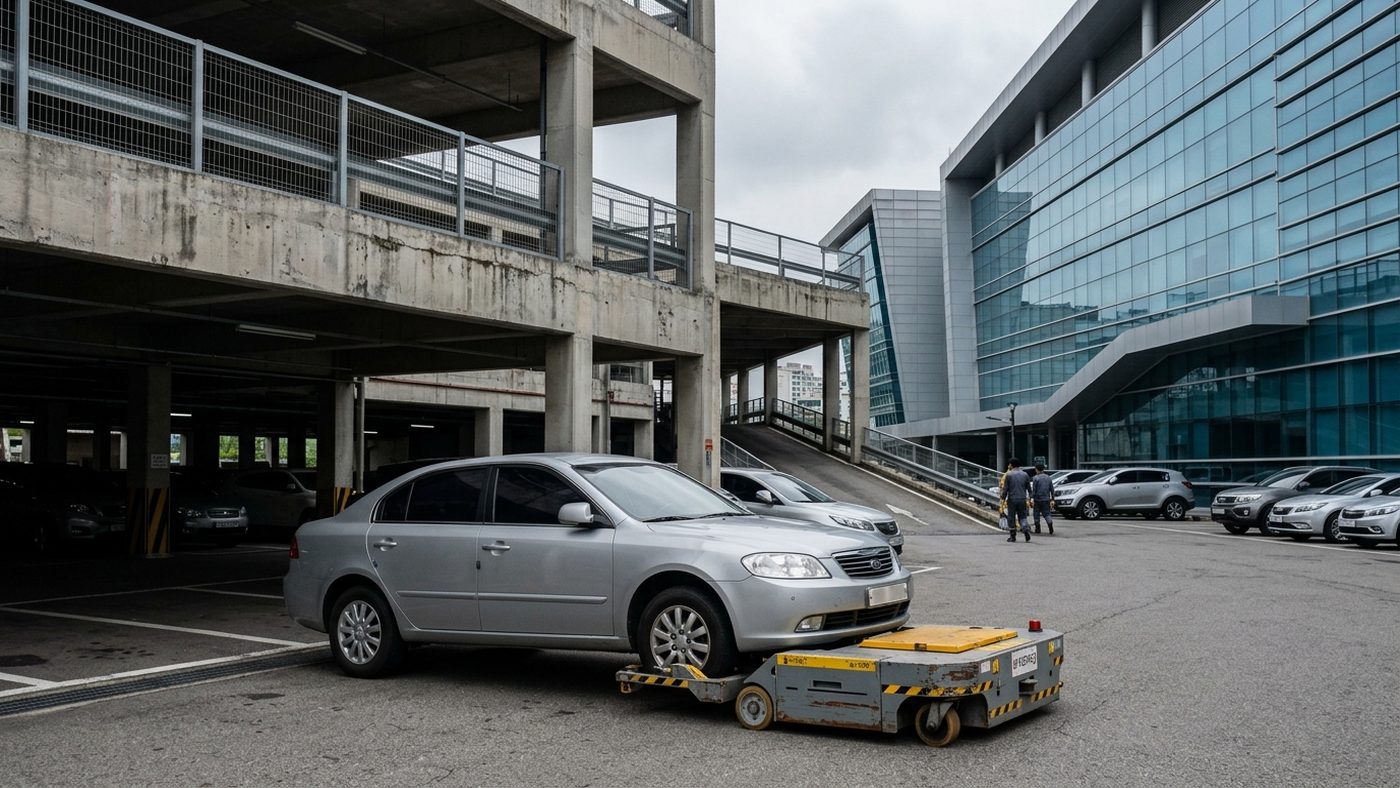
Image credit: Official World Artificial Intelligence Conference cover for the Humanoid Robotics and Embodied Intelligence Development Forum
Disclaimer: This article is provided for informational purposes only and does not constitute investment, legal, technical, or business advice. It synthesizes verified primary-source materials available on July 19, 2026. Product specifications, event schedules, benchmarks, and performance claims remain subject to independent verification. Readers should conduct their own due diligence before making commercial or technical decisions.