AMC Robotics Lines Up US$50 Million to Finish Its Factory
AMC Robotics secured a US$50 million standby equity facility and a US$3.88 million loan to commission its Vietnam plant building the NovaArm and Kyro robots.


A small but growing group of publicly traded robotics companies is financing its factories the way biotech startups finance clinical trials: not through a single venture round, but through a layered stack of standby equity agreements, convertible notes, and milestone-triggered draws that let a thinly capitalized company keep building without committing to a fixed dilution schedule up front. AMC Robotics Corporation, trading on Nasdaq under the ticker AMCI, became the latest example on September 18, when it entered a standby equity purchase agreement worth up to US$50 million alongside a US$3.88 million convertible-note loan, with the combined proceeds earmarked specifically to finish commissioning the company's robotic manufacturing facility by November.
AMC Robotics is a New York-headquartered robotics manufacturer that reached the public markets in December 2025 through a merger with AlphaVest Acquisition Corp, the standard route smaller robotics companies have increasingly used to access public capital without a traditional IPO roadshow. Sean Da, the company's chairman and chief executive, holds a doctorate in electrical engineering from the University of California, Davis and an undergraduate degree from Tsinghua University, and previously built and led YI Technology, an internet-protocol camera maker, before founding senior-care AI company Kami Vision. That background in camera and edge-AI hardware is a reasonable fit for AMC's current product line: Kyro, a quadruped robotic platform built around autonomous navigation and AI-enabled perception for inspection and security work, and NovaArm, a warehouse logistics robot designed to automate sorting at distribution centers.
The Financing Structure Is the Actual Story
The mechanics of the September 18 agreement matter more to a buyer or investor evaluating AMC Robotics than the round's headline size does. The US$50 million figure is not cash sitting in the company's bank account; it is a standby facility, meaning AMC has the right to issue and sell newly created common stock over time, but it cannot draw on that facility at all until the US Securities and Exchange Commission declares effective a registration statement covering the resale of those shares. Until that clears, the only capital actually available to the company is the US$3.88 million loan, delivered in two tranches through convertible promissory notes that carry a fixed conversion price of US$4.017 per share, or, alternatively, a conversion price set at 92 percent of the lowest daily volume-weighted average price over the preceding five trading days, whichever produces a more favorable outcome for the noteholder. Notes mature one year after issuance, and AMC retains the right to prepay the principal early, subject to a 6 percent prepayment premium.
A standby equity purchase agreement works differently from the primary and secondary offerings most public-market investors are used to. Rather than selling a fixed block of shares to a bank or a group of institutional buyers in a single transaction, the issuing company retains the right, but not the obligation, to sell shares to its SEPA counterparty in tranches over an extended commitment period, drawing only when it actually needs the cash and at a price tied to prevailing market conditions at the time of each draw. That structure suits a company like AMC Robotics, whose capital needs are tied to a specific, datable milestone, the Bac Ninh commissioning, rather than to an open-ended growth plan, because it lets the company avoid raising and holding more dilutive capital than the facility actually requires at any given moment.
Chief executive Sean Da described the arrangement plainly: "The standby equity purchase agreement gives AMCI additional means and flexibility to raise capital on company-friendly terms." That framing is accurate as far as it goes, since a standby facility avoids locking the company into a single dilutive raise at a fixed price on a fixed date. It also means existing shareholders are exposed to conversion pricing that moves against them specifically when the stock is weak, since the 92-percent-of-VWAP alternative activates its most favorable terms for the noteholder precisely during a share-price downturn, which is the opposite of when a small-cap company wants to be issuing discounted equity.
From SPAC Merger to Factory Lease to Financing Stack
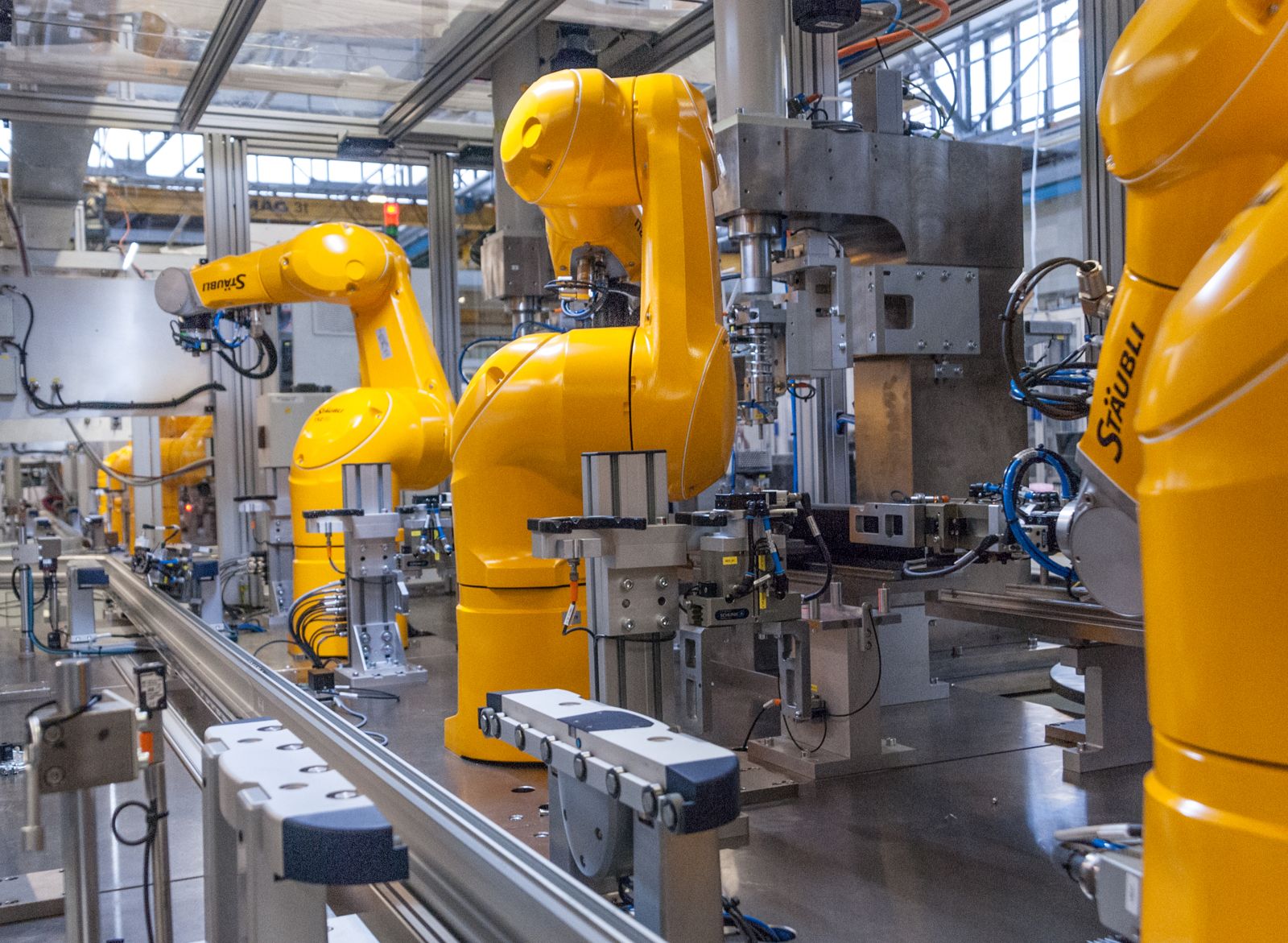
The path to this financing began well before September. AMC Robotics went public through its SPAC combination in December 2025, giving the company Nasdaq-listed currency and public reporting obligations roughly nine months before this latest raise. By June 2026, that currency had translated into a concrete manufacturing commitment: AMC's wholly owned Vietnamese subsidiary, AMCV Company Limited, signed a lease for a 6,150-square-meter facility in Bac Ninh, a manufacturing hub outside Hanoi, with an expected build-out cost of roughly US$3.5 million and initial production targeted for the second half of 2026. That facility's first phase is dedicated to NovaArm production, with capacity for Kyro manufacturing identified as a future expansion rather than a day-one commitment.
The November 2026 commissioning target named in September's financing announcement lines up directly with that second-half-2026 timeline from June, which is a useful consistency check for anyone trying to gauge whether AMC's public disclosures hold together across separate filings. A company juggling multiple financing instruments and an overseas facility build-out is easier to trust when its stated milestones from different months point at the same date rather than drifting, and on that narrow test, AMC's disclosures pass.
Why a Vietnam Factory and Not a US or Chinese One
The choice of Bac Ninh over a US facility or a Chinese contract manufacturer reflects a calculation that has become increasingly common among smaller robotics companies navigating both cost pressure and geopolitical exposure simultaneously. Vietnam offers meaningfully lower labor and facility costs than a comparable US build-out, while sitting outside the direct line of the export-control and tariff exposure that has complicated sourcing decisions for companies dependent on Chinese manufacturing. For a company AMC's size, with 2025 revenue reported around US$6 million, a US$3.5 million facility build-out in Vietnam is a proportionate bet; the same commitment inside the United States would likely have cost several times as much for comparable capacity, a gap that matters enormously to a company still raising capital through convertible notes rather than free cash flow.
RobotAIGeek's analysis of the broader robot financing boom found that capital providers across the robotics sector are increasingly structuring deals around the specific, hard-to-resell nature of robotic assets rather than treating robotics companies like conventional industrial manufacturers. AMC's layered financing stack fits that pattern: rather than a single lender taking a large, illiquid bet on the company's equipment or inventory, the September facility spreads risk across a standby equity line, a convertible note, and a prepayment option, giving both AMC and its capital provider more exits than a traditional term loan would allow.
What Buyers Evaluating AMC Should Actually Watch
For a procurement team weighing Kyro or NovaArm against a better-capitalized competitor, AMC's financing structure is directly relevant to vendor risk, not just an investor-relations detail. A company drawing capital through dilutive, share-price-linked instruments has an incentive to hit its commissioning milestones on schedule, since delay both slows revenue and increases the odds it needs to draw on the standby facility at a depressed share price. The November 2026 commissioning date is therefore not just a manufacturing milestone; it is the point at which AMC's capital structure and its operational execution either confirm each other or diverge. A buyer signing a multi-year supply agreement for NovaArm units should ask directly whether Bac Ninh production has actually started, rather than accepting a press release's target date as confirmation.
That question matters more for AMC than for a larger competitor because Kyro and NovaArm both compete in categories with established, well-funded incumbents. Kyro's quadruped form factor puts it in the same inspection and security niche as Boston Dynamics' Spot and Unitree's Go-series robots, both backed by far larger balance sheets and, in Unitree's case, a Shanghai stock listing that raised roughly US$904 million in its own August 2026 debut. NovaArm competes for warehouse-automation budgets against Geek+, Hai Robotics, and Locus Robotics, all of which ship at volumes AMC has not yet approached. AMC's pitch to buyers is not scale, which it cannot yet match, but cost and flexibility from a Vietnam-based manufacturing base that sidesteps some of the tariff and export-control friction affecting Chinese-built alternatives. Whether that positioning holds up commercially depends entirely on Bac Ninh actually shipping product on the schedule the company has now tied its financing to.
By November, the Bac Ninh floor should be running its first NovaArm units off a commissioned line, watched by a capital structure that will register the outcome almost immediately: a completed, producing facility makes the standby equity line a contingency AMC may never need to draw, while a delayed one turns that same facility into the reason the company has to.
This analysis draws on public filings and disclosures from AMC Robotics Corporation regarding its September 2026 financing agreement and its Vietnam manufacturing facility. It is for general information purposes only and does not constitute investment, financial, or legal advice.
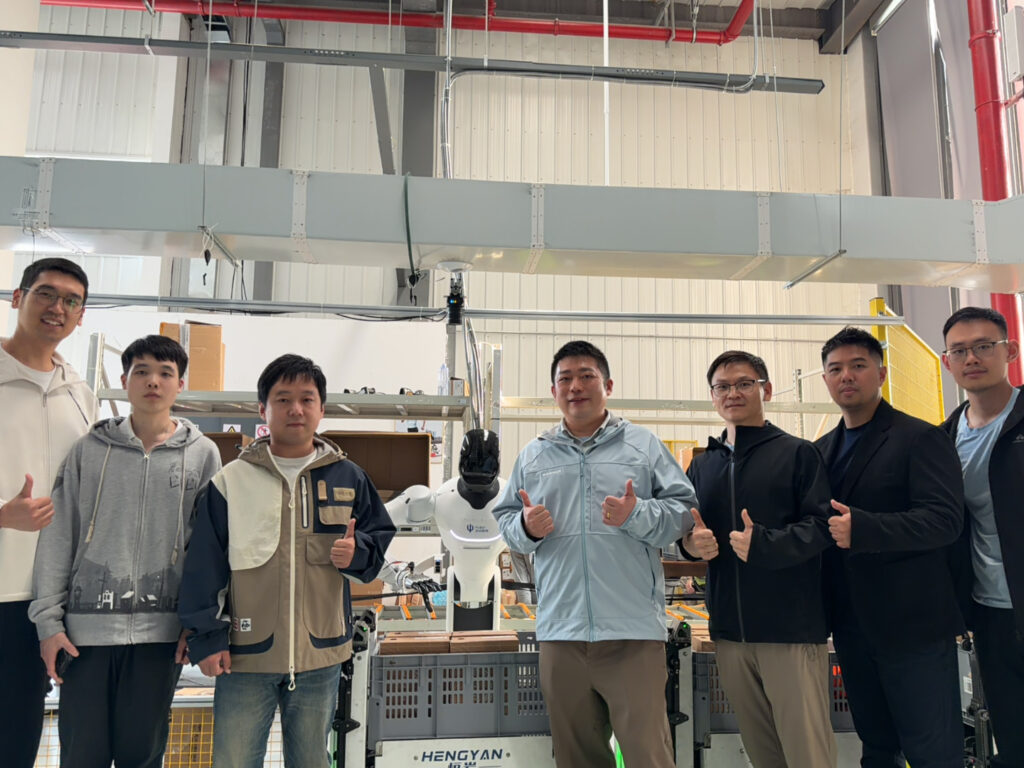
Hero image credit: AMC Robotics.