
Zoox Secures First NHTSA Part 555 Commercial Exemption for Purpose-Built Robotaxis
Amazon's Zoox has received the first-ever NHTSA Part 555 commercial exemption for a purpose-built autonomous vehicle without a steering wheel or pedals. The approval allows Zoox to deploy up to 2,500 robotaxis annually for two years and begin charging fares, starting in Las Vegas next month. The decision marks a watershed moment for the autonomous vehicle industry, establishing a federal precedent for vehicles that do not conform to traditional motor vehicle safety standards.
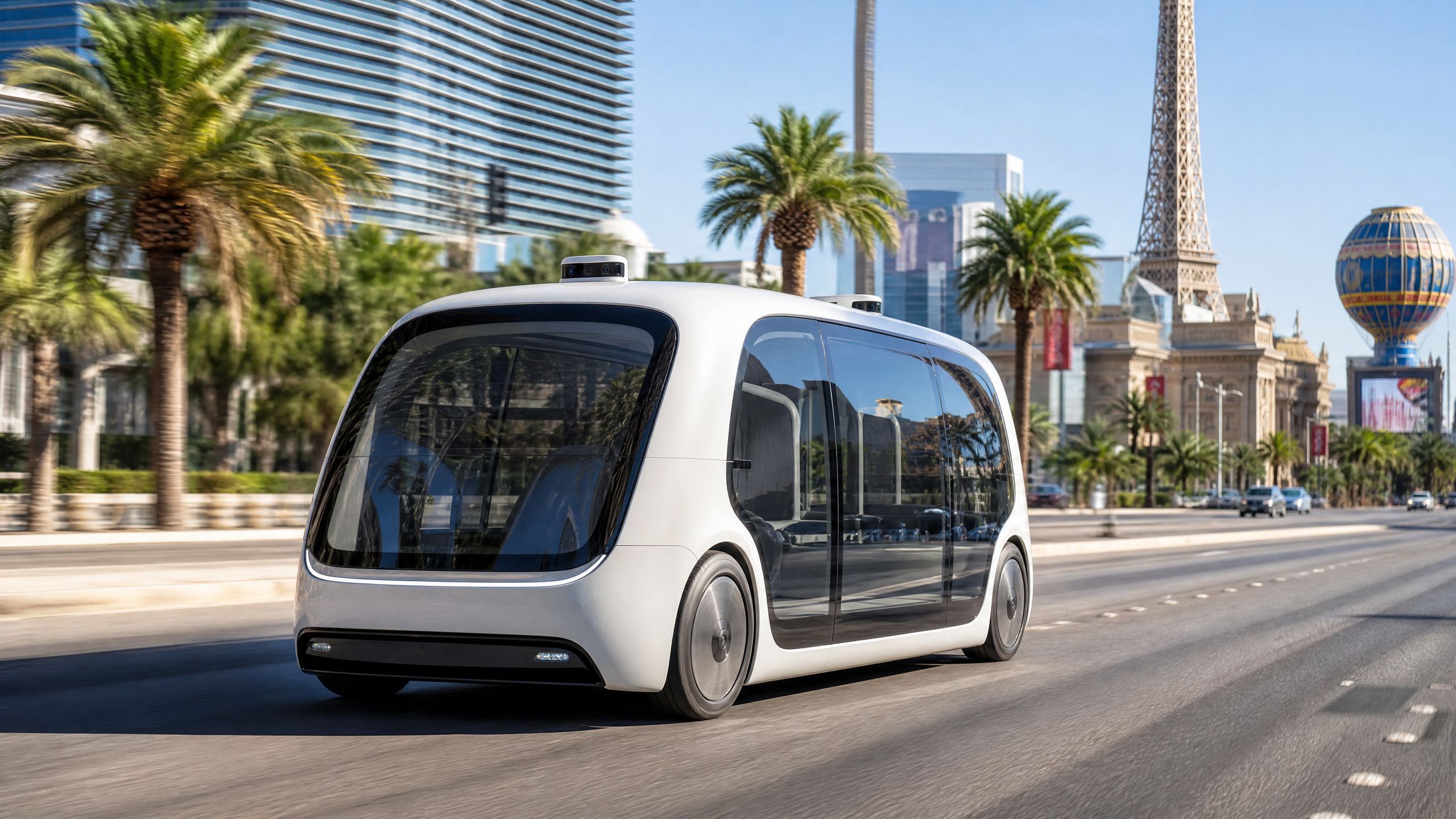
In a watershed moment for the autonomous vehicle industry, Amazon-owned Zoox has secured a Part 555 commercial exemption from the National Highway Traffic Safety Administration. Announced on July 30, 2026, this represents the first time the federal agency has granted commercial deployment approval for a purpose-built autonomous vehicle lacking traditional manual controls. The vehicle has no steering wheel, no brake pedal, no accelerator, and no rearview mirrors.
The exemption allows Zoox to manufacture and deploy up to 2,500 of its bidirectional, pod-like vehicles annually over a two-year period. More importantly, it clears the final regulatory hurdle required for the company to transition from free public testing rides to commercial, fare-charging passenger service. Zoox CEO Aicha Evans confirmed that commercial operations will commence in Las Vegas next month, making it the first purpose-built robotaxi to offer paid rides in the United States.
The Part 555 pathway exists specifically for vehicles that cannot meet existing Federal Motor Vehicle Safety Standards due to their novel design. Traditional FMVSS rules mandate features such as steering columns, driver-side airbags, turn signal stalks, and specific dashboard indicators, none of which are relevant to a vehicle with no driver's seat. By granting the exemption, NHTSA has determined that Zoox's alternative safety systems provide an equivalent or superior level of occupant protection compared to traditional vehicles.
This decision carries enormous precedent value. Other companies developing non-traditional vehicle architectures, including potential future entrants in delivery, transit, and logistics, now have a clear regulatory pathway to follow. The exemption demonstrates that NHTSA is willing to evaluate vehicles on their safety outcomes rather than their adherence to legacy design standards.
Company Background: From Startup to Amazon Subsidiary
Zoox was founded in 2014 by Tim Kentley-Klay and Jesse Levinson with the explicit goal of building an autonomous vehicle from scratch, rather than retrofitting existing cars. This clean-sheet approach was considered highly ambitious and capital-intensive, requiring the company to simultaneously develop the vehicle hardware, the autonomous driving software, and the ride-hailing operational platform.
In June 2020, Amazon acquired Zoox for approximately US$1.2 billion, providing the startup with the financial runway and manufacturing expertise needed to bring its vehicle to production. Under Amazon's ownership, Zoox has continued to operate as a largely independent subsidiary, maintaining its San Francisco headquarters and its focus on the ride-hailing market rather than pivoting to delivery logistics, which many industry observers had expected given Amazon's core business.
The company has been conducting public testing in Las Vegas, San Francisco, and Foster City, California, accumulating over 500,000 completed rides with members of the public. An additional 500,000 potential riders are reportedly on a waitlist, indicating substantial consumer demand for the service once commercial operations begin. This demand data likely played a role in NHTSA's confidence that the service addresses a genuine public need.
The Technology: Purpose-Built Bidirectional Design
The significance of the Part 555 exemption lies in Zoox's fundamental design philosophy. Unlike competitors Waymo and Cruise, which have historically relied on retrofitting existing consumer vehicles with sensor suites and compute modules, Zoox designed its vehicle from the ground up for autonomous ride-hailing with no accommodation for a human driver whatsoever.
The vehicle features a fully symmetrical, bidirectional design, meaning it can drive in either direction without needing to perform a U-turn or three-point turn. It features four-wheel steering, allowing it to navigate tight urban spaces with a turning radius significantly smaller than conventional passenger cars. Inside, carriage-style seating faces passengers toward each other, maximizing cabin space and creating a lounge-like experience that is impossible in a vehicle designed around a forward-facing driver.
The sensor suite includes a combination of cameras, lidar, and radar positioned around the vehicle's perimeter, providing a full 360-degree field of view with no blind spots. Because the vehicle is symmetrical, the sensor coverage is identical regardless of the direction of travel, eliminating the rear-sensor compromises that plague retrofitted vehicles. The onboard compute system processes this sensor data in real time to navigate complex urban environments, including intersections, pedestrian crossings, construction zones, and emergency vehicle interactions.
Each seat is equipped with a custom airbag system designed specifically for the carriage-style seating arrangement. The vehicle also features a novel structural design that distributes crash forces differently than a traditional front-engine car, with crumple zones on all four sides rather than primarily at the front and rear. This omnidirectional protection is a direct benefit of the purpose-built approach.
Safety Record and Regulatory Oversight
The deployment comes amid ongoing regulatory scrutiny of the autonomous vehicle industry. Just weeks prior to the exemption approval, Zoox issued a voluntary recall for 105 of its vehicles due to an issue with the smoke detection system inside the cabin. While the recall was classified as minor and no injuries were reported, such incidents highlight the intense magnifying glass under which autonomous vehicle operators must perform.
The Part 555 exemption requires Zoox to submit extensive, ongoing safety and operational data to NHTSA, ensuring federal oversight remains tight as the fleet scales. This includes mandatory reporting on any crashes, near-misses, software disengagements, and hardware failures. NHTSA retains the authority to revoke or modify the exemption if safety performance deteriorates below acceptable thresholds.
The broader AV industry has faced significant safety scrutiny in recent years. Cruise's operational suspension in late 2023, following an incident where a pedestrian was dragged under one of its vehicles in San Francisco, sent shockwaves through the sector and led to increased regulatory caution across all jurisdictions. Zoox's successful exemption suggests that NHTSA is willing to proceed with approvals when companies can demonstrate robust safety systems, transparent incident reporting, and a genuine commitment to continuous improvement.
Competitor Comparison: The US Robotaxi Landscape

The US robotaxi market is currently dominated by Waymo which operates over 1,000 retrofitted vehicles (primarily Jaguar I-PACE and the newer Zeekr models) providing active paid rides across San Francisco, Los Angeles, Phoenix, and Austin. Because Waymo uses FMVSS-compliant vehicles that retain steering wheels and pedals, even though no human driver is present, it does not require a Part 555 exemption to operate commercially.
Cruise, which had previously sought a similar exemption for its purpose-built Origin vehicle, withdrew its petition following its operational suspension in late 2023. The company is now slowly resuming testing with its retrofitted Chevrolet Bolt fleet under new leadership. Tesla continues to rely on supervised Full Self-Driving in consumer vehicles, with no current timeline for fully driverless, fare-charging commercial deployment.
Zoox's entry introduces a fundamentally differentiated passenger experience that could pressure competitors to accelerate their own purpose-built vehicle programs. However, the regulatory pathway Zoox has navigated took years of sustained engagement with NHTSA, including extensive safety documentation and real-world testing data, suggesting that any competitor pursuing a similar non-FMVSS design faces a multi-year approval timeline.
What This Means for the Industry
For the broader robotics and physical AI sector, the Zoox approval is a massive validation of the full-stack development approach. Building the hardware, the software, and the operational network simultaneously is notoriously capital-intensive, a burden eased by Amazon's deep pockets and manufacturing expertise. The NHTSA exemption proves that this high-risk strategy can successfully clear federal regulatory hurdles and reach commercial deployment.
For municipal planners and transit authorities, the arrival of purpose-built robotaxis necessitates a re-evaluation of curb management, charging infrastructure, and public transit integration strategies. As Zoox scales toward its 2,500-vehicle annual allowance, the physical footprint of autonomous ride-hailing will become a permanent fixture of the urban landscape, starting with Las Vegas and likely expanding to San Francisco and other major metropolitan areas in subsequent years.
For investors and industry observers, the key metric to watch is Zoox's utilization rate and revenue per vehicle-mile once commercial operations begin. The purpose-built design, with its lack of a driver's seat and maximized passenger space, theoretically offers superior unit economics compared to retrofitted vehicles that waste interior volume on unused controls. Whether this theoretical advantage translates into a commercially viable business at scale will be the defining question for Zoox over the next 12 to 18 months.
Disclaimer: This article is for informational purposes only and does not constitute financial, investment, or technical advice. Readers should conduct their own due diligence before making procurement or investment decisions based on this information.












