
Tesla Q2 2026: Optimus Academy Unveiled as Robot Capex Reshapes the Balance Sheet
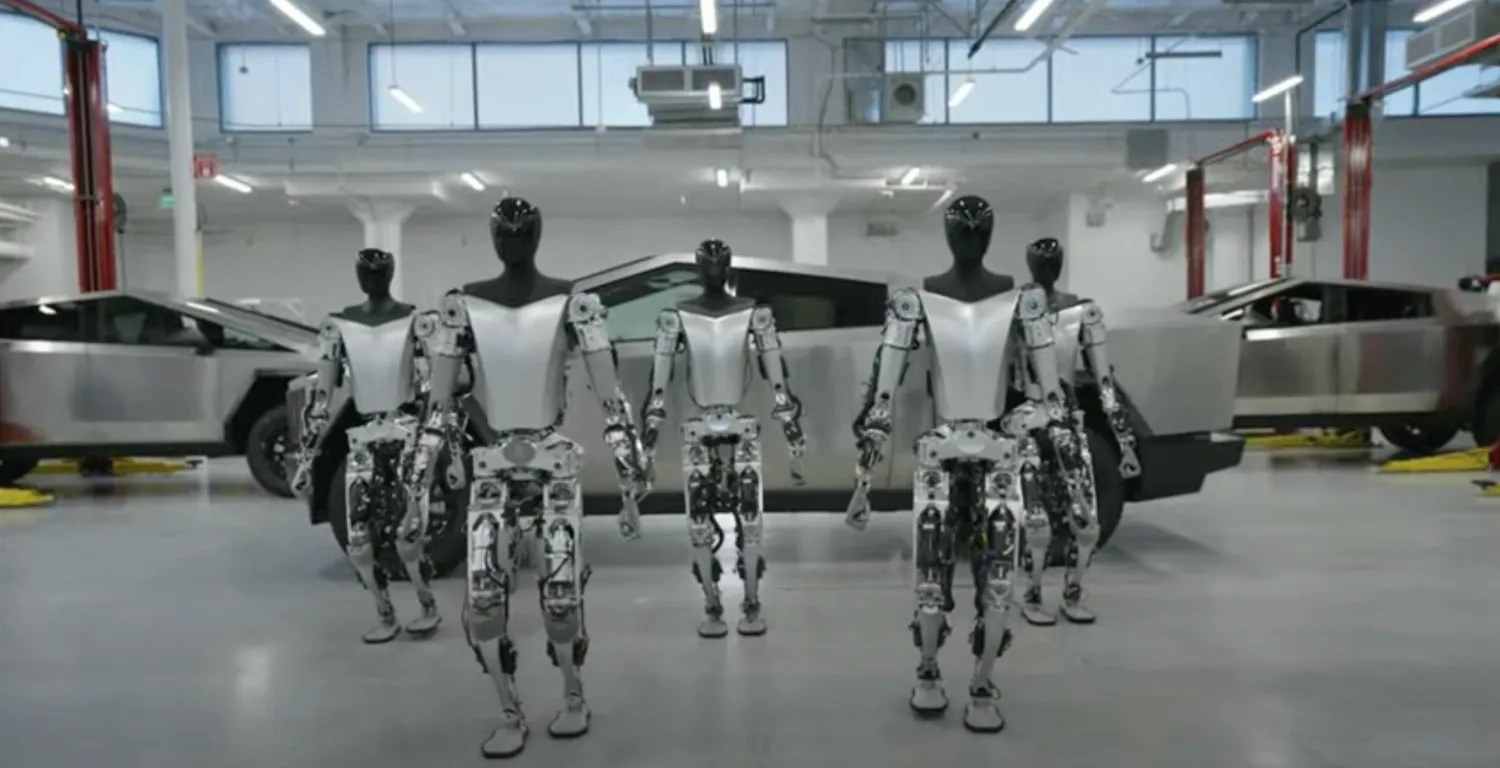
Tesla's second quarter results reaffirmed that Optimus production at Fremont stays on schedule for later this year and revealed a new internal Optimus Academy that will absorb the first production units for training. Capital spending surged 142 percent as investment pivots toward robots, artificial intelligence infrastructure, and autonomous vehicles.
What Did Tesla Announce About Optimus in Its Q2 2026 Results?
Tesla reaffirmed on July 22, 2026 that Optimus humanoid production at its Fremont, California factory stays on track for later this year, and disclosed that initial units will supply a new internal Optimus Academy for training data collection rather than external customers. Capital expenditure surged 142 percent to US$5.8 billion as chief executive Elon Musk cautioned that early production will ramp slowly.
The production timeline itself is not new; Tesla put the Fremont start date on record earlier this year after converting the former Model S and Model X lines. What the second quarter results add are two genuinely new disclosures: the Optimus Academy program, and a set of financial numbers that show how completely the robot and artificial intelligence buildout now dominates Tesla's capital allocation. The company reported revenue of The company reported revenue of US The company reported revenue of US 28.2 billion, above consensus, adjusted earnings of US0.33 per share, below consensus, and quarterly capital expenditure of US$5.8 billion, up 142 percent year over year, much of it directed at Optimus production lines, artificial intelligence data centers, and the Cybercab ramp. Musk paired his familiar claim that Optimus could become the biggest product in Tesla's history with an unusually specific caution: because no established supply chain exists for many Optimus components, the production curve will start flat and stay flat for longer than optimists expect.
The Academy Model and the Data Bottleneck
The Academy disclosure is the most operationally significant sentence in the release. Humanoid robots do not become useful when they are assembled; they become useful when they are trained, and by routing the first production cohort into an internal data-generation program, Tesla is conceding that the bottleneck has moved from mechanical engineering to learned competence. Think of it like opening a school before opening a shop: the first robots off the Fremont line will not be sold, they will practice tasks repeatedly while every joint angle, camera frame, and force reading is recorded, and those recordings become the lessons that make each successive software build more capable. Only when graduates are demonstrably competent does the shop open.
In practice a robot training academy runs three interlocking loops. Teleoperation and demonstration collection produces the datasets that imitation learning consumes: human operators guide robots through household and industrial tasks while every joint angle, camera frame, and force reading is recorded. Autonomous practice under supervision generates the failure cases that are disproportionately valuable for training robust policies, because robots attempting tasks independently while safety observers intervene produce exactly the error distribution that hardens a model. Fleet regression testing forces every new software build to prove it has not degraded previously mastered skills across dozens of robots before wider release, the robotic equivalent of the validation fleets Tesla operates for Full Self-Driving. The approach mirrors infrastructure that Chinese developers have been constructing publicly: China's National Humanoid Robotics Center operates real-world training fields in Shanghai for exactly this purpose, and AgiBot runs large data-collection facilities where teleoperators generate manipulation demonstrations at industrial scale. Staffing these loops is labor-intensive, which makes the Academy a quiet hiring signal as well; robot data operations is becoming a job category of its own, and Tesla is now institutionalizing it in Fremont.
The Supply Chain Admission Behind the Flat Curve
Musk's tempered production guidance aligns Tesla's public posture with what component suppliers have been signaling all year. Precision actuators, dexterous hands, and high-torque-density joint motors are produced today in quantities suited to research programs and pilot fleets, not automotive-scale manufacturing. Harmonic drive suppliers, ball-screw makers, and rare-earth motor producers all quote multi-quarter lead times for meaningful volume. The rare-earth dimension carries an additional geopolitical edge, because China dominates the processing of the magnet materials that high-torque robot joints consume, and export licensing has already tightened once this cycle. A humanoid program planned in Fremont therefore inherits supply exposure in Baotou, and Tesla's flat-curve language is partly an acknowledgment of that dependency. Tesla's admission that it must in effect grow a supply chain rather than procure one is the most candid statement any Western humanoid maker has offered on the scaling problem, and it is a materially different message from the million-units-a-year rhetoric of earlier calls. For component suppliers, the flat-curve admission is a demand signal worth planning against, because the supply chain for humanoid-grade actuators and hands will be built by whoever commits capacity in the next four quarters.
The Financial Frame Around the Robot Bet
The numbers make the robotics commitment legible. Tesla delivered 480,126 vehicles in the quarter, up 25 percent year over year, and deployed 13.5 gigawatt hours of energy storage. Free cash flow was negative Free cash flow was negative US1.09 billion, considerably better than the negative US3.64 billion analysts had feared, but the company is now spending at a pace it describes as its largest investment period ever. Roughly US0.22 of the US0.32 in generally accepted accounting principles earnings per share derived from an unrealized US$1 billion gain on Tesla's stake in SpaceX, meaning core operating profitability remains under pressure precisely while the robot buildout accelerates. The Robotaxi network expanded to seven metropolitan areas, with unsupervised operation live in Austin, Miami, Orlando, and Tampa, and Full Self-Driving subscriptions reached 1.48 million, up 56 percent. Tesla is financing its humanoid program from a vehicle business whose margins are compressing, which raises the stakes on Optimus reaching commercial milestones within a small number of years rather than a decade.
One further disclosure rounds out the picture: Musk teased that the location of Terafab, a semiconductor fabrication project involving SpaceX and Intel, would be revealed soon. If Tesla ultimately controls leading-edge chip supply for its artificial intelligence and robot programs, the vertical integration thesis extends one layer deeper than any competitor has attempted, from the robot's actuators to the silicon running its mind. It would also insulate the Optimus program from the compute allocation contests that every artificial intelligence company now fights, since a robot fleet that learns continuously consumes training capacity indefinitely rather than episodically.
Tesla's Position in the Global Humanoid Field
A late-2026 production start places Tesla in the middle of the global pack rather than ahead of it. In China, Unitree Robotics already sells humanoids commercially and received approval on July 2 for a Shanghai STAR Market listing. AgiBot has shipped thousands of units across its product families, and UBTECH has booked hundreds of millions of RMB in Walker orders from industrial customers. In the United States, Figure AI claims a growing fleet at logistics customers, and Agility Robotics operates Digit deployments with enterprise clients including Schaeffler. What distinguishes Tesla is not timing but integration depth: it controls the factory that will use the robots, the battery and motor supply base, the artificial intelligence training infrastructure, and the vehicle fleet whose real-world data pipeline it intends to replicate for manipulation. No competitor owns that full stack, and the Q2 disclosures show Tesla spending as though it intends to keep it that way.
The Accountability Question Buyers Should Keep Open
A common misconception in humanoid coverage is that internal deployment constitutes commercial proof. When a company sells robots to outside customers, unit economics, uptime, and task completion rates surface in contracts and churn; when robots work only inside their maker's factories and training academies, every metric is self-reported and every timeline is elastic. Tesla has moved its Optimus goalposts before, and the shift from selling robots to schooling them, however technically sound, also defers the moment of external accountability. Procurement teams planning around humanoid availability in 2027 and 2028 should treat Tesla capacity as unproven until robots appear in facilities Tesla does not own, doing work Tesla does not control.
The deeper pattern this quarter reveals is that the humanoid race has quietly become a data race wearing a manufacturing costume: the winners will be decided less by who assembles robots fastest than by who converts robot hours into learned capability fastest. For competing humanoid makers, the Academy strategy raises the bar on training infrastructure, an area where Chinese national programs currently operate at larger visible scale than any Western private effort. For investors and industrial buyers, the 142 percent capex surge confirms that physical artificial intelligence has become the core of Tesla's capital allocation rather than a side project. And for the component ecosystem, from harmonic drive suppliers to dexterous hand specialists, the message is double-edged: demand from the most capitalized Western buyer is confirmed, but its ramp will be slower than the headlines of 2024 and 2025 implied, which favors suppliers with diversified customer bases over those that bet everything on a single marquee program.
Tesla has set itself a deadline it must now meet in public: Fremont either produces Optimus units this year, or the market will conclude that the hardest product Tesla has ever attempted is harder than even Musk's tempered guidance allows. This development confirms that the humanoid sector's center of competition is shifting from production announcements to training infrastructure, where learned capability, not assembly capacity, sets the pace of commercialization.
This analysis synthesizes company statements and public market activity.
Disclaimer: This article is for informational purposes only and does not constitute investment, legal, safety, or procurement advice. Readers should independently verify specifications, certification scope, pricing, availability, regulatory obligations, and operational suitability with the relevant suppliers and authorities before making decisions.












