
Horizon Robotics Raises US$450 Million at Zero Interest, and Most of It Is Already Spoken For
Horizon Robotics has priced US$450 million of zero-coupon convertible bonds due 2031, with conversion set at HK$5.55 per share, its third major capital raise since listing in Hong Kong. Investors are lending the smart-driving chip maker half a billion dollars for free, in exchange for the right to convert into equity at a premium, a structure that signals credit-market conviction in the sector’s upside. Proceeds fund research, the CARIZON joint venture with Volkswagen’s CARIAD, and a war chest that positions Horizon as a buyer when the sector’s predicted consolidation arrives. The deal marks a maturing funding channel: listed robotics platforms now out-raise their private rivals on speed and price. ________________________________________
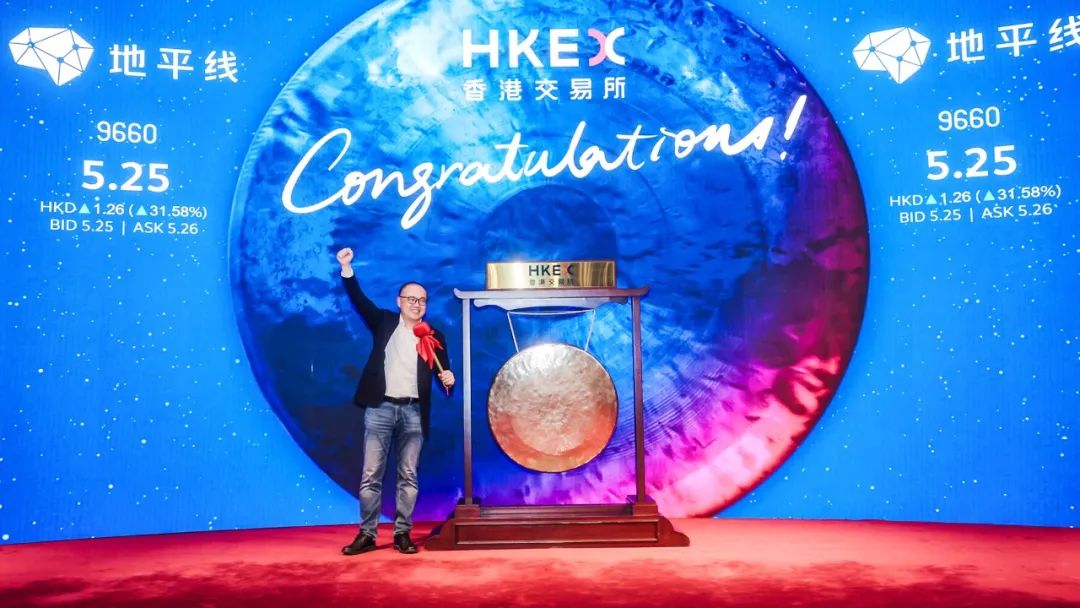
Horizon Robotics, China’s leading independent smart-driving chip developer, has priced a US$450 million zero-coupon convertible bond due 2027, with Goldman Sachs and Morgan Stanley running the deal. The Hong Kong-listed company disclosed the pricing after Tuesday’s trading session, and Chinese financial media detailed the terms on Wednesday.
The headline structure is investor-friendly to a degree that says something about demand for Chinese robotics-adjacent paper: no coupon, a conversion price of HK$5.55 per Class B share representing a 16.8 percent premium over the HK$4.75 close on the subscription agreement date, and settlement expected around July 29. Full conversion would create roughly 636 million new Class B shares, about 4.36 percent of existing issued capital but only about 1.89 percent of general voting power under the company’s weighted voting rights structure. The bonds will be listed on the Vienna Stock Exchange’s Vienna MTF, with the conversion shares to be listed in Hong Kong.
The more revealing number sits in the use of proceeds. Of the roughly US$445.5 million in net proceeds, US$398.9 million goes to CARIAD, Volkswagen Group’s software subsidiary, under an amended agreement, covering repayment of a loan of about US$344.4 million plus an additional cash payment. Only the remainder, under US$50 million, stays with Horizon for working capital and general corporate purposes.
Reading the CARIAD Payment
Horizon’s relationship with Volkswagen is the deepest capital entanglement between a Chinese chip firm and a Western automaker. Volkswagen committed roughly US$2.4 billion in 2022 and 2023 to a joint venture, CARIZON, that adapts Horizon’s chips and software for Volkswagen models in China, alongside a direct equity stake. The German group remains a cornerstone of Horizon’s shareholder register and its most important single customer relationship.
A US$399 million payment to CARIAD under an amended agreement is therefore not a divorce settlement; it is housekeeping within a partnership both sides continue to fund. But the mechanics deserve attention. Horizon is borrowing from public markets at zero interest to retire an obligation to its strategic partner, effectively swapping a bilateral liability to Volkswagen for a dilutive claim held by hedge funds and convertible arbitrage desks. For a company whose stock trades on smart-driving volume growth, that is a rational trade: it cleans the balance sheet ahead of what management clearly expects to be a heavy investment cycle, and it does so without an interest expense line.
The zero-coupon structure means investors are paid entirely in optionality. Buyers accept no yield in exchange for the right to convert at HK$5.55, which is a straightforward bet that Horizon’s shares will appreciate more than 16.8 percent before 2027. Convertible investors made the same style of bet on Chinese EV and battery names in earlier cycles, with results that ranged from spectacular to instructive.
The Anatomy of a Zero-Coupon Bet
For readers outside the convertible desk, the structure rewards a moment of unpacking. A convertible bond is a loan with a lottery ticket stapled to it: the buyer lends money and receives, instead of interest, the right to swap the debt for shares at a preset price. When the coupon is zero, the entire return depends on the shares climbing past the conversion price before maturity. Horizon’s buyers need the stock more than 16.8 percent higher within roughly eighteen months simply to break even on conversion, and meaningfully higher to beat what they could have earned holding treasury bills.
Why would sophisticated investors accept those terms? Partly because convertible arbitrage funds do not buy the equity story at all; they buy the volatility, hedging the share exposure and profiting from the stock’s movement in either direction and Chinese robotics names supply volatility in abundance. And partly because the genuine bulls see a smart-driving market compounding fast enough to make HK$5.55 look conservative. Either way, the zero coupon transfers real economic value to Horizon: eighteen months of free money in an industry where rivals pay double-digit effective costs for private capital.
The weighted voting rights structure does quiet but important work in the background. Because conversion creates Class B shares carrying one vote each while the founders hold high-vote Class A stock, full conversion dilutes economic ownership by 4.36 percent but voting power by only 1.89 percent. Management, in other words, has found a way to raise nearly half a billion US dollars while surrendering less than two percent of control, which is the kind of arithmetic that explains why governance activists dislike dual-class structures and why founders adore them.
A Fundraising Machine Running at Full Throttle
The bond extends a capital accumulation record that has few parallels among Hong Kong’s technology listings. Horizon raised HK$6.09 billion (US$780 million) in its October 2024 IPO, added HK$11.1 billion (US$1.42 billion) through two placements in 2025, and now adds this convertible. Cumulative fundraising since listing exceeds HK$20 billion (US$2.56 billion), inside roughly 21 months.
Why does a company with Horizon’s revenue trajectory need that much capital? The answer is the industry it lives in. Smart-driving silicon combines punishing research and development costs with automotive validation cycles that run years, customers with formidable bargaining power, and production ramps that release slowly. Horizon competes simultaneously against Nvidia’s automotive platform, Qualcomm’s Snapdragon Ride, and the in-house chip programs of its own customers, a competitive set that guarantees the spending will not slow. The company’s Journey family of chips powers driver-assistance systems across dozens of Chinese models, and each generational leap, from mainstream assisted driving toward urban navigation-on-autopilot, multiplies the compute and the validation bill.
There is also a robotics dimension to the war chest. Horizon has been extending its automotive-grade compute and perception stack toward general robotics, where the same combination of vision processing, low power draw, and functional safety applies. In a year when Chinese embodied AI companies raised US$15.5 billion in six months, holding a fortress balance sheet is both defense and option: defense against a capital cycle that will eventually tighten, and an option on acquisitions when the sector’s predicted consolidation arrives.
The skeptical reading of serial fundraising is always dilution, and Horizon’s shareholders have now absorbed three rounds of it since listing. The counterpoint is that every one of those raises priced successively higher structures into a market eager to hold the paper, and the current bond’s zero coupon is the market’s own testimony. Companies in genuine distress do not borrow at zero percent.
The Signal for the Sector
The timing of the raise tracks a broader migration of Hong Kong’s convertible market toward the robotics complex. Zero-coupon convertibles were the signature financing of China’s internet platforms in their growth years, then of the EV and battery cohort; their arrival in smart-driving silicon marks the moment credit investors decided the sector’s equity volatility was worth owning. Horizon is not even the first robotics-adjacent issuer this cycle, but it is the largest pure smart-driving name to borrow at zero, and pricing discipline at the top of a sector tends to reprice everyone beneath it. If the deal trades well, expect RoboSense, Black Sesame, and eventually the newly listed humanoid names to discover the same channel, because a sector that can borrow free money will always prefer it to selling equity at prices management resents.
For the broader Chinese robotics and smart-driving complex, Horizon’s deal marks the maturation of a funding channel. Equity placements and convertible bonds from listed platforms are replacing venture rounds as the sector’s marginal source of capital, a shift that favors companies that reached public markets early. Horizon, RoboSense, and Black Sesame can tap institutional debt and equity desks on days’ notice; their private rivals must still assemble syndicates round by round.
That asymmetry will shape the consolidation everyone in the sector predicts. When the elimination phase arrives, the companies holding listed-market war chests will be the buyers. This week alone, AgiBot engaged three banks for a Hong Kong IPO and Unitree’s Shanghai filing advanced, suggesting the sector’s strongest private names have absorbed the lesson: the durable advantage in a capital-intensive industry is not the best demo, it is the cheapest and deepest access to money.
The Volkswagen relationship, meanwhile, remains the asset that no fundraising table captures. CARIZON gives Horizon something no Chinese chip rival possesses: a design-in relationship with a global automaker’s China lineup, validated at German engineering standards and insulated, at least commercially, from the procurement politics gathering around Chinese technology elsewhere. Every dollar of this bond that flows to CARIAD is, in that light, an investment in keeping the sector’s most valuable partnership current, paid for by investors who charged nothing for the privilege.
The nearest checkpoint for judging the bet is the interim results due next month, which will show whether smart-driving chip volumes are compounding at the pace the conversion premium assumes. Convertible holders will be reading one line above all others: design wins converting into production shipments, because that is the number that decides whether HK$5.55 is a floor being approached or a ceiling receding.
Horizon’s settlement closes before the end of the month. The more interesting date is whenever the company next discloses what the remaining war chest is for.
Disclaimer: This article is for general information purposes only and does not constitute investment, legal, or procurement advice. Readers should verify details with primary sources before making business decisions.












