
DEWALT and August Robotics Launch Fleet-Capable Downward Drilling Robot for Data Centers
DEWALT and August Robotics have commercially launched DALE, an autonomous downward drilling robot designed to accelerate data center construction by drilling up to 10 times faster than traditional methods.
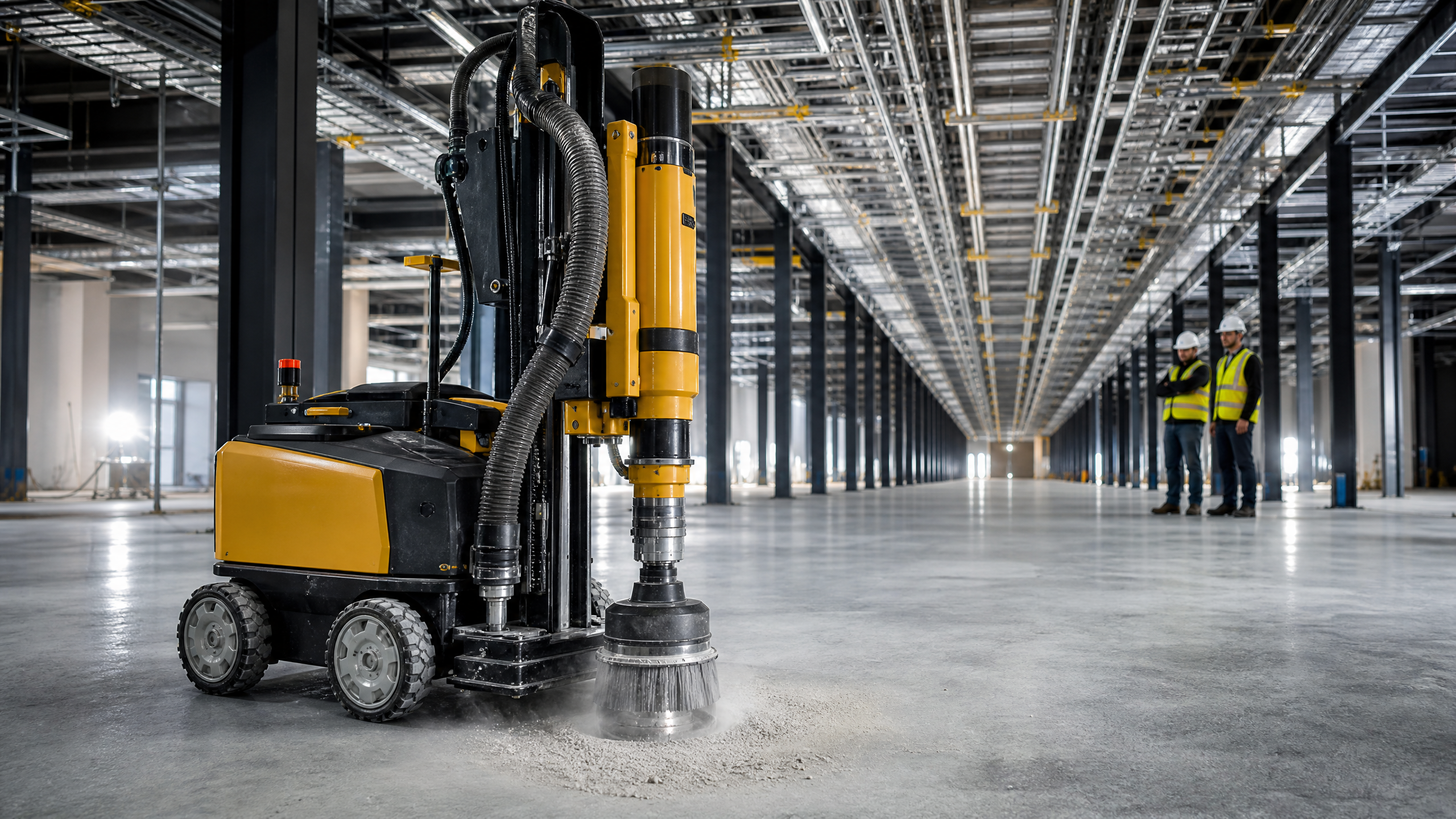
The global surge in artificial intelligence and cloud computing has triggered an unprecedented boom in data center construction, placing immense pressure on contractors, developers, and hyperscale operators to deliver facilities at record speeds [1]. In response to that demand, and against the backdrop of a persistent skilled labor shortage, DEWALT, a Stanley Black & Decker brand, in collaboration with Hong Kong-based August Robotics, announced the commercial launch of DALE™ on July 9, 2026 [2]. DALE is described by the companies as the world’s first fleet-capable, downward drilling robot, specifically engineered to automate the labor-intensive process of concrete floor preparation for server rack installations and mechanical, electrical, and plumbing systems, commonly referred to as MEP systems [2].
The launch is notable because it targets a narrow but high-value construction workflow. Instead of trying to automate an entire jobsite, DALE focuses on a repetitive, accuracy-sensitive, physically demanding task that appears frequently in data center builds. Data centers require dense and precisely placed infrastructure. Before servers, cable trays, cooling systems, power distribution equipment, and other technical assets can be installed, contractors must prepare concrete slabs with thousands of drilled holes. Each hole is small in isolation, but the cumulative workload can become a major schedule constraint when scaled across a hyperscale facility.
The announcement also signals a broader trend in construction robotics. The sector is moving toward practical autonomy where robots are assigned specific tasks that can be digitized, measured, repeated, and validated. DALE fits that pattern. It combines autonomous mobility, computer-aided design file ingestion, tool actuation, dust extraction, fleet coordination, and quality verification into a single system designed for commercial deployment.
The Data Center Construction Bottleneck
Data center construction is a highly specialized and time-sensitive sector. One of the most critical and time-consuming phases is the preparation of the concrete slab. Before server racks can be installed and MEP systems routed, thousands of precise holes must be drilled into the concrete floor to secure infrastructure [3]. Traditionally, this process involves manual layout, marking, and drilling. The work is physically demanding, repetitive, and prone to human error, especially when crews must repeat the same action many thousands of times across large floor plates.
The construction industry is currently grappling with a severe labor shortage, with estimates suggesting a deficit of hundreds of thousands of skilled workers in the United States alone [4]. This shortage is particularly acute in data center construction, where project owners often require compressed build schedules and where multiple large facilities may be under development at the same time. The manual drilling of thousands of holes not only exacerbates labor strain, it also introduces safety risks including fatigue, repetitive strain injuries, and exposure to respirable crystalline silica dust.
Data center projects are especially vulnerable to sequencing delays. The drilling phase may appear straightforward, but it often sits upstream of multiple critical trades. If drilling and anchor preparation are delayed, MEP contractors may not be able to start installation work on time. That delay can cascade into rack deployment, electrical commissioning, cooling system work, network installation, and final facility readiness. In a market where cloud and AI capacity is urgently needed, every week of delay can carry meaningful commercial consequences.
Furthermore, the sheer volume of drilling required in modern hyperscale data centers means that any inefficiency can lead to substantial project delays. A typical data center may require tens of thousands of holes, and traditional manual workflows can take weeks to complete. That creates a bottleneck that delays subsequent trades and ultimately pushes back the facility’s commissioning date [3]. The problem is not simply speed. It is also predictability. Developers and general contractors need to know that a drilling package will be completed accurately, consistently, and in a way that does not create rework for later phases.
Enter DALE: Autonomous Precision at Scale
To address these challenges, DEWALT and August Robotics developed DALE, an autonomous mobile robot equipped with an industrial DEWALT drilling rig [3]. The system leverages August Robotics’ expertise in indoor positioning and autonomous navigation, originally developed for its Lionel robot used in exhibition floor marking [3]. By combining this mobility platform with DEWALT drilling technology, the partnership has created a system intended to transform concrete floor preparation from a manual layout and drilling job into a digital execution workflow.
DALE operates by ingesting the building’s CAD files, allowing it to autonomously navigate the construction site and precisely locate each drilling point [3]. This CAD-driven workflow is important because it links the robot’s activity to the design intent. Rather than relying on a worker to transfer digital plans into physical marks on the floor, the robot can use the design file as its operational map. That reduces manual interpretation and minimizes the risk of layout drift across large areas.
The robot is capable of achieving a placement accuracy of 99.97 percent, ensuring that holes are drilled where required, within a tolerance of approximately 1/8 inch, or 3.1 mm [3]. This level of precision eliminates the need for manual layout and marking in many workflows, significantly reducing the potential for errors that could lead to costly rework. In a data center environment, that precision matters because equipment density is high and installation tolerances can be tight. Misplaced holes may interfere with cable routing, raised floor systems, supports, anchoring plans, or MEP coordination.
The use of a DEWALT drilling rig also matters commercially. Construction contractors are more likely to adopt robotic tools when the core work end-effector comes from a trusted jobsite brand. The robot is not a generic mobile base with an experimental tool attached. It is a purpose-built system that combines familiar drilling hardware with autonomous mobility and digital execution software.
Fleet Capability and Continuous Operation
One of the defining features of DALE is its fleet capability. Multiple robots can be deployed simultaneously on a single site, working in concert to rapidly complete the drilling phase [2]. This scalable approach allows contractors to adjust the number of robots based on the size, complexity, and timeline of the project. Fleet operation also changes the economics of automation. A single robot can improve productivity, but a coordinated fleet can compress an entire schedule segment.
Fleet capability is especially relevant for data centers because many of these projects involve large, repeatable floor areas. If one robot can drill a defined area autonomously, multiple robots can divide a larger site into zones and complete the work in parallel. This is the same operational logic that has accelerated adoption in warehouse robotics, where fleet management software assigns tasks across many autonomous mobile robots. In construction, the operating environment is less structured than a warehouse, but data center slabs offer one of the more suitable environments for robotic deployment because the floor is large, accessible, and tied to a detailed digital plan.
To maximize uptime, DALE is equipped with fast-swap batteries, enabling continuous operation [2]. The robot also features remote monitoring capabilities, allowing operators to track progress, monitor performance, and troubleshoot issues from a centralized dashboard [2]. This continuous operation capability is a critical advantage in the fast-paced data center construction environment, where every hour saved can translate into lower project costs and faster time to market.
Remote monitoring also supports a more efficient labor model. Instead of assigning workers to perform every drilling action manually, a trained operator can supervise robotic execution, verify progress, and intervene when needed. This does not eliminate the need for skilled labor. Rather, it shifts labor toward robot supervision, layout verification, logistics, battery management, exception handling, and quality control. In a labor-constrained industry, that shift can be valuable because it allows experienced workers to cover more productive ground.
Integrated Safety and Quality Assurance
Safety and site cleanliness are paramount in construction, and DALE addresses these concerns through integrated features. The robot is equipped with an automatic dust extraction system that captures silica dust at the source, supporting safer work practices and helping contractors manage compliance obligations related to dust exposure [2]. This feature is particularly important in data center construction, where dust can interfere with sensitive equipment and delay subsequent installation phases.
Concrete drilling can create airborne particles that pose risks to workers if not properly controlled. Manual drilling crews can use dust extraction, respirators, and other protective measures, but compliance can vary by jobsite and task conditions. A robotic system with integrated extraction can make dust control part of the standard drilling workflow. That consistency may become increasingly important as contractors seek to reduce safety incidents, improve jobsite cleanliness, and document their controls.
DALE also incorporates AI-enhanced quality assurance mechanisms [2]. The robot independently verifies the depth and accuracy of each hole, providing a digital record of the drilling process. This traceability ensures that the work meets required specifications and provides valuable data for project management and quality control. By leaving the site clean and prepared, DALE enables MEP workflows to commence immediately after drilling, further accelerating the construction schedule [2].
The digital record is one of the most strategically important aspects of the system. Construction projects increasingly rely on digital twins, building information modeling, and data-driven project controls. A robot that can execute work and document the result creates a closed loop between design, field execution, and verification. For owners and contractors, that can reduce disputes, support quality audits, and improve confidence that work has been completed as specified. In high-value facilities such as data centers, traceable execution data may eventually become as important as raw productivity gains.
Proven Performance: The Year-Long Pilot
Prior to its commercial launch, DALE underwent a rigorous year-long pilot program with a leading global technology company [2]. The results of this pilot demonstrate the potential impact of the technology on data center construction timelines and economics.
During the pilot, DALE drilled at speeds up to 10 times faster than traditional manual methods [2]. Across 26 major data center construction phases, deployment of the robotic fleet reduced project timelines by a total of 190 weeks [2]. The robots successfully drilled more than 230,000 holes with 99.97 percent accuracy, proving the reliability and precision of the system at scale [2].
Those figures are significant because they suggest DALE has moved beyond a lab demonstration or narrow proof of concept. Construction robotics often struggles at the transition from controlled testing to real jobsite deployment. Jobsites are dynamic. Conditions change. Obstacles move. Schedules shift. Workers from multiple trades share the same space. A successful pilot across 26 major construction phases indicates that the system has been exposed to the kinds of variability that often challenge robotic adoption.
The economic benefits are also compelling. According to DEWALT, the use of DALE can reduce the cost per hole from more than $60 using traditional methods to approximately $20 [3]. This cost reduction, combined with accelerated project timelines, provides a strong return on investment case for contractors and developers. Furthermore, automation of the drilling process generated 21,000 hours of labor capacity during the first six months of the pilot, freeing skilled workers to focus on higher-value tasks [3].
The cost per hole metric is especially useful because it translates robotic value into a unit that contractors can understand. Many construction technology products promise productivity gains, but adoption depends on whether those gains can be priced into bids and schedules. If a contractor can estimate the number of required holes from design files, model robotic productivity, and compare cost per hole against manual labor, then DALE becomes easier to evaluate during preconstruction planning.
Strategic Implications and Competitive Landscape
The launch of DALE represents a significant milestone in the adoption of robotics in construction. While the sector has historically been slower to embrace automation than manufacturing or logistics, the combination of acute labor shortages, rising project complexity, tighter timelines, and better digital design workflows is driving a shift toward task-specific robotic systems.
The partnership between DEWALT and August Robotics is strategically important. DEWALT brings brand recognition, customer relationships, tool expertise, and a distribution footprint associated with professional construction markets. August Robotics contributes autonomy, indoor positioning, robotics software, and experience commercializing field robots. By integrating DALE into its PERFORM AND PROTECT™ ecosystem, DEWALT is positioning itself as a broader jobsite solutions provider rather than only a tool supplier [2].
In the broader context of construction robotics, DALE enters a market that is increasingly focused on specialized, single-task robots. Companies such as Built Robotics are developing autonomous solutions for earthmoving and heavy machinery, while others are focusing on tasks such as drywall finishing, layout, painting, rebar tying, and site inspection [5]. The common theme is that robots are first gaining traction in tasks where repetition, safety risk, labor shortage, and digital measurability intersect.
The specific application of downward drilling for data centers represents a highly targeted and lucrative niche. Data centers are capital-intensive assets. Their owners are often sophisticated technology buyers with strong incentives to reduce schedule risk. They also tend to use detailed digital models, which makes robotic file-based execution more practical. These conditions make the data center market a strong early adopter environment for DALE.
However, DALE’s first-mover advantage may not remain uncontested. Other tool manufacturers, robotics startups, and construction automation firms are likely to recognize the opportunity. Future competitors could emerge with alternative drilling platforms, robotic layout and drilling combinations, or integrated construction robotics systems that perform multiple slab preparation tasks. The success of DALE will depend on maintaining strength in autonomous navigation, drilling reliability, dust management, fleet orchestration, operator experience, and integration with broader construction management platforms.
Another competitive factor is service model design. Contractors may prefer robotics as a service, equipment rental, direct purchase, or project-based deployment. The optimal model may vary by contractor size and project frequency. A general contractor that builds data centers continuously may justify dedicated robotic assets. A specialty subcontractor may prefer rental or service-based access. DEWALT’s existing position in construction channels could become an advantage if the company can align DALE’s commercial model with how contractors already procure equipment.
Conclusion
The commercial launch of the DALE downward drilling robot by DEWALT and August Robotics marks a pivotal moment in the evolution of data center construction. By automating one of the most labor-intensive and time-consuming phases of the building process, DALE offers a practical response to the industry’s dual challenges of labor shortages and unprecedented demand for speed.
The reported results of the year-long pilot program, including a 10 times increase in drilling speed, a reduction of 190 weeks in project timelines, more than 230,000 holes drilled, and a significant decrease in cost per hole, demonstrate the tangible value of the technology [2][3]. As demand for AI infrastructure and cloud computing continues to drive the data center boom, systems like DALE may become important tools for hyperscalers, contractors, and subcontractors seeking to maintain a competitive edge.
The successful deployment of DALE also serves as a proof point for the broader adoption of robotics in construction. It highlights the potential for autonomous systems to improve efficiency, reduce costs, enhance safety, and create better documentation of field work. The jobsite of the future is unlikely to be fully robotic in the near term. Instead, it will increasingly rely on collaboration between skilled tradespeople and specialized robotic systems that handle repetitive, hazardous, and precision-critical tasks.
DALE’s launch shows how that future may arrive, not through general-purpose robots that attempt to do everything, but through focused machines that solve expensive bottlenecks one workflow at a time.
Sources:
[1] Manufacturing Dive. “Data center construction boom driving historic demand.” June 8, 2026.
[2] PR Newswire. “Revolutionizing Construction: Introducing the World’s First Fleet-Capable Downward Drilling Robot, Now Commercially Available to Accelerate Data Center Construction.” July 9, 2026.
[3] The Robot Report. “9 weeks to 9 days: How autonomous drilling is transforming data center construction.” January 29, 2026.
[4] Schneider Electric Blog. “Mind the gap: Bridging AI talent shortages in data centers.” February 25, 2026.
[5] The Robot Report. “Built Robotics, Penn xLAB to develop physical AI for construction.” 2026.
Disclaimer: This article is for informational purposes only and does not constitute financial, investment, or technical advice.












