Angel Robotics Brings Its Gait-Assist Wearable Robot to Thailand
Angel Robotics has registered its Angel Suit H10 gait-assistance exoskeleton as a medical device in Thailand, its second Southeast Asian market in under three months after entering Vietnam in August, as the Korean wearable-robotics maker builds a regional rehabilitation-robotics presence ahead of any disclosed US or European push.

A Second Southeast Asian Listing in Under Three Months
Angel Robotics, the Seoul-based wearable-robotics company behind the Angel Suit line of rehabilitation exoskeletons, has registered its Angel Suit H10 gait-assistance robot as a medical device in Thailand, confirmed October 29, 2026. The listing opens a second Southeast Asian market for the device inside three months, following an August 2026 entry into Vietnam with the same product, and it extends a company whose core business is building powered exoskeletons that help people walk, either as daily assistance or as structured rehabilitation after injury.
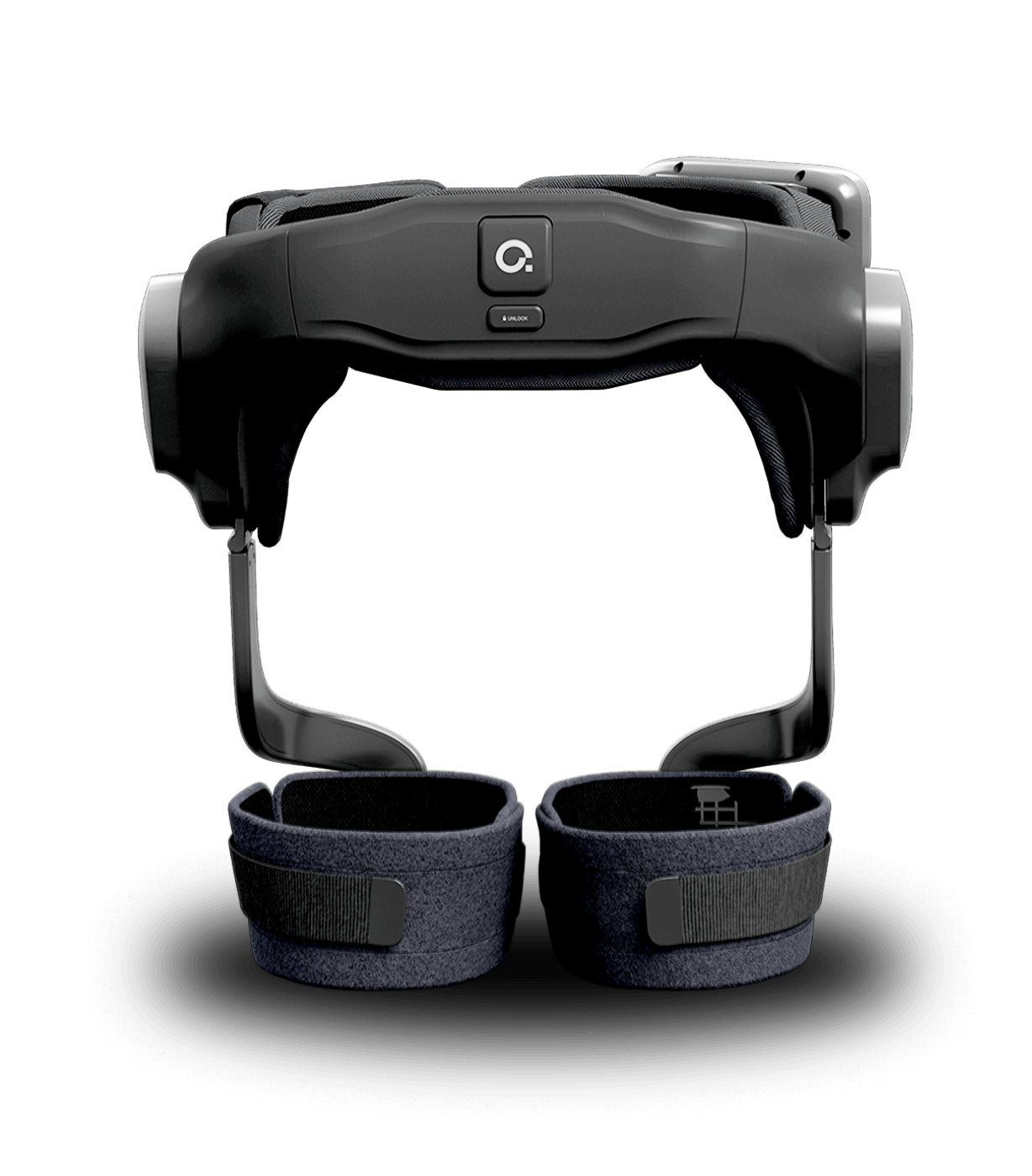
The H10 is a hip-level wearable device built around seven onboard sensors, designed to support two distinct uses: walking assistance for people who have lost some ability to walk unaided, and structured gait training for patients working to regain that ability after a stroke, spinal injury, or other neurological event. Strip away the robotics framing and the job the device does is straightforward. It reads a wearer's hip movement in real time and adds or subtracts mechanical assistance at the joint, the same function a physical therapist provides by hand during a session, except available for longer and more consistent intervals than a therapist's schedule allows.
Thailand Joins a Deliberate Southeast Asia Sequence
Angel Robotics is not treating the Thailand listing as an isolated regulatory filing. The company is building out a broader rehabilitation and assistive-robotics range in the country alongside the Angel Rex M20, a more heavily powered lower-limb exoskeleton aimed at intensive rehabilitation rather than daily walking support, which suggests Thailand is meant to carry a multi-product presence rather than a single-device trial. That sequencing mirrors the Vietnam entry two months earlier, where the H10 arrived first in a market the company has continued investing in since, including hosting a rehabilitation-robotics symposium there in August.
The strategic logic is worth naming plainly. A Korean wearable-robotics maker expanding through Vietnam and Thailand before any disclosed push into the United States or Western Europe is a bet that Southeast Asia's regulatory and reimbursement pathways move faster for a mid-sized exoskeleton company than the more crowded, more heavily contested medical-device markets further west. It is also a smaller, more defensible beachhead: a company the size of Angel Robotics would struggle to fund a simultaneous push into the US Food and Drug Administration's clearance process and Europe's medical-device regulation regime, while a sequence of ASEAN markets lets it build commercial infrastructure, clinical relationships, and reimbursement precedent one country at a time.
The regional logic extends beyond regulatory sequencing. Stroke incidence is rising across Southeast Asia as populations age, and rehabilitation infrastructure in much of the region has not kept pace with that shift: qualified physical therapists are scarce relative to patient need in many mid-sized Thai and Vietnamese hospitals, which is exactly the gap a wearable gait-trainer is built to narrow by extending a single therapist's effective caseload rather than replacing the therapist outright. That structural tailwind does not guarantee Angel Robotics captures the opportunity ahead of better-funded competitors from Japan, Europe, or the United States, several of whom are watching the same demographic trend. It does mean the underlying demand case for wearable rehabilitation robotics in the region, separate from any single company's execution, is sound enough to justify the regulatory investment Angel Robotics has now made twice in three months.
A Regulatory Listing Is Not Yet a Revenue Line
What a medical-device listing confirms, and what it does not, matters for anyone assessing how fast this expansion will show up in deployed units rather than press coverage. Thai regulatory clearance means the H10 can legally be sold and used in Thai clinical settings. It says nothing about which hospitals or rehabilitation centers will actually order it, how it will be reimbursed under Thailand's public or private health-insurance schemes, or how quickly a sales and service organization can be built to support it. That gap, between a device clearing a regulator's desk and a device showing up on a rehabilitation ward's weekly patient schedule, is the ASEAN deployment gap that separates intention from adoption, and it is the gap every wearable-medical-robotics vendor entering the region has to close through its own commercial execution rather than through a listing announcement.
No distribution partner, launch timeline, or specific hospital site has been named for the Thailand rollout. That omission is not necessarily a weakness; many device makers deliberately secure regulatory clearance before locking in commercial partners, so they can negotiate from a position of market access rather than market intent. But it does mean the gap between a demo-stage announcement and a deployable, reimbursable clinical product remains open in Thailand today, and buyers should treat the listing as a necessary first step rather than evidence that the H10 is already in routine clinical use there.
A Company Rebuilding Momentum at Home Before Expanding Abroad
The Thailand listing arrives during a period of visible reorganization at Angel Robotics itself. Founder Gong Kyung-chul returned as chief executive in October 2026 after a two-year absence, with stated plans to expand the company's physical-AI ambitions beyond its current rehabilitation-robotics core. Earlier the same month, Angel Robotics became the first company selected under South Korea's "Innovation Procurement Top Tier" program, a status that fast-tracks qualifying firms through Korean public-sector procurement processes, a domestic credibility marker that matters for a company now asking Southeast Asian regulators and hospital systems to trust its technology as well. The company has also unveiled a research-oriented wearable robot, the phai-x1, broadening its product line beyond the clinical Angel Suit series toward research and eventually non-clinical applications.
On the clinical side, the company's gait-rehabilitation technology already has one concrete reimbursement result to point to at home. South Korea's national health insurer added reimbursement earlier this year for one of the company's gait-rehabilitation robots used in treating children with cerebral palsy. That domestic reimbursement precedent is a more meaningful signal for Southeast Asian hospital buyers than the Thailand listing on its own, because it demonstrates the underlying clinical case has already cleared at least one public payer's bar, even though Thailand's own payers have made no equivalent commitment yet.
What a Southeast Asian Rehabilitation Buyer Should Actually Check
For a hospital administrator or rehabilitation-clinic operator in Bangkok, Jakarta, or Manila evaluating the H10 against established wearable-exoskeleton competitors, the practical diligence list is short and specific. First, confirm what the Thai listing actually covers: a device registration is not automatically a reimbursement code, and a buyer purchasing the H10 today may be doing so as a self-pay or grant-funded acquisition rather than one covered by Thailand's National Health Security Office. Second, ask what local service and training infrastructure exists. A gait-training device that needs recalibration or maintenance is only as useful as the nearest technician who can service it, and Angel Robotics has not disclosed a named distribution or service partner for Thailand. Third, weigh the H10 against the company's own broader rollout. A vendor building out a Thailand presence that includes the heavier-duty Angel Rex M20 alongside the H10 is signaling a multi-year regional commitment rather than a single-product test, which matters for a buyer weighing long-term parts and software support against a vendor that might not still be present in the market in three years.
That last point is the distinction between a demo and a deployable system, and it applies as much to wearable medical robotics as it does to industrial humanoids. A single device clearing a regulatory desk is a demo-stage milestone. A functioning distribution network, trained local technicians, and a reimbursement pathway that a hospital's finance department can actually model are what turn that milestone into a deployable system a procurement committee can sign off on. Angel Robotics has cleared the first hurdle twice now, in Vietnam and in Thailand. The second, harder set of hurdles, the ones that determine whether the H10 shows up in dozens of rehabilitation wards or sits mostly unordered on a regulatory registry, remains unresolved in both markets.
A Narrow but Replicable Playbook
None of this makes the Thailand listing a minor event. Wearable exoskeletons remain a small, technically demanding product category, and a company successfully carrying the same clinical device through two separate Southeast Asian regulatory systems inside three months has built real institutional capability in navigating ASEAN medical-device approval, capability that most robotics startups, focused on a single home market, do not bother to build. If Angel Robotics can pair that regulatory capability with the distribution and reimbursement work still outstanding, the H10 could become a reference case for how a mid-sized Asian robotics company scales a clinical wearable device across a fragmented regional market without the capital a US or European expansion would require.
Picture a rehabilitation ward in a Bangkok hospital six months from now. A patient recovering from a stroke works through a gait-training session, hip motors humming quietly under a fabric harness, while a therapist adjusts resistance settings on a tablet instead of physically supporting the patient's weight step by step. That is the scene Angel Robotics is betting its Thailand listing will eventually produce. Whether it does will depend less on the registration filed this week than on the distributor contracts, reimbursement conversations, and service technicians the company has not yet named.
This analysis reflects the author's own reading of Angel Robotics' October 29, 2026 announcement of its Angel Suit H10 market entry in Thailand, alongside the company's recent public announcements on its leadership change, procurement status, and Korean reimbursement history. It is provided for general information purposes only and does not constitute investment, procurement, or medical advice. Hero image: Angel Robotics, official product photography of the Angel Suit H10.