
AgiBot Hires Three Banks for a Hong Kong IPO That Will Put a Public Price on China’s Humanoid Boom
AgiBot, China’s shipment leader in humanoid robots, has engaged Citic Securities, CICC, and Morgan Stanley as sponsors for a Hong Kong initial public offering, according to people familiar with the mandate. The three-bank lineup, including a global bulge-bracket name, signals a listing marketed to international institutions rather than mainland funds alone. A prospectus would deliver something the humanoid sector has never produced: audited disclosure of unit volumes, margins, and customer concentration from its highest-volume player, just as the company targets 40,000 units this year and Washington legislates against Chinese humanoids. The filing that follows will price the entire boom.
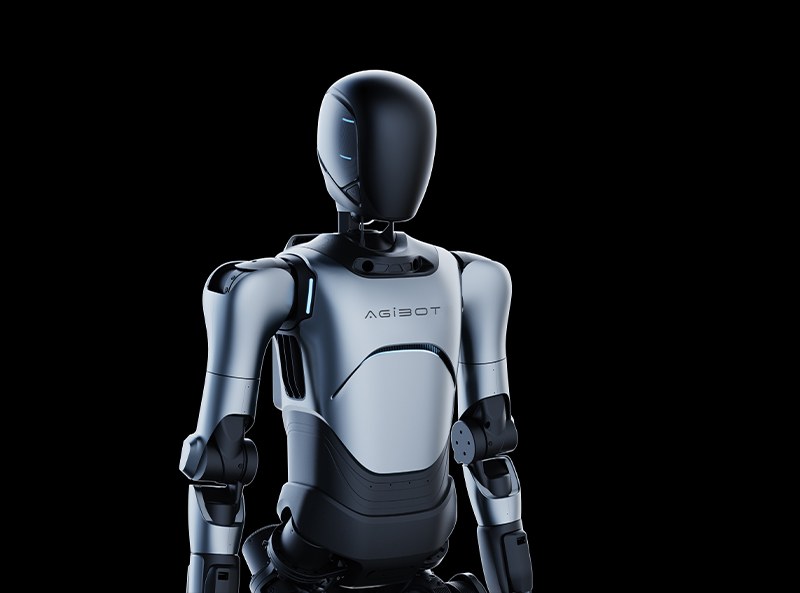
AgiBot, the Shanghai-based humanoid maker that shipped more robots than any other company last year, has hired Citic Securities, China International Capital Corporation, and Morgan Stanley as joint sponsors for a Hong Kong initial public offering, according to people familiar with the matter cited by the South China Morning Post. Neither the company nor the banks commented on the report.
The sponsor mandate converts a year of listing speculation into a concrete process. AgiBot restructured from a limited liability company into a joint-stock limited firm last year, the standard legal preparation for a Chinese listing, and earlier bought control of Shanghai-listed Swancor Advanced Materials for more than CN¥2 billion (US$295 million), a transaction the company insisted was not a backdoor listing. With three sponsor banks now engaged, the front-door route is officially the plan.
What the market will pay is the open question, and the reported numbers span an uncomfortable range. Reuters reported in 2025 that AgiBot was targeting a valuation of HK$40 billion to HK$50 billion, roughly US$5.1 billion to US$6.4 billion. More recent Hong Kong press reports put the ambition as high as US$20 billion. That fourfold spread is less a contradiction than a measure of how fast humanoid sentiment has moved, and of how little pricing precedent exists for what AgiBot is selling.
The Volume Leader Goes First
AgiBot arrives at the IPO gate with the strongest shipment record in the industry. The company delivered 5,168 humanoid robots last year, according to Omdia data, edging out Unitree Robotics at 4,200 units by the research firm’s count, though Unitree’s own figures claim more than 5,500. For scale, leading American developers including Figure AI, Agility Robotics, and Tesla each shipped roughly 150 units in the same period.
The company’s stated ambition for this year is of a different order entirely: partner and co-president Jiang Qingsong told local media in May that AgiBot is targeting 40,000 shipments in 2026, an eightfold increase. The financial base supporting that ambition, by the standards of a sector that mostly burns cash, is unusually presentable. AgiBot generated CN¥1.7 billion (US$237 million) in revenue last year with CN¥591 million (US$82 million) in adjusted profit, and plans to raise about CN¥4.2 billion (US$586 million) to expand development and manufacturing.
An adjusted profit in humanoid robotics deserves the skepticism the word “adjusted” always earns. The figure excludes costs that a public-company income statement will eventually have to include, and a prospectus vetted by three sponsor banks will show precisely how much distance separates adjusted profitability from the statutory kind. That disclosure, more than the valuation headline, is what the industry should be waiting for: it will be the first audited, regulator-reviewed account of what it actually costs to build and sell humanoids at four-digit volume.
The Swancor Detour and What It Taught the Market
The sponsor hires also close a chapter of speculation that AgiBot itself created. When the company spent more than CN¥2 billion (US$295 million) last December to take control of Swancor Advanced Materials, a Shanghai-listed maker of wind-blade resins with no robotics business to speak of, the market’s immediate conclusion was that AgiBot had bought itself a backdoor onto the A-share market. Swancor’s shares moved accordingly, and the episode briefly turned an obscure materials company into a proxy bet on humanoid robotics.
AgiBot insisted at the time that the acquisition was not a reverse listing, and the Hong Kong sponsor mandate now gives that denial its most credible supporting evidence. A company preparing to inject its assets into a listed shell does not simultaneously hire three investment banks for a front-door IPO in another jurisdiction. The more plausible reading of Swancor today is as a strategic platform: a listed vehicle through which AgiBot can consolidate supply chain assets, raise A-share capital for subsidiaries, and maintain a mainland capital markets presence alongside a Hong Kong primary listing. Several of China’s larger technology groups run exactly this dual-vehicle architecture, and it would suit a company whose ambitions increasingly resemble a group rather than a startup.
The choice of Hong Kong over Shanghai’s STAR Market, where rival Unitree filed this month, is itself informative. Hong Kong offers internationally settled currency, fewer profitability gatekeeping requirements, and access to global institutional investors who cannot hold A-shares, advantages that matter for a company whose supply chain, customer base, and now regulatory risks are increasingly international. The cost is exposure: Hong Kong pricing is set by global capital, and global capital will mark AgiBot against every geopolitical headline, including this week’s US House vote to bar the Pentagon from Chinese humanoids.
A Listing Window That Is Wide Open, for Now
The timing exploits the strongest Hong Kong IPO market in years. New listings in the first half of 2026 raised HK$210 billion (US$26.9 billion), up 92 percent year on year, with 87 companies debuting, nearly double the prior year’s count, according to PwC. The pipeline behind AgiBot includes names with global recognition, from fast-fashion giant Shein to optical transceiver maker Zhongji Innolight, whose offering aims to raise US$8 billion and could rank as the city’s largest listing in seven years.
The robotics cohort is moving as a pack. Unitree filed for Shanghai’s STAR Market earlier this month, while IPO applications from Leju Robotics and Deep Robotics have been accepted by the Shenzhen and Shanghai exchanges respectively. In the United States, Agility Robotics is proceeding toward a NASDAQ listing through a SPAC combination and appointed a public-company CFO this week. Within a few quarters, public markets on three exchanges will be pricing humanoid robotics against each other for the first time.
Going first in Hong Kong carries the same double edge it does everywhere. AgiBot would become the reference asset for the entire Chinese humanoid theme, capturing every index fund and thematic mandate that needs exposure. It would also absorb the full force of the market’s verdict if sentiment turns, and the private-market signals are not uniformly bullish: the sector’s own founders describe 2026 as a year of elimination, and cash runways across the industry typically run eighteen to twenty-four months.
What a Public AgiBot Changes
Think of the IPO as the moment the humanoid industry’s scorekeeping changes hands. Private valuations in this sector have been set by strategic investors with industrial motives, carmakers, component suppliers, and state-linked funds whose returns arrive partly through supply chains rather than share prices. A listed AgiBot will be marked to market daily by investors with no such cushions, on disclosed unit volumes, gross margins, and customer concentration.
For competitors, that transparency is a mixed gift. Every Chinese humanoid startup negotiating a funding round will find its terms benchmarked against AgiBot’s public multiple within weeks of the debut. A strong print lifts the whole cohort’s pricing; a weak one hands every venture investor in the sector a reason to tighten. For component suppliers, the prospectus will map AgiBot’s bill of materials and vendor relationships in unprecedented detail, intelligence the entire supply chain will study.
The sponsor selection itself carries signal. Citic Securities and CICC anchor nearly every flagship mainland technology listing, but the presence of Morgan Stanley indicates AgiBot intends to market the deal to global long-only institutions, not merely to mainland funds trading through Stock Connect. That choice raises the disclosure bar and widens the potential investor base simultaneously; it also means the roadshow will have to answer questions about geopolitical exposure that a purely domestic book could have politely ignored.
For international observers, the listing offers something rarer: a regulated window into Chinese humanoid economics at precisely the moment Washington has begun legislating against the machines. The House of Representatives passed a defense bill this week barring the Pentagon from procuring Chinese humanoid robots, and every prospectus risk-factor section drafted for AgiBot will now need a paragraph on US regulatory exposure.
The 40,000-unit target deserves its own scrutiny before it hardens into the offering narrative. An eightfold volume increase in a single year would be extraordinary in any hardware category; in one where the flagship products still perform site-specific work in pilot conditions, it implies either a large anchor order book that has not been publicly detailed or a definition of shipment generous enough to include development kits and entertainment units. Sponsor due diligence will have to convert that target into a documented backlog, and the gap between the two, whatever it turns out to be, will do more to set the final valuation than any comparison table the banks assemble.
Watchers should also mark the calendar mechanics. Hong Kong filings typically surface three to six months after sponsor engagement, which points to a prospectus landing around the turn of the year, potentially within weeks of Unitree’s Shanghai debut. Two rival humanoid listings pricing against each other across two exchanges would give the sector its first genuine valuation discovery event.
No date has been set, and sponsor mandates have been known to sit for quarters before a filing appears. But the direction is unambiguous, and the sequencing is nearly poetic: the company that won the shipment race gets to discover, first and in public, what a humanoid robot business is actually worth.
Disclaimer: This article is for general information purposes only and does not constitute investment, legal, or procurement advice. Readers should verify details with primary sources before making business decisions.












