NVIDIA's New Robot Brain Learns Jobs It Was Never Shown
NVIDIA opened GR00T 2, a robot foundation model that learns new tasks from one demonstration, and Isaac Lab 3.0, a faster simulator, giving any robot maker free access to AI once limited to well-funded in-house teams.

NVIDIA's New Robot Brain Learns Jobs It Was Never Shown
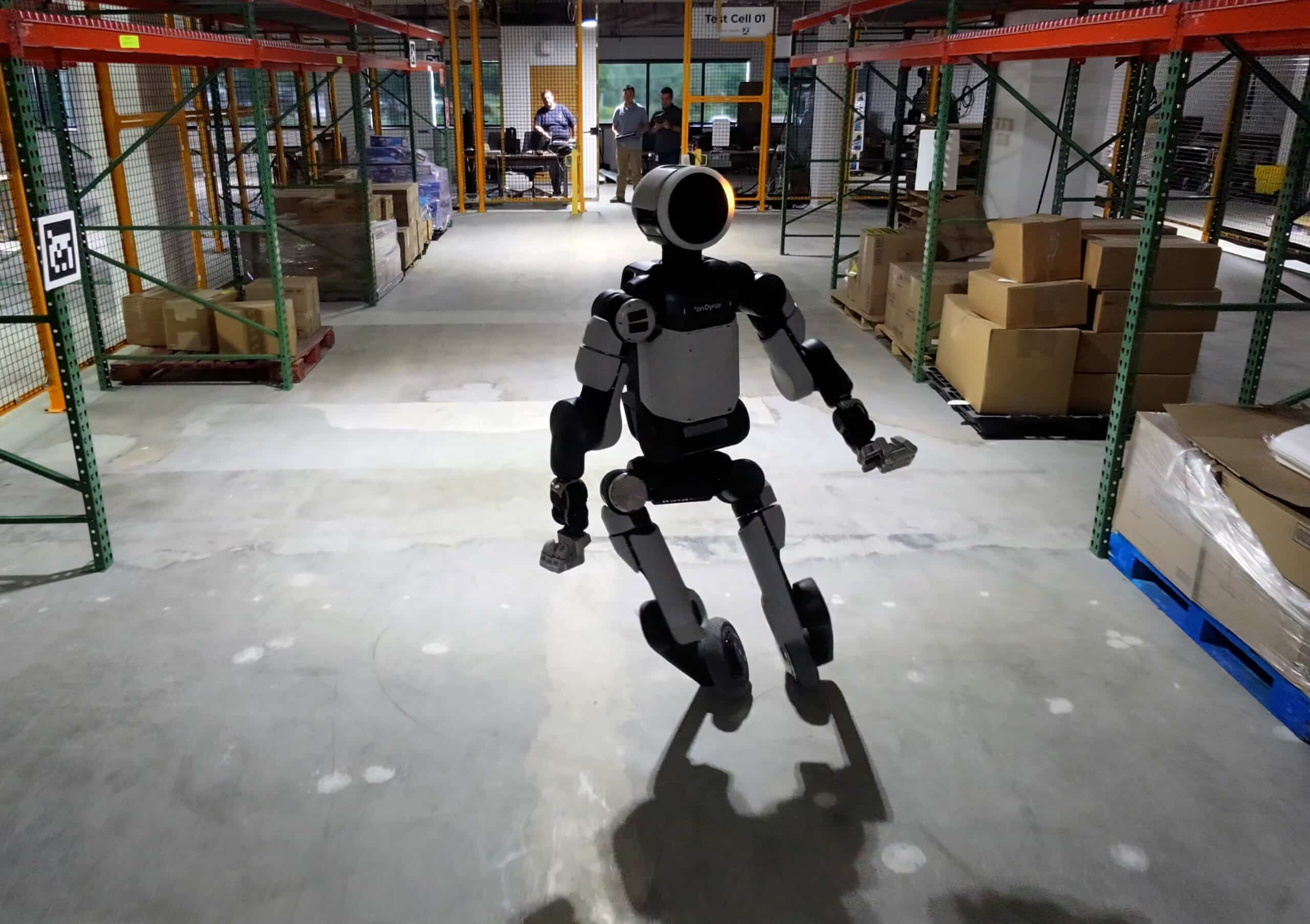
A warehouse-automation buyer evaluating a new robot controller this month would find one running NVIDIA's newest model completing 40 of 50 unfamiliar tasks on its first attempt, without a single task-specific demonstration and without rehearsing on that exact job beforehand. NVIDIA released that model, called GR00T 2, alongside version 3.0 of its Isaac Lab simulation framework on November 9 at the Conference on Robot Learning (CoRL), giving any robot maker free access to software that previously required building an in-house AI team to replicate.
GR00T 2 is what NVIDIA calls an open world action model, trained on robot data plus 100,000 hours of NVIDIA's own open-source human egocentric video, meaning footage recorded from a first-person, head-mounted perspective rather than a fixed security camera. Give it one demonstration of a new task and it succeeds 71% of the time; give it five, and that rises to 95%. Those are not simulation numbers lifted from a research paper's best run. They come from NVIDIA's own published evaluation across 50 distinct tasks, and the model places among the top three performers on four separate independent benchmark suites built to test exactly this kind of generalization: RoboCasa365, RoboLab, RoboDojo and MolmoSpaces.
Why a Free Robot Brain Changes the Buying Calculus
The commercial logic here is straightforward and worth stating plainly for anyone sourcing robots rather than researching them. Training a robot to handle a new SKU, a new bin layout, or a new assembly step has historically meant collecting hundreds or thousands of demonstrations specific to that robot body and that task, then retraining a model, a cycle that can take a vendor's engineering team weeks per customer site. GR00T 2's one-demonstration benchmark result, even accounting for the gap between a controlled evaluation and a messy factory floor, points toward a future where that retraining cycle compresses from weeks to days. For a procurement team weighing total cost of ownership on a fleet of mobile manipulators, the AI stack powering the robot's decision-making is no longer a given vendor's proprietary moat. It is increasingly a shared, freely available layer that any integrator can build on top of, which shifts competition toward the hardware, the service contract, and the integration work rather than the algorithm itself.
That shift is already visible in who NVIDIA named as early adopters. Warehouse-automation specialist Ambi Robotics, industrial-AI firm Dyna Robotics, and contract manufacturer Foxconn are all listed among the partners testing the new stack, alongside robotics names with less public visibility, including Dexmate, FieldAI, Flexion, Walden Robotics and Nexuni. UC Berkeley, the University of Washington and the University of Texas at Austin's Texas Robotics program round out the list on the research side. None of that roster guarantees GR00T 2 will outperform a purpose-built competitor's model on a specific task a buyer cares about. It does mean the model has already cleared the first filter that matters commercially: multiple independent integrators judged it worth building on top of before the public release.
The Simulation Engine Doing the Unglamorous Work
Isaac Lab 3.0, released the same day, is the less visible half of the announcement but arguably the more consequential one for buyers planning multi-year robotics programs. Simulation only transfers to a real robot if the physics inside the simulator match the physics the robot actually experiences, a gap engineers call the sim-to-real problem. Isaac Lab 3.0 lets developers switch between NVIDIA's established PhysX engine and a newer solver called Newton, and the Newton integration specifically adds the ability to model deformable objects such as cables and cloth, along with articulated systems like multi-fingered robotic hands, categories that PhysX has historically struggled to simulate with enough fidelity to train a transferable policy. In NVIDIA's own vision-based dexterous-manipulation benchmark, Isaac Lab 3.0 running on Newton reached up to 2.5 times the training throughput of the prior Isaac Lab 2.3 release running on PhysX.
Throughput matters more to a buyer's timeline than it sounds. A robotics integrator training a grasping policy for a new part geometry needs to run millions of simulated attempts before a model is reliable enough to trust on real hardware. Cutting that training time by more than half compresses the gap between a customer signing a contract for a new application and that application actually running reliably on the floor, which is the stretch of the sales cycle most robotics vendors lose money on. Isaac Lab 3.0 also ships a new reinforcement post-training library built specifically to refine foundation models like GR00T 2 after their initial training, and a developer preview of Isaac Lab-Arena, a testing environment vendors can use to benchmark their own models before committing to a hardware integration.
Two New Benchmarks Built to Catch Overclaiming
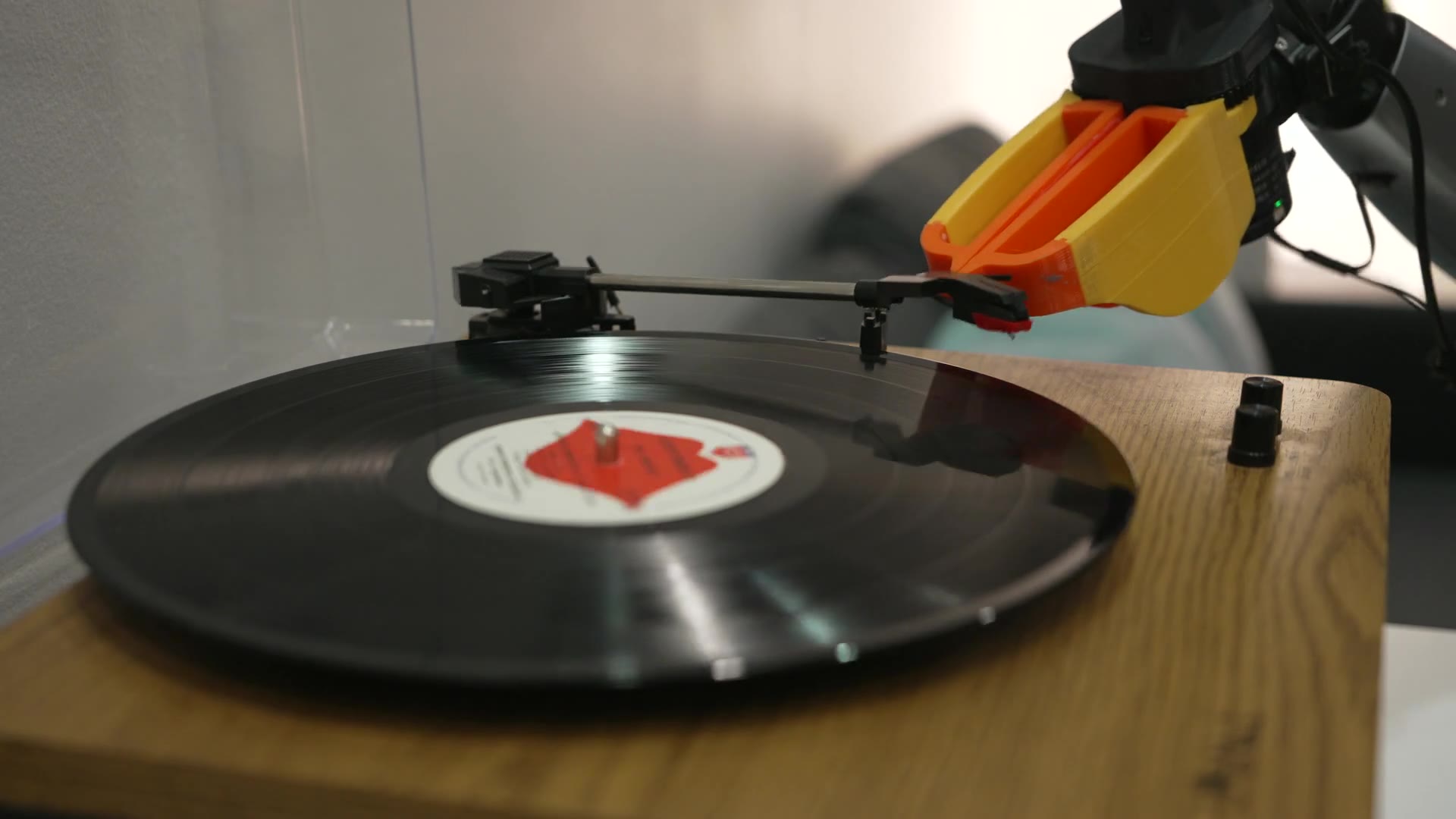
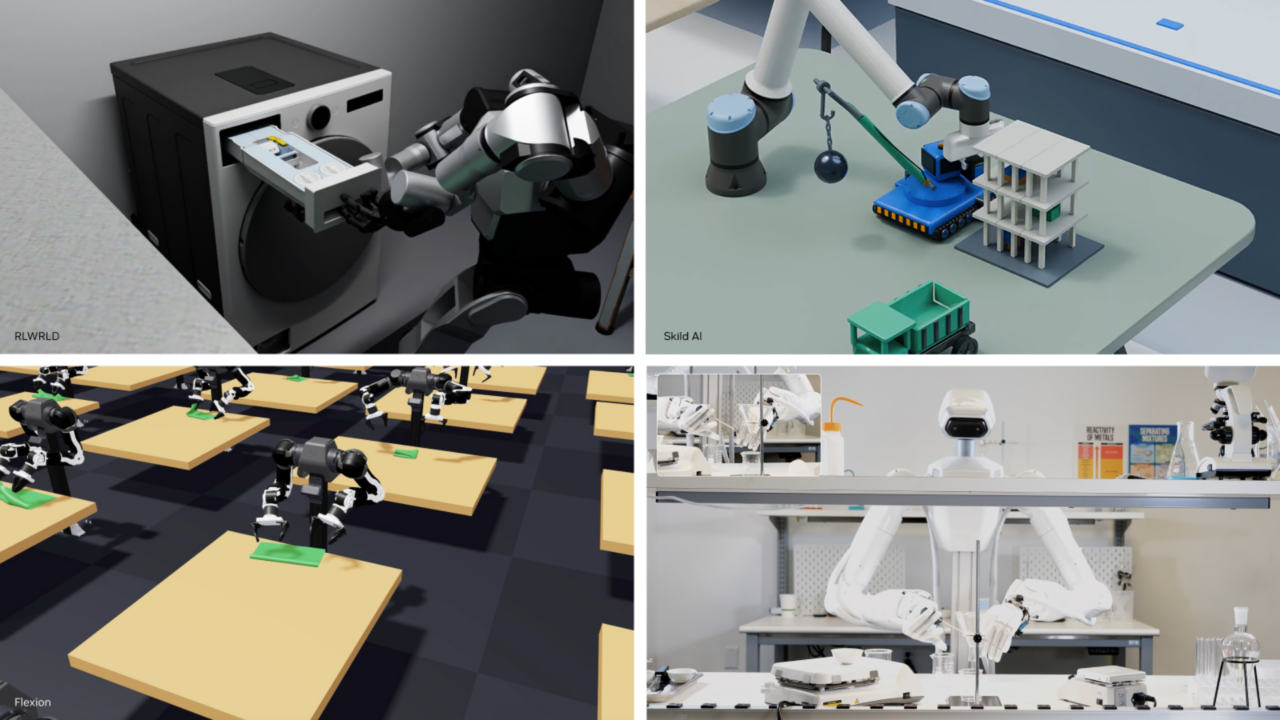
NVIDIA also published two new third-party benchmarks designed to stress-test exactly the kind of generalization claims robot-AI vendors routinely make in sales pitches. DexBench, built with Korean robotics-AI firm RLWRLD, runs 15 dexterity tasks across four commercially relevant scenes: retail, logistics, manufacturing and hospitality, each testing how a model handles variation in object shape, spatial layout and physics rather than a single fixed demo. VABAR, short for Variational Automation Benchmark for Agentic Robotics and built with UC Berkeley, applies the same logic to six industrial tasks, each run across standardized variations and difficulty tiers rather than one scripted success case.
Ken Goldberg, the UC Berkeley robotics professor who leads VABAR alongside a separate project called Graph-as-Policy, framed the moment in terms that go beyond a single product release. "To me, agentic robotics is the most exciting technological development since the internet in 1995," he said. For a procurement audience, the more useful takeaway than the enthusiasm itself is the existence of the benchmark: a buyer evaluating competing humanoid or mobile-manipulation vendors now has an independent, publicly available yardstick for generalization claims that previously had to be taken on a vendor's word, tested only against that vendor's own curated demo.
Open Versus Closed Is the Real Fork in the Road
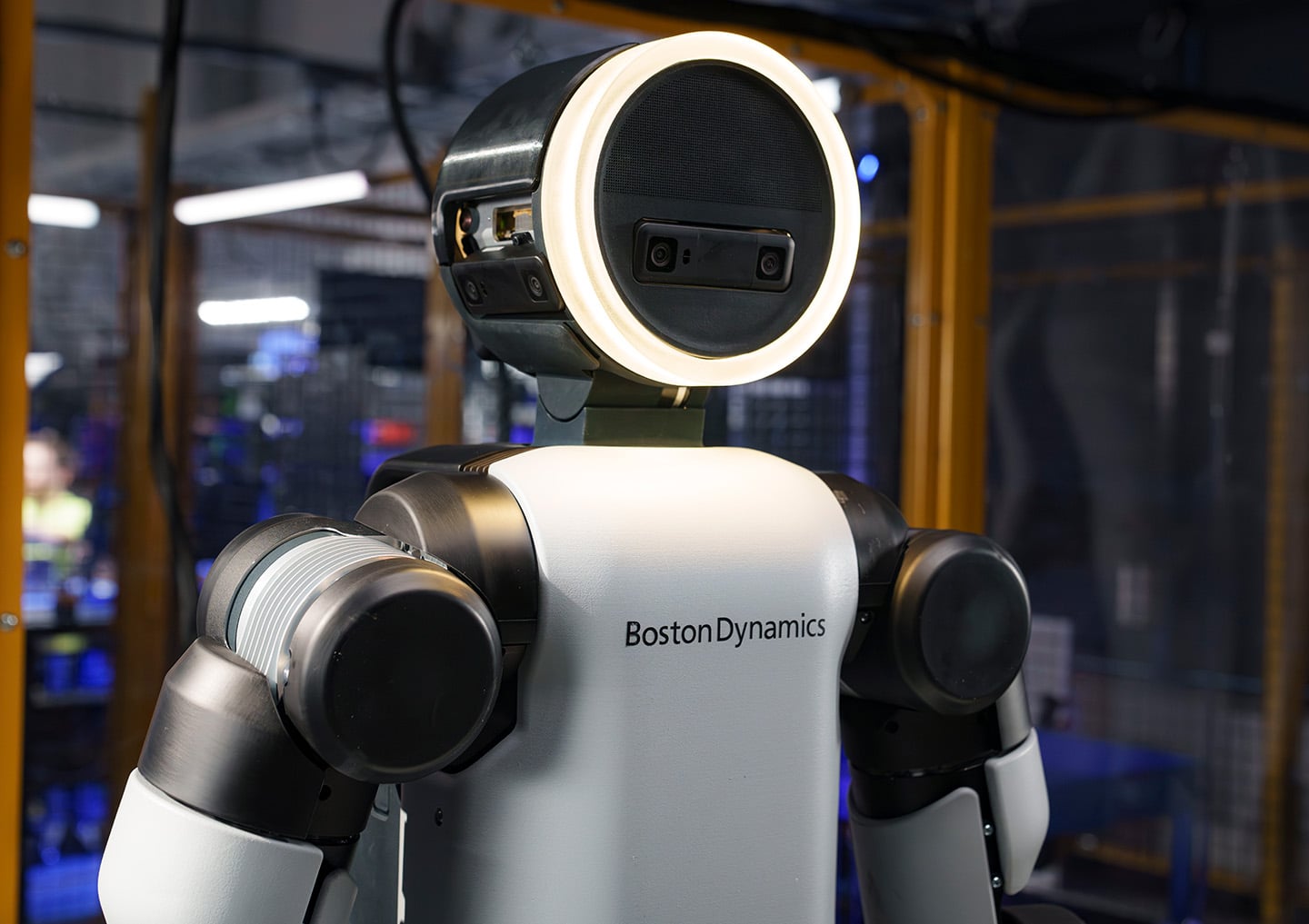
GR00T 2 does not arrive into an empty market, and the distinction that matters most to a buyer is not which model scores highest on a benchmark but which models a vendor can actually inspect, modify and run without a recurring license fee. Figure AI's Helix, the vision-language-action system powering Figure's own humanoids, remains proprietary; Figure builds both the hardware and the brain and has no public plan to open either. Google DeepMind's Gemini Robotics follows a different closed model: it reaches hardware makers like Apptronik's Apollo humanoid through an API relationship with Google, which means every inference call to the robot's decision-making runs through a cloud dependency the integrator does not control. Physical Intelligence, by contrast, builds a robot-agnostic intelligence layer on purpose and open-sourced its first model, called pi-zero, back in February 2025, putting it in the same free-to-inspect camp NVIDIA is now expanding with GR00T 2.
That split, open-and-inspectable versus closed-and-metered, is the axis procurement teams should actually be sorting vendors on, more than any single accuracy number. A closed model ties a buyer's robotics program to one company's roadmap, pricing decisions and continued existence; an open model can be forked, audited for the specific failure modes a buyer's facility cares about, and run on infrastructure the buyer controls. NVIDIA entering that open camp at scale, with a model NVIDIA itself claims is competitive with closed alternatives on independent benchmarks, puts pressure on Figure and Google to either open their own stacks or justify the closed model's premium with capability no open alternative can match. Neither has signaled it will do the former.
What Buyers Should Actually Watch Next
None of this makes GR00T 2 a finished product a buyer can drop into an existing fleet tomorrow. NVIDIA's own evaluation still shows a 29% failure rate on first attempts across the 50-task suite, and generalization benchmarks built in simulation or controlled testbeds routinely overstate how a model performs against the specific mess of a real customer's facility: inconsistent lighting, worn fixtures, and product variations a lab environment never modeled. The honest reading is that NVIDIA has lowered the cost of entry for building a capable robot brain, not eliminated the integration work needed to make one reliable at a specific site.
What is worth tracking over the next two quarters is simpler and more concrete: which of the named early-access partners, Ambi Robotics and Dyna Robotics in particular given their existing warehouse and industrial customer bases, ship a commercial deployment running on GR00T 2 rather than a demo video, and whether the EgoHand hand-tracking model NVIDIA also released, already past 40,000 downloads on Hugging Face in its first two weeks, becomes a de facto standard for the dexterous-manipulation data pipeline the way earlier NVIDIA open releases became standards for perception and mapping. A free, well-benchmarked robot brain is only as valuable as the hardware and service relationship wrapped around it, and that is the layer where the actual purchasing decisions, and the actual margin, will continue to be made.
This analysis is for general information purposes only and does not constitute investment, legal, or professional advice. It synthesizes NVIDIA's own published announcement and benchmark results from its November 9 CoRL release.