Serve Robotics Sells Its Delivery Data Stack to Robot Makers
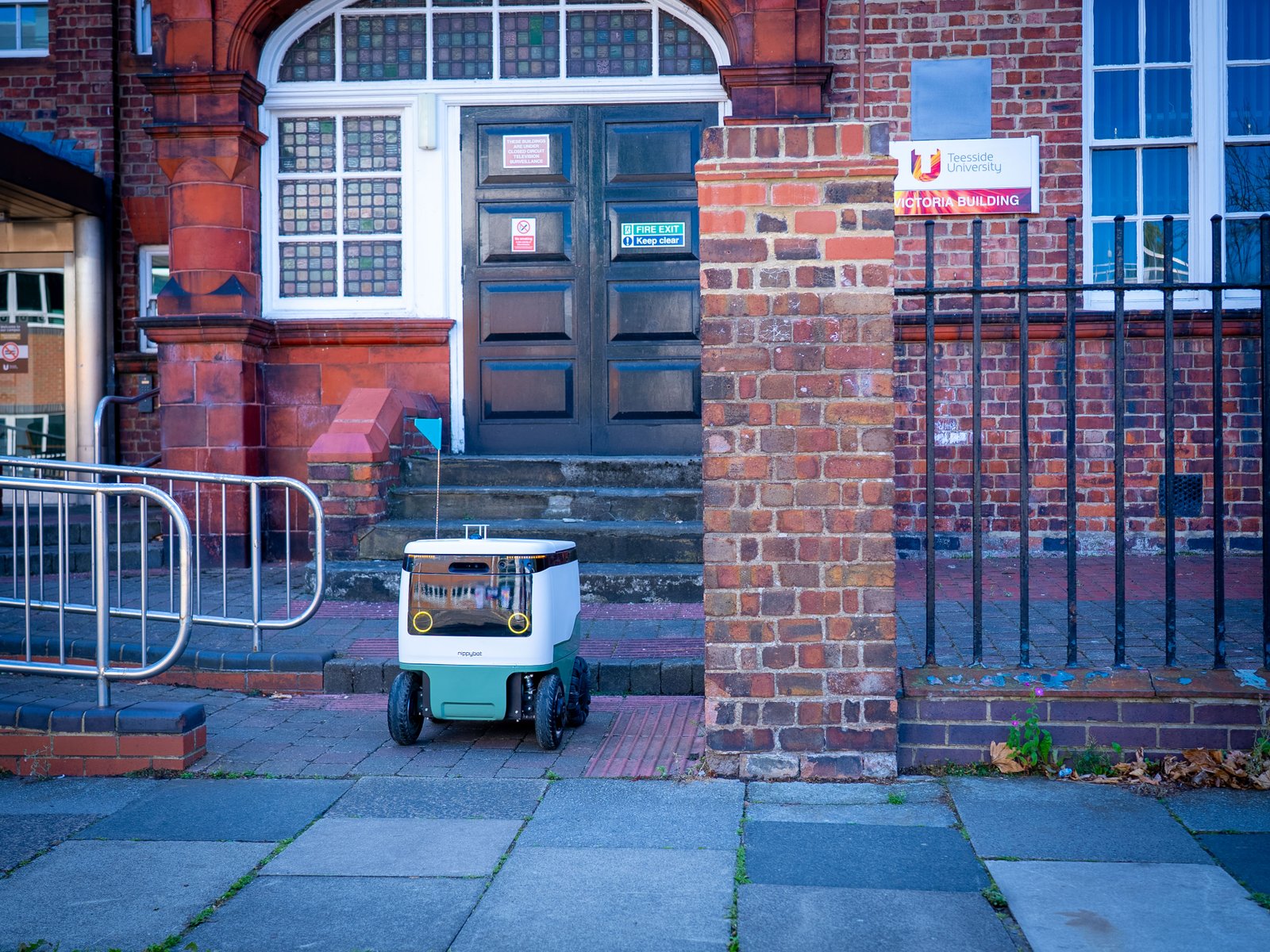
Serve Robotics is opening the connectivity and data infrastructure behind its sidewalk delivery fleet to outside robot makers, starting with a construction-site autonomy customer, as it looks for a second revenue line beyond food delivery.

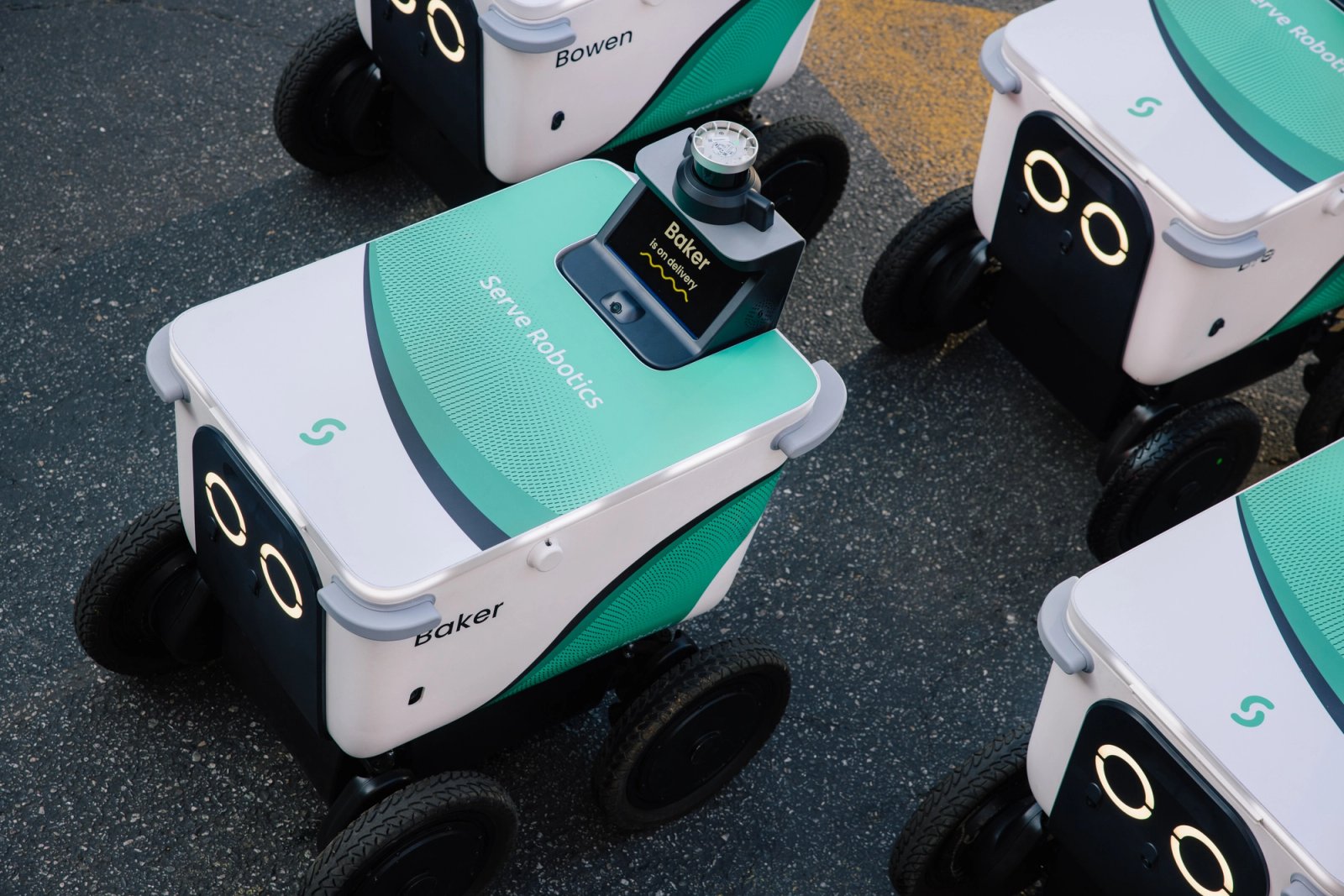
Serve Robotics has put a price tag on something most robot fleet operators treat as a cost center: the plumbing that keeps machines connected, fed with data, and improving over time. On Thursday, alongside its third-quarter 2026 earnings, the Nasdaq-listed sidewalk delivery company said it will sell that plumbing, under the name Physical AI Services, to other companies building robots for farms, warehouses, and other environments no factory floor was designed for.
The pitch is narrow and specific. Serve is not selling robots to competitors. It is selling three pieces of infrastructure it built to keep its own delivery fleet running: a connectivity layer that links field robots to data-center compute, a tool that mines real-world robot data for the edge cases that break autonomy stacks, and a catalog of that data itself, assembled from machines that have spent years navigating sidewalks full of strollers, dogs, and distracted pedestrians. The first paying customer is Bedrock Robotics, a San Francisco-based startup founded in 2024 by former Waymo engineers that retrofits excavators, bulldozers, and loaders with autonomy hardware under its Bedrock Operator platform, and which has run supervised autonomous mass excavation at a 130-acre manufacturing site.
A Fleet That Became a Supplier
Co-founder and chief executive Ali Kashani frames the move as the moment Serve's internal tooling earned a business of its own, comparing it to the point Amazon's internal computing infrastructure became Amazon Web Services. The comparison is a founder's shorthand, not a claim of scale, but the mechanics hold up: a company built hard infrastructure to solve its own operating problem, found that infrastructure useful beyond its original purpose, and decided to sell it. Kashani says none of it would exist without Serve's own fleet logging years of edge cases on public sidewalks first.
Bedrock's problem looks nothing like Serve's on the surface. A delivery robot crosses a crosswalk; an excavator working a job site does not, and Bedrock has raised roughly US$950 million across four rounds since mid-2025, most recently a US$600 million Series C in October at a US$4.1 billion valuation, precisely because investors believe construction autonomy is a large enough market to justify that infrastructure build-out alone. But both companies' robots operate outside the structured, mapped environments that most industrial robotics was built for, and both need a way to catch the rare, expensive failure case, feed it back into training, and do it without hauling a data center onto the vehicle. That shared operating problem, not shared geography or shared customers, is what Serve is selling.
Where the Compute Actually Lives
The first of the three products, Serve Link, addresses the compute problem directly. Field robots are constrained by batteries, weight, and heat, which caps how much onboard inference they can run economically. Serve Link routes that work to data-center-grade models instead, letting a lighter, cheaper robot borrow decision-making power it could never carry itself. Serve is working with telecom carrier T-Mobile to push that connectivity closer to the robots operating in the field, an arrangement that points to where the real bottleneck in outdoor autonomy has shifted. The limiting factor is no longer how smart the onboard model is; it is how fast and how reliably a robot thirty miles from the nearest data center can reach a smarter one.
That is a telecom problem as much as a robotics one, and it explains why Serve went to a carrier rather than building its own network. Cellular coverage on a construction site or a rural logistics yard is inconsistent in ways a downtown sidewalk mostly is not, and latency spikes in exactly the moments an autonomy stack most needs a fast answer, when a worker, a vehicle, or an unmapped obstacle appears without warning. A connectivity partner that already operates towers near a customer's job sites is a faster route to reliable field coverage than Serve negotiating spectrum and backhaul deals on its own, and it lets the company keep its engineering focus on the software layer where it has an actual operating record.
The Infrastructure Layer Investors Keep Funding
Serve's move fits a pattern that has been building across physical AI for most of 2026: venture money and public-market capital are increasingly rewarding the companies that sell the scaffolding beneath robots, not just the robots themselves. Compute platforms, simulation environments, teleoperation tooling, and now field connectivity and curated operating data have each become standalone businesses, because training a reliable autonomy stack from scratch is slower and more expensive than buying access to someone else's years of real-world mileage. Serve's advantage in that market is not a better robot. It is four years of sidewalk operation that cannot be purchased any faster by writing a bigger check, and that scarcity is precisely what it is now pricing for sale.
The second and third products are less glamorous and arguably more valuable to a buyer doing diligence. The data curator tool is built to find the edge cases inside a fleet's operating history: the delivery that got blocked by an unexpected obstacle, the moment a sensor read the world wrong, the interaction a planner had not anticipated. Those moments are rare individually and decisive collectively, since most autonomy failures cluster in a long tail of situations that training data rarely covers well. Serve's own foundation-model data catalog, built from its sidewalk fleet's accumulated miles, is the raw material behind it: a record of how machines behave in environments full of people who were never told to expect a robot and will not get out of its way.
A New Line Item in the Procurement Conversation
For a procurement team evaluating outdoor or semi-structured autonomy, that is the commercially relevant part of this announcement. Buying a robot platform is increasingly a choice about more than hardware and a base model; it now means choosing a data and connectivity supplier as well, and that supplier does not have to be the company that built the chassis. Serve is betting that its multi-year operating record in an uncontrolled public environment is a more defensible asset than any single robot it has shipped, and that other fleet operators would rather buy years of edge-case data than spend years accumulating their own.
None of this displaces Serve's existing businesses. The company's sidewalk delivery fleet keeps running, now shifting its commercial weight away from its original Uber Eats partnership toward DoorDash and the delivery platform Wonder. Its hospital robot line, inherited through the acquisition of Diligent Robotics, also continues unchanged. Physical AI Services sits alongside both rather than replacing either, which matters for how durable the new revenue line looks on a balance sheet: it is underwritten by operations that already generate cash, not a speculative pivot away from them.
What a Buyer Still Does Not Know
Serve disclosed no pricing, no contract terms, and no revenue target for the new business. That omission is the honest caveat in an otherwise clean strategic logic: infrastructure businesses live or die on unit economics that were not shared here, and a single named customer in construction autonomy is a proof of concept, not a market. A company such as Bedrock, flush with nearly a billion dollars of its own venture funding, is also not a typical buyer; it can afford to pay for infrastructure that a smaller robotics startup might choose to build in-house instead. Companies evaluating Physical AI Services as a vendor, rather than reading about it as a strategy story, will need Serve to answer the pricing question, and show a second and third customer outside construction, before this becomes a recurring line item in anyone else's budget.
There is also a structural question a buyer should ask before signing on: what happens to a company's own operating data once it flows through someone else's curation pipeline. Serve has not published terms on data ownership, exclusivity, or whether a customer's edge cases could, in aggregate, sharpen a future Serve competitor's own fleet. For a construction-autonomy company competing on exactly the kind of rare-failure handling Serve is selling tools to find, that is not a minor footnote. The willingness to hand sensitive operating data to an outside vendor, even one without a competing product in the same vertical, is itself a commercial decision procurement and legal teams will need to weigh separately from the technical pitch.
What a four-year-old sidewalk robot company can tell an excavator-autonomy startup about operating in an unstructured world is not obvious until the two are named in the same sentence. For procurement teams building physical AI products today, the more durable lesson is simpler: the hardest and most expensive part of outdoor autonomy was never the robot itself. It was the years spent collecting what the sidewalk, the job site, or the warehouse floor actually throws at a machine, and Serve has decided that record is worth selling before a rival fleet operator decides to sell theirs first.
This article is based on company statements made in connection with Serve Robotics' third-quarter 2026 earnings and public market activity, and is intended for general information purposes only; it does not constitute investment, financial, or legal advice.