Carnegie Mellon's $15,000 Robot Learns Chores From Watching Humans
Carnegie Mellon researchers unveiled Pixel, a wheeled research robot built for under US$15,000, paired with a learning system that teaches it household tasks from handheld human demonstrations rather than costly teleoperation.

Carnegie Mellon University researchers published two papers on November 2, 2026, describing Pixel, a wheeled research robot paired with a learning method called Pixel-UMI that teaches it chores by watching humans perform them with handheld recording tools rather than by piloting the robot itself through every example. The project's own site puts the hardware's reported build cost under US$15,000, a research-platform estimate rather than a retail price, at a moment when most capable manipulation robots in academic labs cost several times that to assemble.
The work comes out of the lab of Deepak Pathak, the Raj Reddy Assistant Professor at CMU's School of Computer Science, led by graduate researchers Tony Tao and Jason Jingzhou Liu, who share equal credit, with Pathak and Ruslan Salakhutdinov sharing equal advising credit. Pathak is also a cofounder and chief executive of Skild AI, a well-funded robotics-foundation-model startup, but Pixel is explicitly a CMU lab project rather than a Skild AI product, and the distinction matters for anyone trying to track which organization owns what in a field where academic labs and their founders' startups increasingly overlap. Pathak called it "one of the most ambitious projects from my CMU lab" in a post on social media, a framing that keeps the work inside the university's publication and open-source norms rather than a company's commercial roadmap.
A Body Built Around a Cheaper Way to Teach It
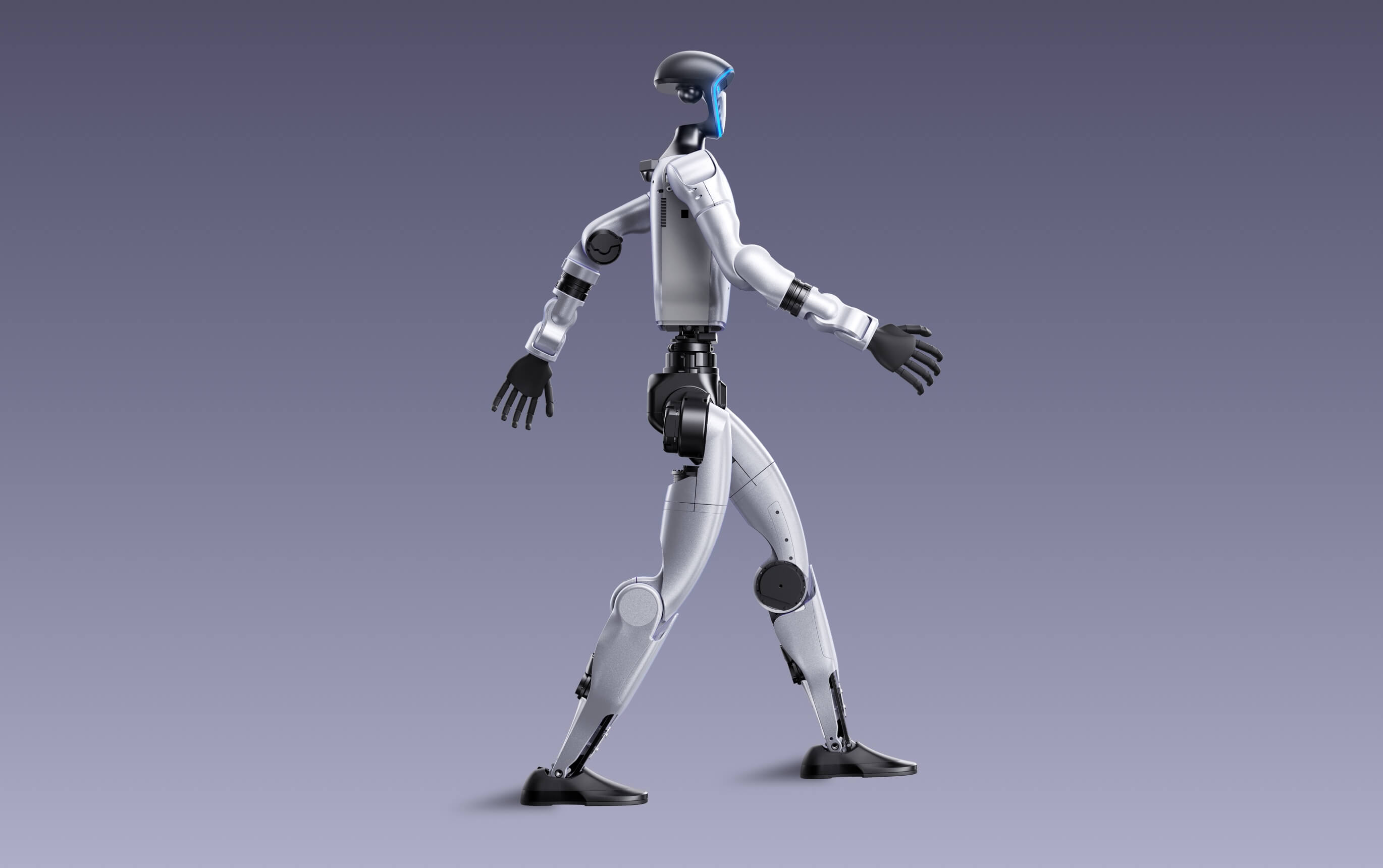
Pixel pairs a 17-degree-of-freedom upper body with an omnidirectional wheeled base, a vertical lift, an articulated torso, and compliant grippers designed to absorb contact rather than fight it. None of those specifications is unusual on its own. What makes Pixel worth watching is the teaching pipeline wrapped around the hardware, which is the part of a manipulation robot that normally costs more than the robot itself once a lab factors in the engineer-hours spent on teleoperation.
Most robots that learn manipulation from demonstration today require a human to pilot the actual robot through every example, recording joint trajectories the robot can later replay or generalize from. That approach scales poorly: every new environment or task variation means another round of teleoperated data collection on the physical hardware, with the robot itself as the bottleneck. Pixel-UMI, the companion method CMU released alongside the hardware, sidesteps that bottleneck by having humans wear sensorized handheld grippers and a head-mounted camera to record demonstrations directly, without the robot needing to be present at the location where the task happens at all.
How a Video of a Human Becomes a Robot's Instructions
The pipeline works in two stages. A vision-language model first breaks a spoken or written instruction into a sequence of subtasks, the kind of high-level planning step that large multimodal models have gotten reasonably good at over the past two years. A separate, lower-level learned policy then generates the actual movement for each subtask, and this is where Pixel-UMI's reconstruction step does its work: it takes the recorded human demonstration and maps the human's hand and arm movements onto collision-free postures for Pixel's own, differently proportioned body, correcting for the fact that a human's head-mounted camera sees the world from a different vantage point than Pixel's own sensors do. Human corrections offered while the robot is actually executing a task get folded back in to improve performance on the contact-heavy steps, the ones where a few centimeters of error means a dropped object or a stalled grip rather than a clean completion.
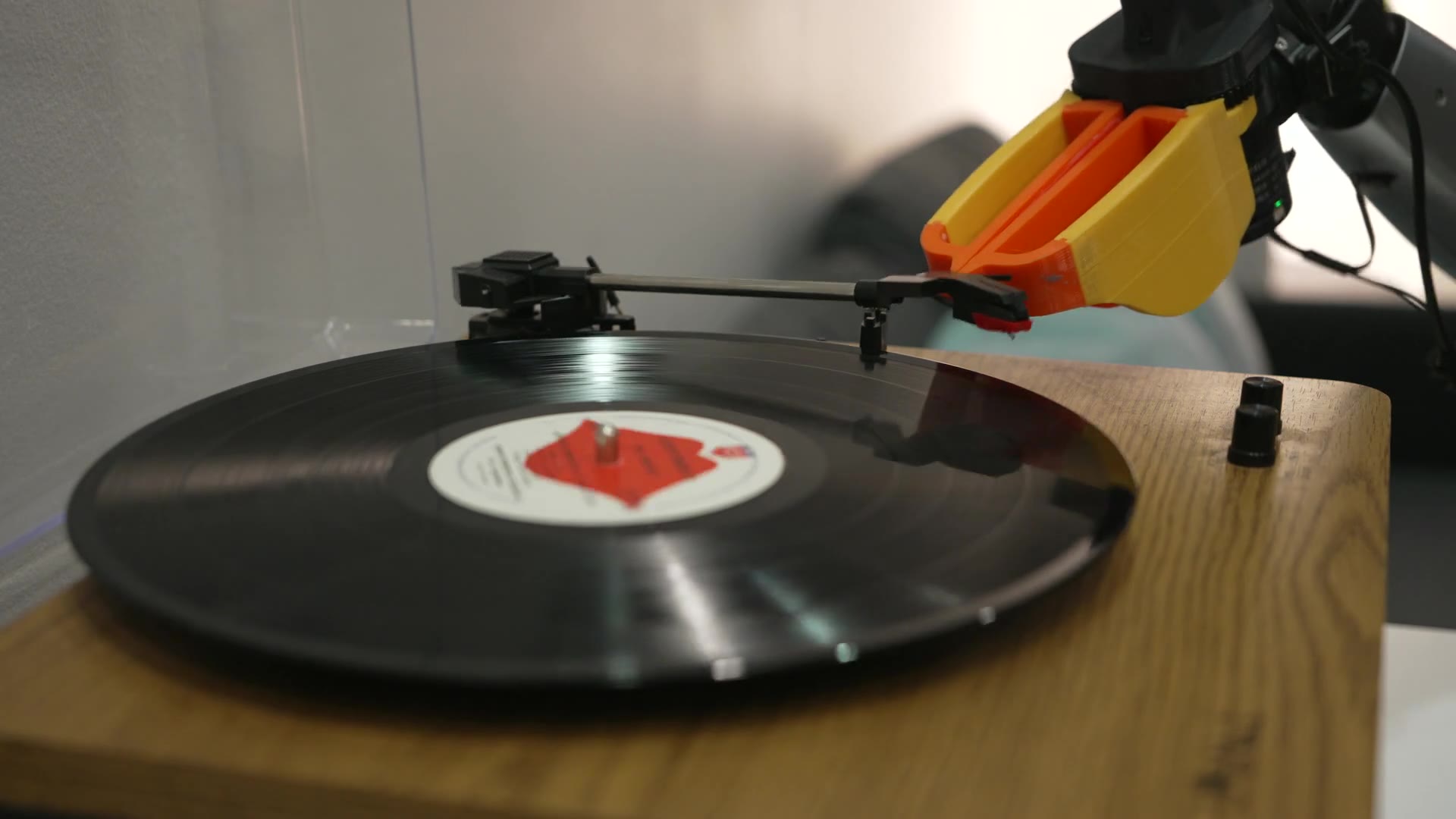
In practice, that pipeline let Pixel perform autonomous demonstrations of toy cleanup, pillow tidying, vacuum cleaning, and snack retrieval, tasks drawn from the kind of unstructured home environment that has remained stubbornly difficult for robots trained mainly in warehouses and labs. Two additional tasks, loading a dishwasher and operating a record player, were shown under teleoperation rather than full autonomy, a distinction CMU's own materials are careful to keep separate and one worth preserving here rather than blurring into a single capability claim. The record-player task, in particular, is a useful illustration of the kind of fine motor sequencing, lifting a tonearm, setting it down on a specific groove, that remains squarely in teleoperated territory rather than autonomous territory for this generation of the system.
What 87 Percent Actually Measures
CMU's reported headline figure is an 87 percent average task progress across five tasks, and the word "progress" is doing real work in that sentence. This is not a flat success rate in the sense of five tasks completed cleanly 87 percent of the time; it is a metric that credits partial, intermediate progress toward a task's completion, meaning a robot that gets most of the way through a multi-step chore before faltering scores meaningfully above zero even without a clean finish. That is a standard and defensible way to report results in robot-learning research, since binary success rates tend to understate genuine progress on long-horizon tasks, but it is also a figure that reads more impressively in a headline than it does once a buyer understands exactly what is being averaged. Anyone evaluating demonstration-learning systems against this benchmark should ask explicitly whether a reported number is a completion rate or a progress metric before comparing it against a rival system's claims, since the two are not interchangeable.
The system's own limitations are documented alongside the results rather than left for outside reviewers to discover. The high-level planner relies on a predefined library of skills, which means Pixel's apparent flexibility in choosing what to do next is bounded by what someone has already taught it how to do at the subtask level; it is not yet composing genuinely novel manipulation strategies from first principles. An open-source release of the code and training pipeline is promised on the project's own site but had not shipped as of the papers' publication, so outside labs cannot yet independently verify the reported numbers on their own hardware.
The name Pixel-UMI also signals where this work sits inside a broader research lineage rather than standing apart from it. Handheld, robot-free data-collection rigs for manipulation learning have been an active research thread across several labs over the past two years, built on the premise that the physical robot is the most expensive and least scalable part of a teleoperation pipeline, and that a cheap handheld tool can capture most of the useful signal without it. CMU's contribution is less about inventing that premise than about pairing it with a specific reconstruction method tuned to Pixel's own wheeled, dual-arm body and validating it across a mixed set of autonomous and teleoperated household tasks rather than a narrower lab benchmark. That incremental, system-level framing is typical of how progress in this corner of robotics tends to compound: not through a single breakthrough paper, but through successive labs validating a shared data-collection premise on increasingly capable hardware.
Why a Cheaper Teaching Method Matters More Than a Cheaper Robot
The headline build-cost figure invites comparison to far more expensive humanoid platforms, but the more consequential cost reduction here is in the teaching process, not the hardware bill of materials. A robotics buyer evaluating demonstration-learning as a path toward deployable home or light-commercial robots should weight the handheld-recording approach more heavily than the under-US$15,000 chassis price, because the recurring expense in this category has always been the labor of generating training data, not the one-time cost of a research platform. Teleoperated data collection on commercial manipulation arms typically runs an order of magnitude higher per hour of usable demonstration once an operator's time, the robot's downtime, and the need for an engineer on-site to supervise are all counted, so a method that moves that collection off the robot entirely changes the unit economics of scaling a training dataset, not just the sticker price of a single unit. If human demonstrators can record useful training examples with a handheld gripper rig in whatever location a task actually happens, rather than requiring a teleoperated robot and an engineer on-site, the economics of scaling a demonstration dataset across many homes, facilities, or task variations shift meaningfully, even before the underlying model architecture improves further.
That said, this remains a research platform published through academic channels, not a product roadmap with a ship date. CMU has not stated a commercial price, a production timeline, or a path to market, and the skill-library constraint means Pixel today generalizes within a bounded set of learned behaviors rather than arbitrary new chores. The honest reading for anyone tracking affordable general-purpose robotics is that Pixel-UMI's data-collection method, more than the specific robot it was demonstrated on, is the piece most likely to show up inside other labs' and companies' systems over the next year, assuming the promised open-source release actually lands and holds up to outside scrutiny.
A tonearm lowering onto a spinning record, under remote human guidance rather than full autonomy, is as good an image as any for where demonstration-learning robotics currently stands: close enough to look convincing, still leaning on a human hand to get the needle exactly where it belongs.
This analysis synthesizes the research team's published papers and project materials, without independent replication of the reported results.
This article is for general information purposes only and does not constitute investment, financial, or professional advice.