Geek+'s 24/7 Warehouse Plan Bets on Software, Not Robots
Geek+ introduced a 24/7 Autonomous Intelligent Warehouse framework built around its Gravity 4D world model and Warehouse Brain software, signaling a shift from selling robots to selling the orchestration layer an entire warehouse depends on.

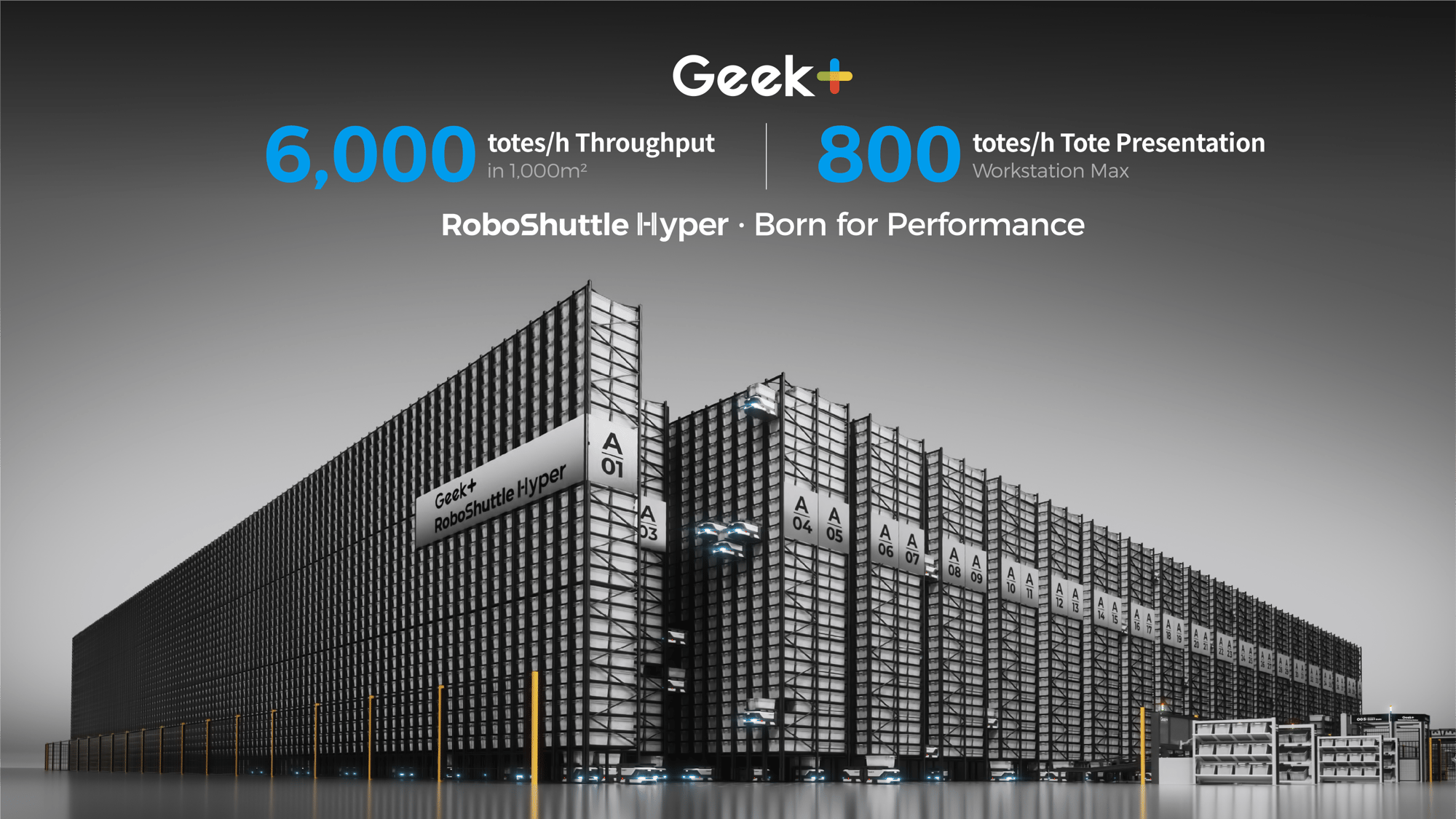
Geek+ used a Tuesday announcement to formally stop describing itself as a robot vendor and start describing itself as a warehouse operating system provider. The Beijing-based autonomous mobile robot maker introduced what it calls its 24/7 Autonomous Intelligent Warehouse framework, built around a new perception-and-planning model it calls Gravity 4D and a software layer, Geek+ Warehouse Brain, meant to run storage, sorting, and order fulfillment with minimal human intervention across a full operating day rather than in the scheduled shifts most automated warehouses still rely on.
The distinction matters more than the marketing framing suggests. Most warehouse automation sold over the past decade, including a large share of Geek+'s own installed base, has been goods-to-person robotics: autonomous mobile robots that bring shelving to a stationary human picker, cutting walking time but still requiring a person at the pick station and a human-planned shift schedule around that labor. A genuinely 24/7, minimal-intervention warehouse is a different proposition entirely, one that requires the software orchestrating the robots to handle the exceptions, a misplaced item, a jammed conveyor, an order that does not match expected inventory, that a human supervisor currently resolves on the spot. Geek+ is betting its next phase of growth on building that exception-handling layer, not on selling more robots into warehouses that still need a person watching the floor.
What Gravity 4D Is Actually Trying to Solve
Geek+ describes Gravity 4D as a unified embodied-intelligence model that fuses multimodal perception, combining camera, depth, and sensor data into a single world representation, with what the company calls 4D world modeling, tracking not just where objects and robots are in three-dimensional space but how that layout changes over time as orders are fulfilled and inventory moves. The stated purpose is dynamic planning and anomaly handling: giving the system enough predictive understanding of a warehouse's physical state to reroute a robot around an unexpected obstruction, reprioritize a task when a bottleneck forms, or flag an inventory discrepancy, without a human operator making that call manually.
That framing puts Gravity 4D in the same technical category as the broader physical AI push reshaping industrial robotics generally, systems trained to build an internal, predictive model of their physical environment rather than simply reacting to pre-programmed rules. The distinction between a demo and a deployable system in this category almost always comes down to how the model handles the long tail of edge cases a curated demonstration never shows: a pallet stacked slightly off-center, a barcode scanner that misreads a label, two robots approaching the same narrow aisle from opposite directions. Geek+ has not published benchmark figures for Gravity 4D's performance on any of those specific failure modes, which means the model's real capability, as distinct from its stated design goal, remains unverified pending independent deployment data.
Warehouse Brain and the Shift From Selling Robots to Selling Orchestration
The second half of Tuesday's announcement, Geek+ Warehouse Brain, is arguably the more consequential piece for how the company plans to compete. The platform combines three components Geek+ has sold separately in various forms for years, a robot management system that coordinates individual AMR movement and task assignment, a warehouse execution system that sequences picking, packing, and sorting workflows, and an operations platform layer the company describes as handling broader orchestration and operational intelligence, into a single integrated stack. Packaging those three layers together, rather than selling them as separable modules a customer might mix with a competitor's hardware or a third-party warehouse management system, is a classic platform-lock strategy: once a customer's operations run on Geek+'s full orchestration stack, switching to a competing AMR vendor means replacing not just the robots but the software coordinating an entire facility's workflow.
For a logistics buyer, that bundling changes the actual purchase decision in ways worth naming explicitly. A warehouse operator evaluating Geek+ against a competitor selling AMR hardware alone is no longer comparing robot specifications and price per unit; they are comparing which vendor's software will make the long-term operational decisions for their facility, how transparent that decision-making is, and how costly it becomes to migrate away from it later. Buyer economics in warehouse automation have historically been dominated by hardware capital expenditure, but a platform like Warehouse Brain shifts a meaningful share of that spend toward a software and services relationship that persists, and compounds in switching cost, long after the initial robot fleet is paid off.
The AMR Lineup Is the Least Interesting Part of This Announcement
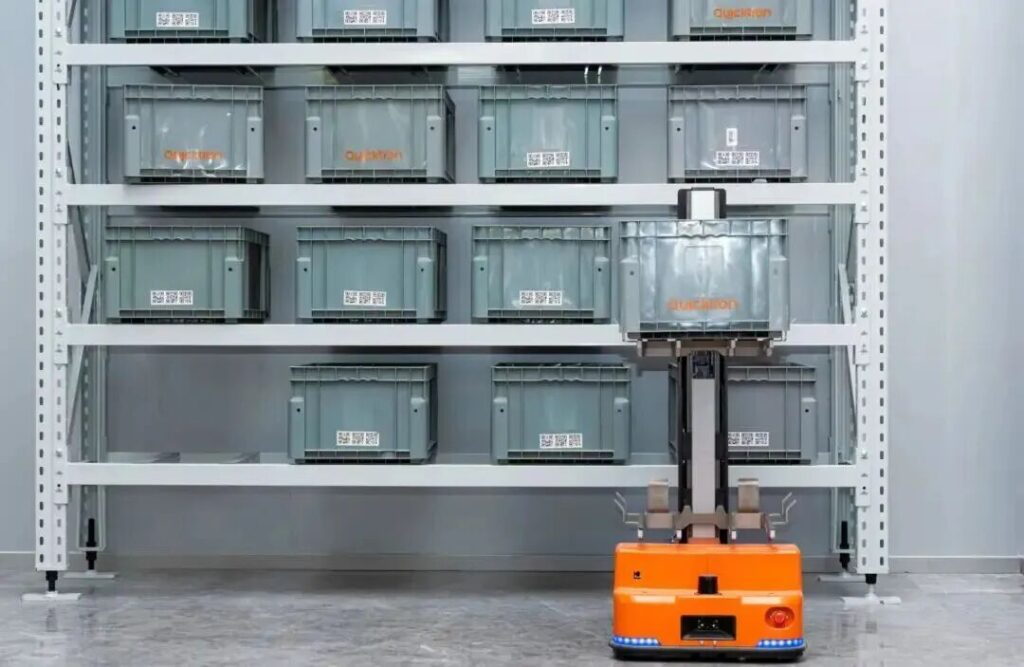
Geek+ also used Tuesday's release to reiterate the breadth of its autonomous mobile robot lineup, spanning goods-to-person shelving robots through to systems designed for more traditional, less reconfigured warehouse layouts. That breadth is real and reflects roughly a decade of Geek+ deployments across e-commerce, retail, and third-party logistics customers globally, but it is the part of the announcement doing the least new work. Hardware breadth has been table stakes in the AMR category for several years now, and a buyer choosing between established vendors in this space is rarely deciding based on which one offers more robot form factors. The actual competitive question Tuesday's announcement raises is whether Gravity 4D and Warehouse Brain deliver enough orchestration intelligence to justify treating Geek+ less as a robotics supplier and more as critical infrastructure a facility's entire fulfillment operation depends on, the same durable-dependency relationship an enterprise software vendor cultivates rather than the more transactional relationship a hardware vendor typically holds.
That reframing, from equipment vendor to infrastructure provider, is the thread connecting this announcement to a broader pattern across Chinese warehouse robotics makers moving from a capacity-driven growth phase into one where margin and customer retention depend more on software stickiness than on unit shipments. Robots are relatively easy for a well-capitalized competitor to match on specification within a product cycle or two. An orchestration platform that has learned a specific facility's exception patterns over months or years of operation, the kind of institutional memory Gravity 4D's world-modeling approach is explicitly designed to accumulate, is a far harder asset for a competitor to replicate quickly, which is the real strategic logic behind packaging robots and software together rather than continuing to sell them as a hardware line with software as an afterthought.
What Buyers Should Ask Before Committing to the Platform
A facility operator evaluating the 24/7 Autonomous Intelligent Warehouse framework should treat Tuesday's announcement as a roadmap statement rather than a verified capability. Geek+ disclosed no named pilot customer, no performance benchmark, and no timeline for when Gravity 4D-driven facilities might run with meaningfully less human oversight than a conventional goods-to-person deployment already requires. The gap between demo performance and deployment reality is where most ambitious warehouse automation claims eventually get tested, and a 24/7, minimal-intervention warehouse is a considerably higher bar than the partially automated facilities Geek+ and its competitors have successfully deployed at scale for years.
The more useful question for a buyer is not whether Gravity 4D works exactly as described today, but what commitment the Warehouse Brain software stack represents once adopted. A facility that builds its fulfillment operations around Geek+'s integrated orchestration layer is making a multi-year infrastructure decision, not a one-time equipment purchase, and should negotiate accordingly: data portability if the relationship ends, clear service-level commitments around exception-handling accuracy rather than marketing language about autonomy, and a contractual path for benchmarking Gravity 4D's actual anomaly-handling performance against the current goods-to-person baseline before expanding the deployment facility-wide.
The Labor Math Behind the 24/7 Framing
The choice to frame this specifically around round-the-clock operation, rather than simply higher throughput or lower cost per order, is itself a signal about which constraint Geek+ believes it is actually solving. Most warehouse operations today run multiple shifts precisely because the facility depends on human labor, and human labor comes with legally mandated breaks, shift changes, and overnight staffing premiums that make continuous operation expensive even when customer demand genuinely runs around the clock. A facility that can run order fulfillment through the night without a full overnight staff is not simply automating existing work; it opens up a fundamentally different cost structure for operators serving customers in multiple time zones or running same-day and next-day delivery commitments that do not pause at the end of a day shift.
That is also where the task displacement pattern already visible in logistics becomes most concrete. Goods-to-person automation displaced the walking and searching component of picking while still requiring a picker at the station. A genuinely 24/7, minimal-intervention warehouse displaces the staffing requirement itself for large stretches of the operating day, which is a materially larger claim on the labor side than anything Geek+ or its competitors have previously shipped at scale. Procurement and operations leaders should treat that distinction as the real test of whether Gravity 4D and Warehouse Brain represent an incremental software update to existing AMR deployments or a genuinely new operating model, because the answer determines whether the business case rests on modest efficiency gains or on restructuring overnight staffing entirely.
Where This Leaves the Broader Warehouse Robotics Field
Geek+ is not alone in recognizing that the next competitive phase in warehouse robotics runs through software orchestration rather than robot hardware alone, and other established Chinese AMR makers are very likely working on comparable world-modeling and warehouse-execution platforms of their own, even where they have not yet made a comparably public announcement. What Tuesday's framework signals most clearly is that the category's leading vendors increasingly see hardware differentiation as a shrinking source of competitive advantage, and are racing instead to become the software layer a customer's entire fulfillment operation cannot easily be unbundled from. Whether Geek+ wins that race depends less on how compelling Gravity 4D sounds in a press release than on whether its anomaly-handling actually holds up across the messy, inconsistent conditions real warehouses produce every day, the same test every ambitious physical AI claim in this industry eventually has to pass.
This article synthesizes Geek+'s public announcement and industry context on warehouse automation trends. It is for general information purposes only and does not constitute procurement or investment advice.