China's Humanoid Robot Brain Is Becoming a Commodity
As Chinese humanoid robot brain models like Galaxy General's AstraBrain-WBC converge in performance, the durable competitive edge is shifting from the general model to proprietary data, supply chains, and real deployments.

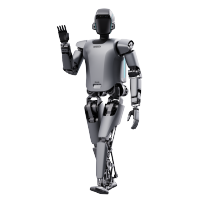
Chinese humanoid robot makers are approaching a moment that has already reshaped software industries from cloud computing to large language models: the layer that used to be the hardest technical problem is becoming the easiest one to buy. As general-purpose motion-control and planning models improve fast enough to run on hardware from more than one manufacturer, the mechanical "body" a Chinese robot company spent years engineering risks becoming a replaceable peripheral rather than a durable asset, unless that company controls something the model itself cannot replicate: proprietary field data, a locked-down supply chain, or a specific deployment a general model has never seen.
Galaxy General, a Beijing-based embodied-AI company headquartered in the capital's Haidian district and known in China by its Chinese name Yinhe Tongyong, is the clearest evidence of how fast that commoditization is moving. The company built its reputation on AstraBrain, an openly published technical stack that includes what it calls a general-purpose "cerebellum" model for real-time, whole-body motion control, and on Xiaogai, a service robot that performed on China's nationally televised Spring Festival Gala broadcast. In June, Galaxy General released AstraBrain-WBC 0.5, describing it as the first general-purpose whole-body control foundation model for humanoid robots, built on a GPT-style causal Transformer architecture that treats full-body motion as a continuous sequence-prediction problem rather than a set of hand-coded behaviors.
A Motion Model That Learned Moves It Was Never Shown
The headline number behind AstraBrain-WBC 0.5 is a jump in task success rate from 83.26 percent to 92.58 percent as the company scaled its training data from roughly two million motion-capture frames to about two billion. That scaling curve matters more than the final percentage, because it demonstrates the same pattern that has driven progress in large language models: performance climbing predictably as training data grows, rather than plateauing once a model reaches a certain size. Galaxy General has reported that the resulting model can execute high-dynamic movements, including basketball dribbling, boxing combinations, and street-dance sequences, that never appeared in its training set, a zero-shot generalization result the company has used to argue the model has learned something closer to general motion competence than memorized choreography. The company has open-sourced the underlying paper, code, and technical materials, a choice that accelerates exactly the commoditization dynamic its own benchmark numbers illustrate: a capability published openly is a capability any competitor with sufficient compute can replicate within a product cycle or two.
That openness sits alongside a broader industry pattern visible across China's humanoid sector this year. General-purpose planning and perception benchmarks that once separated serious robotics labs from hobbyist projects, tasks like long-horizon manipulation planning and dynamic object interaction, are increasingly being cleared by multiple competing models within months of each other, rather than standing as a durable technical moat for whichever company publishes first. When several companies can post comparable scores on the same public benchmark inside a single product cycle, the benchmark stops functioning as a competitive differentiator and starts functioning as a baseline qualification, the technical equivalent of a passing grade rather than a trophy.
Where the Durable Advantage Is Actually Sitting
The more consequential number for anyone buying, investing in, or competing against Chinese humanoid hardware is a structural one rather than a benchmark score: industry estimates put roughly 97 percent of China's current humanoid robot supply chain concentration in hardware component manufacturing, actuators, reducers, sensors, and structural assembly, rather than in the software and model layer that benchmark competitions tend to spotlight. That concentration is the clearest sign of where the industry's actual capital and specialization have gone over the past several years, and it is also the reason the commoditization of general motion models matters so much right now. A company that has built its entire value proposition around having the best general-purpose "brain" is building on ground that is visibly eroding every time a competitor, open-source release, or new entrant posts a comparable benchmark score. A company that has instead built proprietary manufacturing capability, a trained workforce, actuator supply agreements, and deployment relationships inside specific industrial or commercial sites has built something a benchmark release cannot erase overnight.
This is the practical meaning behind the question of whether a Chinese humanoid maker's robot "body" functions as an asset or a peripheral. An asset is something that compounds in value the longer a company operates it: proprietary data collected from real deployments, manufacturing yield improvements that come only from production experience, and customer relationships that create switching costs. A peripheral is something a buyer could, in principle, swap for a competitor's equivalent part without losing meaningful capability, the hardware-industry equivalent of a commodity component. As general motion and planning models converge toward similar performance across multiple vendors, any humanoid maker whose primary differentiation lived in that model layer is at structural risk of becoming a peripheral supplier to whichever company controls the data, the deployment relationships, or the manufacturing scale that a model release alone cannot replicate.
The Scenario-Specific Data Problem General Models Cannot Solve
The practical obstacle every general-purpose motion model still runs into is that dribbling a basketball in a demonstration video and reliably tending a specific CNC machine on a specific factory floor are different categories of problem, even when both get described loosely as "manipulation." The second category requires training data gathered from the exact fixtures, lighting conditions, part tolerances, and failure modes of a real production environment, data that a general model trained on broad motion-capture footage simply does not have, and that no competitor can acquire without first winning the same deployment. This is the gap Chinese humanoid makers with actual factory and warehouse deployments are positioned to exploit, and it is also the gap that explains why so much of the industry's public messaging has shifted over the past two quarters from announcing new general capabilities toward announcing specific deployment wins, pilot programs, and operator partnerships. A company that can point to months of real production data from an actual customer site has a defensible position a benchmark announcement cannot match, regardless of how impressive that benchmark score is.
For a procurement team evaluating competing Chinese humanoid vendors, the useful diagnostic question has shifted accordingly. Asking which company has the best general-purpose model is increasingly the wrong question, given how quickly that layer is converging across the field; the more informative question is which company has deployment-specific data from an environment similar to the buyer's own, since that data, not the underlying model architecture, is what will determine whether a robot actually works on a given production line inside the first ninety days rather than only in a demonstration video.
What This Means for the Next Phase of Competition
None of this means the model layer stops mattering. A company with no competitive general-purpose capability at all cannot credibly compete for new deployments, and continued investment in motion and planning models remains table stakes for staying in the conversation. What is changing is where the marginal dollar of competitive advantage goes once a company has cleared that baseline. Spending further research budget chasing incremental gains on a benchmark that multiple competitors will match within a quarter delivers less durable advantage than spending the same budget on proprietary data collection inside paying deployments, on securing actuator and sensor supply agreements that competitors cannot easily replicate, or on the unglamorous manufacturing-yield improvements that only come from building the same robot thousands of times.
Galaxy General's own choice to open-source AstraBrain-WBC illustrates that the company itself appears to understand this shift. Publishing a general motion-control breakthrough openly costs the company any first-mover model advantage almost immediately, which only makes commercial sense if the company's actual strategy rests elsewhere, in Xiaogai's public deployments, in the data those deployments generate, or in positioning itself as the open technical standard other Chinese humanoid makers build on top of rather than compete against directly. Either way, the signal for the rest of the industry is the same: the robot body that looked like commodity hardware next to a flashy model demo a year ago is turning out to be the harder thing to copy, and the model that looked like the hard problem is turning out to be the part a well-funded competitor eventually gets right too, usually within a product cycle or two rather than the multi-year head start model-layer leadership once seemed to promise.
This account draws on Galaxy General's published technical materials on AstraBrain-WBC and on industry reporting on China's humanoid robot supply chain structure, current as of publication.
Disclaimer: This article is provided for general information purposes only and does not constitute investment, financial, or procurement advice. RobotAIGeek makes reasonable efforts to verify facts at the time of publication but cannot guarantee complete accuracy of details that may change after publication. Readers should confirm current benchmark results and supply chain data directly with the companies and industry bodies involved.