Humanoid Robot Batteries Are Becoming a US$850 Million Bet by 2037
IDTechEx forecasts the humanoid robot battery market growing to US$850 million by 2037, arguing swap-pack demand, not robot unit counts, will drive most of that growth as Agility, XPENG, and Figure pursue three different battery strategies.

Research firm IDTechEx forecasts the market for humanoid robot batteries will grow from a small base today to US$850 million by 2037, a compound annual growth rate of 34.2 percent over an eleven-year window, driven less by the robots themselves than by the spare battery packs operators will buy to keep those robots running through battery-swap routines. That distinction, between batteries sold with new robots and batteries sold as a consumable swap part, is the detail buyers and suppliers in this category should understand before treating the headline number as a simple proxy for humanoid robot unit sales.
The forecast lands at a moment when battery chemistry, not actuators or AI models, has become the quiet bottleneck constraining how fast humanoid robots can actually work a shift. A robot that needs to stop and recharge for forty minutes every two hours of operation is not a viable warehouse or factory asset regardless of how capable its manipulation software is, which is why the battery-swap economics IDTechEx is forecasting matter more to near-term deployment economics than almost any other spec sheet line item humanoid makers publish.
Why Swapping, Not Charging, Is the Bigger Market
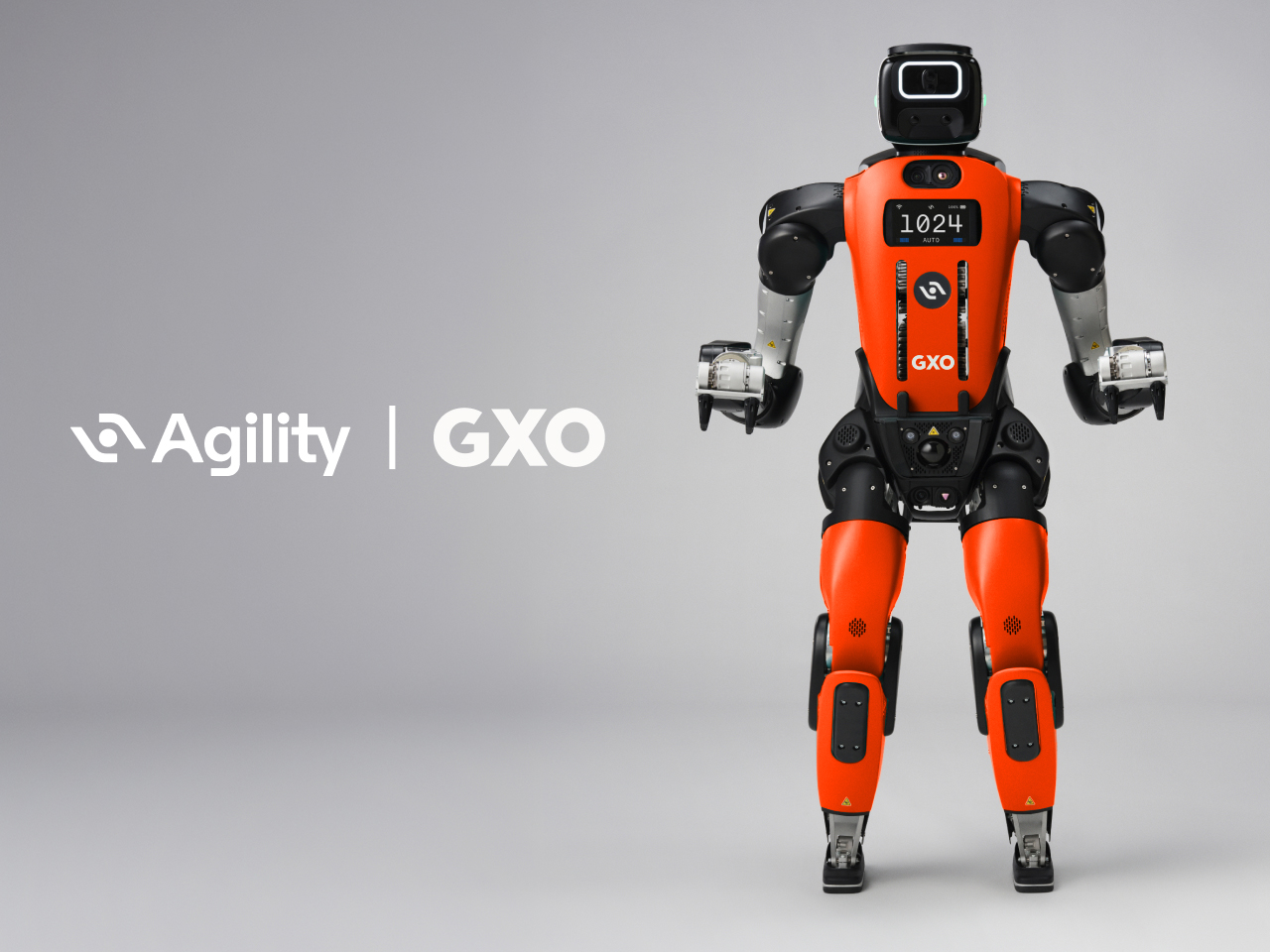
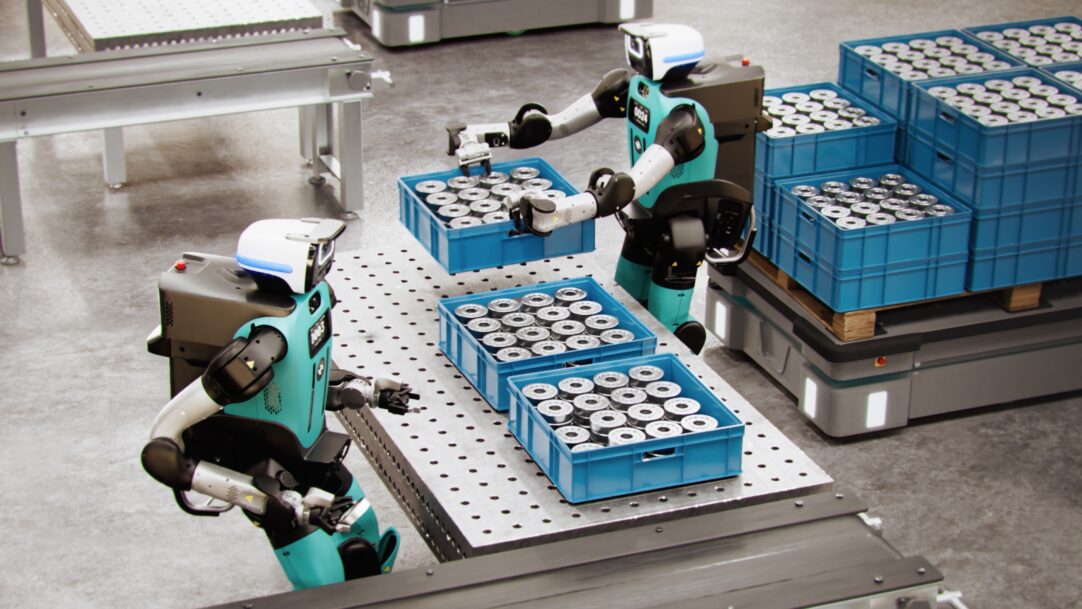
IDTechEx's core insight is that battery demand in this category will not scale one-to-one with robot unit shipments. A single deployed humanoid that uses hot-swappable packs needs more than one battery to stay productive across a working day, since one pack powers the robot while a second or third charges on a dock, which means the installed base of batteries in the field will outgrow the installed base of robots by a meaningful multiple as swap-based operating models become standard. That dynamic is already visible in how leading humanoid makers are designing their power systems: Agility Robotics' Digit 5 uses cells from battery specialist Nyobolt and is built around a nine-minute recharge target specifically so operators can cycle packs fast enough to keep a robot fleet working close to continuously, while XPENG's IRON humanoid is moving a solid-state battery pack into small-batch production, and Figure has built its own battery packs in-house for the Figure 03 platform rather than sourcing from a third party.
Those three approaches, third-party cells optimized for fast swap cycles, an in-house solid-state pack entering early production, and vertically integrated in-house manufacturing, represent three different bets on where value accrues in the humanoid power stack, and IDTechEx's forecast is effectively a wager that all three paths will coexist rather than one chemistry or sourcing model winning outright by 2037. For procurement teams building a multi-year humanoid deployment plan, that plurality matters: betting on a single robot platform today is also, implicitly, a bet on that platform's specific battery architecture and the swap infrastructure, docking stations, spare-pack inventory, charging bays, that architecture requires.
The Chemistry Race Underneath the Growth Number
IDTechEx's report evaluates three battery chemistries competing for share in this market: conventional lithium-ion, which dominates today's shipped humanoid robots on cost and manufacturing maturity; solid-state batteries, which offer higher energy density and improved safety characteristics but currently cost more and run on more limited production capacity; and lithium-sulfur chemistry, an earlier-stage technology that promises even higher theoretical energy density at the cost of cycle-life and manufacturing challenges that have kept it out of mass production across any battery-consuming industry so far. The report's expectation that emerging chemistries will gain share as manufacturing matures is a standard battery-industry prediction, one that has played out slower than forecast in electric vehicles for over a decade, and humanoid robotics buyers should weight that historical pattern heavily before assuming solid-state or lithium-sulfur packs will displace lithium-ion on any aggressive timeline.
Energy density matters more acutely in humanoid robotics than in most other battery-consuming categories because of a constraint electric vehicles do not face: a humanoid robot's battery pack has to fit inside a torso or leg cavity sized and shaped like a human body, not a flat chassis with room to spread cells across the floor plan. That packaging constraint is why solid-state chemistry's density advantage carries outsized appeal for humanoid designers specifically, even at today's cost premium, and it is also why XPENG's decision to push a solid-state pack into small-batch production this early, rather than waiting for costs to fall further, reads as a deliberate bet that the packaging and weight advantage is worth paying for now rather than optimizing for cost first and density later.
What a Nine-Minute Recharge Target Actually Buys an Operator
Agility Robotics' choice to pursue a nine-minute recharge target with Nyobolt cells is worth unpacking as a case study in how battery specification choices cascade into operational economics. A robot that can go from near-empty to working-charge in nine minutes needs a smaller buffer of spare packs per deployed unit than one requiring a forty-minute or hour-long recharge cycle, which lowers the capital cost of the swap infrastructure an operator has to build around each robot even if the per-cell cost of fast-charge-capable chemistry runs higher than a standard pack. That tradeoff, faster charging against higher cell cost, is the exact calculation IDTechEx's swap-driven demand model is implicitly pricing into its battery-market forecast, and it is also the calculation procurement teams should be running explicitly rather than treating battery specs as a secondary detail behind payload and dexterity figures.
The practical buyer takeaway is that recharge speed and swap-pack economics deserve the same scrutiny in a humanoid procurement evaluation that uptime guarantees get in any other industrial equipment purchase, because the two are functionally the same question asked in different units. A humanoid robot advertised at an attractive per-unit price but requiring a large, expensive buffer of spare battery packs to run a full shift is not necessarily the cheaper option once total cost of ownership across a deployed fleet is calculated, and battery architecture is the single spec sheet line item most likely to be underweighted in that calculation today.
Figure's In-House Bet and the Vertical Integration Question
Figure's decision to build its own battery packs for the Figure 03 platform, rather than sourcing from a specialist like Nyobolt or a chemistry partner the way XPENG has approached solid-state, represents the third distinct strategic path in this market: full vertical integration. That approach trades the speed and specialization advantage of working with an established battery supplier for direct control over the pack's design, cost structure, and roadmap, a bet that mirrors the vertical-integration strategy some humanoid makers have already made on actuators and dexterous hands rather than sourcing those components from third-party specialists either.
Vertical integration in battery manufacturing carries a different risk profile than vertical integration in mechanical components, because battery chemistry and cell manufacturing are mature, capital-intensive industries with established specialists who have spent decades optimizing exactly the problems a robotics company would otherwise have to solve from scratch. A humanoid maker building its own packs is betting that the battery requirements specific to bipedal robotics, energy density within a human-shaped cavity, discharge curves matched to actuator power draw, thermal management in a compact enclosure, are different enough from electric vehicle or consumer electronics battery requirements to justify the investment, rather than assuming an existing battery supplier's off-the-shelf product line can be adapted cheaply.
What US$850 Million by 2037 Does and Does Not Tell Buyers Today
It is worth being direct about what this forecast can and cannot support as a planning input. IDTechEx's public overview does not disclose the detailed unit-shipment and swap-ratio assumptions underlying the US$850 million figure, which means the number should be read as a directional signal about where capital and manufacturing capacity are likely to concentrate over the next decade rather than a precise market-sizing tool for a specific procurement or investment decision made today. The 34.2 percent compound annual growth rate is the more durable signal in the forecast, since it reflects IDTechEx's view on the shape of adoption, batteries scaling faster than robot shipments alone would predict, more than it depends on getting the humanoid robot unit-shipment forecast itself exactly right.
For buyers evaluating humanoid platforms over a multi-year deployment horizon, the forecast's most quotable insight is also its most practically useful one: battery-swap infrastructure, not battery chemistry breakthroughs, is likely to be the near-term bottleneck determining which humanoid platforms actually achieve the continuous, multi-shift operation that justifies their price against a human-labor baseline. A platform with an elegant battery chemistry roadmap but no mature swap infrastructure will lose a real-world uptime comparison to a platform running conventional lithium-ion cells through a well-engineered, fast swap-dock system, at least until solid-state and lithium-sulfur chemistries clear the manufacturing-scale hurdles that have slowed their adoption in every other battery-consuming industry to date.
The next marker worth watching is not another market-size forecast but a disclosed, independently verified uptime figure from an operator running a humanoid fleet across multiple shifts on swap-based power, the kind of operational data that would validate whether the battery architecture choices Agility, XPENG, and Figure have each made actually deliver the continuous-operation economics their specifications promise on paper.
This article synthesizes a published IDTechEx market forecast and public company disclosures related to humanoid robot battery technology. It is for general information purposes only and does not constitute investment advice.