Spirit AI Says Robot Brains Could Hit a ChatGPT Moment by 2027
Spirit AI's wheeled Moz1 humanoids already hit 90% success on structured tasks at CATL and JD.com. Its co-founder says the real bottleneck is the robot brain, not the body, and names a 2027 deadline for closing it.

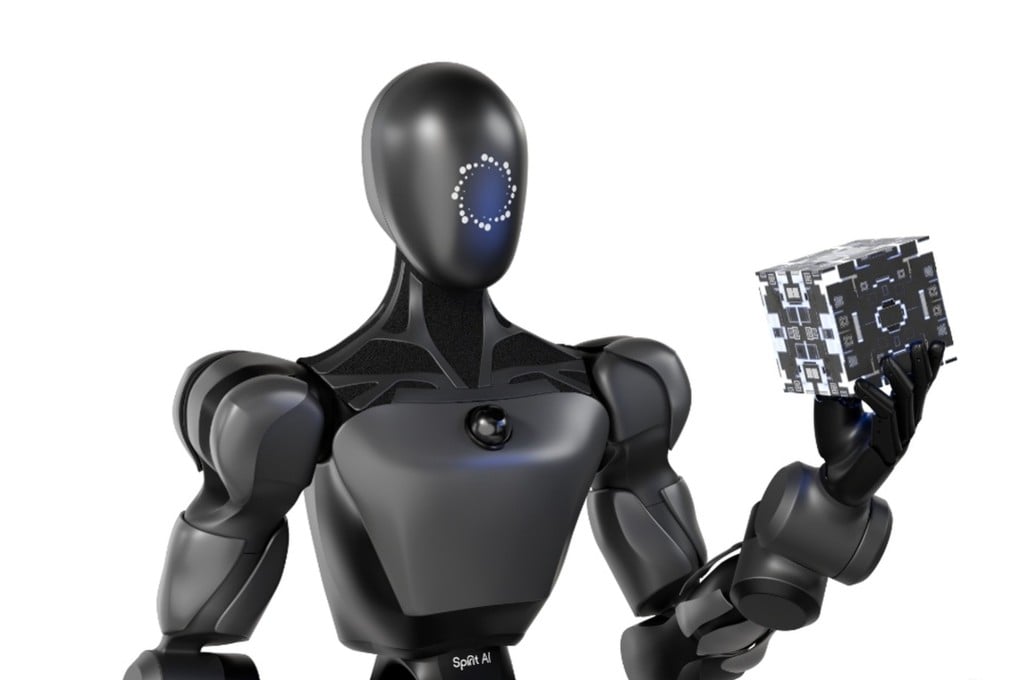
Spirit AI has raised more than US$670 million in the twenty months since its founding, and its co-founder says the money is chasing a specific deadline: a "GPT-3.0 moment" for robot intelligence by the middle of 2027, when a humanoid should be able to take a spoken instruction and complete a genuinely new physical task without task-specific retraining. The Hangzhou-based startup, now valued at 20 billion yuan (approximately US$2.9 billion), is not just promising the milestone. It already has wheeled humanoids working structured shifts at a CATL battery plant and inside JD.com's logistics operations, which gives buyers an unusually early data point on whether the claim is marketing or a real capability curve.
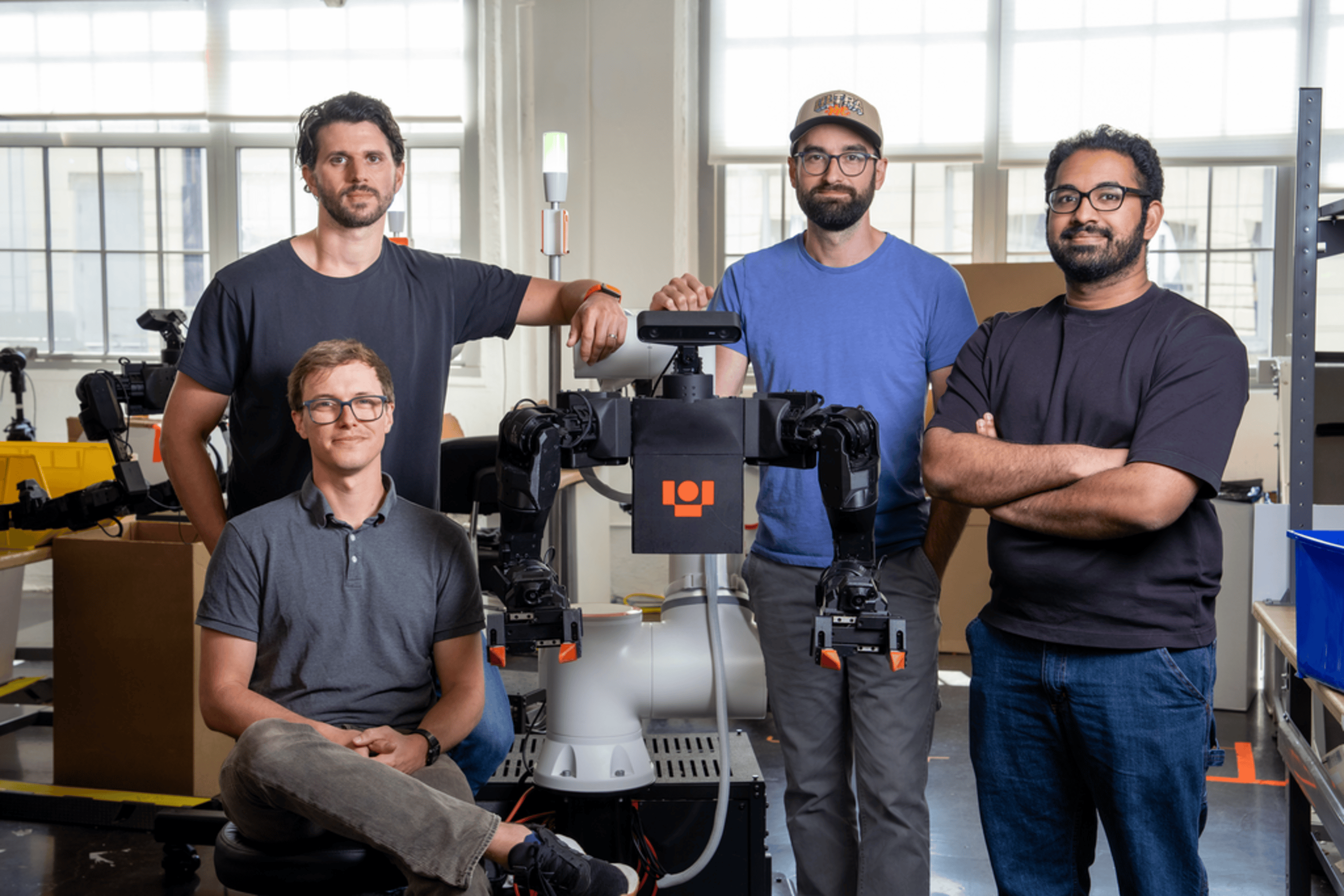
Spirit AI was founded in Hangzhou in January 2024 by chief executive Han Fengtao, a former chief technology officer at industrial robot maker Rokae, alongside Gao Yang, the company's co-founder and chief scientist, who also holds an assistant professorship in robotics at Tsinghua University. The company has grown to roughly 300 full-time staff supported by close to 1,000 contractors nationwide who help label and curate the physical-interaction data its models train on, and its investor base includes both CATL and JD.com, which makes each company simultaneously a backer and a live deployment site for Spirit AI's hardware.
The Brain Bottleneck Now Has a Deadline Attached
Gao's framing of the problem is unusually blunt for a founder raising capital on hardware hype: "The brain is indeed the weakest link in the complete robotics stack." That statement matters more than it might from a components supplier, because Spirit AI has spent two years and most of its capital building both the wheeled humanoid body and the model that controls it, and Gao is still naming the model as the constraint. His forecast is specific enough to be falsifiable: a "GPT-3.0 milestone" by mid-2027, at which point he expects robots to parse open-ended verbal instructions and execute unfamiliar multi-step physical tasks, rather than the narrow, heavily rehearsed routines that dominate today's humanoid demonstrations.
That timeline sits inside a broader industry debate about whether embodied intelligence is scaling the way large language models did, where more data and compute reliably bought more capability, or whether physical tasks resist that kind of scaling because the training data is scarce, expensive to collect, and much harder to simulate than text. Gao's own answer leans toward scaling: "Progress is extremely fast. Today, robots operate across large spatial areas and execute continuous complex workflows," a description that implicitly contrasts with the single-station, single-task demonstrations that most humanoid vendors still show at trade fairs. Procurement teams evaluating any wheeled or bipedal humanoid vendor should treat that contrast as the actual product question: does the system generalize across a changing environment, or does it only look fluent inside a rehearsed sequence that engineers spent weeks tuning before the cameras arrived.
What Moz1 Is Actually Doing on a Working Floor
The evidence Spirit AI can point to today is narrower than the 2027 forecast, and that gap is the honest starting point for any buyer. Tens of Moz1 units, wheeled humanoids built around dual seven-degree-of-freedom force-controlled arms, are deployed on CATL's battery production line and inside JD.com's retail and logistics operations. On simple, structured tasks, the company reports a 90 percent success rate, a figure worth sitting with rather than treating as either a triumph or a disappointment. Ninety percent is well short of the reliability an unattended production line needs, but it is a real number from a real deployment, not a simulation benchmark or a single controlled demo, and it gives Spirit AI something almost no humanoid startup can currently show: repeated, measurable performance on someone else's factory floor over weeks rather than hours.
That distinction is the one procurement and automation buyers should be filtering for across the entire humanoid category right now. A robot that performs a scripted pick-and-place sequence flawlessly in a booth demo has told a buyer almost nothing about deployment reliability. A robot running structured tasks inside CATL's production environment, where downtime has a direct cost and safety tolerances are strict, has told a buyer something, even if the success rate is not yet enterprise-grade. Spirit AI's own numbers concede the gap between "works" and "works reliably enough to remove human backup," which is a more credible disclosure than most vendors are willing to make in public.
The two deployment sites also test different things, which is useful for a buyer trying to separate a controlled pilot from something closer to production conditions. CATL's battery line is a manufacturing environment with tight safety tolerances, fixed cycle times, and a strong incentive to remove any robot that becomes a bottleneck rather than a help. JD.com's retail and logistics floor is messier by design, with variable item shapes, shifting layouts, and less predictable task sequencing. A vendor that can show comparable success rates across both environments has demonstrated something closer to general capability than a vendor that only performs well in the tightly controlled setting. Spirit AI has not published a side-by-side breakdown of the two sites, and that is a reasonable next disclosure for buyers to request before treating the 90 percent figure as a single, uniform number.
The Capital Is Backing the Model, Not the Hardware
Spirit AI's US$670 million in funding, arriving in back-to-back rounds since 2024, is notable less for its size, which trails several better-known Chinese humanoid makers, than for what it signals about where investors think the real bottleneck sits. Hardware, at least at the level of actuators, wheeled bases, and force-controlled arms, has become increasingly commoditized across China's humanoid supply chain, with multiple manufacturers now able to build broadly comparable bodies. What remains scarce is the software stack that turns a capable body into a system that can take an ambiguous instruction and produce a correct sequence of physical actions. Spirit AI's roughly 1,000-person contractor network exists specifically to generate and label the kind of real-world interaction data that a model needs to close that gap, and the company's valuation is effectively a bet that whoever solves the software problem first captures disproportionate value regardless of who builds the cheapest arm.
That thesis lines up with a pattern RobotAIGeek has tracked in China's broader humanoid shipment data, where unit volumes have scaled far faster than the share of robots capable of sustaining an actual working shift. The industry has built bodies faster than it has built the brains to run them, and Spirit AI's pitch to investors is that the brain, not the body, is where the next round of value gets created. A separate effort now underway in Beijing to close the same gap through better training environments, detailed in RobotAIGeek's coverage of a Beijing lab's self-grading simulation approach, underscores that Spirit AI is not alone in treating the brain as the scarce input, even if its specific data-collection method differs.
The contractor network is where that difference shows up. Roughly 1,000 people nationwide spend their days operating, correcting, and annotating Spirit AI's robots as they attempt new tasks, generating the kind of labeled physical-interaction data that is nearly impossible to synthesize convincingly in simulation. That is a slower and more expensive path to training data than scraping text from the internet, which is part of why Gao's 2027 timeline reads as aggressive rather than conservative. It also means Spirit AI's real moat, if the strategy works, is not the Moz1 hardware at all but the accumulated library of corrected physical demonstrations that a competitor cannot simply buy or copy.
What Buyers Should Actually Track Between Now and 2027
For an automation buyer deciding whether to pilot a humanoid system today, Gao's 2027 forecast is not itself an actionable data point. What is actionable is the trajectory of the success-rate figure Spirit AI has already disclosed. If the CATL and JD.com deployments move from 90 percent on structured tasks toward something closer to industrial reliability over the next several quarters, that trend line is a far better predictor of readiness for a broader rollout than any language-model comparison a founder offers in an interview. If the number stalls, that is equally informative, and probably more common across the sector than vendors will volunteer.
The company that names its own weakest link in public, and then publishes a number attached to it, has given buyers more to evaluate than most of its competitors currently do. The 90 percent figure is the one to watch as the next confirmed checkpoint before 2027, and the gap between that number and true unattended reliability is where the remaining US$670 million will actually be spent.
This analysis draws on public statements from Spirit AI's co-founder regarding the company's funding history, technology roadmap, and current deployments at CATL and JD.com. It is for general information purposes only and does not constitute investment, financial, or legal advice.
Hero image credit: Spirit AI, via South China Morning Post.