
AeroVironment Wins $464.8 Million Army Contract for LOCUST X3 Laser Weapons
AeroVironment secured a $464.8 million US Army contract to mass-produce its LOCUST X3 laser weapon, the first American production deal for a directed-energy defense system, backed by a $30 million Albuquerque manufacturing expansion.

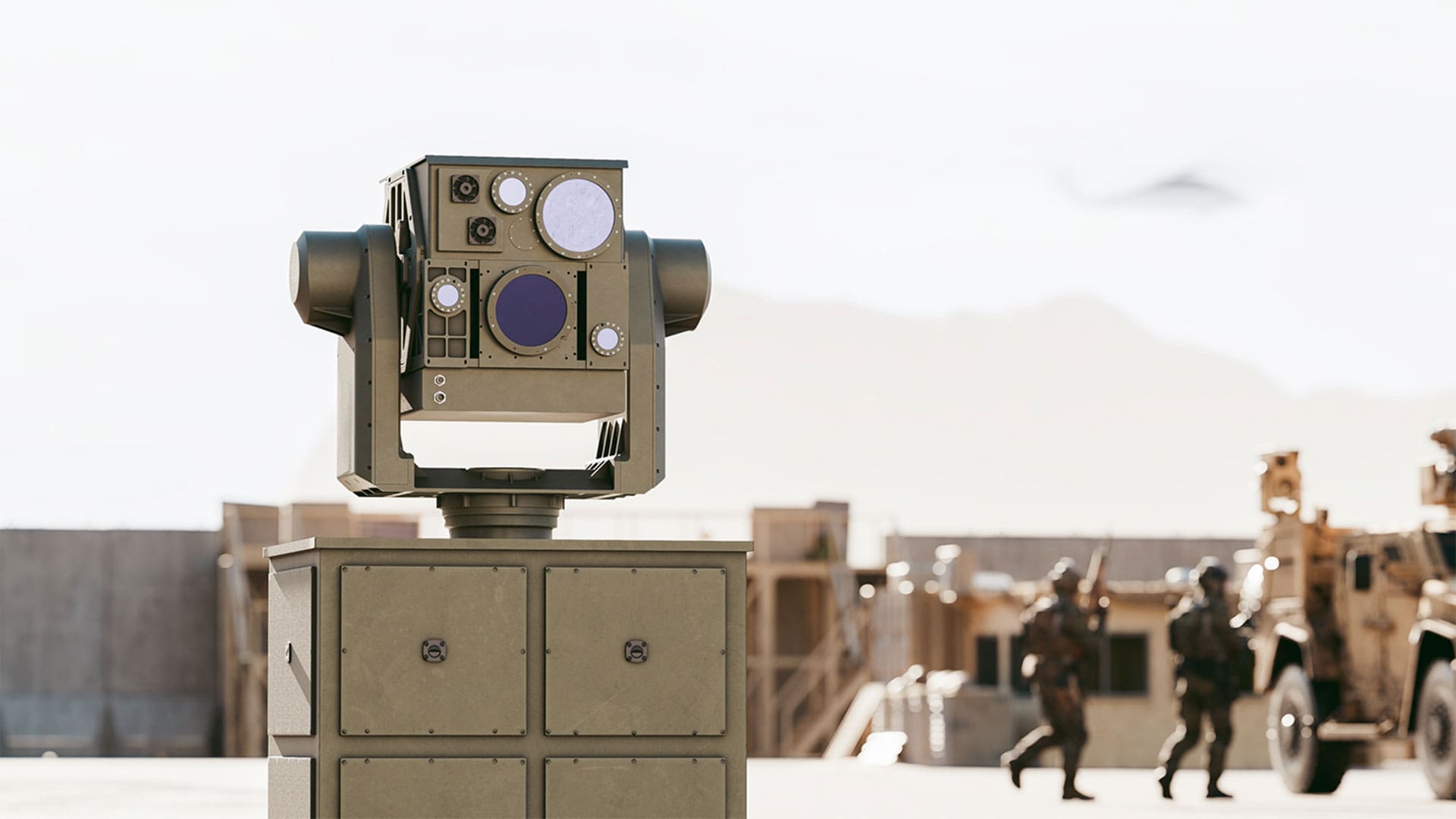
AeroVironment will collect US$464.8 million from the US Army to move its LOCUST X3 laser weapon from prototype to factory floor, the company said on September 2, under a production award the Pentagon is calling the first-ever US procurement contract for a directed-energy weapon system. The Enduring-High Energy Laser (E-HEL) award, structured as an Other Transaction Agreement, funds delivery of dozens of LOCUST X3 units over the next several years, alongside a US$30 million expansion of AeroVironment's Albuquerque, New Mexico production line built specifically to build them at rate.
The dollar figure matters less than what it converts into: a standing, repeatable order for a weapon that has already been tested against the threat the Army says it can no longer treat as occasional. LOCUST X3 is built to shoot down Group 1 through 3 unmanned aircraft, the small and midsize drones that swarmed convoys and air-defense radars across recent Middle East and Eastern European conflicts, along with unmanned surface vessels. AeroVironment's own program office estimates that a single engagement costs below US$5 in energy, a number the Army has repeated in budget testimony because it is the entire economic case for lasers over missiles against cheap drones.
What US$464.8 Million Actually Buys
LOCUST X3 is the third generation of AeroVironment's directed-energy line, unveiled in March as a scalable 20 to 35-plus kilowatt platform with a modular beam director and AV_Halo PINPOINT, the company's AI-enabled detection, tracking, and engagement software. The production configuration under this award runs at 30 kilowatts and is built to mount on the Army's Joint Light Tactical Vehicle, turning a standard troop carrier into a mobile counter-drone node rather than requiring a dedicated platform. That mobility requirement, not the laser itself, is usually what kills directed-energy programs before they reach soldiers: a weapon that only works from a fixed pad or a purpose-built truck cannot follow the formations it is meant to protect.
AeroVironment says the configuration was validated in joint testing with Joint Interagency Task Force 401 at White Sands Missile Range, trials that also fed into coordination between the Department of War and the Federal Aviation Administration on operating high-energy lasers in domestic airspace, a regulatory question that has quietly gated every US laser-weapons program regardless of how well the hardware performs. Clearing that coordination hurdle before the production contract, rather than after, is one reason this award reads as more than a routine follow-on: the Army is not waiting on airspace approval to start fielding the system.
The Economics That Made This a Production Order
Every directed-energy program before this one has stalled somewhere between a successful demonstration and a signed production contract, usually because the Army could not translate "the laser worked" into a fieldable, maintainable, mass-produced unit at a price that beat the alternative. AeroVironment's pitch has been that LOCUST's cost curve runs the opposite direction of the threat it counters: a Group 1-3 drone costs its operator a few hundred to a few thousand US dollars to build, while a surface-to-air missile intercept can run into six figures per shot. A magazine that never runs out, refilled by a generator rather than a truck of munitions, changes the math for units that expect to face drone waves rather than isolated intruders.
That arithmetic is why the E-HEL award is structured as a multi-year production line rather than a one-off buy. The Army's own doctrine has shifted toward layered air defense, stacking cheap kinetic interceptors, electronic warfare, and now lasers so that no single counter-drone method has to work against every threat class. AeroVironment's other recent Army order, for Switchblade 600 loitering munitions, sits on the offensive side of that same layered doctrine, and the company is increasingly positioned as a vendor the Army buys from on both sides of the drone fight at once.
Manufacturing Is the Actual Bottleneck Now
The US$30 million Albuquerque investment is the detail buyers and competitors should weigh most heavily, because it signals AeroVironment expects the constraint on this program to be factory throughput rather than further engineering. Directed-energy weapons have a specific manufacturing problem that missiles do not: the optics, cooling systems, and beam directors require precision assembly and testing that does not scale the way welding a missile airframe does. A company that can only hand-build a handful of units a year cannot satisfy an Army that wants "dozens" delivered on a multi-year schedule, let alone the follow-on orders a successful fielding will generate.
AeroVironment has been building toward exactly this kind of production capacity commitment across its portfolio. The company's Greek production venture for drones and counter-drone systems, announced in August, extended that manufacturing buildout into a NATO ally's own industrial base, a hedge against the same domestic capacity constraints the Albuquerque expansion is meant to solve at home. Read together, the two moves describe a company betting that the next phase of the counter-drone market is won on production line capacity, not laboratory demonstrations.
Why This Contract Structure Signals Confidence
Other Transaction Agreements exist specifically to move faster than the Federal Acquisition Regulation's standard procurement process, and the Army has used them increasingly for software-defined and rapidly evolving hardware programs, including this week's separate US$192 million TITAN production award to Palantir and Anduril. Both awards landed within days of each other, and both mark the same underlying shift: production money for systems the Army tested under operational conditions rather than in a contractor's lab, on contract vehicles designed to keep pace with the technology rather than the paperwork.
For companies competing against AeroVironment in directed energy, the signal is less about the dollar figure and more about the precedent. Once one vendor secures a multi-year, JLTV-integrated, White Sands-validated production contract with a domestic manufacturing footprint behind it, the bar for the next competitor is no longer "build a working laser." It is "build a working laser, mount it on the vehicle the Army actually uses, clear it for the airspace the Army actually operates in, and prove a factory can turn it out on schedule." AeroVironment has now checked every one of those boxes before its rivals have checked the first two.
The production run is also a test the company set for itself. Directed-energy weapons have a history of impressive test-range footage followed by fielding delays measured in years, and the Army's decision to fund dozens of units rather than a handful gives AeroVironment little room to blame the technology if delivery slips. Every unit that reaches a unit on schedule adds to a fleet the Army has said it wants to expand well past this initial order; every unit that slips adds to a list of directed-energy promises the Pentagon has heard before.
A Crowded Field the Award Just Thinned
AeroVironment is not the only US contractor with a laser weapon in testing. The Army has run competing directed-energy efforts for years, including truck-mounted systems evaluated under its short-range air defense modernization line and separate Navy and Air Force laser programs pursued largely independently of each other, a duplication the Pentagon's own inspectors general have flagged repeatedly as wasteful. What has been missing across nearly all of them is a production decision: a moment where a service commits real manufacturing dollars rather than extending another year of prototype funding. The E-HEL award is that moment for the Army's ground-mobile laser effort, and it effectively narrows the field to whichever competitors can match AeroVironment's combination of a JLTV-integrated form factor, cleared airspace coordination, and a funded factory line.
That narrowing matters commercially beyond the immediate contract value. Army program offices tend to treat a first production award as a reference design for the requirement it satisfies, making follow-on competitions harder for rivals who have not cleared the same testing and regulatory hurdles. A competitor with a more powerful laser but no JLTV integration, or no White Sands data, now has to close two gaps at once just to be evaluated on equal footing. For procurement teams and investors tracking the counter-drone sector, AeroVironment's award functions as a preview of the technical and regulatory bar every subsequent US directed-energy contract will be measured against.
What Allied Buyers Will Watch Next
Foreign militaries shopping for counter-drone systems, particularly in the Gulf and in Europe's eastern flank, have watched US directed-energy programs stall for years without a production commitment to point to when justifying their own procurement budgets. A signed, dollar-denominated US Army production contract changes that calculus, giving allied defense ministries a benchmark price and a fielded reference customer rather than a contractor's projected roadmap. AeroVironment's Greek manufacturing venture positions the company to respond quickly if that interest materializes into orders, since European co-production requirements increasingly favor vendors who can point to local assembly rather than a purely American supply chain.
The near-term test for buyers will be delivery, not more demonstrations. AeroVironment has committed to a multi-year cadence of "dozens" of LOCUST X3 units, a term the Army chose deliberately over a fixed number, which gives the company flexibility on pace but also removes the easy public benchmark that a hard delivery count would have provided. Procurement officials and competitors alike will be counting units fielded to operational formations, not units announced, as the real measure of whether this production award becomes the template the Army intends or another directed-energy program that photographed well and shipped slowly.
This analysis synthesizes AeroVironment's public disclosures and contract documentation as of September 2, 2026.
Image: AeroVironment.
This article is provided for general information purposes only and does not constitute investment, procurement, legal, or engineering advice.











