Open Source Is Becoming Robotics' Default Infrastructure
Intrinsic open-sourced its industrial robotics platform and Qualcomm agreed to acquire MoveIt maker PickNik while pledging to keep it open, a one-two punch at ROSCon 2026 that shifts the vendor lock-in math every robotics buyer runs.

Open Source Is Becoming a Competitive Weapon in Robotics
Two major robotics announcements landed just one day apart at ROSCon Toronto in September 2026.
On September 22, Intrinsic, Google's robotics software unit, open-sourced core components of its industrial robotics platform as Intrinsic Core, under the permissive Apache 2.0 license.
A day later, Qualcomm announced an agreement to acquire PickNik Inc., the company behind the widely used MoveIt motion-planning framework, while committing to keeping MoveIt open source.
On the surface, these look like two very different business decisions.
Look closer, however, and they point toward the same broader trend: in robotics, open source is becoming more than a development philosophy. It is increasingly becoming a competitive strategy.
Two Different Paths Toward the Same Idea
Intrinsic emerged from Alphabet's X moonshot lab in 2021 and has since moved closer to Google's core organization.
PickNik has a very different history. Founded in Boulder, Colorado, in 2015, the company grew around MoveIt, the motion-planning framework that originated within the Robot Operating System (ROS) ecosystem.
Neither company is a household name.
But their software sits surprisingly close to one of the most important problems in modern robotics: teaching machines how to perceive their environment and move through it safely and intelligently.
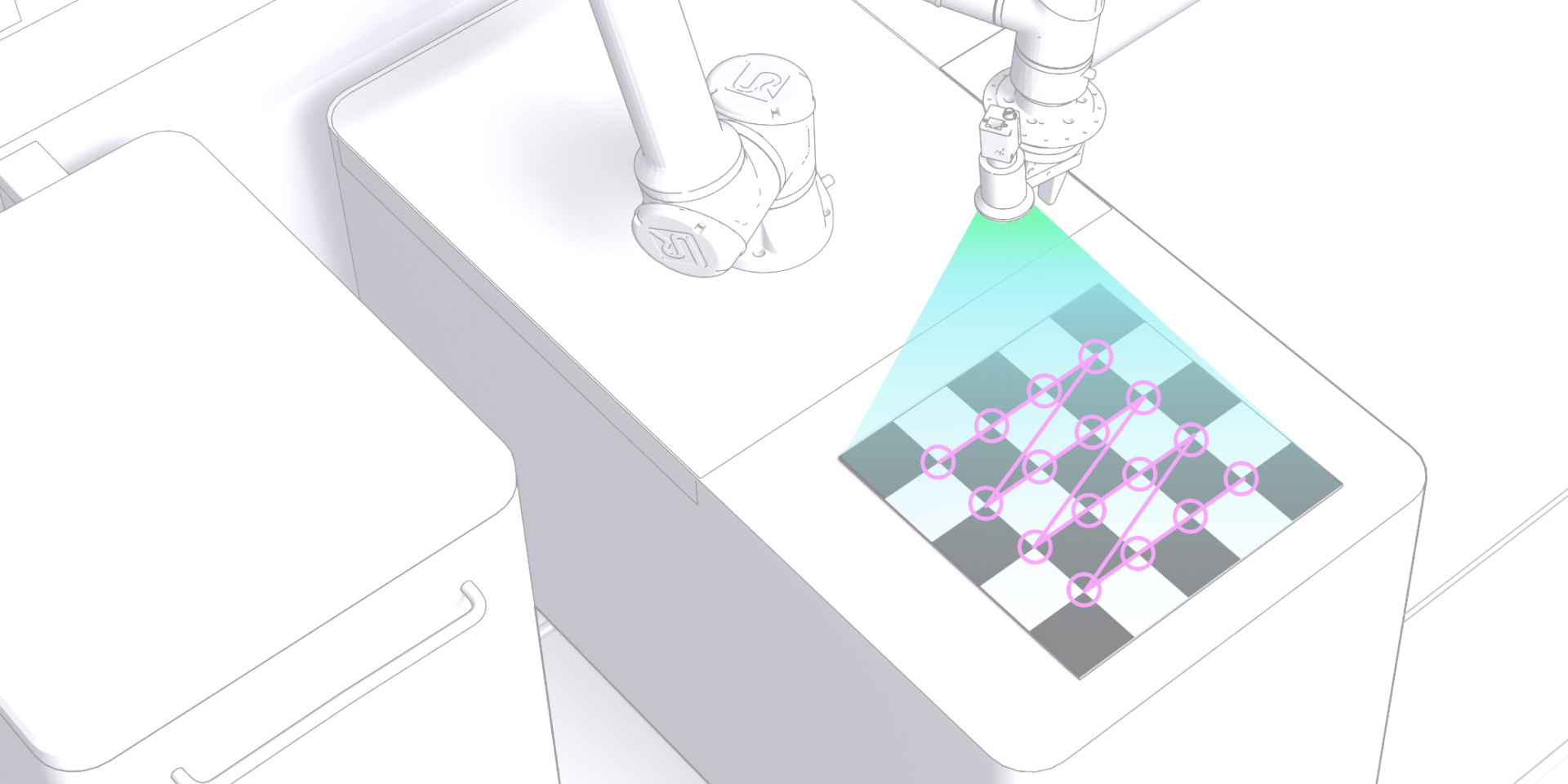
Intrinsic Core includes technologies for real-time robot control, 6-degree-of-freedom pose estimation, automated collision-free motion planning, sensor-driven grasp planning, simulation, camera calibration and ROS drivers for supported robot arms, grippers and cameras.
Intrinsic is presenting the release not as a simplified educational toolkit, but as technology derived from the same foundation used in its commercial deployments.
Alongside it, the company introduced the Open Machine Tending Solution, a reference design aimed at CNC machine tending using robot arms from manufacturers including FANUC and Universal Robots.
The significance is straightforward: developers and integrators can now build commercial robotics systems on top of substantial portions of this stack without paying a traditional software licensing fee.
Qualcomm's strategy looks different, but the underlying logic is similar.
Rather than open-sourcing a previously closed robotics platform, Qualcomm is acquiring the company responsible for maintaining one of robotics' most important existing open-source projects.
MoveIt has become a major motion-planning framework within ROS, with applications ranging from industrial robot arms to research platforms, humanoids and mobile manipulators.
Qualcomm has indicated that MoveIt will remain open source while becoming more closely integrated with its Dragonwing hardware platforms.
As Qualcomm's Nakul Duggal put it, "software is the connective tissue that turns great hardware into great robots."
That statement reveals much of the strategy.
Qualcomm does not necessarily need to sell the motion planner itself. If developers use MoveIt to build robots powered by Qualcomm hardware, the open-source software becomes part of the ecosystem that makes the silicon more valuable.
And Then There Was Robotiq
The pattern became even more interesting when Robotiq entered the picture.
The Quebec-based gripper manufacturer also open-sourced parts of its software ecosystem around the same period, including its gripper SDK, a company-maintained ROS 2 driver and updated Isaac Sim assets. These form part of a new software layer the company calls Contact Core.
Within roughly the same conference window, companies representing three different layers of the robotics stack were leaning into open software:
Intrinsic: robot control, perception and motion software.
Qualcomm and PickNik: computing hardware combined with open-source motion planning.
Robotiq: end-effector hardware supported by open software.
They are not identical strategies, nor do they necessarily indicate coordination.
But together they highlight an important shift in how robotics companies can think about competitive advantage.
The valuable asset may no longer be the code alone.
It may be the ecosystem that forms around it.
What Does "Open" Actually Mean?
This distinction matters because "open source" can mean very different things in practice.
At its simplest, open-source software makes its source code available under a license that allows others to inspect, modify and redistribute it according to defined terms.
Intrinsic Core uses the Apache License 2.0, a permissive license that generally allows companies to build commercial products using the code without being required to publish their own modifications.
That is substantially different from a vendor publishing an SDK or API while keeping the underlying runtime proprietary.
For robotics buyers and integrators, therefore, the important question is not simply:
"Is it open source?"
A better question is:
"Which parts of the system are actually open?"
Consider three areas.
1. What layer is open?
A vendor may publish interfaces and drivers while keeping control, planning or perception systems proprietary.
The more of the operational stack that is genuinely available under an open license, the more flexibility an integrator potentially has.
2. What remains commercial?
Open-source software does not mean the entire ecosystem is free.
Companies can still charge for support, cloud hosting, certification, hardware integration, deployment tooling, enterprise management and specialized services.
In many cases, that is precisely the business model.
3. How mature is the project?
A GitHub repository existing publicly does not automatically make it production-ready.
Buyers should look beyond launch-day attention and examine factors such as development activity, contributors, documentation, hardware compatibility, issue resolution and real-world deployments.
MoveIt has more than a decade of history across the ROS ecosystem.
Intrinsic Core, by comparison, is a much newer public project. Its long-term community trajectory is still being established.
That difference matters when evaluating technology expected to remain operational for years.
Open Source Changes the Vendor Lock-In Equation
One of the biggest implications of this trend is vendor lock-in.
Traditional vertically integrated robotics platforms can tightly connect hardware, runtime software, simulation tools and developer tooling.
That approach has advantages. Integration can be easier, components can be optimized together, and customers may have a single vendor responsible for the complete stack.
But it can also create dependencies.
Once a manufacturer builds production workflows around proprietary tooling, switching platforms can become expensive.
Open-source components change that calculation.
If control, motion planning, drivers and other foundational software can be inspected, modified or forked, customers potentially gain more freedom to change hardware vendors, work with different integrators or maintain systems independently.
That does not automatically make open platforms superior to vertically integrated ones.
Instead, it adds another dimension to procurement decisions.
Buyers are no longer evaluating only features, performance and price.
They may also need to ask:
How much future flexibility does this architecture preserve?
That question becomes especially important when a robot is expected to remain on a factory floor for five, ten or even fifteen years.
Open Source Does Not Eliminate Lock-In
There is an important caveat.
Publishing code does not eliminate every form of dependency.
An open-source robotics stack can still depend heavily on proprietary hardware, cloud infrastructure, certification programs, hosted simulation services or vendor-specific tooling.
There is also a fundamental difference between having access to source code and having an active organization capable of maintaining it.
Code released today under Apache 2.0 cannot simply be taken back from people who already received it under those terms.
But future development can take a different direction.
A company could keep today's platform open while putting future capabilities into commercial services. Advanced AI planning, fleet management, cloud simulation or specialized hardware acceleration could potentially become the commercial layer surrounding an otherwise open core.
That is not inherently problematic. Sustainable open-source projects often need viable business models.
But buyers should understand where those boundaries sit.
Data deserves similar attention.
Who owns calibration data?
Who controls deployment logs?
Where is fleet telemetry stored?
Can that data move to another platform?
Those questions may ultimately matter just as much as the software license.
GitHub Is the Beginning of Due Diligence, Not the End
For companies evaluating these platforms, an open-source repository should be treated as the beginning of technical due diligence.
Look at who contributes.
Look at how frequently the project is updated.
Look at whether development happens publicly.
Look at how quickly issues and security problems are addressed.
Look at whether multiple organizations contribute or whether virtually all development still comes from a single vendor.
And perhaps most importantly, ask the vendor which parts of its future roadmap are expected to remain open.
A healthy open-source robotics project is more than downloadable code.
It is a living ecosystem.
The Bigger Robotics Strategy
The announcements from Intrinsic, Qualcomm and Robotiq suggest that some major players increasingly see open-source software not as something that competes with their business model, but as something that can strengthen it.
For a chip manufacturer, open software can encourage developers to build on its hardware.
For a robotics platform company, it can attract integrators and manufacturers.
For a component maker, it can make hardware easier to adopt.
The monetization opportunity then moves outward—from charging for access to every line of software toward selling hardware, services, integration, support, cloud infrastructure or specialized capabilities around an open foundation.
That model is already familiar in other areas of technology.
Robotics may now be moving further in the same direction.
And that could change an important question for the next generation of robotics platforms.
The competition may no longer be simply about who owns the best robotics stack.
Increasingly, it may also be about who can build the strongest ecosystem around one.
This article synthesizes public disclosures from Intrinsic and Qualcomm alongside industry reporting surrounding their September 2026 ROSCon announcements. It is intended for general informational purposes and does not constitute investment, financial or legal advice.
Hero image credit: Intrinsic