HD Hyundai Cuts Robot Programming Time With Palantir
HD Hyundai Robotics says a Palantir pilot cut average robot program problem resolution from 21.5 days to 7.9 days. The promised cost cut is still an expectation, not a priced result.

HD Hyundai Robotics, the industrial robot unit of HD Hyundai in South Korea, said on 1 November 2026 that a pilot with Palantir Technologies cut the average time to resolve robot program problems from 21.5 days to 7.9 days. The result covers work that began in August. It does not cover a new robot model, a named factory order, or a published price.
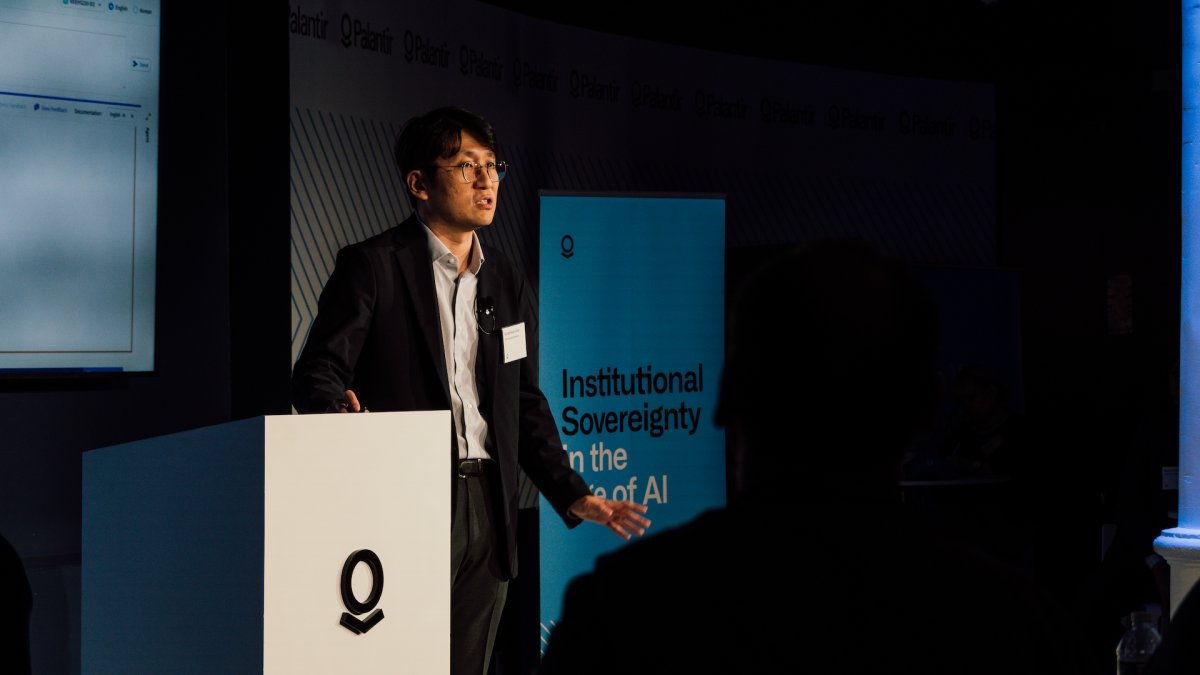
Ahn Seong-hwan, chief technology officer and senior executive vice president, presented the figures as a keynote speaker at Palantir's Sovereignty Bootcamp in New York. The forum, which started in July and has now held three sessions, has drawn about 450 people from roughly 250 institutions and companies. Its stated subject is how firms use artificial intelligence while keeping core data under their own control.
A Three Week Fix Becomes an Eight Day Fix
The operational change is specific. Field engineers used to watch a robot move, then revise the sequence, the path, and the speed by hand. That loop depended on the person at the cell. Two plants could run the same robot and still take different times to clear the same fault, because the method lived in individual experience rather than in a shared procedure.
Under the pilot, an artificial intelligence agent reads the existing robot program and proposes changes. Engineers then accept, reject, or amend those proposals using what they know about the cell. Simulation sits in the same loop, so a path change can be checked before someone stands next to the arm. HD Hyundai Robotics described the shift as a change in who does the first pass, not as the removal of the engineer.
The arithmetic is plain. 7.9 divided by 21.5 is about 0.37, so the reported average is roughly 63 percent shorter. A line change that used to wait the better part of three weeks now waits a little over a week, if the pilot average holds on the next job. For a buyer, that is a scheduling fact before it is a technology claim. Maintenance windows, customer acceptance tests, and the date a new part number can ship all sit on that clock.
What the company has not said matters as much as what it has said. It has not published the number of programs in the average, the robot models involved, the plants, or whether the clock included customer approval time. A buyer who treats 7.9 days as a contractual service level would be reading a figure the company has not offered as a guarantee.
The Cost Line Is Still an Expectation
HD Hyundai Robotics expects robot programming costs to fall by more than 50 percent. That sentence is an expectation, not a closed invoice. No baseline in Korean won or US dollars was released. No before and after labor hours were released. A procurement team cannot convert "more than 50 percent" into a unit cost without the denominator.
The honest reading is narrower. If the scarce input is senior programmer time, and if the agent removes the first round of path and speed edits, then labor hours should fall. Whether they fall by half depends on what else sits in the programming bill: safety reviews, fixture design, weld parameter sign off, and travel to the customer site. None of those items were itemized. The 50 percent figure should stay in the opportunity column of a business case until a customer, or HD Hyundai Robotics itself, shows a paid project with both clocks and both invoices.
There is a second commercial object inside the same announcement. The company wants field engineers to stop being the people who only program, install, and commission, and to become people who define the site problem and then use the agent to implement a fix. Palantir chief revenue officer Ryan Taylor said the joint work is changing how customer problems get solved. Ahn said the company will keep widening work with global firms so its physical AI work goes further. Both lines describe intent. Neither line is a product sheet.
What a Buyer Should Ask Before Signing
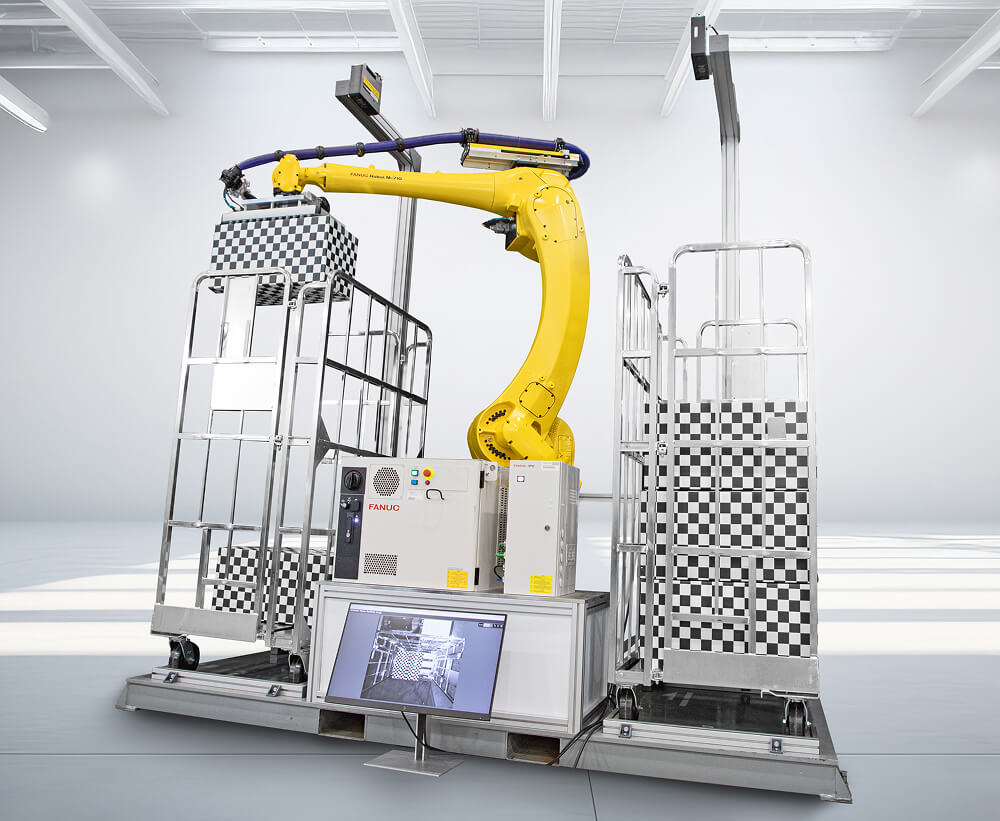
Physical artificial intelligence, in this announcement, is not a walking machine. It is software wrapped around programs that already run on industrial arms. That distinction should shape the request for proposal. A buyer who needs a humanoid for an unstructured aisle is looking at a different purchase. A buyer who already owns HD Hyundai Robotics arms, or who is about to, is looking at a change to the integration statement of work.
Five questions are enough to test the claim without inventing a benchmark the company did not publish.
First, which tasks sat inside the 21.5 day average? Path correction, speed tuning, and fault recovery are not the same job as a new cell design. If the pilot covered only the first group, the saving does not transfer to a greenfield line.
Second, who owns the program data once the agent has read it? The bootcamp branding is about sovereignty, meaning the customer keeps control of core information. A contract should say where the program files reside, who can retrain the agent, and what leaves the plant network. The keynote did not publish that schedule.
Third, does the 7.9 day figure include safety validation? A faster edit that still waits on a risk assessment has not shortened the critical path. The announcement describes engineers refining proposals. It does not say a safety sign off was removed or compressed.
Fourth, is the cost expectation measured on HD Hyundai Robotics labor, customer labor, or both? A vendor that cuts its own programming hours may or may not cut the price on the purchase order. The buyer should ask which side of the invoice moves.
Fifth, what happens when the agent is wrong? The method still needs a person who can reject a bad path. If the remaining experts are fewer, and if they are now spread across more cells, the residual risk is a bad proposal that nobody qualified is free to catch. That risk is not in the 63 percent figure. It belongs in the implementation plan.
Where This Sits Against a Normal Integration Bid
A conventional integration bid prices robot hardware, end effectors, safety fencing or its absence, and a block of engineering days. The engineering block is often the part that overruns, because the path that worked in simulation meets a real fixture, a real part tolerance, and a real cycle time target. HD Hyundai Robotics is arguing that the overrun lives in repeated human edits, and that an agent can take the first edit.
That argument is useful even if a buyer never purchases Palantir software. It tells the buyer to split the engineering line into first pass and expert review, and to ask every vendor what share of paid days is first pass work that software might absorb. Vendors who cannot separate those hours are still selling a blended day rate. Vendors who can separate them can be compared on the expert review hours that actually remain.
The comparison available today is internal to this pilot, not a market table. Pricing for the Palantir deployment was not disclosed, so it is recorded as not available. The only measured pair is time: 21.5 days before the agent, 7.9 days after, on the company's account of robot program problems. Hardware price, software subscription, and integrator day rate are not available from this announcement. A buyer comparing this offer with a conventional integrator should not fill those blanks with estimates from other countries or other years.
The Engineer Is the Remaining Constraint
The planned role change is the part with the longest consequence. If basic programming and test runs move toward the agent, the people who remain are paid to name the problem and to judge the fix. That is a smaller group with a higher required skill. Plants that already struggle to hire robot programmers will not automatically gain capacity. They may trade a shortage of programmers for a shortage of reviewers.
HD Hyundai Robotics and Palantir agreed to hold regular meetings of senior executives to set field tasks and keep the cooperation going. Money and product scope for that committee were not stated. A steering meeting is a governance tool. It is not evidence that a second plant has repeated the 7.9 day result.
For operations leaders, the practical test over the next quarter is repetition. One pilot average, presented at a vendor event in New York, is a lead indicator. A second average, on a named process, with the task list attached, would be a buying input. Until that second number exists, the correct use of 1 November is to reopen the integration schedule, not to rewrite the automation budget.
The wider point is that industrial robot value is moving toward the hours between a program fault and a cleared cell. Hardware reach and payload still decide whether a robot can do the job. They no longer decide how fast the job can be changed. HD Hyundai Robotics has put a company measured interval on that second question. The interval is shorter. The invoice is not yet on the table.
This article is for informational purposes only and does not constitute investment, procurement, or engineering advice. Figures come from company statements carried by public reporting and have not been independently audited.