Tesla Unveils US$25,000 Cybercab With No Steering Wheel
Tesla revealed the production Cybercab at an Austin event, pricing its first vehicle with no steering wheel or pedals at US$25,000 and rolling it into the existing Robotaxi app.

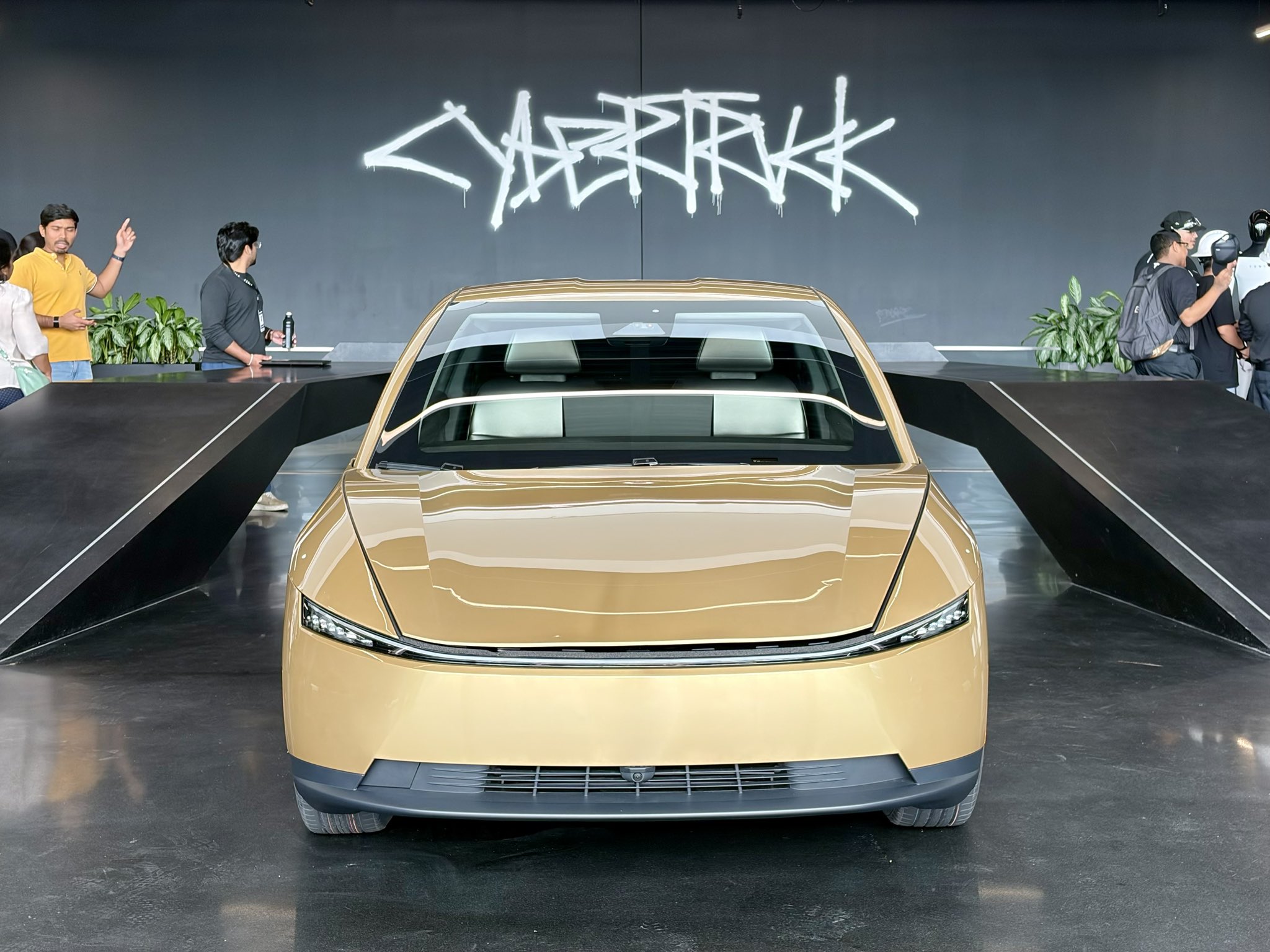
Tesla unveiled the production version of its Cybercab on Thursday at an invite-only, livestreamed event in Austin, Texas, confirming a US$25,000 starting price for a two-seat autonomous vehicle built with no steering wheel and no pedals. The company said riders in Austin would be able to hail the Cybercab through its existing Robotaxi application within the following week, folding the new hardware directly into a driverless service that already operates in six US cities rather than treating the reveal as a distant concept.
The event closes a gap that has defined Tesla's robotaxi ambitions since the company first showed a Cybercab concept in October 2024. Federal filings tied to the vehicle's emissions certification, submitted to the US Environmental Protection Agency (EPA) ahead of the reveal, list a 47.6 to 48.0 kilowatt-hour lithium-ion battery, a 163-kilowatt electric motor, a curb weight of roughly 3,113 pounds, and a preliminary real-world range near 293 miles. Those figures make the Cybercab lighter than a Model 3 despite carrying Tesla's full self-driving compute stack, and they give buyers and fleet operators the first independently verifiable specification sheet for a vehicle the company had previously described mostly in superlatives.
A Price Built for Fleets, Not Just Individual Buyers
Tesla is selling the Cybercab to two different customers with one price tag. Individual buyers can order the vehicle outright, but the company has designed the economics around fleet operators who will run the car as a paid robotaxi asset, wireless inductive charging pads and a cabin stripped of manual controls are choices that make sense primarily for a vehicle meant to charge and dispatch itself between fares rather than sit in a driveway. At US$25,000, the Cybercab undercuts the price of every new Tesla currently in production, and it lands well below the roughly US$35,000 to US$45,000 range analysts had penciled in based on Tesla's earlier commentary about building the cheapest vehicle the company has ever sold.
That price matters more as a fleet-economics input than as a retail number. A robotaxi's unit economics run on cost per mile amortized against utilization, and a US$25,000 asset that can run near-continuously without a driver's wage attached changes the payback math against Waymo's more expensive, sensor-heavy retrofits and against human-driven ride-hailing altogether. Tesla has leaned on this argument publicly for years without a production vehicle to back it, and Thursday's event replaces the argument with a purchasable object, EPA paperwork, and a functioning app integration in one of the six cities where the company already runs driverless service.
No Steering Wheel Is a Regulatory Statement, Not Just a Design Choice
Removing the steering wheel and pedals is not simply a styling decision. Every Tesla vehicle sold to date, including the Model Y units currently running as driverless robotaxis in Austin, Dallas, Houston, Miami, Orlando, and Tampa, retains manual controls that allow a human to take over or that satisfy older vehicle safety standards written around a human driver. A car built with no manual controls at all has to clear a different regulatory bar, one that assumes full autonomy is the vehicle's only operating mode rather than a feature layered onto a conventional car.
Tesla has not published the specific federal exemption or rule interpretation underlying Thursday's launch, and the company's public messaging around the event stayed deliberately thin on regulatory detail in the days before the reveal. What is verifiable is the outcome: a vehicle without driver controls is now taking paid fares in a US city, which puts Tesla in a small group of companies, alongside Waymo and a handful of purpose-built robotaxi makers, that have cleared the practical and regulatory hurdles to operate a car nobody inside is licensed to drive. The robotaxi field already has four serious contenders competing for the same city-by-city expansion playbook, and Tesla's move to a purpose-built, no-manual-controls vehicle changes the terms of that competition rather than just adding another entrant to it.
The Manufacturing Case Tesla Is Betting the Reveal On
Tesla's stated ambition is to build a Cybercab every ten seconds at full production, an assembly rate that implies annual capacity in the millions of units rather than the tens of thousands typical of a new vehicle program's first year. Reaching that cadence requires a production process closer to consumer electronics than to conventional automaking, since a steering-wheel-free interior removes some assembly complexity while the compute and sensor stack Tesla calls AI4, its fourth-generation autonomy hardware, adds new manufacturing steps that did not exist on any prior Tesla line.
Gigafactory Texas has been building toward this cadence since the first Cybercab rolled off the line in February, with subsequent production images showing vehicles missing doors and front panels on the assembly floor as Tesla worked through the fit and finish issues that typically accompany a new platform's ramp. Thursday's event marks the point where that ramp produced enough finished, driveable units to support both a public unveiling and an immediate commercial rollout in the same week, a compressed timeline that leaves Tesla little room to quietly delay if early units show defects once they are logging real passenger miles rather than factory test loops.
The Accessibility Case Tesla Built Before the Price Tag
Tesla previewed several of the Cybercab's cabin design choices months before Thursday's event, bringing a pre-production unit to the National Federation of the Blind's annual convention in Austin in July. The vehicle's seat height was set to match a standard wheelchair seat, its butterfly doors open wide enough for a wheelchair to pull up parallel to the car rather than at an angle, and the emergency-stop button and interior door release both carry Braille labeling alongside the standard printed text. Tesla also built in exterior microphones and speakers so the vehicle can announce its arrival audibly and take a spoken destination command, along with dedicated cabin space for service animals, canes, and other assistive devices.
Those choices matter for procurement teams evaluating the Cybercab beyond its headline price, because a driverless vehicle with no human operator to assist a rider has to solve accessibility problems in hardware that a conventional taxi solves with a driver's judgment. A fleet operator serving a city contract, or a transit authority weighing a driverless option against a paratransit budget line, now has a documented feature set to evaluate rather than a promise, and the emergency-stop Braille labeling in particular signals Tesla built the accessibility case into the vehicle's safety systems rather than treating it as a trim option layered on afterward.
What the Existing Robotaxi Fleet Tells Buyers About the New One
Tesla's decision to fold the Cybercab into an already-operating Robotaxi service, rather than launching it as a standalone pilot, is itself a signal worth reading. The Model Y-based robotaxis running in Austin and five other cities have accumulated real operating history, and the company appears to be betting that regulators, insurers, and riders will extend some of that accumulated trust to a new vehicle sharing the same autonomy stack rather than requiring the Cybercab to build a track record from zero. Waymo's own expansion into Denver, San Diego, and Tampa earlier this month shows a rival pursuing the same city-count strategy with a different vehicle and sensor philosophy, and the two companies are now converging on overlapping markets with fundamentally different bets about what a robotaxi should look like underneath the software.
For procurement teams and fleet operators evaluating whether to add Cybercab units to an existing mixed fleet, the near-term test is not the specification sheet Tesla filed with the EPA. It is whether the vehicles Tesla puts on Austin streets this month match the reliability of the Model Y fleet they are joining, since a compute stack and charging architecture that work in a factory demo do not always translate cleanly into a car running eighteen-hour shifts in Texas heat. Tesla has given buyers a firm price and a verified specification sheet; it has not yet given them a maintenance record, and that gap is what the next several weeks of Austin service will start to fill.
The Wider Market the Cybercab Just Entered
Industry analysts covering the autonomous vehicle sector have projected robotaxi fleets could grow roughly tenfold by 2030 as artificial intelligence advances continue cutting the cost of deploying and operating self-driving hardware, and Tesla's entry with a sub-US$25,000 purpose-built vehicle is a direct bet on that cost curve continuing to bend in the company's favor. Rivals are moving on parallel tracks rather than waiting to see how Cybercab performs: Zoox has already secured a first-of-its-kind federal exemption to sell a purpose-built robotaxi with no manual controls, putting at least two US companies now operating vehicles nobody inside is licensed to drive, and international players including WeRide and Pony.ai are racing to add thousands of robotaxi units across cities in the Middle East and Europe over the same stretch of 2026 that Tesla is using to scale Cybercab production in Texas.
That competitive backdrop is what makes Thursday's price disclosure more consequential than a typical vehicle reveal. A robotaxi operator choosing between platforms is not just comparing sticker prices, it is comparing cost per mile, uptime, and regulatory clearance across vehicles built on fundamentally different bets about sensors, compute, and manual-control fallback. Tesla's camera-only, no-manual-controls approach remains the outlier among major players, most of whom retain expensive lidar arrays or backup manual controls as a hedge, and Thursday's event is the first time buyers can weigh that bet against a real price, a real specification sheet, and a real delivery date rather than a roadmap slide.
This analysis synthesizes Tesla's September 3 event disclosures, public EPA certification filings, and reporting from automotive-industry outlets tracking the Cybercab program as of September 3, 2026.
This article is provided for general information purposes only and does not constitute investment, procurement, legal, or engineering advice.