PlusAI Agrees US$800 Million Autonomous-Truck SPAC Deal
PlusAI agreed to a transaction valuing it at approximately US$800 million before new money and potentially providing up to US$300 million for autonomous-truck commercialization.

SANTA CLARA, Calif., Sept. 3, 2026. PlusAI agreed to combine with Texas Ventures Acquisition III in a deal valuing the autonomous-trucking software company at approximately US$800 million before new money. The proposed transaction could provide up to approximately US$300 million to fund factory-built autonomous trucks, subject to shareholder approval, redemptions, and other closing conditions.
PlusAI, legally Plus Automation, is a Silicon Valley physical-AI company developing SuperDrive software for Level 4 autonomous commercial trucks and HyperFoundry tools for building and validating autonomy systems. It works with truckmakers including TRATON, Hyundai, and IVECO, placing its business between vehicle manufacturers, fleet operators, and the software required to run driverless freight.
The Deal Funds Two Businesses on Different Clocks
PlusAI’s transaction is easier to understand when its two main products are separated. HyperFoundry is generating revenue now by monetizing the company’s data, models, and simulation capabilities. SuperDrive is the larger commercial bet, a virtual driver intended for factory-built autonomous trucks, with a commercial launch targeted for 2027.
The company said HyperFoundry has generated US$25 million of revenue and that it is targeting US$40 million to US$50 million of contracted revenue in 2026. Those numbers are not interchangeable. Revenue already generated is realized performance. Contracted-revenue targets are management objectives and may include work that depends on customer commitments, delivery schedules, or accounting treatment not detailed in the announcement.
SuperDrive is also operating before full commercial launch. PlusAI says the system is transporting freight on autonomous routes in Texas with Ryder and International. That establishes a real operating context, but the announcement does not provide route count, truck count, intervention rate, paid miles, or unit economics. The 2027 milestone remains a target for factory-built deployment with original-equipment-manufacturer partners, not a statement that large driverless fleets are already in service.
This split explains why PlusAI is seeking public capital now. HyperFoundry can generate nearer-term cash and customer relationships while SuperDrive moves through vehicle integration, validation, regulation, and fleet adoption. One business helps finance the wait for the other. The transaction gives management more runway, but it also makes the gap between present revenue and future autonomy easier to measure.
Up to US$300 Million Does Not Mean US$300 Million at Closing
The proposed capital package combines more than US$60 million of fully committed financing with approximately US$236 million held in the Texas Ventures III trust. The company presents the total as up to approximately US$300 million. The phrase “up to” carries much of the financial meaning.
Shareholders in a special-purpose acquisition company can usually redeem their shares before a transaction closes. Redemptions reduce the cash available from the trust. The committed financing is intended to satisfy the minimum cash condition, but the final proceeds will also depend on expenses, closing adjustments, and the transaction reaching completion. The boards have approved the deal, while shareholder and regulatory steps remain.
That means procurement teams should not build supplier assumptions around the maximum headline. PlusAI may receive substantial capital, but the final amount has not been delivered. Investors should also distinguish the approximately US$800 million pre-money equity value from market capitalization after closing. New capital, share issuance, redemptions, earnout arrangements, and post-closing trading can all change the value attributed to the combined company.
The proposed structure is still commercially relevant. Autonomous trucking demands spending long before a fleet produces recurring driver revenue. Software teams must work with vehicle manufacturers, safety engineers, fleet operators, simulation systems, and regulators. A larger balance sheet can support that integration cycle without forcing PlusAI to depend on one truckmaker or one customer for every development milestone.
Factory Integration Is the Real Product Strategy
Many autonomous-vehicle programmes began by adding sensors, computers, and controls to existing vehicles. That approach is useful for testing, but it can create a vehicle that is expensive to assemble, difficult to maintain, and awkward to support at scale. PlusAI’s stated strategy is to put SuperDrive into factory-built trucks through established manufacturers.
That is the commercial logic behind PlusAI’s work with TRATON brands, Hyundai, and IVECO. The software company provides the virtual driver and development platform. The truckmaker controls vehicle engineering, production quality, distribution, and much of the service relationship. The model can be capital efficient because PlusAI does not need to manufacture complete trucks, but it also gives the original-equipment manufacturer leverage over launch timing and product configuration.
This is why the company’s planned Driver-as-a-Service model should be judged through fleet economics rather than software branding. The buyer needs to know how pricing compares with driver cost, fuel savings, utilization gains, insurance, remote assistance, maintenance, and downtime. A recurring fee creates attractive revenue only when the fleet receives dependable recurring value.
Freight Routes Offer a Narrower Road to Autonomy
Autonomous trucking has a structural advantage over urban robotaxis. Long-haul freight can concentrate on defined highway corridors, freight terminals, and repeat routes. The operating environment remains demanding, but the service can avoid some of the passenger pickup, dense curb behavior, and city-by-city consumer experience challenges faced by robotaxi systems.
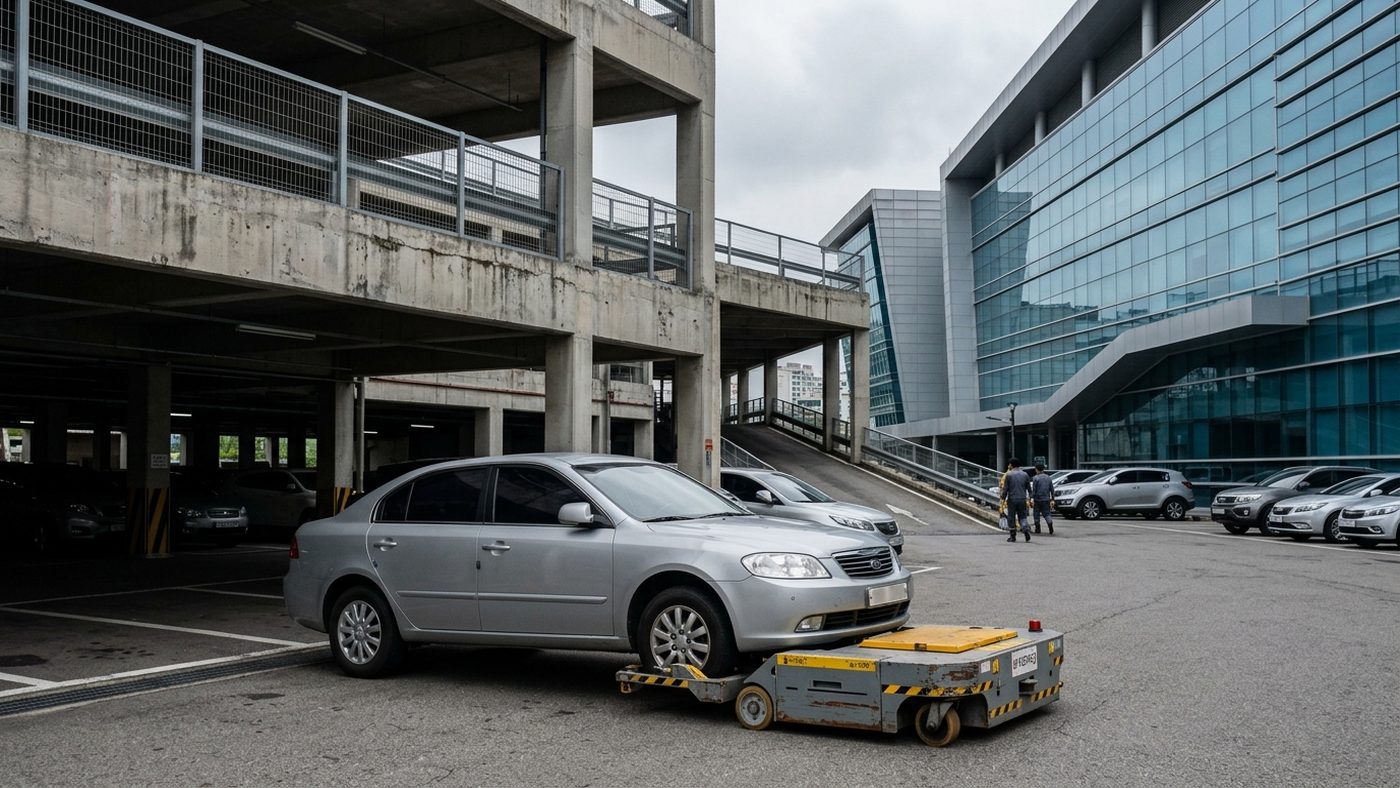
The strongest early market may therefore be a network of constrained freight lanes rather than a vehicle that can drive anywhere. Fenced-yard autonomy has already shown why controlled operating domains can reach customers before unrestricted driverless services. Autonomous trucking extends that principle to a larger geography while preserving repeatable routes and professional fleet management.
That does not make the task easy. Highway driving requires reliable perception at speed, safe behavior around construction and emergency vehicles, weather tolerance, secure communications, and a plan for events the onboard system cannot resolve. Terminals create their own handoff problem between autonomous highway movement and human or automated yard operations.
PlusAI’s Texas freight activity is therefore an important proof point, but buyers need operating data. Miles alone can flatter a system running on favorable routes. More useful measures include autonomous completion rate, disengagement causes, remote-assistance frequency, on-time delivery, safety-driver requirements, downtime, and the cost of maintaining the sensor and compute package.
The 2027 factory launch target should be read as the start of commercial accountability, not the finish line. A production truck must be orderable, serviceable, insurable, and supported across its operating territory. It also has to fit fleet replacement cycles. Even a technically ready system may scale gradually because fleets do not replace every truck at once.
HyperFoundry Reduces Dependence on a Single Launch Date
The less visible part of the announcement may be the more practical business buffer. HyperFoundry packages data, models, and simulation capabilities into a development platform that can be used before SuperDrive reaches broad deployment. The company says it has already generated US$25 million from the platform.
That revenue gives PlusAI a way to monetize work created during years of autonomy development. Simulation scenarios, validation methods, and trained models can be valuable to manufacturers and developers facing similar testing burdens. The platform can also deepen relationships with partners that may later adopt SuperDrive.
The counterpoint is that tools and services can absorb engineering time without producing the margins or repeatability expected from a software platform. Public reporting will need to show how HyperFoundry revenue is generated, whether customers renew, how concentrated the work is, and how much customization each contract requires. A high-value engineering engagement is not the same business as a standardized subscription, even if both are called software.
The relationship between the two products also deserves scrutiny. HyperFoundry should make SuperDrive development faster and safer by reusing data and validation workflows. If the products drift into separate customer bases and roadmaps, PlusAI could end up managing two businesses with different sales cycles and resource needs. The financing gives the company room to support both. It does not remove the need to choose priorities.
Original-Equipment Partners Control the Calendar
PlusAI targets a 2027 commercial launch with factory-built autonomous trucks, but vehicle programmes are governed by more than software readiness. Truckmakers manage platform engineering, supplier validation, manufacturing changes, warranties, dealer preparation, and regulatory compliance. Fleets add procurement cycles, route planning, labor negotiations, insurance, and operational training.
The same tension appears across physical AI. Large physical-AI forecasts often depend on infrastructure and integration rather than the robot or vehicle alone. In autonomous freight, that infrastructure includes trucks, depots, maps, remote support, maintenance systems, and customer workflows. The software is central, but the deployment chain determines revenue.
Procurement teams evaluating PlusAI should therefore ask for a platform-by-platform roadmap. Which truck models will ship first? In which jurisdictions? Under what operating conditions? Who owns the safety case, software updates, and field support? What changes when the truck crosses from an autonomous corridor into a manually operated terminal? Clear answers matter more than a broad addressable-market estimate.
Public Capital Raises the Reporting Standard
The transaction could fund PlusAI through 2027, according to the company’s plan. Closing would also introduce public-company reporting around a business that mixes realized platform revenue, contracted targets, long-cycle vehicle development, and future recurring-service economics.
That reporting can help buyers as much as investors. A fleet choosing autonomy software is making a multiyear supplier decision. It needs confidence that the vendor can fund development, support deployed vehicles, protect data, and maintain software through regulatory change. Cash runway and customer concentration are procurement facts when the product is expected to drive a truck for years.
The hard truth is that a public listing does not shorten validation. It may pay for more testing and integration, but it cannot turn a 2027 target into a guaranteed launch or make trust cash immune to redemptions. The deal should be judged first by whether it closes, then by the net cash delivered, and finally by whether that cash produces orderable trucks and repeatable revenue.
PlusAI has supplied unusually useful markers for that judgment: US$25 million of HyperFoundry revenue, a US$40 million to US$50 million contracted-revenue target for 2026, an approximately US$800 million pre-money valuation, and a 2027 SuperDrive commercial-launch target. The next year will show whether those figures connect into one operating model.
The strongest closing statistic is therefore not the proposed US$800 million valuation. It is the US$25 million already generated by HyperFoundry, because it is the part of the autonomy story that has crossed from forecast into revenue.
This analysis synthesizes PlusAI’s transaction announcement, company operating disclosures, and public market activity as of September 3, 2026.
This article is provided for general information purposes only and does not constitute investment, procurement, legal, or engineering advice.