The Global AI Robotics Race Accelerates in June 2026
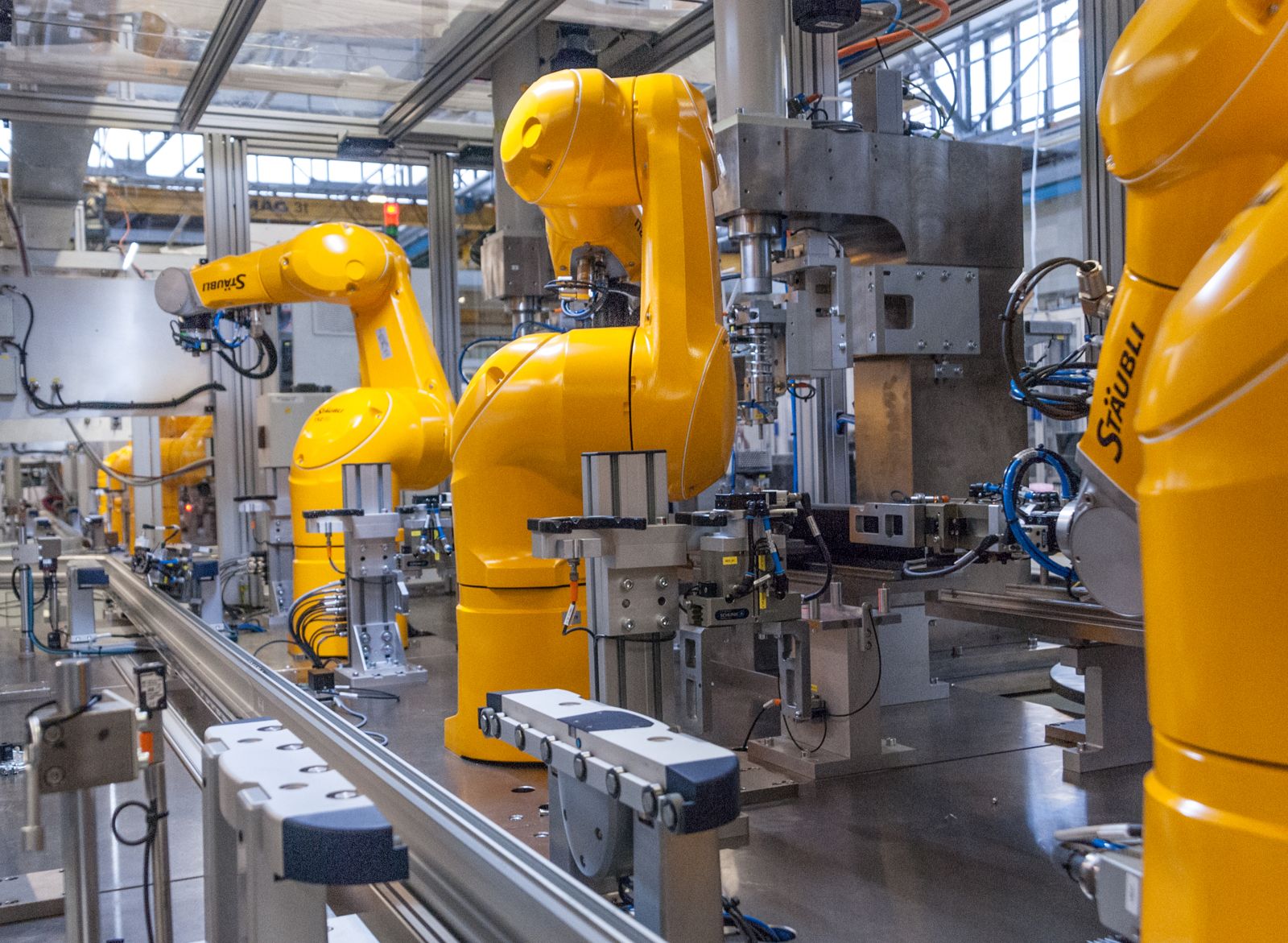
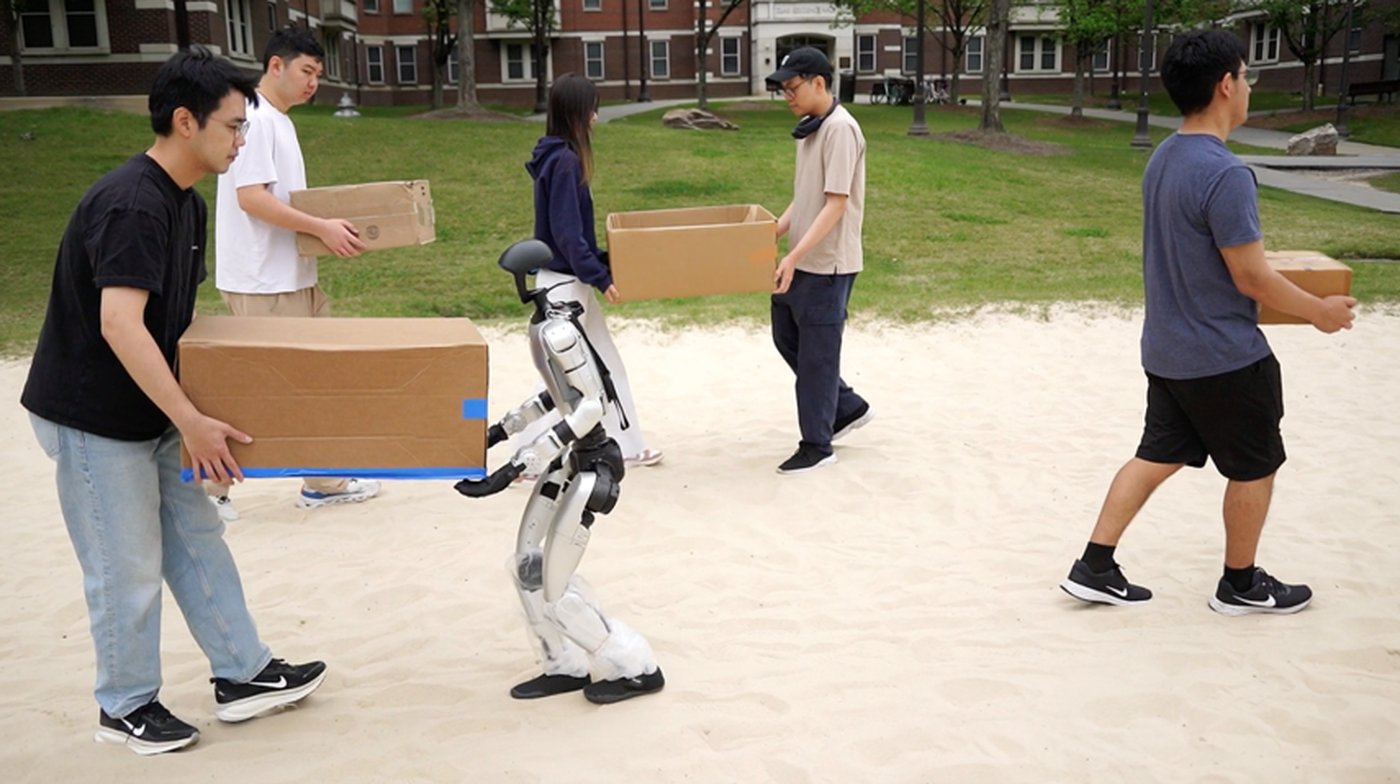
June 2026 marked a major turning point for embodied AI, with China pushing humanoid robot deployment at national scale, Alibaba releasing a three-model robotics stack, Zhiyuan setting a table-tennis milestone, and Europe answering with major funding and new robot form factors.

June 2026 is shaping up as a watershed month for AI-powered robotics. From Beijing's factory floors to European startup labs, a wave of breakthroughs is accelerating the transition from demonstration robots to machines that actually work — autonomously, at scale, and in the real world. Three regions, three very different strategies, one shared conviction: the age of practical embodied AI has arrived.
China Pulls Every Lever: 10,000 Robots, a National Directive, and Alibaba's AI Brain
China's government is done waiting. On June 10, the Ministry of Industry and Information Technology (MIIT) and the State-owned Assets Supervision and Administration Commission (SASAC) issued a sweeping joint directive ordering local governments and state-owned enterprises to test and deploy humanoid robots across manufacturing, logistics, retail, and healthcare — with a binding target of more than 10,000 units in commercial use before the year is out. The initiative introduces a "Humanoid Robot-as-a-Service" model, defining over 100 high-value application scenarios that enterprises are expected to adopt within months, not years. Chinese embodied AI firms had already raised approximately $2.9 billion in early 2026, and the new directive is designed to convert that capital into real-world deployments at national scale.
The hardware racing to meet that deadline is formidable. The TianGong 3.0, jointly developed by the Beijing Innovation Center of Humanoid Robotics and chip firm D-Robotics, is on track for mass delivery in the second half of 2026. Powered by D-Robotics's Xuri S600 embedded-intelligence chip, TianGong 3.0's AI model was compressed to less than 20% of its original size through parameter distillation and architecture lightweighting — a feat enabling sophisticated on-device reasoning without cloud dependency. Its target environments span industrial production lines, warehousing, intelligent services, and maintenance in hazardous or complex spaces.

Alibaba Enters the Arena: Three Foundation Models for Every Robot Body
On June 17 — just as TianGong 3.0 was finalising its production ramp — Alibaba's Qwen team unveiled a full robotics AI suite comprising three foundation models. Qwen-RobotNav extends vision-language capabilities into mobile robots, unifying instruction following, goal-directed navigation, target tracking, and autonomous driving within a single framework. Qwen-RobotManip, the manipulation specialist, was trained on more than 38,100 hours of fully open-source data and supports large-scale learning across multiple hardware platforms. The third model, Qwen-RobotWorld, functions as a general-purpose world model: it accepts natural-language action commands and predicts physically consistent future states across navigation, driving, and manipulation scenarios simultaneously — effectively giving any robot body a unified AI brain capable of reasoning about its own next moves before executing them.
The launch signals Alibaba's ambition to own the software layer of China's robotics surge, in much the same way its cloud business underpins enterprise computing. By open-sourcing the training data for Qwen-RobotManip, the company is making a deliberate bet on ecosystem scale over proprietary lock-in — a strategy that could prove decisive as hundreds of Chinese hardware makers scramble for capable robot brains.
"The Expedition A3 must execute a complete closed-loop control sequence — visual perception, trajectory prediction, full-body motion planning, and precision striking — all in milliseconds."
— Embodied Global, reporting on Zhiyuan Robotics' Expedition A3 ping-pong achievement, June 16, 2026
Asia's Proving Ground: When a Ping-Pong Match Becomes an Engineering Milestone
China's Zhiyuan Robotics demonstrated on June 15 exactly what "embodied AI under pressure" looks like in practice. Its Expedition A3 became the world's first full-size bipedal humanoid to play fully autonomous table tennis — no remote control, no pre-scripted routines, no human safety net. Table tennis is a deliberately brutal benchmark: ball speeds exceed 5 metres per second, spin and trajectory shift continuously, and every response window is measured in milliseconds. To crack it, Zhiyuan partnered with two Peking University research teams: Professor Zhang Shanghang's group developed the SpikePingpong motion control algorithm, while Professor Huang Tiejun's team contributed a 20kHz high-frequency pulse camera capturing visual data at 20,000 frames per second — ten times faster than conventional imaging. The result is millimetre-level prediction of where paddle meets ball, coordinated with full-body kinematic planning across the robot's bipedal stance, torso, arms, and wrist simultaneously.
Q: Why is ping-pong considered such a significant benchmark for humanoid robots?
A: Because it demands real-time sensor fusion, sub-millisecond reaction cycles, and coordinated full-body motion — precisely the same capability profile a robot needs to handle fast, unpredictable tasks on a factory floor or in a service environment.
Q: What makes the 20kHz pulse camera fundamentally different from standard robot vision?
A: It fires at 20,000 frames per second compared to the 60–120fps of conventional cameras, enabling the robot to track rapidly spinning objects and predict contact points with millimetre accuracy that no ordinary imaging pipeline can match.

The West Rewrites the Blueprint: Neura's $1.4 Billion and the Robot That Ditched Its Legs
Western robotics companies are mounting a serious response. Germany's Neura Robotics closed a landmark $1.4 billion Series C in June 2026, led by Nvidia and Amazon alongside Qualcomm, Bosch, Schaeffler, and the European Investment Bank, valuing the firm at approximately $7 billion. The round is one of the largest ever raised by a European robotics company and signals that American tech giants are placing significant bets on European embodied AI as a strategic counterweight to China's state-backed surge.
Meanwhile, Paris-based Genesis AI took a deliberately contrarian position with the unveiling of Eno — a general-purpose robot that abandons the humanoid form entirely. Instead of legs, Eno rides a wheeled base; instead of a head, it uses a height-adjustable tower fitted with human-dexterous hands. At its core runs GENE, a robotics foundation model engineered for long-horizon planning, real-time reasoning transparency, and millimetre-precision manipulation. Backed by $105 million in seed funding from Khosla Ventures, Eclipse, and Bpifrance — with Eric Schmidt among its advisors — Genesis AI is targeting manufacturing, logistics, lab, and healthcare deployments by end-2026, with consumer applications to follow. The message is pointed: the human body may not be the optimal template for every task a robot will ever be asked to do.
Taken together, this week's dispatches from Beijing, Shanghai, and Paris tell a coherent story. The robotics race is no longer about impressive demos — it's about mass-production targets, enterprise deployment mandates, AI software stacks at ecosystem scale, and fundamental questions of physical form. Whether the winning design has two legs, four, or wheels may ultimately matter far less than which system can think, adapt, and act reliably enough to earn a permanent place on the factory floor — and, soon enough, in the home.
📰 News References:
• Alibaba Qwen-Robot series with three foundation models for embodied AI — TechNode, June 17, 2026
• TianGong 3.0 to enter mass delivery in H2 2026 — Gasgoo (Beijing Innovation Center of Humanoid Robotics), June 9, 2026
• China Targets 10,000 Humanoid Robots in Commercial Use by End-2026 — Caixin Global, June 10, 2026
• Zhiyuan Expedition A3 Becomes First Full-Size Humanoid Robot to Play Autonomous Ping-Pong — Embodied Global, June 16, 2026
• Eno: Genesis AI's First General-Purpose Robot Challenges Traditional Humanoid Design — Interesting Engineering / PR Newswire, June 16–17, 2026
• Humanoid Robotics Secures $1.4B — Nvidia & Amazon Lead Neura Funding Round — StockXpo / Neura Robotics, June 10, 2026