





BESCHREIBUNG
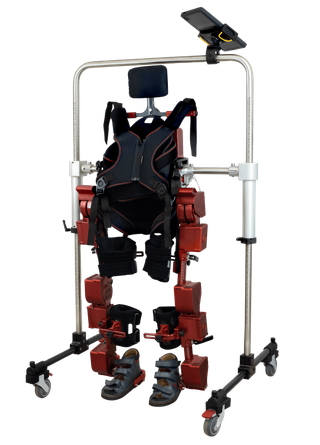
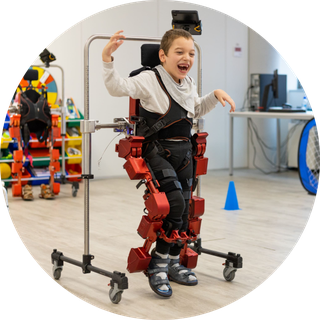
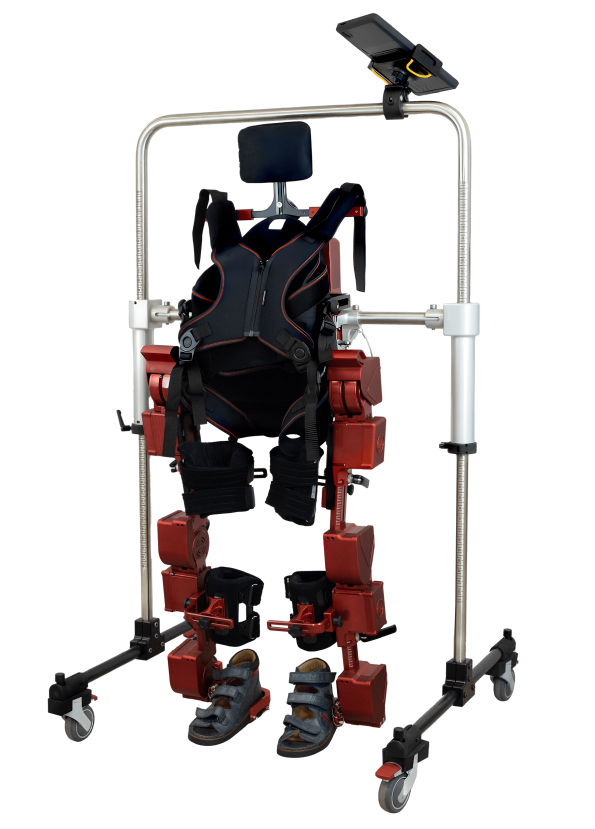
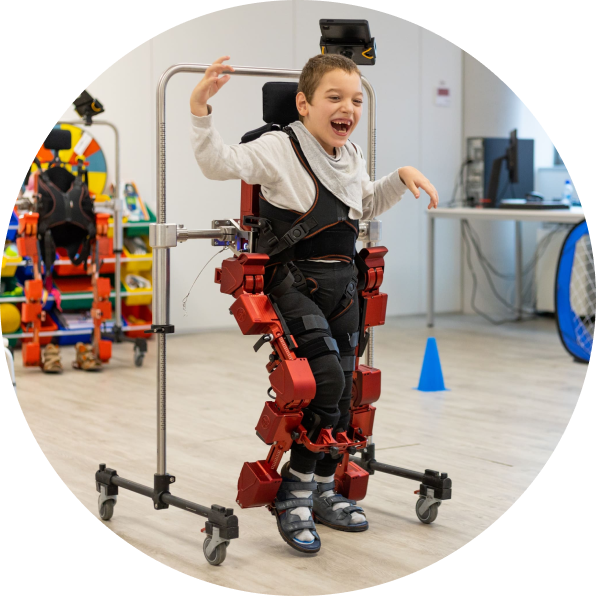
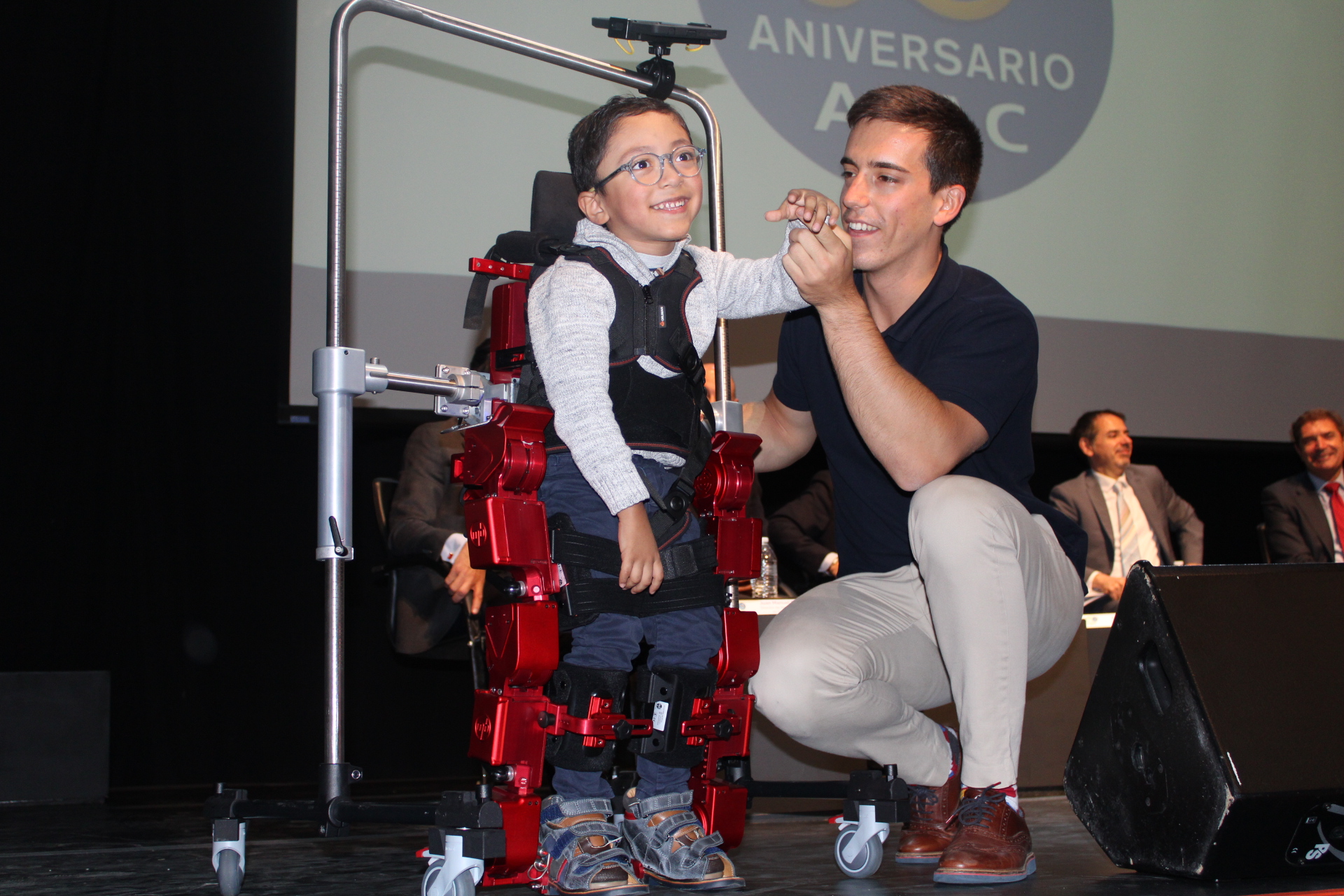
ATLAS 2030 is Marsi Bionics' paediatric walking exoskeleton, which the company calls the world's first paediatric exoskeleton designed to help children with neurological and neuromuscular diseases - such as cerebral palsy and spinal muscular atrophy - walk. It is a THKAFO-type device supporting the child from the trunk to the feet, so it does not require trunk control, and it can be fitted with head support. Eight active joints give full mobility and allow walking forwards and backwards. The exoskeleton reads the child's movement intention non-invasively and responds step by step (active mode, training the child's own strength), or it can work passively, generating a gait pattern personalised to each patient. Its dimensions adjust as the child grows, it is fitted in about 5 minutes, and extra batteries are included. An auxiliary support frame holds the exoskeleton so the therapist no longer has to hold it from behind, and can stand in front of the child with hands free for global rehabilitation activities. Reported clinical benefits include wider and maintained joint range, improved muscle strength, maintenance of scoliosis and better respiratory function, less contracture and regulated muscle tone, prevention or delay of musculoskeletal complications, and better daily-living ability and wellbeing. It received CE marking from the Spanish Agency of Medicines and Medical Devices in May 2021 and is used in hospitals and rehabilitation centres in Spain and internationally.
FUNKTIONEN
- Paediatric THKAFO-type gait exoskeleton (trunk to feet)
- 8 active joints
- walks forwards and backwards
- No trunk control required
- optional head support
- Active mode reads movement intention non-invasively
- Passive mode with a personalised gait pattern
- Adjustable to the child's growth
- fitted in 5 minutes
- Auxiliary support frame frees the therapist's hands
- Extra batteries included
- For cerebral palsy, SMA and other neuromuscular/neurological diseases
- CE marked (AEMPS), May 2021
TECHNISCHE DATEN
Verifiziert| Mobilität | |
| Bewegungsart | Zweibeiner |
|---|---|
| Einsatzumgebung | Hospitals and rehabilitation centres. |
| Aktoren | Electric motors at the leg joints |
TECHNISCHE DATEN
Verifiziert| Mobilität | |
| Bewegungsart | Zweibeiner |
|---|---|
| Einsatzumgebung | Hospitals and rehabilitation centres. |
| Aktoren | Electric motors at the leg joints |
Bilder



Bildbeiträge
Videos
ROBOTER-FOREN
Foren werden geladen...
BEWERTUNGEN
HÄUFIG GESTELLTE FRAGEN
What is the Marsi Bionics ATLAS 2030?
ATLAS 2030 is Marsi Bionics' paediatric walking exoskeleton, which the company calls the world's first paediatric exoskeleton designed to help children with neurological and neuromuscular diseases - such as cerebral palsy and spinal muscular atrophy - walk.
Who makes the Marsi Bionics ATLAS 2030?
The Marsi Bionics ATLAS 2030 is made by Marsi Bionics, a robotics company based in Spain.
How much does the Marsi Bionics ATLAS 2030 cost?
Marsi Bionics has not publicly announced pricing for the Marsi Bionics ATLAS 2030. You can enquire through RobotAIGeek for current pricing.
What is the Marsi Bionics ATLAS 2030 used for?
The Marsi Bionics ATLAS 2030 is designed for assistenz, medizinische assistenz, and rehabilitation. It is used in gesundheitswesen settings.
When was the Marsi Bionics ATLAS 2030 released?
The Marsi Bionics ATLAS 2030 was released in 2021.
MIT ÄHNLICHEN ROBOTERN VERGLEICHEN
Sehen Sie, wie sich dieser Roboter gegenüber seinen nächsten Alternativen schlägt
- Marsi Bionics ATLAS 2030 vs Atalante X
- Marsi Bionics ATLAS 2030 vs Eve
- Marsi Bionics ATLAS 2030 vs Trexo Home
- Marsi Bionics ATLAS 2030 vs Trexo Plus
- Marsi Bionics ATLAS 2030 vs Rex Bionics REX