D-Robotics Raises US$400 Million to Scale Its Embodied AI Chips
D-Robotics closed a US$400 million Series C to scale its Sunrise chips and software platform for China's embodied AI robot makers.

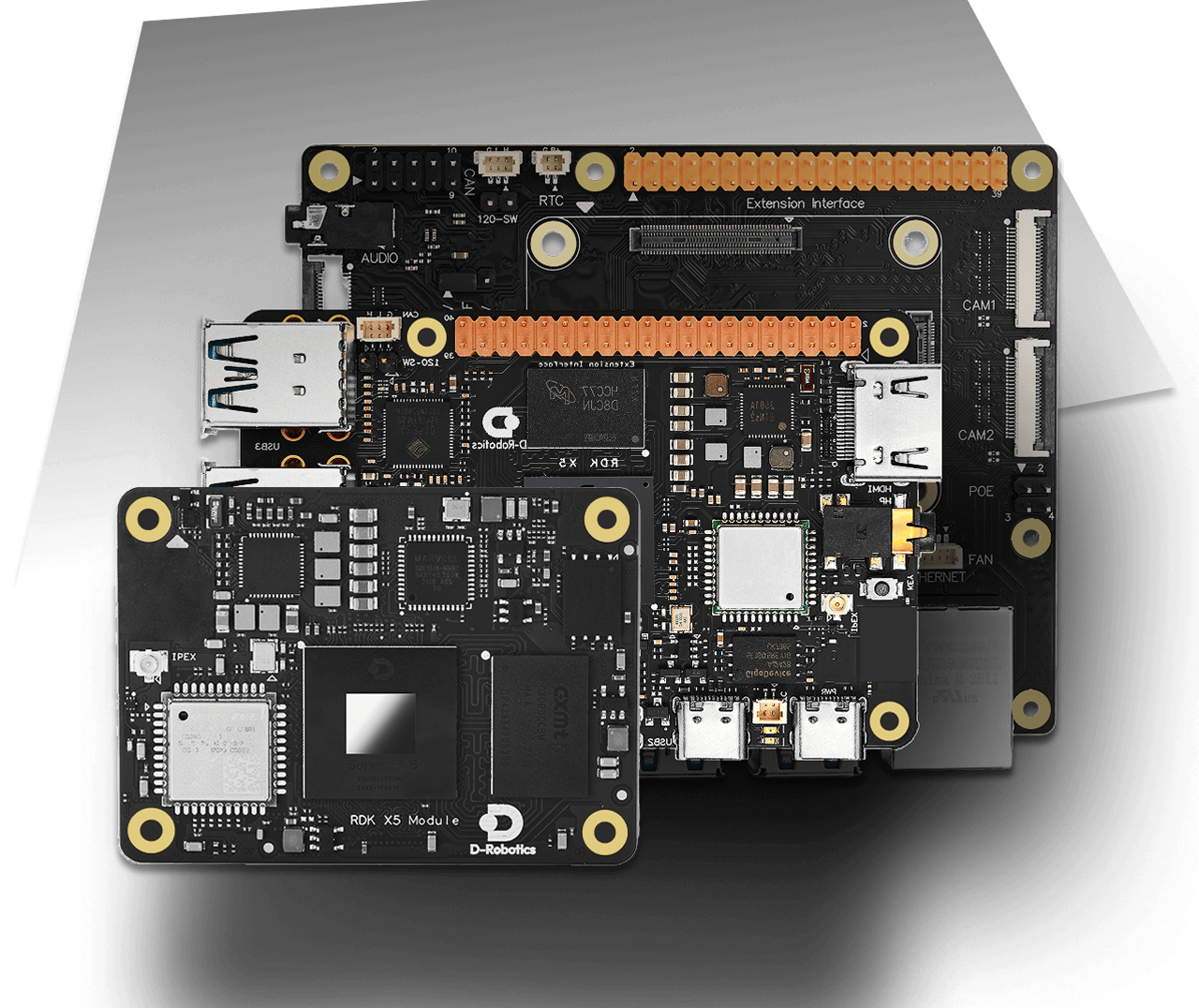
D-Robotics, a Shenzhen-based maker of AI chips for robots, said on September 17 that it closed a US$400 million Series C round led by Mirae Asset Capital, with Meituan's strategic investment arm, Hefei State-owned Capital, Nanshan SEI Investment, Cathay Capital, GF Xinde Investment, and several other institutional backers joining as co-investors. The round values a two-year-old chip company as one of the best-financed suppliers to China's crowded embodied-AI hardware market, and it lands at a moment when the harder commercial question in humanoid robotics has shifted from which company builds the flashiest demo to which supplier controls the silicon and software every one of those demos eventually has to run on.
D-Robotics was incubated by Horizon Robotics, the Nasdaq- and Hong Kong-listed automotive chipmaker, and spun out as an independent company in January 2024 to focus specifically on robotics rather than the automated-driving chips that remain Horizon Robotics' core business. The split matters commercially: where Horizon Robotics sells perception and driving chips to automakers, D-Robotics builds general-purpose compute hardware and developer tooling for the wider universe of service robots, industrial arms, drones, and now humanoids, positioning itself as an arms dealer to the entire embodied-AI category rather than a bet on any single robot maker winning.
The Chip Business Behind the Humanoid Headlines
The product line doing the commercial work is the Sunrise chip series, paired with RDK developer kits that let robotics engineers build on the silicon without designing a board from scratch. The current flagship, the Sunrise S600, launched in November 2025 and has already been adopted by more than 20 customers within six months, including UBTECH, Astribot, Fourier, and the humanoid and embodied-AI startups TARS and Spirit AI. Cumulative Sunrise chip shipments have surpassed 8 million units as of mid-2026, a volume figure that puts D-Robotics closer to a components supplier with real production history than to a pre-revenue robotics startup riding a funding wave. The company has told investors that revenue rose several times over year-on-year in the first half of 2026, a growth rate that tracks the broader acceleration in Chinese humanoid and embodied-AI shipments this year rather than a single blockbuster contract.
That distinction, between a hardware vendor with distributed revenue across dozens of robot makers and a single robot company dependent on its own sales execution, is the commercial logic investors are underwriting. A humanoid robot maker's valuation lives or dies on whether its own product finds a buyer. A chip and software supplier selling into that same category collects revenue whichever humanoid brand wins the deployment, provided its silicon is inside enough of the competing platforms. D-Robotics has built exactly that kind of diversified exposure: UBTECH and Astribot compete directly against each other for the same industrial and service-robot contracts, and D-Robotics' Sunrise chips sit inside both.
Building the Developer Base Before the Market Consolidates
Alongside the chip shipments, D-Robotics has spent the past two years building a developer ecosystem it calls the Gravity Program, which now supports more than 500 robotics developers working across ten application categories, from manipulation research to autonomous mobile platforms. The company's RDK developer kits are in use at more than 500 universities and among over 100,000 developers across more than 20 countries, a distribution footprint that functions less like a typical enterprise sales pipeline and more like the developer-first strategy chipmakers such as NVIDIA used to lock in CUDA before AI compute demand exploded. For a chip supplier, a large base of trained developers who already know how to build on a given architecture is a switching-cost moat: every engineering team that learns the Sunrise toolchain in a university lab or an early-stage startup is a team less likely to rebuild on a rival's silicon once it reaches production scale.
That strategy carries real execution risk. A developer ecosystem built on affordable, accessible development kits does not automatically convert into the kind of high-margin, high-volume contracts a chip company needs to justify a US$400 million raise, and D-Robotics is competing for those production contracts against far larger semiconductor players, including NVIDIA's Jetson line and Qualcomm's robotics chipsets, both of which have deeper manufacturing relationships and larger balance sheets. D-Robotics' bet is that proximity to China's fastest-growing humanoid and service-robot makers, most of which prefer a domestic supplier for cost, supply-chain security, and government-procurement reasons, gives it a structural home-market advantage those larger rivals cannot easily replicate.
What the Funding Actually Buys
D-Robotics says the new capital will go toward two specific priorities: broadening the Sunrise chip lineup across a wider range of compute tiers, and building an integrated software platform that spans data collection, model training, simulation, and deployment for embodied-AI applications. That second priority is the more consequential one for the company's long-term positioning. Selling a capable chip is a one-time hardware transaction; selling the software stack that a robotics team uses to collect training data, simulate a robot's behavior before deployment, and then push a validated model onto that same chip converts a hardware customer into a recurring platform customer, the same shift that turned semiconductor companies serving the smartphone and cloud-computing industries into software-adjacent businesses over the past decade.
Whether D-Robotics can execute that software transition matters more to its next funding round than the chip shipment numbers it is citing today, because chip volume alone does not carry the margin structure investors expect from a platform company. A robotics buyer who has already integrated the RDK toolchain and trained models on D-Robotics' software stack faces a genuine switching cost if a rival chipmaker later offers marginally better silicon, which is precisely the lock-in dynamic the company is trying to build before China's embodied-AI hardware market consolidates around a smaller number of dominant suppliers.
The Geopolitical Backdrop Behind a Domestic Chip Champion
D-Robotics' fundraising also lands inside a broader Chinese industrial-policy push toward domestic semiconductor self-sufficiency in AI and robotics compute, an area where export restrictions on the most advanced foreign-made AI accelerators have made Chinese robot makers more willing, and in some cases more required by state-linked procurement rules, to qualify a domestic chip supplier for production hardware rather than depending entirely on foreign silicon. That policy backdrop does not appear directly in D-Robotics' funding announcement, but it shapes the investor calculus, since Hefei State-owned Capital and Nanshan SEI Investment among the round's co-investors are government-linked funds whose participation typically signals alignment with regional and national industrial-policy priorities rather than a purely financial return calculation. For robot makers building products intended for the Chinese domestic market, particularly any product category touching government procurement, defense-adjacent manufacturing, or state-owned enterprise supply chains, a domestically designed and manufactured chip platform carries a procurement advantage that has nothing to do with raw computing performance and everything to do with supply-chain risk management in an environment where foreign chip export rules can change with little notice.
That dynamic partially explains why D-Robotics has been able to raise at this valuation and scale despite chip design and manufacturing being one of the most capital-intensive, competitive segments in all of technology. A robotics-focused compute supplier does not need to out-engineer NVIDIA's most advanced data-center silicon to win business from a Chinese humanoid or service-robot maker; it needs to offer a credible, domestically sourced alternative that a Chinese customer can qualify into a production line without the geopolitical exposure a foreign chip carries. Whether that advantage persists depends heavily on decisions outside D-Robotics' control, from the trajectory of export-control policy to whether Chinese robot exports to markets like Europe and Southeast Asia eventually require customers there to specify non-Chinese compute hardware for their own supply-chain diversification reasons, a scenario that would cut against D-Robotics' current domestic-substitution advantage in exactly the export markets its humanoid-maker customers are trying to reach.
A Crowded Field With Room for Only So Many Winners
D-Robotics is not the only Chinese company chasing this position. Horizon Robotics itself, its former parent, continues to supply automotive-grade chips that overlap at the edges with robotics applications, and a cluster of well-funded rivals, including chip and module suppliers targeting the same humanoid and service-robot manufacturers, are running comparable playbooks of developer kits, university partnerships, and integrated software stacks. The test for D-Robotics over the next twelve months is not whether it can keep shipping Sunrise chips into a growing market, since the underlying demand for embodied-AI compute is expanding quickly enough to support several suppliers simultaneously, but whether its developer base and software platform convert into the kind of sticky, multi-year contracts that separate a durable infrastructure company from a chip vendor riding a temporary demand spike.
For procurement teams and robot makers evaluating compute suppliers rather than chasing funding headlines, the practical signal from this round is that D-Robotics now has the balance sheet to compete on chip roadmap cadence with far larger rivals for at least the next several product cycles, and a customer base broad enough, spanning UBTECH's industrial humanoids to Astribot's manipulation-focused platforms, that no single customer's success or failure will determine the company's trajectory. That diversification is the clearest evidence that D-Robotics has moved past the startup phase where one contract makes or breaks the business, and into the infrastructure-supplier phase where the real competition is measured in years of developer loyalty rather than a single funding announcement.
This analysis draws on public statements from D-Robotics regarding its Series C funding round, product shipments, and developer ecosystem. It is for general information purposes only and does not constitute investment, financial, or legal advice.
Hero image credit: D-Robotics.