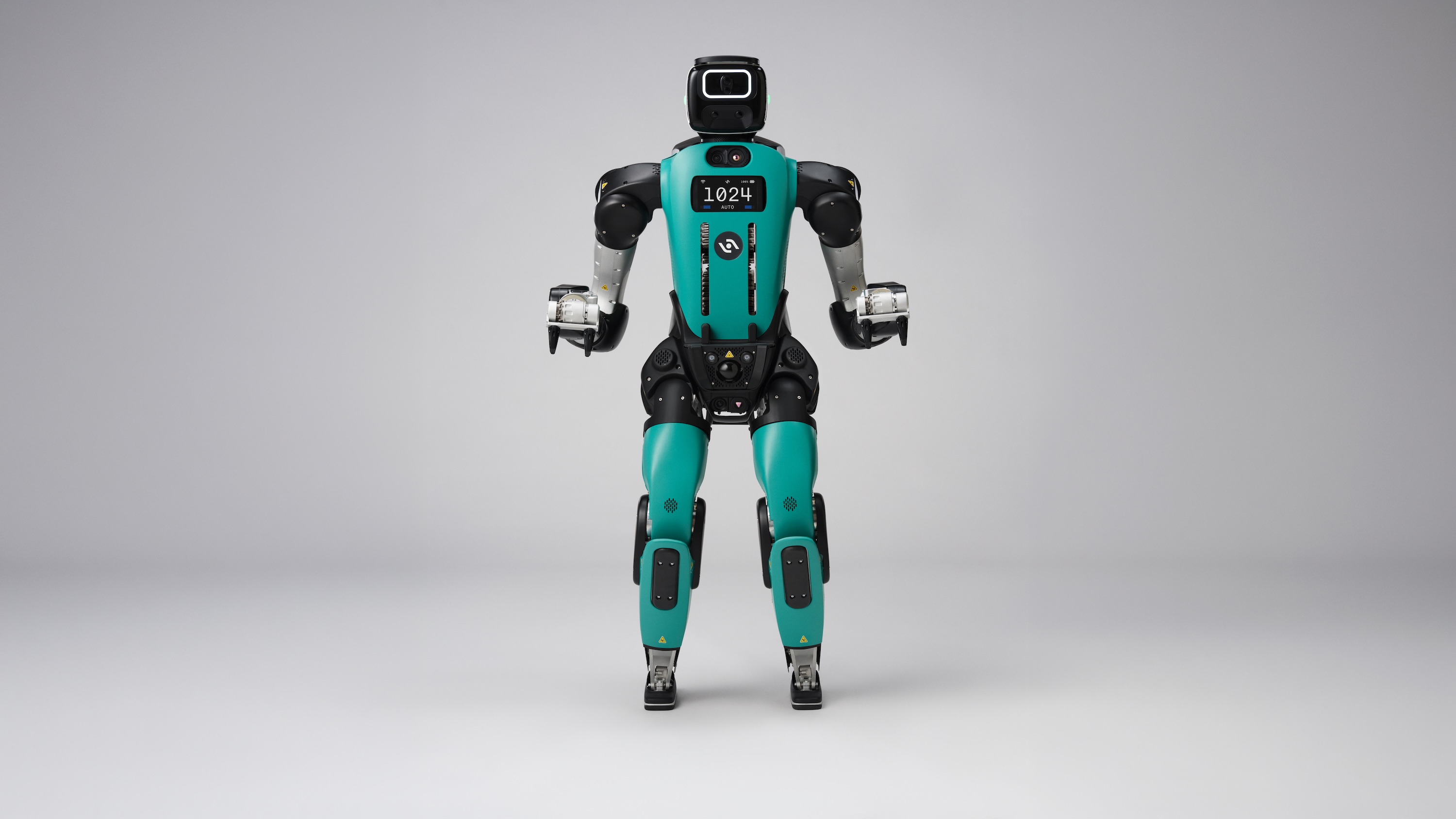
Boston Dynamics Opens Atlas Training Center at Hyundai Metaplant
Boston Dynamics opened an operational Georgia training center where Atlas humanoids are learning automotive-parts sequencing, creating a measurable bridge between demonstrations and Hyundai's planned factory deployment.

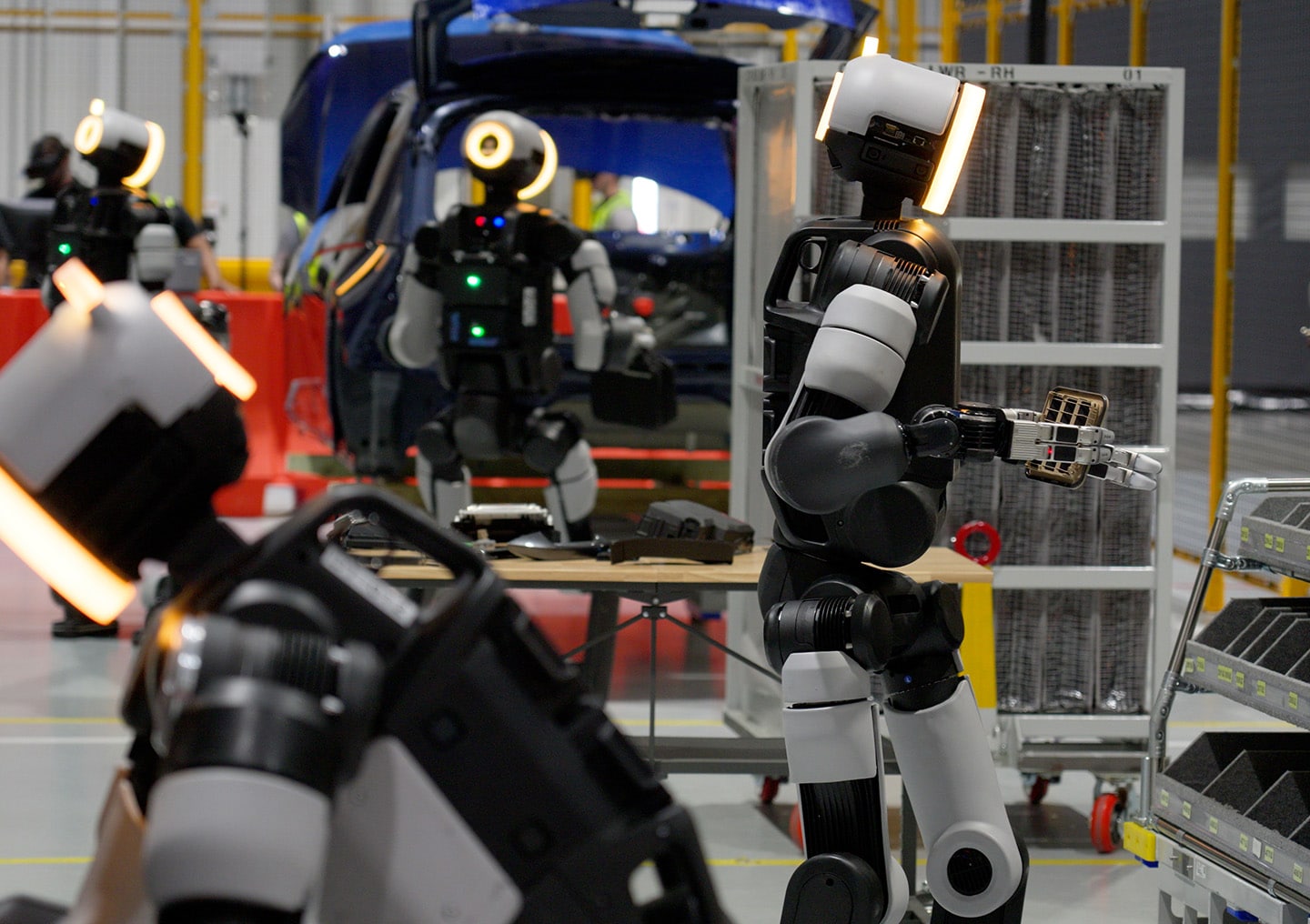
One operational training center now stands between Boston Dynamics’ Atlas demonstrations and Hyundai Motor Group’s plan to place 25,000 humanoids in its factories. On Monday, September 21, Boston Dynamics opened the Robotics Metaplant Application Center inside Hyundai’s Georgia manufacturing campus, where Atlas robots are learning automotive-parts logistics and sequencing before assembly.
Waltham, Massachusetts-based Boston Dynamics develops the Spot quadruped, Stretch case-handling robot and Atlas electric humanoid. The Hyundai Motor Group company is using the new center, known as RMAC, as a controlled bridge between Atlas development and factory work. Its first phase is operational, but Atlas remains a platform in development rather than a generally available industrial product.
A Training Center Turns Factory Ambition Into a Commissioning Process
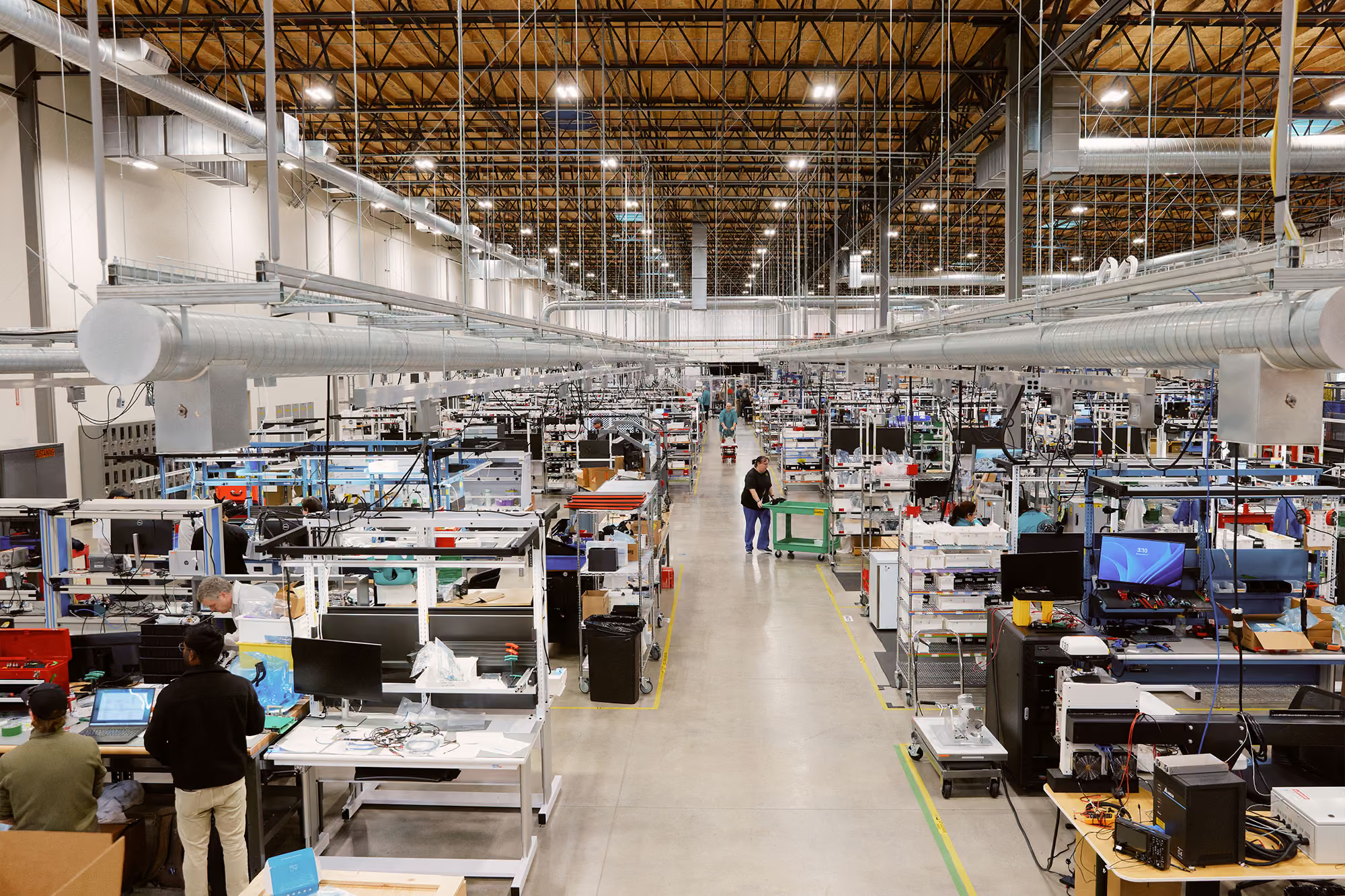
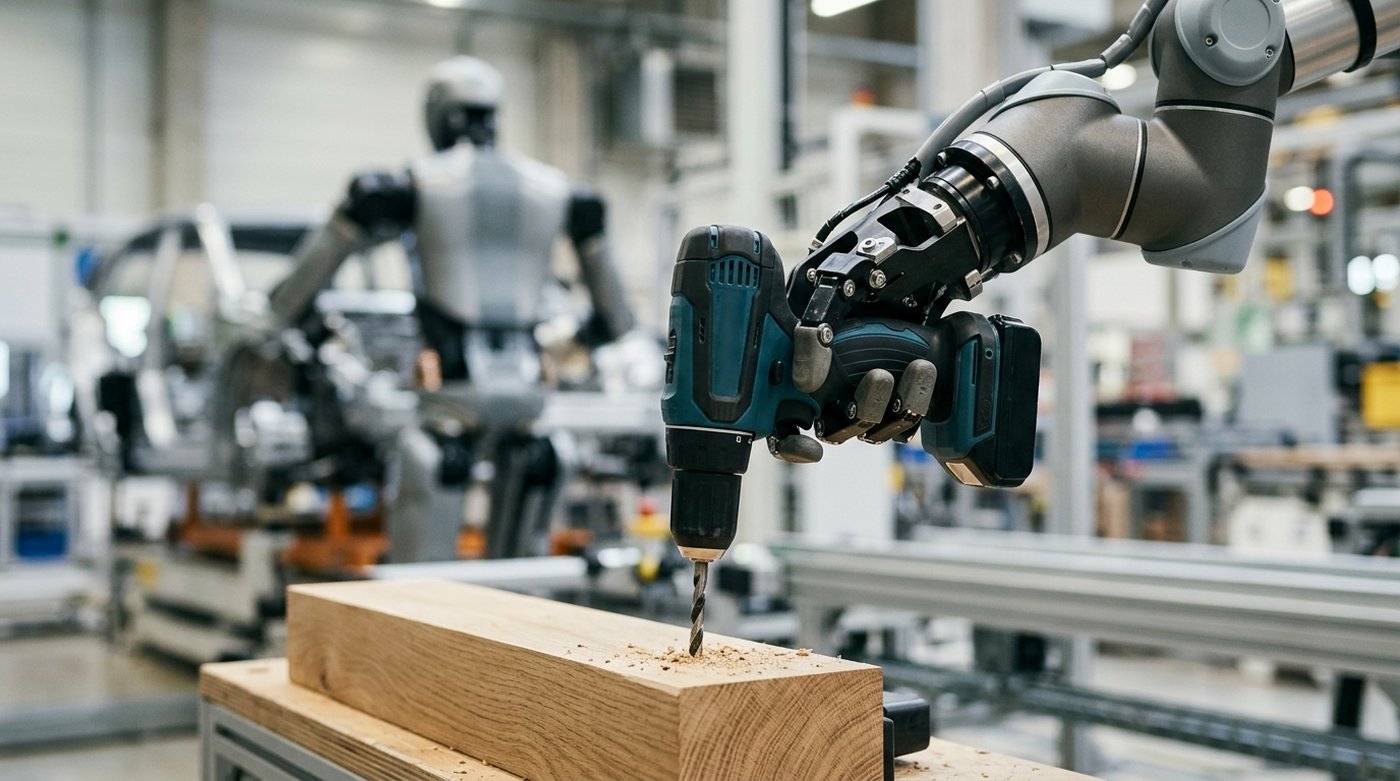
The immediate work at RMAC is less glamorous than the acrobatics that made Atlas famous, and that is exactly why it matters. The robots are preparing automotive parts and placing them in the correct sequence for assembly. That task requires reliable identification, handling, routing and recovery when something is missing or out of position. Each step can be measured against a production requirement rather than applause from a demonstration audience.
For an operations team, a humanoid does not become useful when it performs a task once. It becomes useful when the task can be defined, taught, repeated, audited and transferred to another work cell without a constant engineering escort. RMAC gives Boston Dynamics and Hyundai a place to build that process next to the manufacturing system the robots are meant to serve. The center is therefore not simply a robotics laboratory. It is an attempt to create the commissioning discipline that factories already expect from conventional automation.
The distinction is easy to miss. A demonstration proves that a robot can move through a carefully prepared sequence. A training center has to expose the robot to normal variation: parts arriving in a different orientation, bins that are not perfectly placed, people crossing a shared area, tools becoming unavailable and production schedules changing. The work is closer to preparing a new employee for a station than installing a machine behind a fence. The robot must learn the task, but the plant must also define where the robot is allowed to fail and what a safe recovery looks like.
Boston Dynamics has not disclosed how many Atlas units are currently at RMAC, how many task cycles they have completed, or what level of human supervision remains necessary. It has also not published cycle-time, uptime or failure-recovery data. That missing information does not make the center unimportant. It establishes the next evidence buyers should expect before treating Atlas as production equipment rather than an advanced development platform.
The 25,000-Unit Goal Is a Sequence, Not a Fleet
Hyundai Motor Group plans to expand Atlas across Hyundai Motor and Kia plants over the next several years, beginning with a stated path involving 25,000 units. It also plans a United States robot-production facility designed for annual capacity of 30,000 machines. Those figures describe ambition and future capacity. They are not disclosed purchase orders, installed robots, completed deliveries or recognized revenue.
That distinction is central to the difference between humanoids shipped, deployed and merely promised. A production target says how much hardware an organization wants the option to build. A deployment plan says where that hardware might go. An operational installation requires validated tasks, plant acceptance, safety controls, maintenance support and evidence that the equipment improves the line rather than adding another layer of supervision.
RMAC is the missing middle in that sequence. If Atlas is expected to move from parts logistics into component assembly by 2030, each task family must be broken into repeatable operating procedures. Grasping a part is only one element. The robot must recognize the correct part, understand its destination, coordinate with conveyors and human workers, maintain traceability, detect a bad placement and recover without damaging equipment or interrupting takt time. A useful training center turns those requirements into test cases before deployment teams commit plant-floor space and integration budgets.
This also explains why the center is inside Hyundai Motor Group Metaplant America rather than isolated in a robotics campus. Factory integration cannot be learned from robot data alone. It depends on production engineering, quality systems, material flow, worker training, maintenance practices and the software that schedules work. By putting Atlas near an operating automotive environment, Boston Dynamics can collect failure cases that reflect actual plant constraints instead of reproducing them later from memory in a remote lab.
Hyundai Is Building a Faster Learning Loop Around Atlas
The commercial advantage RMAC could create is not a single movement or benchmark score. It is a shorter loop between a task failing, engineers understanding why, the robot or workflow being changed and the revised process returning to the floor. Hyundai’s scale gives Boston Dynamics access to many similar production problems across multiple plants. If those problems can be represented consistently, one validated improvement may be transferable across more than one work cell.
That operating model also gives practical weight to Hyundai’s own warning that Chinese competitors are moving faster. The September 19 discussion focused on competitive learning speed and engineering talent. RMAC is a separate development because it shows one mechanism Hyundai is building to answer that concern: a dedicated environment where robotics development, manufacturing operations and task data meet. The relevant comparison is no longer which company can produce the most impressive prototype. It is which organization can convert factory exceptions into reliable robot behavior with the least delay.
Hyundai still has to prove that an internal factory network produces a reusable learning advantage rather than a collection of custom integrations. Automotive plants share process discipline, but they do not share every fixture, line layout or staffing model. A robot trained around one vehicle program may require substantial adaptation for another. The more Boston Dynamics can separate reusable Atlas capabilities from plant-specific engineering, the more credible the large fleet target becomes. If every installation requires bespoke programming and weeks of on-site tuning, scale will be limited by integrator capacity long before robot production reaches its stated ceiling.
The center’s roadmap acknowledges that problem indirectly. In 2027, RMAC is expected to move into a building roughly ten times larger than its current space. Boston Dynamics also plans to explore Atlas use cases with existing Spot and Stretch customers in manufacturing, aerospace, semiconductors, logistics, food and beverage, and life sciences. Those discussions are not announced deployments. They are a test of whether the methods developed beside Hyundai’s assembly operation can travel to industries with different materials, safety regimes and task economics.
Buyers Need Acceptance Data, Not Another Humanoid Count
For procurement and operations teams, the useful question is not whether Atlas can handle a component in a photograph. It is whether Boston Dynamics can package a task with an acceptance standard. Buyers will need to know the cycle-time range, intervention rate, recovery procedure, payload limits, safe operating envelope, changeover effort and integration burden. They will also need clarity on who owns the task model, how updates are validated and what happens when a plant changes its parts, fixtures or production schedule.
Labor substitution should not be the first business case. Early humanoid deployments are more likely to earn approval where the work is strenuous, repetitive, ergonomically difficult or expensive to automate with fixed equipment because the product mix changes. Parts sequencing fits that profile better than a claim that one general-purpose robot will replace an entire job. It is bounded enough to measure, adjacent to material flow and useful even if the robot cannot yet perform final assembly.
The same logic applies to safety. A humanoid operating near people and vehicle bodies has to be assessed as part of a work system, not only as a standalone machine. Safe speed, force limits, emergency behavior, traffic rules and human handoff procedures will depend on the task and environment. RMAC can generate the evidence needed for those decisions, but the opening announcement does not provide that evidence yet. Buyers should treat the center as proof that Boston Dynamics recognizes the commissioning problem, not proof that the problem has been solved.
Cost will remain difficult to judge until the company discloses commercial terms and operating data. A robot’s purchase price is only one input. Deployment engineering, tooling, software integration, supervision, maintenance, spare units and line downtime during commissioning can dominate the first installation. The strongest signal RMAC could produce is not a larger robot count. It is a repeatable reduction in the time and labor required to move a validated task from the center into another plant.
The Next Test Is Whether Training Travels Beyond Georgia
Boston Dynamics has moved Atlas one step closer to industrial accountability. The robot now has an operational training environment inside the manufacturing network that is supposed to absorb it. That gives engineers access to real parts, real sequencing constraints and the plant disciplines that polished demonstrations avoid. It also gives Hyundai a place to decide which tasks are ready before exposing production lines to immature automation.
The important milestones from here are specific. Boston Dynamics must show that Atlas can sustain parts-sequencing work over meaningful operating periods, publish or provide buyers with acceptance metrics, move validated tasks into production cells and demonstrate that the same methods work outside one Georgia site. Progress toward component assembly by 2030 should be judged by completed task transfers and stable operations, not by the headline size of the planned fleet.
RMAC does not validate a 25,000-robot deployment. It creates the operating system for testing whether such a deployment can be justified one task, one work cell and one accepted process at a time. The 2027 move to a center roughly ten times larger will be the next visible sign of whether Boston Dynamics is building a scalable commissioning model or simply a bigger place to train prototypes.
This analysis draws on public statements from Boston Dynamics regarding the September 21, 2026 opening of the Robotics Metaplant Application Center. It is for general information purposes only and does not constitute investment, financial, or legal advice.
Hero image credit: Boston Dynamics.