The Robot Financing Boom Is Built on an Asset Nobody Can Resell
Robots-as-a-service financiers like Formic pitch zero capital expenditure to manufacturers, but the model rests on an asset class with no secondary market or depreciation curve. A June federal financing proposal, and the unresolved 2019-to-2023 resale of warehouse robot maker 6 River Systems, both show why nobody, banks, financiers, or buyers, can yet say what a used robot is actually worth.

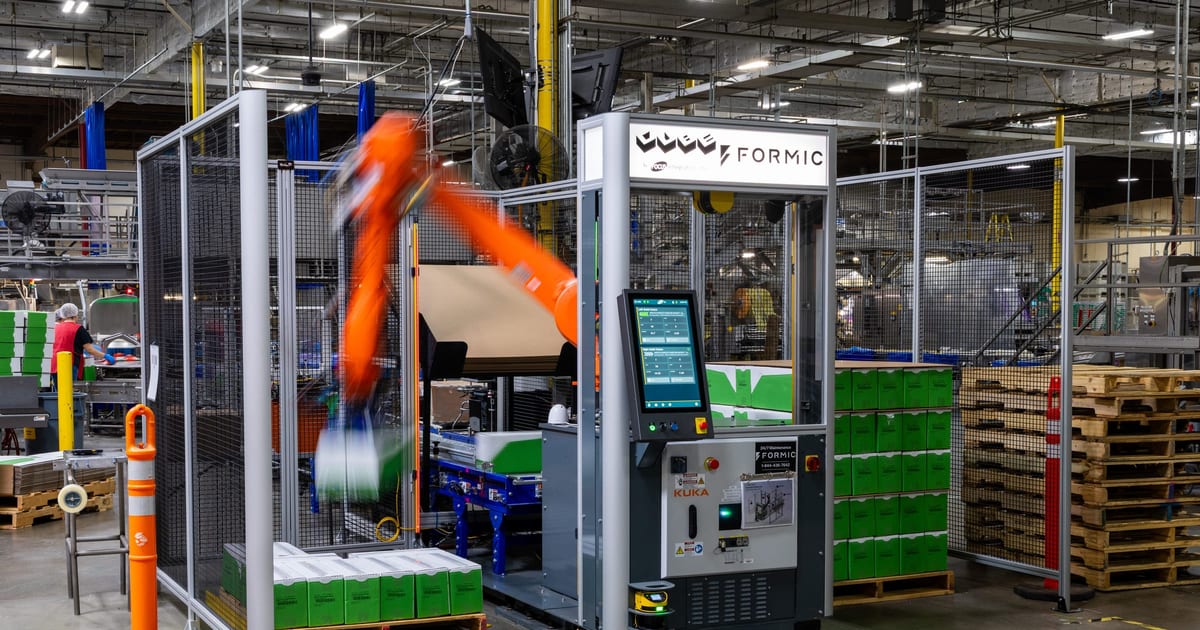
A robotics financier is now advertising its pitch to American manufacturers in four words: "US$0 CapEx Required." Sign up, and a robot arm shows up on the factory floor, running the night shift, billed like a utility. No purchase order for a six-figure machine. No line item depreciating on anyone's balance sheet, at least not on the customer's.
That phrase is doing more work than it looks like it's doing. It does not mean the capital cost disappeared. It means someone else agreed to hold it, on the belief that the machine will still be worth something years from now. The honest question an operator should ask before signing is not whether that belief is comforting. It's whether anyone involved actually knows the answer.
Robots-as-a-service is being sold as the low-risk way to automate. What it actually does is move the risk to whichever balance sheet is willing to price a machine that has no functioning resale market behind it.
The pitch, and what it quietly assumes
Formic, a Chicago-based automation financier, runs the model in its purest form: manufacturers pay a fixed monthly rate tied to usage, Formic owns and maintains the hardware, and the company's own materials report a fleet producing 45.6 million items a week across its customer base at 99.3 percent uptime over the past year, with 893 worker injuries avoided in that period. It is a genuinely useful product for a mid-size food processor or packager that cannot justify a capital purchase and a maintenance staff for one automation line.
But the pricing logic gives away what it cannot solve. Formic charges by uptime and output, not as a share of what the robot will fetch when the contract ends, because nobody involved can state that second number with any confidence. Compare that to a commercial truck lease, priced in part against a well-documented resale curve built from decades of comparable auction sales. Robotics financiers cannot do that math yet. There is no equivalent ledger for a six-axis arm or a mobile picking robot, so the entire model is built around never having to answer the resale question at all.
What a truck has that a robot doesn't
Heavy equipment, trucks, excavators, forklifts, has a mature secondary market: dedicated used-equipment dealers, standing auction calendars, and enough repeat sales that a lender can look up what a five-year-old unit actually fetched last quarter. That comparable-sales data is what lets a bank treat the machine as real collateral rather than a bet on the borrower alone.
Industrial robots have nothing close to that infrastructure. A handful of specialist dealers list used robotic arms online, closer to spare-parts and small-shop channels than a liquid market with published clearing prices. A KUKA or Fanuc arm pulled from a shuttered production line does not have a blue-book value the way a forklift does. It has an asking price, set by whoever happens to be selling it that month, and a buyer with no reliable way to check it against anything.
A federal policy paper published in June proposed loan guarantees to fix exactly this kind of equipment-finance gap, and it is instructive that the same paper limits its own remedy to "classes of equipment with sufficient liquidity." Read plainly, that is an admission that the fix does not automatically extend to the equipment most likely to need it. The paper separately estimates that reaching half of China's roughly two million operating industrial robots would require the United States to add about 600,000 units, near US$30 billion at typical unit prices. That is a real number attached to a policy document. Whether the assets bought with that money would qualify as bankable collateral under the paper's own liquidity test is a separate question, and the paper does not answer it.
The one data point we actually have
One clean case shows what happens when a robot fleet's value gets tested for real. In 2019, Shopify announced it was paying US$450 million for 6 River Systems, the maker of the Chuck warehouse robot, and said so publicly, price included. Four years later, in May 2023, Ocado announced its own agreement to acquire the same company from Shopify. Ocado's announcement, unlike Shopify's, named no price at all.
Both companies had every reason to disclose a number if the number helped their story. Neither did. That silence is itself the data point: when an actual robot fleet with real deployed hardware in more than 100 warehouses changed hands a second time, nobody wanted to put a figure next to it in public. Trade coverage at the time floated a sale price in the low eight figures, a small fraction of the original outlay, but neither company has confirmed that number, so treat it as unverified. What is confirmed is simpler and just as telling: the industry's highest-profile robot fleet sale in years produced no public price the second time around, in a market that would have loved a benchmark.
Who is actually holding the risk
None of this makes robots-as-a-service a bad deal for the manufacturer signing up. Shifting equipment risk to a specialist who can service a fleet across dozens of customers is a sound trade, the same logic that built the leasing industry for every other category of capital equipment. The difference is that a forklift lessor is pricing a known curve. A robot financier is pricing a guess, and covering for that uncertainty with operational guarantees, uptime commitments, maintenance included, performance-based billing, rather than with a resale assumption it could actually defend.
That is a reasonable way to run a business. It is a less reasonable thing for buyers to mistake for risk elimination. The risk on a six-figure robot cell does not vanish because the invoice says "US$0 CapEx." It moves to whoever signed the financing agreement, and that party is pricing an asset with less historical data behind it than the truck idling in the same parking lot.
What I'd ask, running a platform that tracks this from the Philippines
I spend my working days reading company filings, deployment announcements, and financing terms across a robotics taxonomy that spans manufacturers most Western coverage never mentions. Formic itself only serves US manufacturers; most of the operators I track in Southeast Asia are buying or leasing through a vendor's own captive finance arm, on terms that rarely spell out an exit. What happens to the machine if the integrator folds. What the buyout price is at lease end. Whether that price was set against any actual comparable sale, or just picked.
Ask your robot financier one question before signing: what did the last unit like this one actually sell for, used. A confident number is worth something. A shrug tells you exactly who is holding the risk everyone promised had been removed.
The infrastructure nobody is building yet
The missing piece in robotics finance is not a better foundation model or a cheaper actuator. It is a transparent, repeated-sales record of what used robots actually trade for, the kind of dataset the truck and forklift markets took decades to build through plain auction volume. Nobody has an incentive to build it quietly: financiers profit from opacity that lets them price risk on their own terms, and manufacturers rarely resell often enough to create the volume such a market needs on its own.
Someone will eventually build it anyway, probably an insurer with claims data across enough failed deployments, or a RaaS platform large enough to have taken thousands of units back at contract end and quietly compiled what they were actually worth. Whoever owns that dataset first will have a more durable hold on how capital flows into this industry than anyone holding a better gripper or a faster policy model. Capital always eventually asks what an asset is worth when it stops being useful. Robotics has not had to answer that question yet. It will.
Disclaimer: This column reflects the author's own analysis and is provided for general information purposes only. It does not constitute investment, financial, legal, or accounting advice. Readers should verify details with primary sources before making business decisions. Hero image: a KUKA robotic arm operating on a Formic-managed production line at a US manufacturing facility, official photography via Formic's own website.