China Ships 69 Percent of the World's Mobile Robots
Chinese manufacturers shipped 68.68% of the world's mobile robots in 2025 and captured 61.46% of industry revenue, according to CMRA and NSRI data that shows Hikrobot and Geekplus scaling on different strategies.

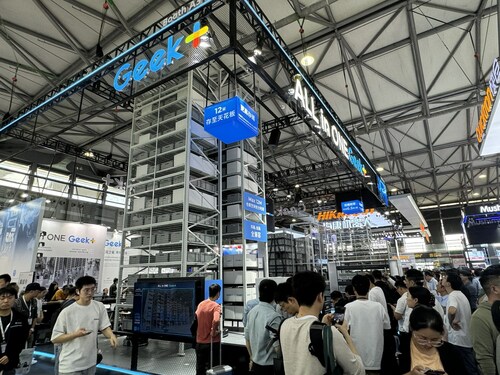
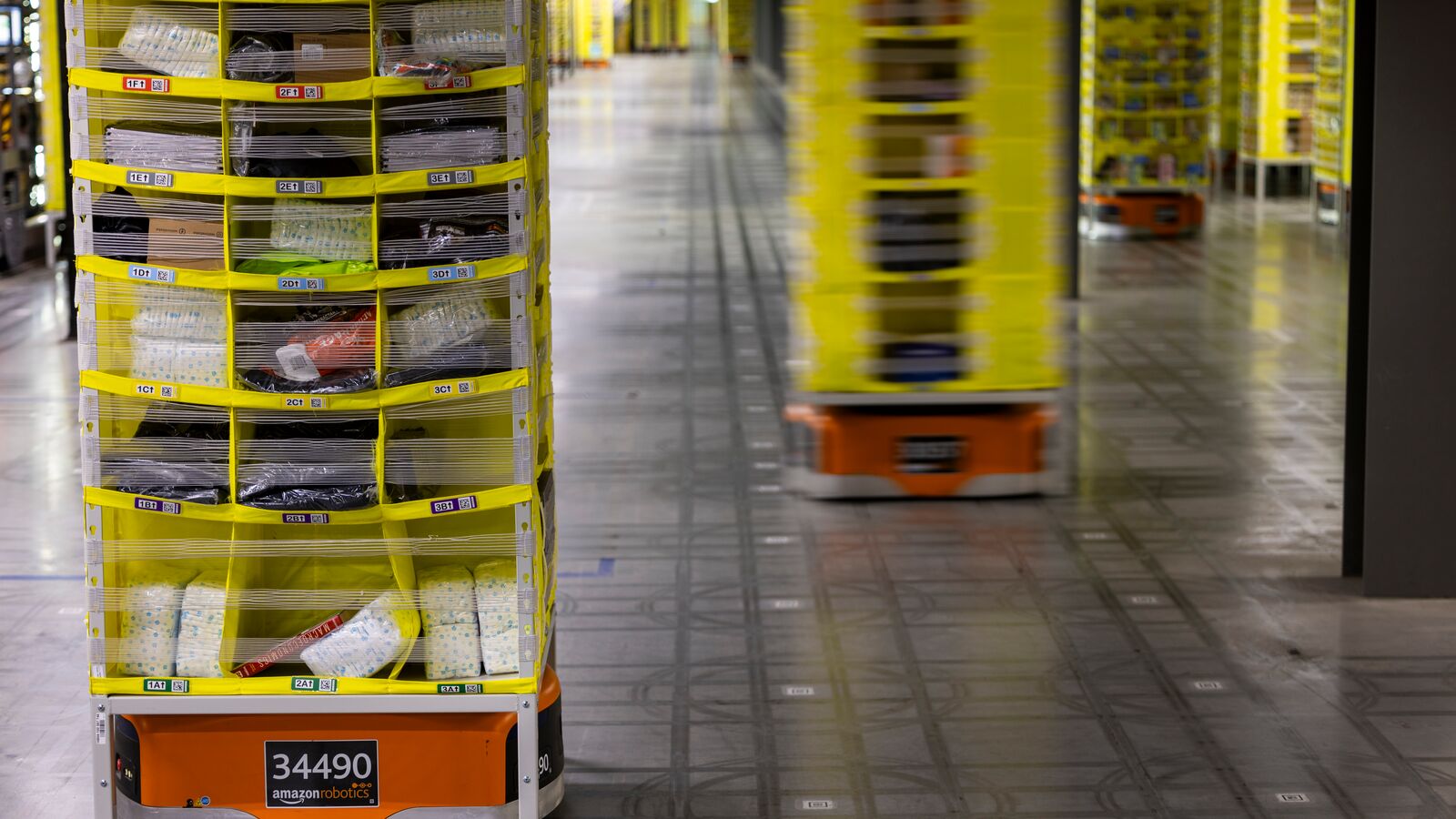
Chinese manufacturers shipped roughly 182,000 mobile robots in 2025, 68.68 percent of a global unit total of about 265,000, while collecting RMB26.1 billion (approximately US$3.65 billion) in revenue, about 61.46 percent of the global market's value. The figures come from a forthcoming Global Mobile Robot Industry Development Report compiled by the China Mobile Robot Industry Alliance and the New Strategy Mobile Robot Industry Research Institute, and they describe a warehouse-automation category, automated guided vehicles and autonomous mobile robots, where one country now supplies more than two-thirds of the physical units running in the world's factories and distribution centers.
The gap between that 68.68 percent unit share and the 61.46 percent revenue share is the number a procurement team should sit with longest. China is not winning this market by matching global average selling prices; it is winning by selling more machines at a lower blended price than the rest of the industry, which is a structurally different competitive position than a manufacturer that wins on unit economics alone. A vendor pool that can out-ship the rest of the world while collecting a smaller proportional share of the money is a pool still competing on price, and that dynamic shapes what a buyer should expect from sourcing negotiations over the next several years far more than the headline share number does.
Two Companies, Two Different Bets on the Same Boom
The report's company-level detail shows two distinct strategies inside the same national growth story. Hikrobot, the mobile-robotics unit of Hangzhou-based Hikvision, passed 200,000 cumulative mobile robot units produced during the period, doubling its cumulative total from the roughly 100,000 units it had shipped as of May 2024. That is a volume-manufacturing story built on Hikvision's existing supply chain and its core machine-vision business, which supplies the perception stack many AGVs and AMRs need to find their way across a warehouse floor. Geekplus, the Beijing-based warehouse robotics company known internationally for its shelf-to-person and tote-to-person fulfillment systems, reported RMB3.171 billion (approximately US$443 million) in 2025 revenue, with 75.3 percent of that, RMB2.387 billion (approximately US$334 million), earned outside China.
Those are not the same business. Hikrobot's growth reads as domestic manufacturing scale feeding a fast-growing home market and export channel built on hardware volume. Geekplus's number is closer to the opposite: a company that has already done the harder work of selling multi-step, software-integrated fulfillment systems into overseas warehouses where the buyer is choosing a systems partner, not just a unit price. A contractor evaluating Chinese AMR suppliers should treat those as two different due-diligence exercises. One test is whether a vendor's manufacturing scale and cost base survive a serious warehouse deployment; the other is whether a vendor's software, service network and integration support hold up in a market a long way from its home base. The report's numbers suggest China now has credible suppliers clearing both bars, not just one.
What 42 Percent of the World's Suppliers Means for a Buyer's Shortlist
The report counts roughly 230 Chinese manufacturers among more than 550 mobile robot companies worldwide, about 42 percent of the total supplier base, and says 20 of the 29 companies globally that have shipped more than 10,000 cumulative units are Chinese. That second figure is the more useful one for a sourcing decision, because a raw company count includes every early-stage vendor with a single pilot customer, while a 10,000-unit cumulative shipment threshold filters for manufacturers that have actually proven they can build, ship and support hardware at production scale. Two out of every three suppliers in the world that clear that bar are now Chinese, which means a Western warehouse operator building a serious AMR shortlist in 2026 is choosing among a supplier base where the deepest bench of scaled manufacturers sits in one country, whatever else that operator's own procurement policy might prefer.
That concentration cuts two ways for a buyer. The immediate advantage is price and choice: with two-thirds of the world's proven-scale suppliers based in one country, competitive tension among Chinese vendors has been a large part of what has pushed AGV and AMR prices down enough to make automation viable for mid-size distribution centers that could not have justified the cost five years ago. The offsetting risk is supply-chain concentration in exactly the sense that has already reshaped sourcing decisions in other hardware categories: a warehouse operator standardizing its fleet on a single Chinese vendor's hardware and software stack is making the same kind of single-country dependency bet that solar panel, battery and consumer electronics buyers have had to reckon with over the past decade, with all the tariff, export-control and geopolitical exposure that bet can carry over a five-to-seven-year fleet lifecycle.
The Uncomfortable Math for Non-Chinese Manufacturers
The report's growth figures are also a direct measure of the competitive pressure facing AMR and AGV manufacturers based in North America, Europe, Japan and South Korea. Global unit shipments grew 16.23 percent year over year and global revenue grew 14.55 percent, both healthy expansion numbers for the category as a whole, but a supplier base that is 42 percent Chinese by company count and dominant among proven scaled manufacturers is capturing more than a proportional share of that growth. A non-Chinese AMR vendor competing for the same warehouse contracts is not just fighting for market share in an expanding category; it is fighting to keep share in a category where the largest and fastest-growing group of competitors can typically price lower on comparable hardware specifications, backed by a domestic manufacturing base and component supply chain that has scaled alongside China's broader robotics and electronics industry.
That pressure does not mean non-Chinese suppliers are being pushed out of every deal. Warehouse buyers in regulated industries, in sectors sensitive to data security or supply-chain provenance, or in geographies where import tariffs or export restrictions apply to Chinese robotics hardware, still have clear reasons to pay a premium for a domestically manufactured or allied-country alternative. What the report's numbers do establish is that this premium is now a deliberate, quantifiable sourcing decision rather than a rounding error: a buyer choosing a non-Chinese AMR supplier in 2026 is very likely paying more per unit for the same class of hardware than a competitor sourcing from one of the roughly 230 Chinese manufacturers the report counts, and should be able to state exactly what that premium buys, whether it is data governance, warranty terms, local service response time or regulatory compliance, rather than treating "not Chinese" as a justification on its own.
Reading the Report as an Industry Association Document, Not Independent Research
The figures above come from an industry alliance and its affiliated research institute, not from a government statistical agency or an independent market-research firm with no membership stake in the sector's growth narrative. That does not make the numbers wrong, and the specific, falsifiable details, Hikrobot's cumulative unit count, Geekplus's revenue split between domestic and overseas sales, the 10,000-unit shipment threshold, are the kind of granular claims that are harder to inflate credibly than a vague market-size estimate would be. But a buyer citing this report internally to justify a sourcing decision should note its provenance alongside the numbers, and should treat the global market-size figures, the US$6.3 billion total and the 16.23 percent growth rate, as an industry-association estimate to be checked against a second source, such as a customs trade-data pull or a competing research firm's count, before building a multi-year capital-budgeting case on top of it.
The report is due for full publication later this year, and the version underlying Friday's figures is a preview rather than the finished document. The number worth tracking when the full report lands is not the aggregate China-versus-world split, which is unlikely to move much, but the shipment data broken out by robot subtype, since a 68.68 percent unit share spread evenly across simple tote-carrying AGVs and layered multi-robot orchestration systems tells a very different story than the same share concentrated in the low end of the hardware spectrum. That breakdown, not the topline number already circulating, is what will tell a buyer whether China's mobile robot dominance is a manufacturing-scale story, a systems-engineering story, or both at once.
For a fleet manager building next year's automation budget, the actionable takeaway is to ask each shortlisted vendor, Chinese or otherwise, for the same two figures the report just supplied for the market as a whole: cumulative units actually shipped and in service, not units announced or in pilot, and the split between domestic and export revenue. A supplier that can answer both with specifics, the way Hikrobot and Geekplus did here, has already survived the scaling and support problems that sink most robotics vendors before their tenth customer. A supplier that cannot is still, whatever its unit price, a bet on the manufacturing-scale story rather than proof that it has already won it.
Hero image credit: Geek+.
This analysis draws on figures published by the China Mobile Robot Industry Alliance and the New Strategy Mobile Robot Industry Research Institute, along with public company disclosures from Hikrobot and Geekplus. It is for general information purposes only and does not constitute investment, financial, or legal advice.