
Galileo E1-W vs MagicDog Y1
Galileo Technology vs MagicLab Robotics — specs, price, and data-backed comparison.
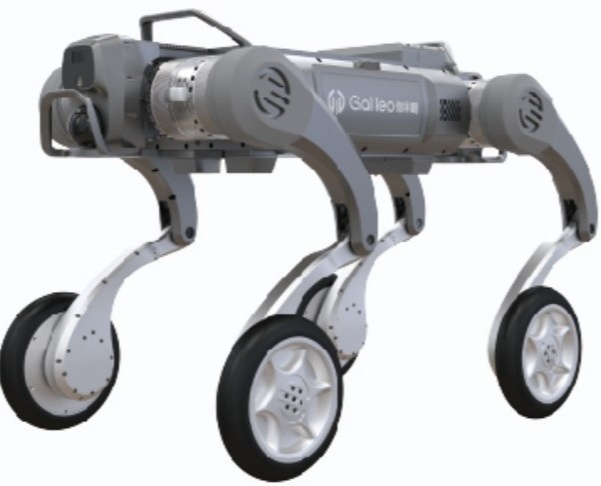
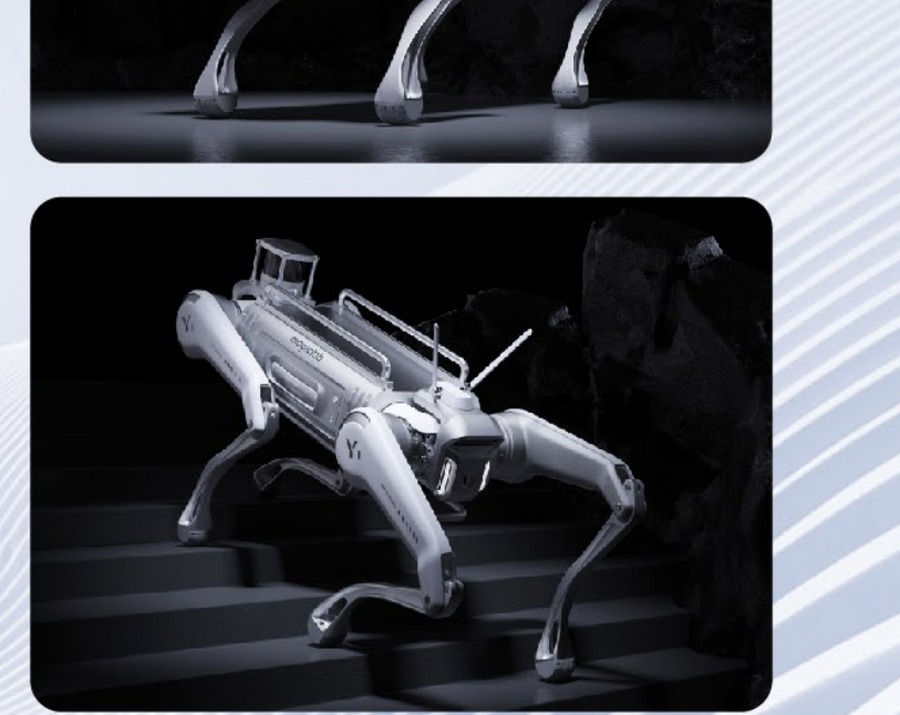
QUICK TAKE
- MagicDog Y1 offers the higher payload (150 kg vs 30 kg).
- MagicDog Y1 offers the longer runtime (240 min vs 150 min).
- MagicDog Y1 offers the larger battery (2.4 kWh vs 1.44 kWh).
- Galileo E1-W offers the lighter build (60 kg vs 70 kg).
SPECIFICATIONS COMPARED
| Galileo E1-W | MagicDog Y1 | |
|---|---|---|
| Company | Galileo Technology | MagicLab Robotics |
| Category | Industrial-Robot | Industrial-Robot |
| Price: | Not announced | Not announced |
| Weight | 60 kg | 70 kg |
| Payload | 30 kg | 150 kg |
| Degrees of Freedom | — | 12 |
| Speed | 21.6 km/h | 21.6 km/h |
| Battery Life | 150 min | 240 min |
| Connectivity | WiFi 6, optional 4G and 5G; Ethernet, USB and RS485 external interfaces | Wi-Fi 6, Bluetooth 5.2, optional 5G module |
| Software / AI | Autonomous navigation and obstacle avoidance with multi-sensor fusion | Centimetre-level positioning with dynamic obstacle avoidance; one-click dispatch integration on a plug-and-play open platform |
FREQUENTLY ASKED QUESTIONS
What is the difference between the Galileo E1-W and the MagicDog Y1?
Galileo E1-W is made by Galileo Technology, while MagicDog Y1 is made by MagicLab Robotics. Both are industrial-robots, so the differences come down to price and specifications.
Which has the higher payload, the Galileo E1-W or the MagicDog Y1?
The MagicDog Y1 has the higher payload at 150 kg, compared to 30 kg for the Galileo E1-W.
Which has the longer battery life, the Galileo E1-W or the MagicDog Y1?
The MagicDog Y1 has the higher runtime at about 240 minutes, compared to about 150 minutes for the Galileo E1-W.