Unitree Says Its Robots Paint and Play Chess With No Training. One of Those Claims Has an Asterisk.
Unitree CEO Wang Xingxing says GPT-6 lets its humanoids paint and play Chinese chess with zero task-specific training. The chess demo leans on a dedicated chess engine for move selection, and the showcase ran on video, not live.

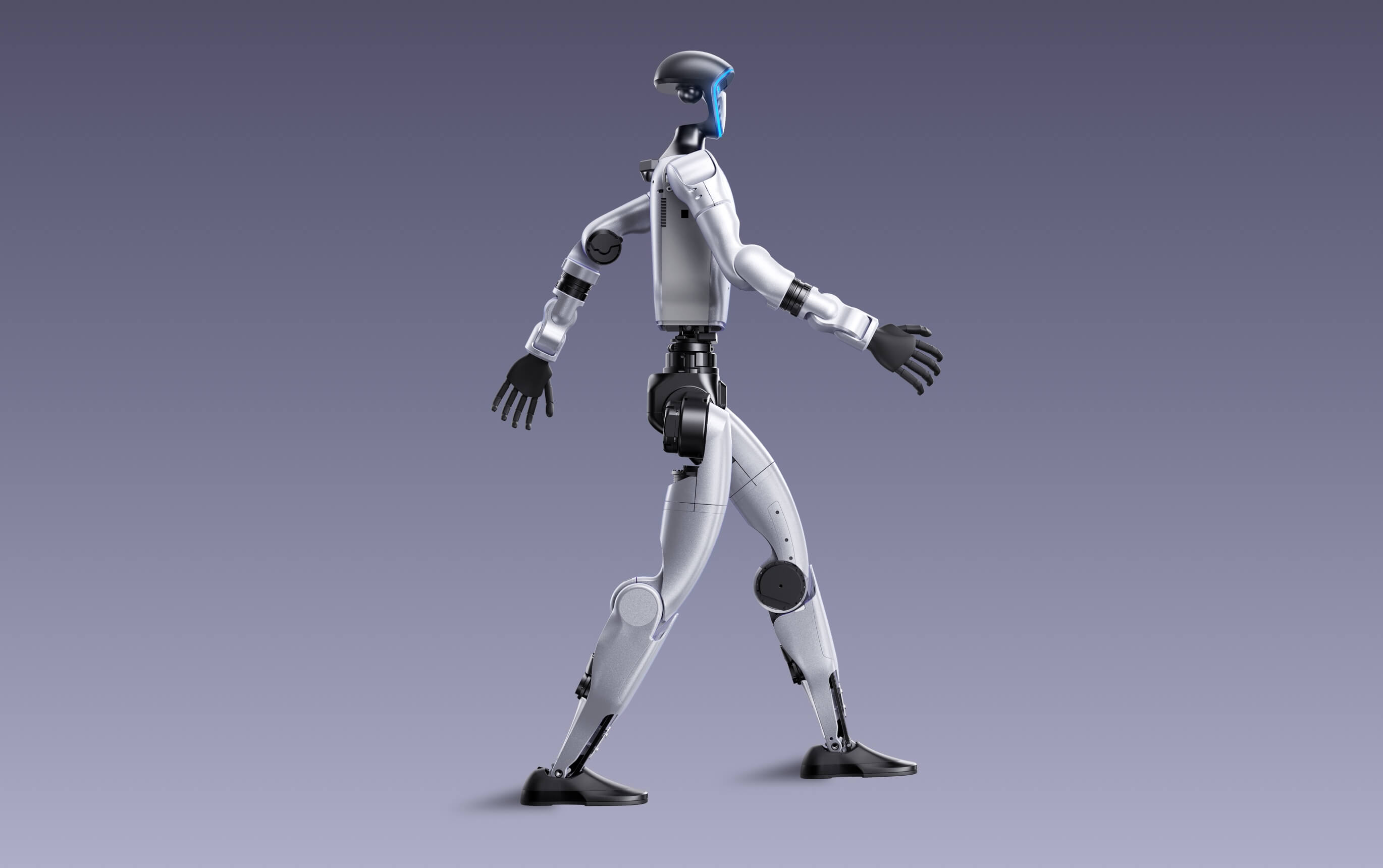
Unitree's founder and chief executive, Wang Xingxing, told an audience at the China International Import Expo in Shanghai on Wednesday that the company's humanoid robots can now paint a picture and play Chinese chess with no task-specific training, crediting the result to OpenAI's GPT-6 model handling the planning behind each task. For procurement teams evaluating humanoid platforms, the claim is less about painting or chess and more about whether a general-purpose model can finally replace the narrow, hand-tuned skill programming that has made humanoid deployments slow and expensive to customize.
What Wang Actually Showed, and What He Did Not
Wang's presentation relied on video clips rather than a live, on-stage demonstration. In the footage, a Unitree humanoid picked up a brush, mixed and switched paint colors, and produced a picture without being programmed for that specific sequence beforehand. A second clip showed the same zero-training claim applied to a round of Chinese chess, or xiangqi, rather than international chess. Wang said repeatedly during his remarks that both demonstrations were completed under "zero training" conditions, meaning the robot had not been drilled on painting or chess moves ahead of time the way earlier generations of robot demos typically were.
The distinction between a recorded clip and a live run matters more than it sounds. Hangzhou-based Unitree has built its reputation on hardware that performs reliably in public, from backflips to kung fu routines at trade shows, and its credibility with industrial buyers rests on the assumption that what airs on video is reproducible on a factory floor. One outlet covering the same CIIE session reported a stumble during a separate live segment of the event, a reminder that the gap between a curated clip and consistent, repeatable performance has not closed just because a new model is in the loop. Buyers evaluating this announcement for deployment purposes should treat the painting and chess clips as a capability demonstration, not as evidence of production-grade reliability.
The Chess Claim Has a Quiet Asterisk
The more commercially relevant nuance sits inside the chess demonstration itself. According to Unitree's own technical description of the system, GPT-6 is not independently calculating chess strategy. The model handles perception, that is, reading the board state from a camera feed, and sequencing, that is, deciding when to reach, grip, and place a piece. The actual move selection runs through Fairy-Stockfish, a dedicated open-source chess engine bolted onto the pipeline. In other words, the "robot that plays chess without training" is really a vision-language model operating a mechanical arm on behalf of a specialized chess engine that has existed for years and was never the hard part of the demonstration. Painting is the cleaner example of genuine zero-shot generalization, since there is no equivalent external engine doing the creative work. Chess, despite being the more attention-grabbing claim, is closer to a well-executed integration exercise than a demonstration of general physical reasoning.
This is a distinction that most of the coverage out of Shanghai glossed over, and it is the one procurement teams should hold onto. A model that can read a scene, decide "pick up piece A, place it at square B," and execute that motion without being hand-coded for the specific task is a genuinely useful capability for warehouse picking, kitting, and inspection work, where the "thinking" is often simpler than chess but the physical execution is just as demanding. A model that is quietly delegating the actual decision-making to a purpose-built engine is not evidence that the same system could handle, say, a never-before-seen assembly sequence with no comparable engine available to lean on.
Wang's Own Caveat Is the Most Useful Part of the Story
Buried in the same remarks was an admission from Wang himself that is more useful to buyers than the headline claims: large models already handle planning and navigation reasonably well, he said, but they remain prone to errors once they move into actual physical manipulation. That is precisely the order of difficulty that matters for industrial deployment. Planning which shelf to walk to is the easy half of a warehouse task. Gripping an irregular object without crushing or dropping it, under variable lighting and partial occlusion, is the half that determines whether a pilot program survives contact with a real operations floor. Wang's own framing suggests Unitree is not claiming to have solved that harder half, even as its marketing leans on demonstrations, like chess and painting, that are comparatively forgiving on the manipulation side.
Wang has also used the same week to make a broader prediction: that models in the GPT-6 class could produce a "ChatGPT moment" for robotics within one to two years, and that he now expects humanoids to succeed at roughly 80 percent of voice-commanded tasks by 2028. Those are forecasts, not results, and should be read as such. The gap between an 80 percent task-success target set for two years out and the specific, curated clips shown this week is the gap procurement teams are being asked to underwrite if they commit capital now rather than waiting for a verifiable reliability track record.
A Hardware Company Leaning on Someone Else's Brain
There is also a competitive signal buried in the choice of model. Unitree built its business and its valuation on mechanical engineering: it is, by reputation, a hardware company first, known for producing capable, inexpensive robot bodies faster than rivals in the West. Its own large-model development has not been the centerpiece of its public demonstrations the way its actuators and locomotion have. Leaning on OpenAI's GPT-6 for the "brain" behind this week's showcase, rather than a Unitree-developed model, suggests the company is treating its foundation model as something to source rather than something to build in-house, at least for now. That is a reasonable strategy for a hardware specialist trying to move fast, but it also means Unitree's competitive moat around this specific demonstration is thinner than it looks: any other humanoid maker with a GPT-6 integration and a comparable arm could stage a similar clip. The differentiation buyers should be pricing in is Unitree's hardware cost and manufacturing scale, not a proprietary intelligence layer, because the intelligence layer on display this week was not proprietary.
What This Means for Deployment Timelines
None of this makes the demonstration meaningless. A humanoid that can be shown a new, simple task and generalize to it without bespoke programming, even if only for narrow categories like object placement or basic tool use, would meaningfully cut the integration cost that has made humanoid pilots expensive relative to purpose-built automation. But the specific tasks shown this week were chosen for their visual appeal and their tolerance for being partly outsourced to specialized software, not for their representativeness of warehouse, logistics, or assembly work. Buyers building a 2027 or 2028 deployment case around this kind of general-purpose capability should ask any vendor making similar claims a pointed question: which part of the demonstrated task was handled by the general model, and which part was quietly handled by a narrow tool bolted on for the occasion.
The Diligence Checklist This Demo Should Trigger
For a sourcing team building a request for proposal around general-purpose humanoid skills, three questions follow directly from what happened in Shanghai. First, ask for the task's full software stack, not just the marketing description of the model. If a vendor's "zero training" claim rests on a dedicated solver, engine, or lookup table doing the actual decision-making, that is useful information about integration cost, not evidence of generalization. Second, ask to see the same task performed live, on unfamiliar hardware, in front of the buyer's own team, rather than relying on a recorded clip produced under conditions the vendor controlled. Third, ask specifically about manipulation under uncertainty: variable object weight, partial occlusion, lighting changes, because that is the exact category Wang himself flagged as still error-prone, and it is also the category that determines whether a pilot survives its first month on a real production or fulfillment floor.
None of this is unique to Unitree. Every humanoid vendor racing to attach a frontier language model to a robot body this year will face the same three questions eventually, and the ones who answer them with verifiable, repeatable demonstrations rather than curated video will be the ones worth a serious purchase order. Unitree's advantage has always been that its hardware is cheap and its production lines are fast; wrapping that hardware in someone else's model is a sensible way to look competitive on intelligence while the company's own foundation-model work matures. It is not yet a reason to move a deployment budget off a vendor with a longer reliability track record.
A Closing Image From the Expo Floor
Picture the two clips side by side: a robot arm pulling a loaded brush across canvas, color shifting cleanly between strokes, and a second arm lowering a xiangqi piece onto a board square with the quiet certainty of a system that already knew, courtesy of a decades-old chess engine, exactly where that piece belonged. One of those images shows a machine improvising. The other shows a machine following very good instructions. Procurement teams watching the highlight reel from Shanghai this week would do well to tell the two apart before they write a check.
This analysis synthesizes company statements made at a public industry event and independent media coverage of the same remarks.
This article is for general information purposes only and does not constitute investment, financial, or professional advice. Readers should conduct independent research before making procurement or investment decisions.