TechMagic and Sanwa Technos Form Capital Alliance for Food Robots
TechMagic, the Tokyo cooking-robot maker behind I-Robo, has signed a capital and business alliance with trading house Sanwa Technos to secure parts procurement, quality control, and overseas manufacturing scale.

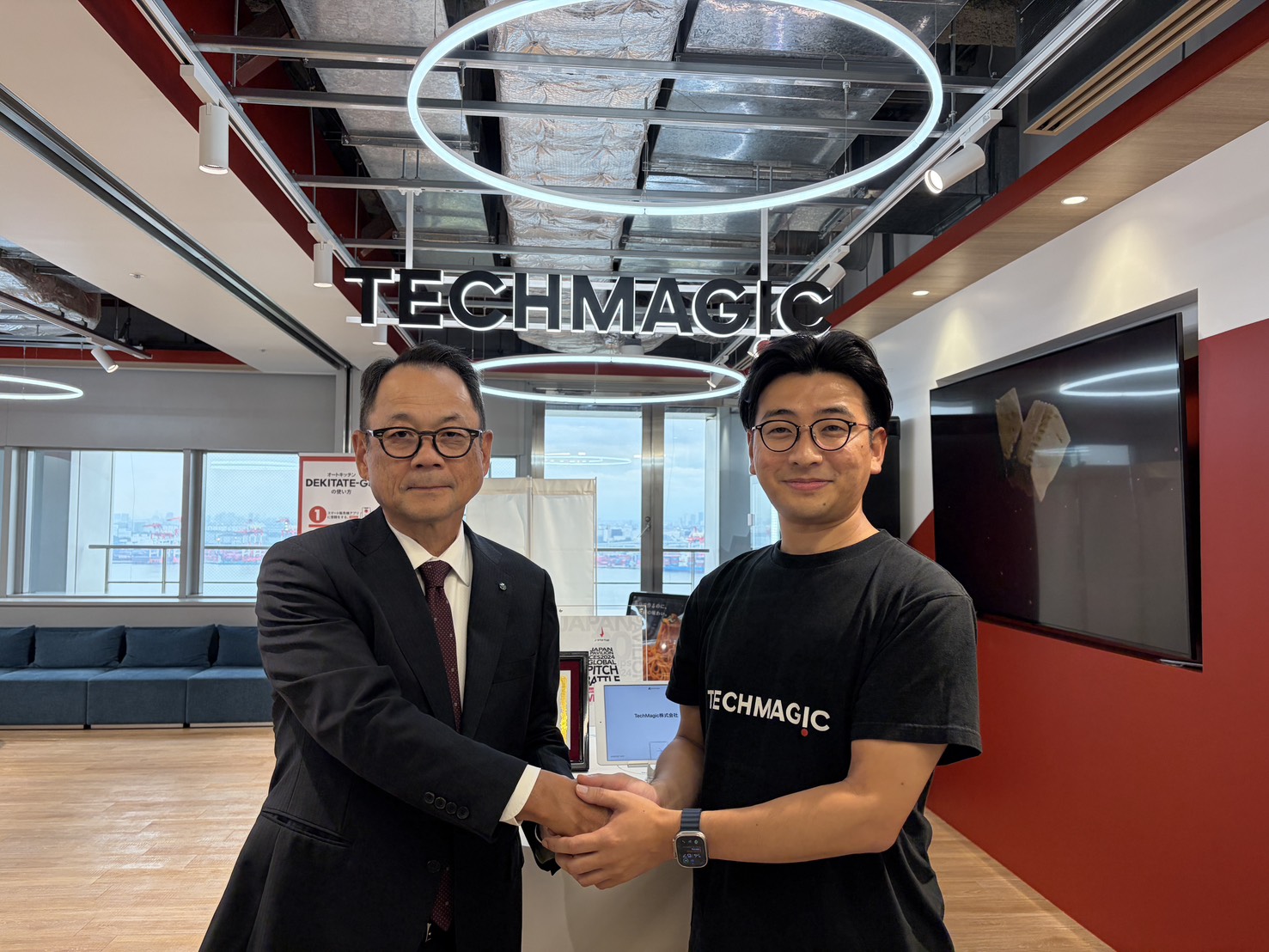
Thirty-three domestic sites, 15 overseas companies, and a 2027 growth plan now have a new target: a Tokyo cooking-robot maker with customers at Ippudo and Lawson. TechMagic and Sanwa Technos signed a capital and business alliance on October 23, 2026, the companies announced Wednesday from Tokyo, pairing a food-service robotics startup with an industrial trading house that has spent decades moving mechatronics equipment through Japan's manufacturing supply chains.
TechMagic is a Tokyo-based robotics company founded in February 2018 to build AI- and robotics-based equipment for food-service businesses facing Japan's acute labor shortage. Its stir-fry cooking robots, I-Robo and I-Robo 2, already run in kitchens for Osaka Osho and Ippudo, alongside a rotating cast of convenience-store, golf-course, and hot-spring facility clients through its broader T-Robo, P-Robo, W-Robo, and M-Robo product lines. Sanwa Technos, the larger and far older partner in this deal, is an independent technical trading company based in Chuo-ku, Tokyo, listed on Japan's exchange under securities code 8137, that sells industrial electronics, mechatronics equipment, FA systems, semiconductor equipment, and industrial robots while providing production-line engineering support across a network of 40 locations in Japan and abroad.
A Trading House Buys Its Way Into Food Robotics
The alliance is structured around what each company lacks. TechMagic can design a cooking robot and sell it to a restaurant chain, but moving from a working prototype to reliable mass production, procuring components at scale, holding yield rates steady at a new factory line, and then distributing finished machines overseas, requires a different kind of capability than product design. That is precisely Sanwa Technos's business: parts procurement, quality control from the early stages of development, and a network built over decades for scaling hardware into international markets. Under the alliance, the two companies will jointly develop new robots for the food industry, with Sanwa Technos involved from early development to reduce the yield risk that often appears only once a product moves from pilot runs to full-scale manufacturing.
Neither company disclosed the size of the capital investment or the resulting equity stake, which is itself a signal worth reading. An alliance announcement that leads with investment size usually wants to be read as a financing story. One that leads with operational integration, parts procurement, quality control, overseas distribution, wants to be read as a supply chain story, and that is the framing TechMagic and Sanwa Technos chose. For buyers tracking Japan's food-service automation market, the deal matters less for its price tag than for what it signals about how a small robotics company reaches manufacturing scale in Japan: not by raising a large venture round and building a factory itself, but by trading equity to an established industrial distributor that already owns the procurement relationships and production discipline a scaled robot line requires.
Japan's Labor Shortage Is Creating a Market for This Exact Trade
Japan's restaurant and food-service industry has been short-staffed for years, a problem that predates the current wave of robotics investment and has only intensified as the country's working-age population continues to shrink. Chains like Ippudo and convenience-store operators like Lawson, both already TechMagic customers, face a structural problem that no single wage increase solves: there are simply not enough workers willing to do repetitive kitchen tasks at the volume a national chain requires. That gap is what has made stir-fry and prep robots commercially viable in Japan years before similar categories gained traction in markets with looser labor markets, and it is the demand base Sanwa Technos is buying exposure to through this alliance.
The alliance also fits a broader pattern among Japanese trading houses and industrial distributors, who have increasingly used capital alliances rather than outright acquisitions to gain exposure to robotics startups without absorbing the execution risk of running a hardware company themselves. For Sanwa Technos, a company whose core business is distribution and engineering support rather than product invention, a minority stake paired with an operational partnership lets it participate in TechMagic's upside, and in the broader food-robotics category, while leaving product development risk with the smaller, more specialized partner. For TechMagic, the trade is straightforward: give up some equity and some independence in exchange for manufacturing discipline and an overseas distribution network it would otherwise take years to build on its own.
Why a Trading House, and Not a Venture Fund
The choice of partner says as much as the deal terms. TechMagic could, in principle, have raised a larger venture round from a financial investor and built out its own procurement and manufacturing operation in-house, as several better-funded humanoid and industrial robotics startups elsewhere in Asia have chosen to do. Instead it picked a partner whose balance sheet is secondary to its operating capability: Sanwa Technos does not just write a check, it brings 40 existing sites of procurement relationships, quality-control processes already proven across semiconductor and FA equipment supply chains, and an overseas sales network built over decades. For a hardware company at TechMagic's stage, that kind of embedded operating capability is often worth more than an equivalent amount of venture capital, because it compresses years of supply-chain learning that a financial investor's cash alone cannot buy.
That distinction matters for how other robotics founders in Japan should think about their own next funding round. A venture investor optimizes primarily for equity return and generally expects the founding team to solve manufacturing and distribution itself. A strategic partner like Sanwa Technos optimizes for embedding its own distribution and procurement infrastructure into a category it wants exposure to, which can mean faster time to reliable mass production but also deeper entanglement with a single partner's existing customer relationships and sales channels. TechMagic's calculation appears to be that, in a market as labor-constrained and quality-sensitive as Japanese food service, the speed and reliability gain from a strategic industrial partner outweighs the narrower ownership and control it would retain by raising capital on its own terms.
What the Deal Signals for Other Robotics Startups Courting Scale
The template here is worth watching for other narrow-vertical robotics startups in Japan and across Asia that have proven a product works in a handful of customer sites but have not yet solved the harder problem of manufacturing it reliably at volume. TechMagic's own history illustrates the gap: a company founded in 2018 with working robots in named restaurant chains by 2026 still needed an outside partner specifically for the step between prototype and mass production. That step, often underestimated by robotics founders who focus engineering effort on the product itself, is where many promising robotics companies stall, unable to hold quality consistent once they move past a handful of hand-built units.
Sanwa Technos is pursuing this deal under its SUN-WA Growth Plan 2027, a stated strategy of investing in startups and pursuing new business creation rather than relying solely on its legacy distribution business for growth. That framing matters for how buyers and competitors should read this specific deal: it is not an isolated bet on one cooking-robot company, it is one instance of a broader strategy by an established industrial distributor to use capital alliances as a pipeline into newer robotics categories before those categories mature and consolidate around a smaller number of winners. Other robotics startups serving Japan's food-service, hospitality, and light-manufacturing sectors should expect more capital from distributors and trading houses pursuing the same playbook, particularly companies that, like Sanwa Technos, already have the procurement and quality-control infrastructure that younger robotics companies lack.
For food-service operators evaluating cooking and prep robotics, the practical takeaway from this alliance is about supply reliability rather than new features. A vendor backed by an established parts and quality-control partner is less likely to face the component shortages or inconsistent build quality that have slowed deployment at other early-stage robotics vendors, a factor that matters as much as raw capability when a restaurant chain is deciding whether to commit kitchen operations to a still-young robotics supplier.
There is a due-diligence lesson in this for restaurant and retail chains evaluating any robotics vendor, not just TechMagic. A machine that performs well in a single pilot kitchen tells a buyer almost nothing about whether the vendor can deliver a tenth unit, a hundredth unit, or a replacement part three years after installation with the same build quality. Chains like Ippudo and Lawson that have already committed to TechMagic's robots stand to benefit directly if the Sanwa Technos partnership succeeds in stabilizing component supply and manufacturing yield, since that stability is what determines uptime and service response once a robot is running unattended on a commercial kitchen line rather than in a controlled pilot environment.
The two companies did not specify a timeline for the first jointly developed product to reach customers, nor did they name the specific robot categories beyond the general framing of addressing food-industry labor shortages and productivity. That omission is itself a data point for close observers: alliances built around shared manufacturing infrastructure, rather than a single named product launch, typically take longer to show results than a straightforward product announcement, because the partners are building shared processes before they are building a specific machine. Buyers and competitors tracking TechMagic's progress should watch for a concrete product unveiling, rather than further alliance announcements, as the clearer signal of whether this manufacturing partnership is actually working.
This article is for general information purposes only and does not constitute investment, financial, or procurement advice. It synthesizes company statements regarding the alliance, without independent verification of the undisclosed investment terms.