NVIDIA Shows AI Agents Building Robot Simulations From Plain Language
NVIDIA published developer examples of frontier AI agents building robotics simulation environments from natural-language prompts inside Omniverse, cutting simulation setup from weeks to days without any new standalone product.

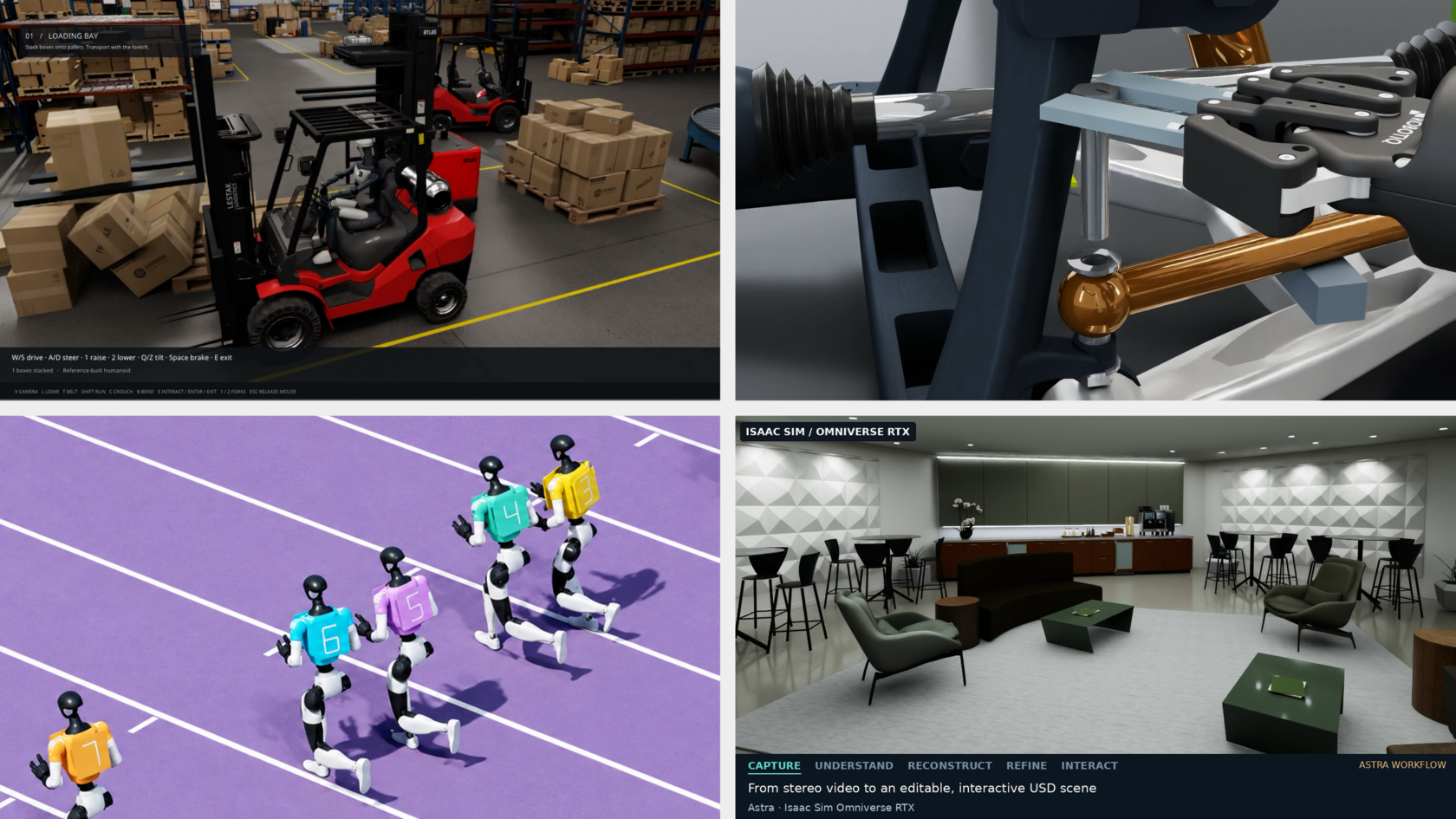
NVIDIA published a developer roundup this week showing engineers using frontier AI agents to build robotics simulation environments through natural-language instructions rather than hand-written simulation code, a workflow shift that matters less for any single feature it announces, since the post introduces no new standalone product, and more for what it reveals about how quickly the labor cost of building a robot simulation is falling. In one example, a developer used an AI agent called GPT-6 Astra to build a physics-based humanoid warehouse simulator complete with first- and third-person views, working from a pre-built warehouse scene and guiding the result through conversational instructions rather than writing simulation logic directly, a task that has historically required specialized simulation engineers with months of lead time.
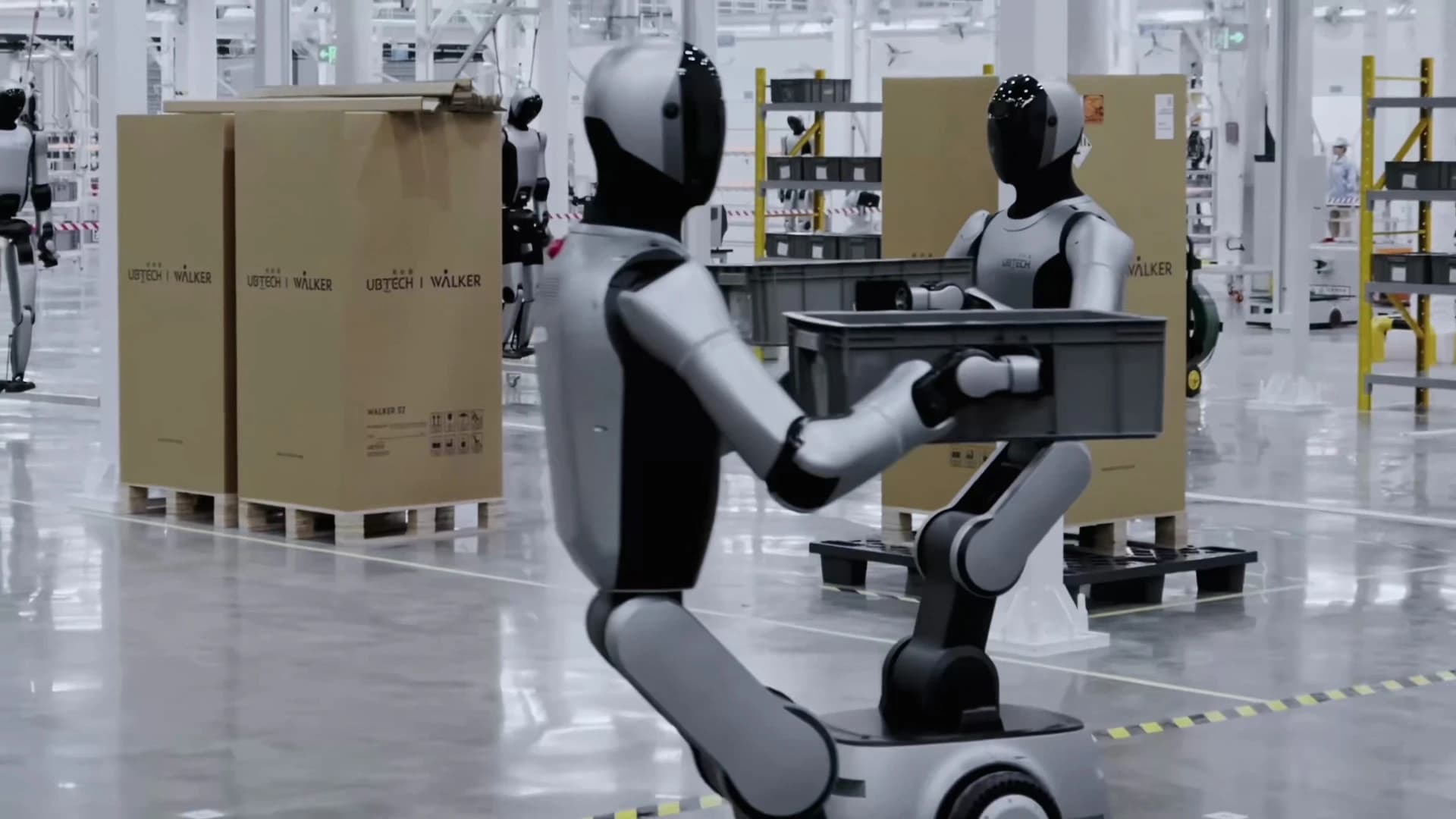
The examples NVIDIA chose to highlight span the categories that matter most to robotics and autonomous-systems buyers evaluating where simulation-driven development is heading. A developer built a reusable autonomous-driving test environment modeled on a real San Francisco street, connecting traffic simulation, sensor modeling, and NVIDIA's own Alpamayo driving model, then used a separate tool called Cosmos3-Nano to vary weather and lighting conditions for stress-testing. Another team used AI agents to build and refine digital twins by comparing simulated camera and lidar sensor output against real recorded data, completing work in about three days that would traditionally require a specialized simulation team considerably longer. A third developer tested simulated Unitree G1 humanoid robots on athletic movements, logging a single hurdle clearance in 64 of 100 trials, a concrete, if modest, benchmark for how far humanoid locomotion research has progressed inside simulation before any of it touches physical hardware.
Why Natural-Language Simulation Building Changes the Economics
Building a robotics simulation environment has traditionally required a narrow specialist skill set: engineers who understand both the physics and rendering engine being used and the specific robot or vehicle platform being modeled, a combination scarce enough that simulation development has been a bottleneck limiting how many robotics ideas a company can actually test before committing to expensive physical prototyping. If an AI agent can translate a plain-language description of a desired test scenario into a working simulation with physics, sensor modeling, and an interactive environment, as these examples claim, the practical effect is to let a far larger population of engineers, product managers, and even non-technical domain experts generate test scenarios directly, compressing a process that previously required scheduling time with a scarce specialist team into something closer to an afternoon's iteration.
That compression has a direct buyer-facing implication for any company evaluating whether to invest in physical robot prototypes before validating an idea in simulation. The traditional calculus has weighed the cost and time of simulation development against the cost and risk of skipping simulation and testing directly on physical hardware, a tradeoff that favored skipping simulation more often when simulation setup itself consumed weeks of specialist time. If simulation setup compresses from weeks to days, as the digital-twin example suggests, the calculus shifts meaningfully toward testing more ideas in simulation before any physical build, which should reduce the number of failed physical prototypes companies build and, in principle, shorten the overall development cycle from concept to a validated robot design ready for real-world testing.
The Honest Limits of a Demo-Driven Field
None of these examples constitute a production deployment, and buyers should read this NVIDIA post for what it is: a showcase of what frontier AI agents can do inside Omniverse-based simulation tools when wielded by NVIDIA's own developer relations team and partner engineers under favorable conditions, not an independently audited benchmark of reliability across arbitrary use cases. The 64-of-100 hurdle-clearance result for the simulated Unitree G1 is presented without comparison against a baseline, whether that is a non-AI-agent-assisted simulation approach, a different humanoid platform, or the same task attempted in physical hardware, which means the number demonstrates that the simulated robot can sometimes clear a hurdle, not that the AI-agent-assisted development process produced a measurably better result than traditional simulation engineering would have on the same timeline.
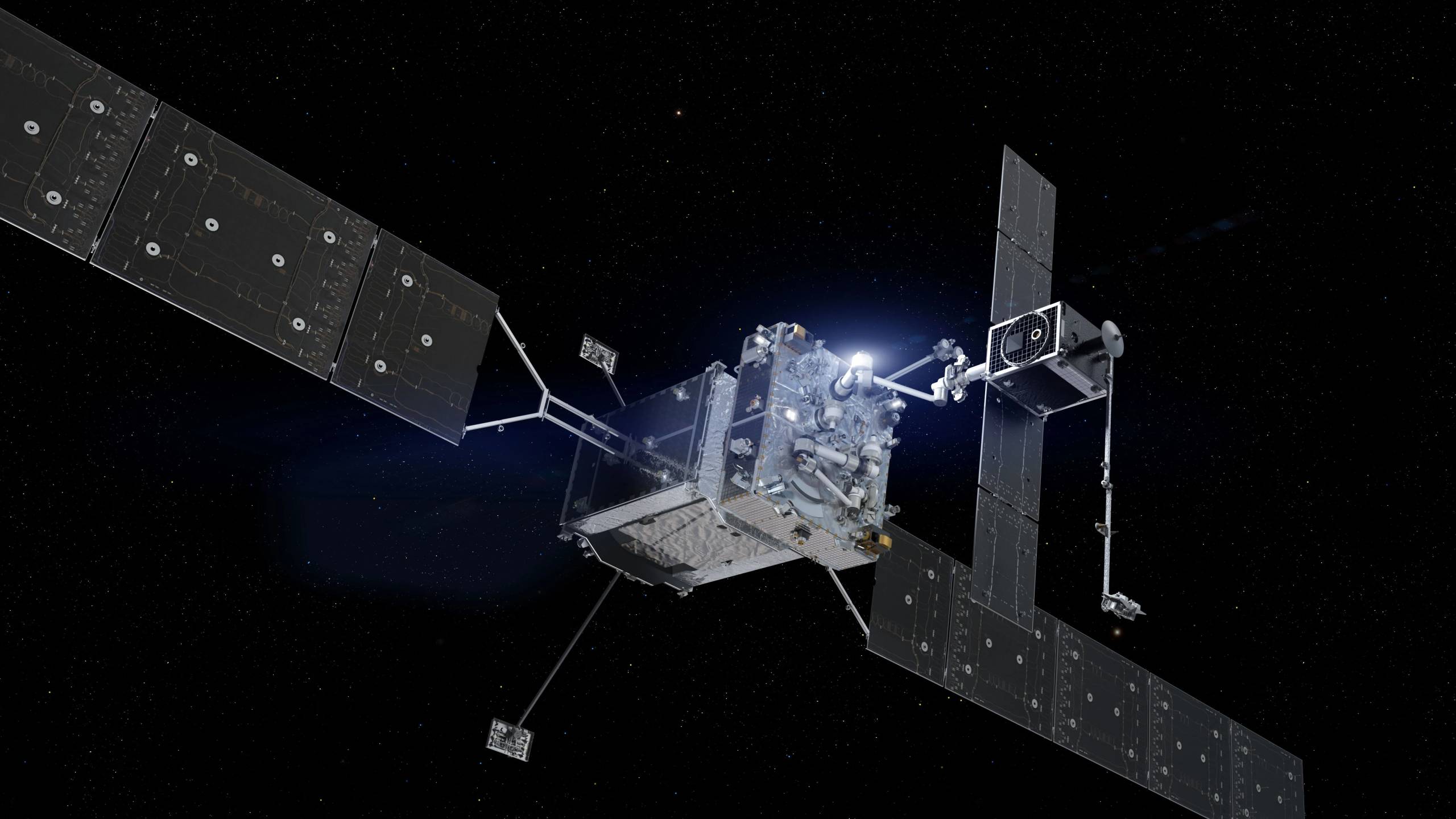
The broader pattern across NVIDIA's robotics software stack, Omniverse for simulation, Isaac Sim for robot-specific development, Cosmos for generative world models, and Newton for physics, is to position frontier AI agents as a layer that makes all of these tools more accessible rather than replacing the underlying simulation infrastructure itself. Named partners across the examples, PTC Onshape for mechanical design, NASA's own public data assets for the International Space Station example, and Unitree's G1 humanoid platform, illustrate a deliberate strategy of showing the AI-agent workflow working across design tools, data sources, and robot platforms NVIDIA does not itself make, reinforcing Omniverse's position as connective infrastructure rather than a closed, single-vendor ecosystem. For a robotics company evaluating its own simulation tooling investment, that ecosystem breadth is arguably a more durable signal than any individual demo, since it suggests the AI-agent-assisted workflow is designed to work with whatever design and robot platforms a buyer already has rather than requiring a wholesale platform migration to NVIDIA's own tools exclusively.
What to Watch Before Betting a Development Roadmap on This
Robotics teams considering whether to restructure their own simulation workflow around AI-agent-assisted development should look past the showcase examples to a more practical question: how much engineering oversight these agent-built simulations still require before the results can be trusted for a real design decision. Every example NVIDIA highlighted involved an experienced developer reviewing and guiding the AI agent's output, not an unsupervised agent producing a finished simulation end to end, which means the skill requirement has shifted rather than disappeared, from writing simulation code directly to evaluating and steering an AI agent's simulation output, a different but still real expertise requirement that buyers should not assume away when estimating how much this approach actually reduces their own staffing needs.
The clearer signal to track going forward is whether NVIDIA or its developer partners publish a case where an AI-agent-built simulation directly informed a physical robot design decision that shipped, closing the loop from natural-language simulation prompt to a validated change in real hardware, rather than remaining a standalone demonstration of the simulation tooling's capability. That closed-loop case study, when it arrives, will be the evidence that actually settles whether this workflow shift changes robotics development timelines in practice, rather than simply making an already-capable simulation platform somewhat easier to use for the engineers who already knew how to use it.
Who This Actually Serves First
The buyer most likely to benefit immediately from this workflow shift is not the large robotics company that already employs a dedicated simulation engineering team capable of building custom test environments on demand, but the mid-sized manufacturer or systems integrator that has wanted to validate a robotics or automation concept in simulation before committing capital to a physical pilot, and has historically been priced out of that option because hiring or contracting simulation expertise for a single evaluation project rarely justified the cost. If a product manager or automation engineer at that kind of company can genuinely produce a usable test environment from a natural-language description, reviewed and corrected by an engineer who understands the physical process but does not need deep simulation-software expertise, the practical effect is to extend simulation-driven validation to a much larger population of buyers who could not previously justify the specialist cost of entry. That shift, if it holds up outside NVIDIA's own showcase conditions, is a more consequential outcome for the broader industrial robotics market than any single example in the post, since it expands who can test an automation idea cheaply before committing to hardware, not just how fast an existing simulation team can work.
The robotic-disassembly example, where a developer modeled a car suspension assembly in PTC's Onshape computer-aided design software and then used Isaac Sim to work out a robot-operable wrench shape for backing out the assembly's bolts, is worth separating out from the more headline-grabbing humanoid and autonomous-driving examples because it points toward a nearer-term, more commercially mundane but arguably more immediately useful application: using AI-agent-assisted simulation to design task-specific tooling and end effectors for a known, well-defined industrial task, rather than attempting to validate an entire general-purpose robot's behavior across unpredictable real-world conditions. Disassembly and recycling automation, an area with growing regulatory and cost pressure behind it as electronics and vehicle recycling mandates expand globally, is exactly the kind of narrow, well-specified task where simulation-driven tool design can plausibly shorten development timelines without requiring the same leap of faith that humanoid locomotion or full autonomous-driving validation still demands.
Buyers evaluating whether to adopt an AI-agent-assisted simulation workflow in their own development process should also weigh a cost dimension NVIDIA's post does not address directly: the compute and software licensing cost of running Omniverse, Isaac Sim, and the frontier AI models themselves at the scale needed for a real development team's iteration cycle, as distinct from a single showcase example built under conditions NVIDIA's own developer relations team likely had every incentive to optimize. A fair evaluation requires running a comparable pilot inside the buyer's own infrastructure and budget constraints, with the buyer's own engineers doing the prompting and reviewing, before concluding that the workflow NVIDIA demonstrated will deliver a similar time savings inside a different company's specific technical environment and cost structure.
This analysis synthesizes company statements and publicly available technical disclosures as of the publication date and should not be read as investment, financial, or professional advice; it is provided for general information purposes only.