Meta Confirms Fourier Humanoid Project, 'Max' Prototype Reported
Meta confirmed it is working with Shanghai-based Fourier Intelligence on humanoid robot research, while reports describe a prototype called Max and a faster-moving second version already underway.


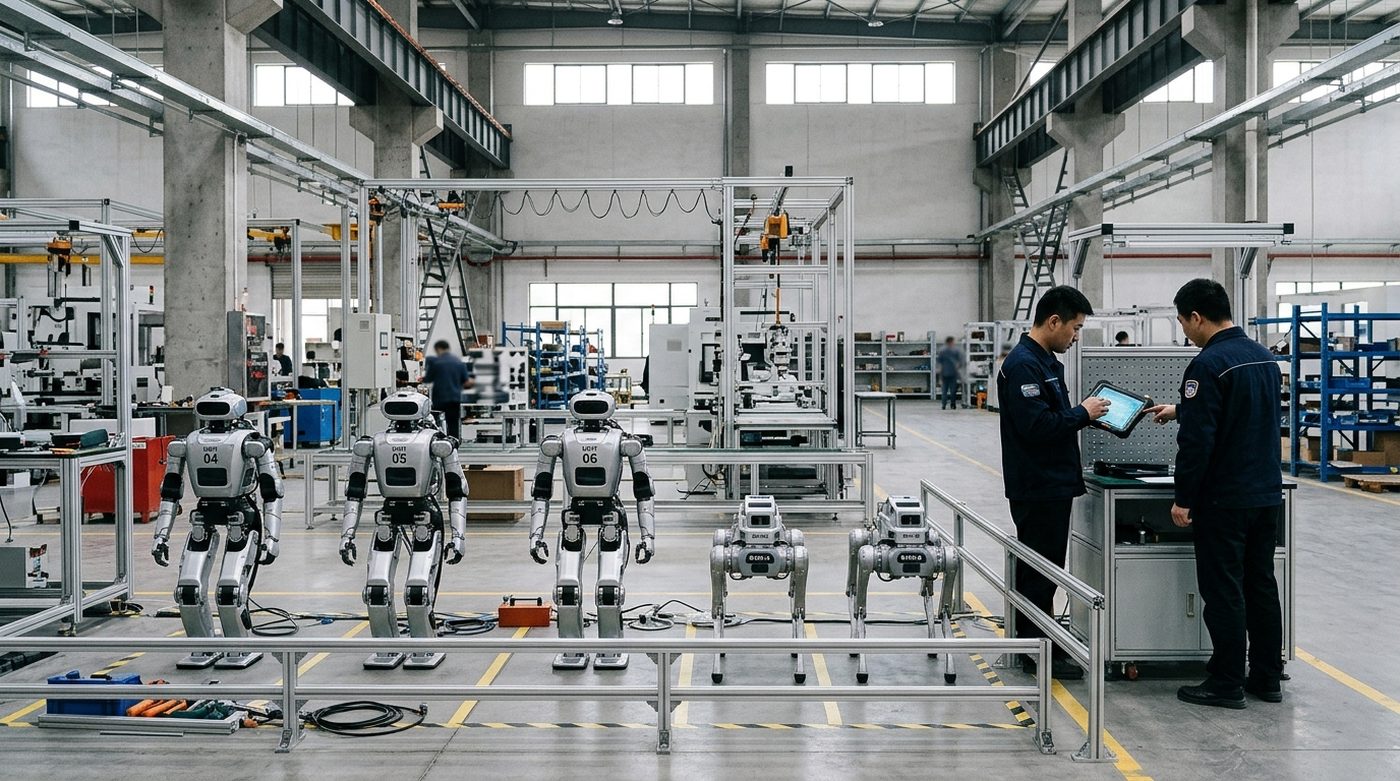
Meta says its collaboration with Chinese humanoid robot maker Fourier Intelligence is limited to internal research with no plans to sell the resulting hardware, even as people familiar with the project describe a working prototype, code-named Max, that the two companies reportedly built in about three months and are already iterating on with a second version. The contrast between Meta's public framing and the pace described around the project captures a fast-moving dynamic Meta has now largely reserved comment on: a company that spent years saying humanoid robots were not a near-term priority is now embedded inside a Shanghai humanoid factory.
Fourier Intelligence, headquartered in Shanghai, is one of China's more established humanoid robot makers, best known outside China for the GR-3, a "care-bot" companion humanoid it unveiled at CES 2026 aimed at rehabilitation and home-assistance use cases rather than the warehouse and logistics work that dominates most US humanoid funding. The company has spent several product generations, from GR-1 through GR-3, building out the mechanical and perception stack that reportedly made it an attractive partner for Meta once the social media company decided to accelerate its own physical-AI ambitions rather than build a humanoid platform from a blank sheet.
A Confirmed Partnership, a Reported Prototype
What Meta has put on the record is narrow and specific. A company spokesperson said the Fourier effort is focused on internal research and experimentation, and that Meta has no plans to sell these units, language that confirms the collaboration exists while deliberately avoiding any commitment about where it leads. Everything beyond that framing, including the prototype's name, its specifications, and the internal timeline, comes from people familiar with the project rather than from an official Meta or Fourier announcement, and should be read with that distinction in mind.
Those people describe a humanoid prototype called Max, built in roughly three months, standing about 1.5 meters tall and weighing around 48 kilograms, running on Nvidia's Jetson Thor compute platform, the same edge-AI hardware line Nvidia has positioned as a reference platform for humanoid robotics developers more broadly. People briefed on Meta's requirements for the project describe an emphasis on human interaction rather than industrial dexterity: voice recognition from roughly five meters away, gesture recognition, the ability to maintain eye contact, and a way for the robot to visibly signal its own operating state to a person standing nearby. That requirement set reads less like a warehouse picking robot and more like a consumer-facing companion or demonstration platform, consistent with Meta's broader push into AI-driven consumer hardware and wearables rather than industrial automation.
The Work Has Already Moved to a Second Version
Work on a successor, described as Max 2, reportedly began in September, with a redesigned torso, improved hands, an integrated projector, and additional sensors intended to help the robot climb and descend stairs. Moving to a second hardware revision within months of the first prototype is a meaningfully fast cadence for humanoid development, where mechanical iteration cycles typically run closer to a year once a company accounts for tooling, supplier lead times, and testing. The speed is easier to explain given how embedded Meta's own team reportedly became in the process: a Meta product vice president is said to have spent close to two months on-site at Fourier's Shanghai factory, an arrangement that collapses the usual back-and-forth between a US product organization and an overseas manufacturing partner into something closer to co-located engineering.
Why Meta Would Choose a Chinese Manufacturing Partner at All
The more strategically interesting fact is not that Max exists but who Meta chose to build it with. Meta has the balance sheet to fund an in-house humanoid program or to acquire a Western robotics startup outright, and it has previously moved toward physical-AI research through its acquisition of Assured Robot Intelligence. Partnering with a Shanghai-based manufacturer for the hardware itself is a different kind of bet: it borrows Fourier's existing mechanical design, supply chain, and manufacturing throughput rather than building that capability from scratch in the United States, trading geopolitical sensitivity around Chinese-made robotics hardware for a dramatically shorter time to a working prototype. For procurement and policy teams tracking where humanoid supply chains actually sit, Meta's choice is a data point worth weighing against its own public statements about reducing dependence on Chinese manufacturing in other product categories; the company is applying a different calculus to early-stage humanoid hardware than it has to, for instance, consumer electronics assembly.
It also says something about where genuine humanoid manufacturing capacity currently exists. A three-month build timeline for a functioning bipedal prototype with the interaction requirements Meta is said to have specified is not achievable by assembling a team and ordering parts; it requires a manufacturing partner that already has a working mechanical platform, a trained workforce, and a supply chain tuned to humanoid-specific components such as actuators and dexterous hands. China's humanoid manufacturers, Fourier among them, have spent the past several years building exactly that kind of capacity, often for a domestic market with more aggressive deployment timelines than most Western competitors have faced. Meta's willingness to go to Shanghai rather than wait for a comparable US supplier to mature is a reasonably direct signal about the current state of that competitive gap.
What the Jetson Thor Choice Signals About the Stack
The reported compute choice is itself informative. Nvidia's Jetson Thor platform has become something close to a default reference architecture for humanoid developers outside the small group of companies, such as Tesla and Unitree, that design their own silicon, because it packages enough onboard inference power for perception and control without requiring a robotics team to also become a chip design team. Fourier building Max around Jetson Thor rather than a proprietary compute stack suggests the project was optimized for speed of iteration over long-term cost or differentiation, consistent with a research prototype rather than a product engineered for mass production economics. Companies that eventually do commit to shipping humanoids at volume tend to migrate away from off-the-shelf compute toward custom silicon once the design stabilizes, both to cut bill-of-materials cost and to control a component that otherwise ties the robot's roadmap to Nvidia's own release schedule. Max staying on a reference platform this early is consistent with Meta's own description of the project as research rather than a near-term commercial line.
The Honest Reading of an Unconfirmed Roadmap
It is worth stating plainly what the available evidence does and does not show. Meta's own statement commits the company to nothing beyond research and experimentation, and a research prototype moving to a second hardware revision is not evidence of an imminent product launch, a manufacturing agreement at scale, or a Meta decision to compete directly with humanoid platform makers such as Figure, Agility, or Unitree. Companies run internal hardware research programs that never ship a product more often than they run ones that do, and the specific interaction-focused requirement set reported around Max, heavy on voice and gesture recognition and light on manipulation or mobility specs, reads more like an exploration of Meta's existing AI-assistant and smart-glasses ambitions in physical form than a committed humanoid product roadmap. Readers should treat the reported specifications and the Max 2 timeline as evidence of an active, well-resourced research effort, not as confirmation that a Meta-branded humanoid robot is coming to market.
What is confirmed, and what matters most for anyone tracking the humanoid supply chain, is that Meta now has engineers embedded inside a Chinese humanoid manufacturer's own factory floor, iterating on hardware fast enough to reach a second revision within months. The next concrete signal to watch is whether Meta formalizes that relationship beyond research, through a disclosed investment, a supply agreement, or a public demonstration, any of which would move this from an internal experiment to a declared position in the humanoid race. Until one of those happens, the honest summary is that Meta confirmed the partnership and confirmed nothing else, and everything that makes the story interesting, the name, the specs, the speed, still sits in the category of reported rather than verified.
For buyers and competitors watching the humanoid market rather than Meta's product roadmap specifically, the more durable takeaway sits one level below the headline. A major US technology company with effectively unlimited capital chose a Chinese manufacturing partner over building domestic humanoid capability from scratch, on a timeline measured in months rather than years. That choice is a more concrete data point about where usable humanoid manufacturing capacity actually sits today than any funding announcement or benchmark score, and it is one procurement teams evaluating their own humanoid suppliers, Chinese or otherwise, should weigh directly against public statements from any vendor claiming comparable capability can be stood up domestically on a similar timeline.
This account draws on Meta's public statement about the Fourier collaboration and on widely circulated reporting describing the Max prototype, current as of publication.
Disclaimer: This article is provided for general information purposes only and does not constitute investment, financial, or procurement advice. RobotAIGeek makes reasonable efforts to verify facts at the time of publication but cannot guarantee complete accuracy of details that may change after publication, particularly unconfirmed specifications and timelines. Readers should seek direct confirmation from Meta or Fourier Intelligence before treating reported details as final.