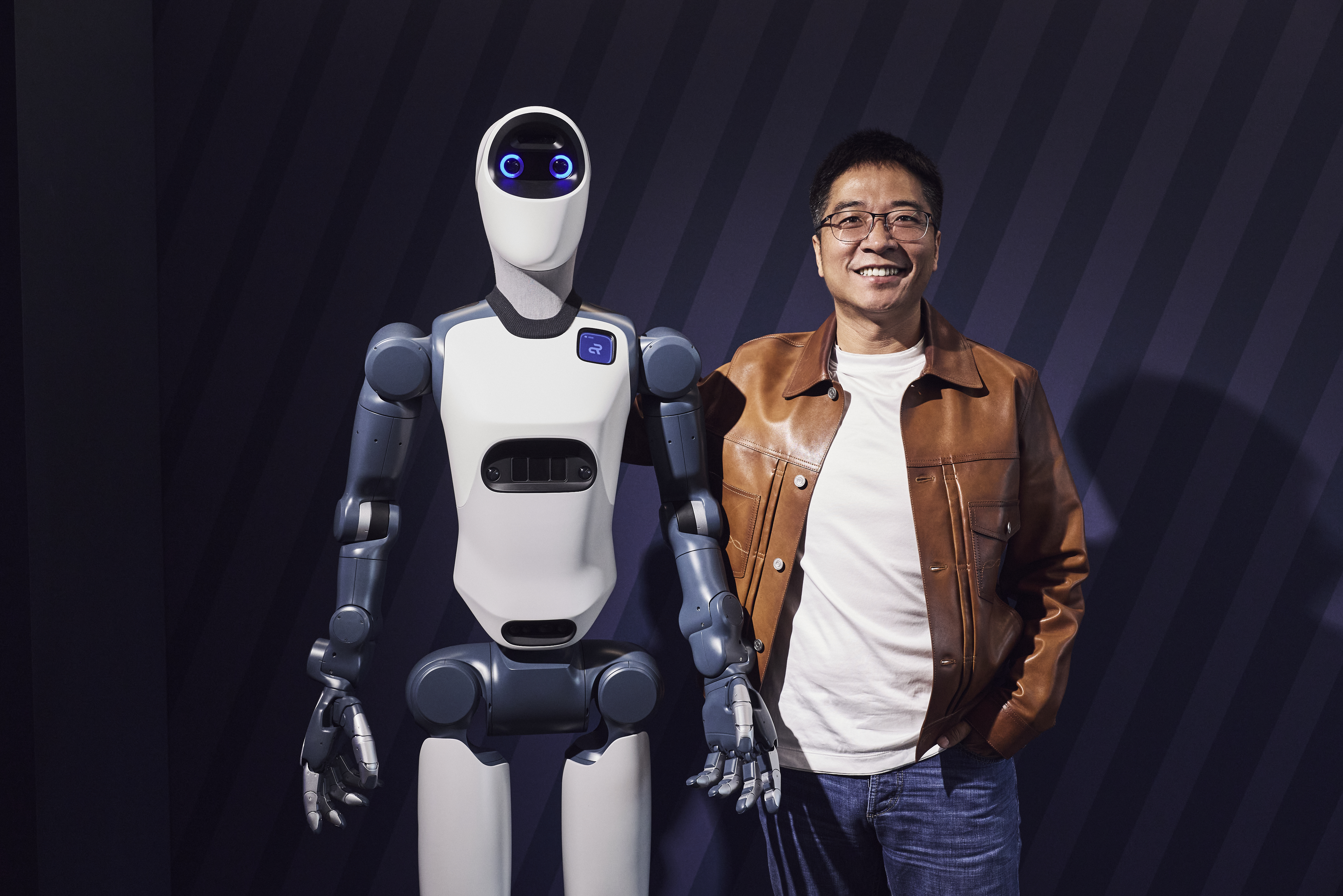
Gausium Wins Third ISSA Award, Tops IDC Cleaning Robot Tracker
Gausium's Marvel robot won the ISSA Innovation Award's Robotics category, and IDC's 2025 tracker ranks the company first worldwide in commercial cleaning robot shipments and revenue, extending a run that includes award wins for Phantas and Mira.

Gausium has taken a third ISSA Innovation Award in five years, and this time the company is pairing the trophy with a bigger number: IDC's Worldwide Annual Commercial Cleaning Robotics Tracker for 2025 places Gausium first in the world by both unit shipments and revenue, and first by market share across Europe, the Americas, and Asia-Pacific. The company announced both results on November 23, 2026, two days after ISSA Show North America closed in Las Vegas (November 17-19), where its Marvel robot won the Robotics category of the ISSA Innovation Awards.
Gausium, headquartered in Shanghai's Pudong New Area and known until a 2024 rebrand as Gaussian Robotics, builds autonomous floor-cleaning machines for airports, hospitals, warehouses, and retail chains. Founded in 2013, the company has spent more than a decade narrowing a fleet of single-purpose janitorial machines into a smaller set of multi-function robots, a strategy that is now showing up directly in its award history and its market-share numbers.
A Three-Year Trophy Case Tells a Product Story
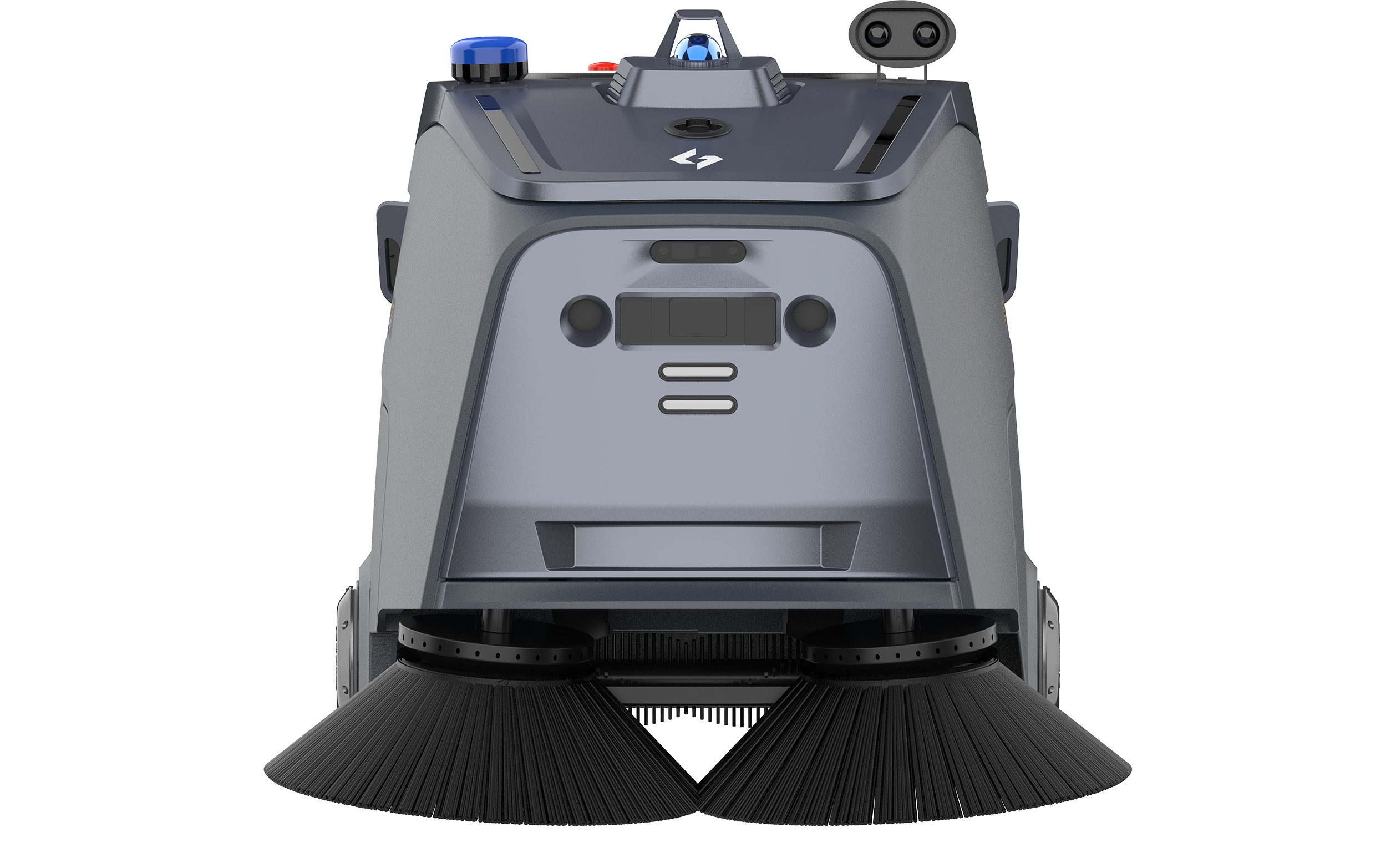
The ISSA Innovation Awards are judged by the cleaning industry's own trade body, and Gausium's run through them tracks the company's product roadmap almost exactly. Phantas, an all-in-one scrubbing and vacuuming robot, won Innovation of the Year in 2022. Mira, a smaller unit built for narrower aisles and tighter commercial spaces, won the Automation and Equipment category's Innovation of the Year in 2025. Marvel, the newest entrant, took the 2026 Robotics category outright. Marvel sweeps, scrubs, and optionally polishes in a single pass with no manual preparation step, switching between dry-sweeping and wet-scrubbing modes based on what its sensors detect on the floor, and flushes its own waste-water tank and suction path between cycles. Gausium says field tests in retail, logistics, and parking settings produced no pipeline clogging, the specific failure mode that has historically made combined sweep-and-scrub units a harder sell than single-task machines. Three different robots, three different award cycles, one consistent theme: each machine replaces more than one piece of equipment a facilities team would otherwise have to buy, train staff on, and maintain separately.
Gausium Chief Technology Officer Dr. Baoxing Qin framed that design logic directly at the show, asking why a large facility should "need a separate machine for sweeping and another for scrubbing." It is a procurement question dressed up as an engineering one. Every additional machine on a janitorial fleet adds a purchase order, a maintenance contract, a charging dock, and a training session, and large facilities operators have historically accepted that overhead because single-task cleaning equipment was simpler to build and cheaper to buy outright. Gausium's bet, reinforced by three straight award wins for combining tasks into one chassis, is that buyers will now pay a premium for fewer machines doing more, provided the combined unit performs as reliably as the specialists it replaces.
What the IDC Number Actually Measures
The ISSA awards are a judged competition; the IDC ranking is a market-size count, and the distinction matters for anyone sourcing cleaning robots rather than just admiring the hardware. IDC's Worldwide Annual Commercial Cleaning Robotics Tracker, in its 2025 edition, puts Gausium first globally in both unit shipments and revenue, first in every core application segment the tracker covers, and first by market share in Europe, the Americas, and Asia-Pacific individually rather than only in aggregate. Gausium says it has held the shipments-and-revenue lead for several consecutive tracker cycles, though the company's announcement does not specify exactly how many years that streak covers. IDC's underlying market count gives the category's scale: global commercial cleaning robot shipments reached 58,000 units in 2025, up 83.8% year over year, in a market IDC values at US$760 million, up 48.5%. Gausium says it now counts more than 9,400 customers across more than 70 countries and regions as of November 2026.
Independent press coverage of Gausium's previous IDC placements, including Japanese-language trade releases tied to the company's Asia-Pacific push, corroborates the broad shape of the claim: Gausium has been describing itself as the world's top commercial cleaning robot supplier by shipments and revenue across multiple reporting cycles, not just this one. That track record matters more to a buyer than a single year's snapshot, because a fleet operator standardizing on one vendor is making a multi-year bet on parts availability, software updates, and resale value, not just this quarter's unit price.
A regional market leading across three separate continents, rather than one dominant home market propped up by smaller positions elsewhere, is the detail worth isolating from Gausium's announcement: it is a harder number to manufacture through a single large contract than an aggregate global share figure would be.
The Hardware Behind the Headline
Gausium used the ISSA floor to show more than its award winners. Beetle 2.0, the company's compact sweeper line, appeared with a new disposal station that was shown publicly for the first time, addressing one of the more mundane but persistent friction points in autonomous sweeping: someone still has to empty the hopper, and a dedicated disposal station that a robot can dock with automatically removes a manual step from an otherwise unattended cleaning cycle. The company's broader lineup on display included Omnie, a compact scrubber; the Vacuum 40 and Scrubber 75 ride-on-style units; and PhanShop, aimed at smaller retail footprints. Gausium also teased an additional unnamed product without providing further detail, a standard trade-show move that keeps a company's booth relevant for the next cycle of coverage without committing to a launch date.
Tim Slusher, representing Gausium's North American sales team, took part in the show's Cleaning Insights program, a signal that the company is investing in direct customer-facing presence in the US market rather than selling exclusively through distributors. For a buyer evaluating service and support, not just sticker price, that kind of in-region sales and training presence often matters as much as the hardware specification sheet.
Why the Timing Favors the Multi-Task Argument
Commercial cleaning has been one of the more conservative corners of service robotics, in part because the return-on-investment case for a single-task robot is narrow: a floor-scrubbing robot has to beat the fully loaded cost of a human scrubbing contractor on scrubbing alone, with no credit for anything else it might do. A combined sweep-and-scrub or sweep-and-vacuum machine changes that math, because it is competing against the combined cost of two or more pieces of equipment and the labor coordination required to run them in sequence. Gausium's award wins across Phantas, Mira, and now Marvel suggest the company has read that shift correctly, and the IDC shipment numbers suggest buyers have been acting on it at scale rather than just in pilot programs.
The competitive set Gausium is claiming share against includes both floor-care incumbents retrofitting existing scrubber and sweeper lines with autonomy, and venture-backed robotics-first entrants building cleaning robots from a blank sheet. A company founded in 2013, well before the current wave of embodied-AI funding, winning a 2026 shipments-and-revenue title against both camps is a different proof point than a newer entrant posting a strong single quarter. It indicates the company has already survived at least one full hardware generation cycle and the associated service and parts obligations that come with a fleet still running on the floor years after purchase.
A Crowded Field Gausium Is Now Leading on Paper
Gausium is not claiming the IDC top spot in an empty market. Brain Corp licenses its BrainOS autonomy stack to floor-care manufacturers including Tennant and Minuteman, putting its software inside machines sold under other brands rather than competing as a standalone robot maker. Avidbots builds its Neo scrubber for large-format retail and warehouse floors. SoftBank Robotics distributes the Whiz vacuuming robot, originally developed with Brain Corp's technology, through a channel-partner model across North America and parts of Asia. Each of these competitors has staked out a different go-to-market approach: license the autonomy, sell through an established floor-care brand, or build and sell the hardware directly, which is the path Gausium has taken since 2013. A company topping an independent tracker's shipment and revenue count while selling hardware under its own name, rather than as an embedded component inside someone else's product line, is a different kind of market position than a software licensor claiming adoption across multiple third-party brands.
The Beetle 2.0 disposal station fits into that same competitive logic. Autonomous emptying is a small mechanical addition, but it is the kind of detail that decides whether a cleaning robot fleet still needs a staff member walking the floor on a fixed schedule or can genuinely run unattended through a shift. Competitors without an equivalent docking-and-disposal mechanism are, in effect, asking a facility to keep a human in the loop for the one step robotics was supposed to remove. Showing that station publicly for the first time at ISSA, alongside the award wins, is Gausium signaling that it sees unattended operation, not just autonomous navigation, as the next competitive line to hold.
What a Buyer Should Actually Watch Next
None of this settles whether Gausium's machines are the right fit for any specific facility; that still comes down to floor type, shift patterns, and the specifics of a pilot deployment. But the IDC ranking and the three-year award run together narrow the due-diligence question for a procurement team evaluating cleaning robotics vendors. The question is no longer whether an autonomous cleaning robot can do the job of two or three single-task machines. Gausium's own disclosure, backed by a trade body's judged award and a market-research firm's shipment count, says that question has already been answered in the market. The remaining question is which vendor's version of that combined machine, and which region's service network behind it, fits a given building.
This article is for general information purposes only and does not constitute investment, procurement, or professional advice. It synthesizes company statements as of publication.