Physical AI's Most Convincing 2026 Business Case Wasn't a Humanoid. It Was a Robot That Climbs Navy Hulls.
Gecko Robotics, a Pittsburgh robot-inspection company, spent 2026 closing a run of unglamorous government contracts, a US$71 million Navy and GSA contract vehicle, a 20-site Trident Maritime shipyard-productivity deal, and an NVIDIA AI-safety partnership, on top of 2025's US$1.25 billion unicorn valuation and its US$100 million-plus NAES power-grid deal. This column argues that quiet, dollar-denominated pattern is a more convincing proof of physical AI's business model in 2026 than any humanoid demo reel, and asks what it means for utilities and shipyards outside the U.S. defense-industrial base.

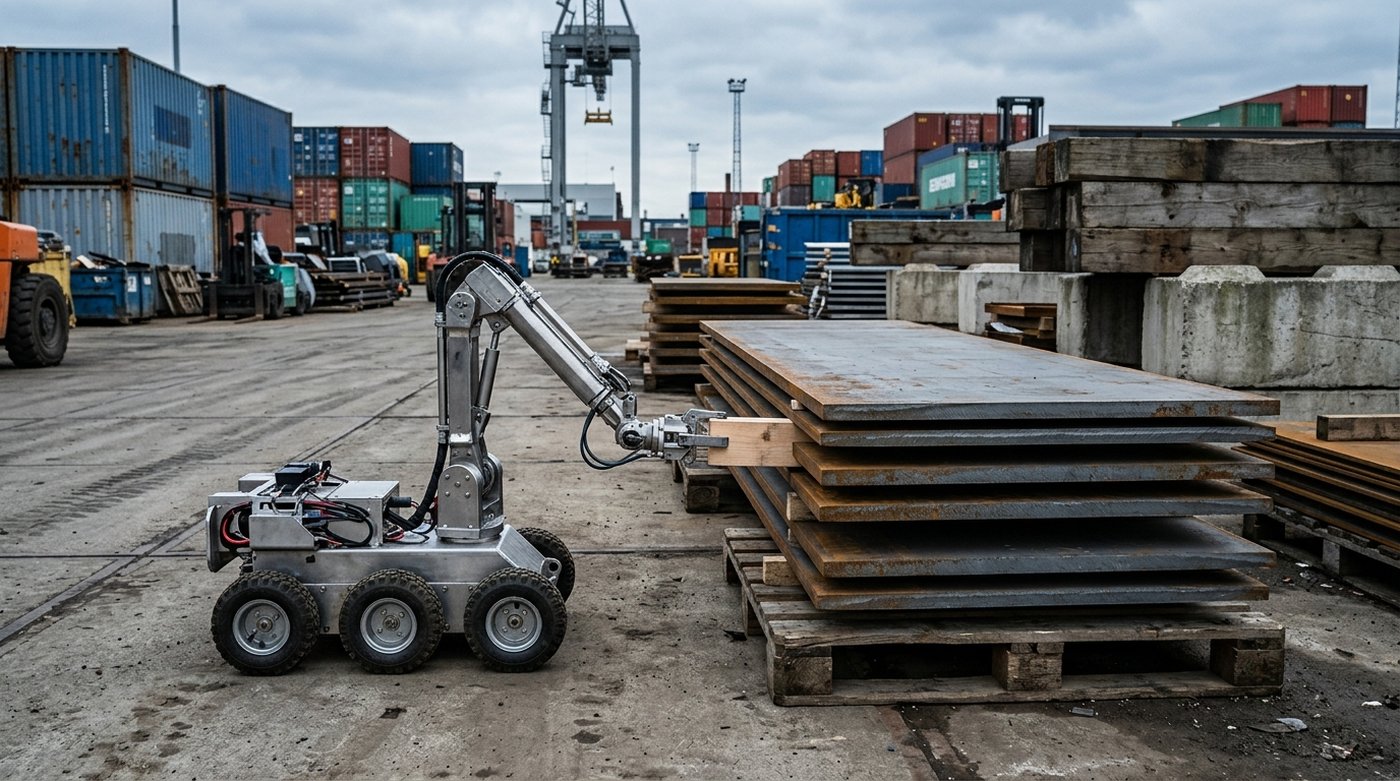
No one has posted a viral video of a Gecko Robotics machine this year. There is no choreographed warehouse walk, no stage demo, no robot folding a towel in front of a crowd. What Gecko has instead is a stack of signed contracts: a US$1.25 billion private valuation, a US$71 million Navy and federal supply contract, a 20-site shipyard productivity deal, and an AI-safety collaboration with NVIDIA announced last month. None of it trended. All of it is real money changing hands for a wall-climbing inspection robot whose entire job is to find cracks in things.
My thesis: the clearest evidence that physical AI has a working business model in 2026 is not a bipedal robot in a factory promo. It is a Pittsburgh robotics company that sells asset-health data to the U.S. Navy, the General Services Administration, and the power grid, and keeps closing deals without needing anyone to believe a machine can think. Gecko's customers do not care whether its robots are intelligent. They care whether the crack gets found before the turbine fails.
A Unicorn With No Demo Reel
Gecko reached a US$1.25 billion valuation in June 2025, a Series D that doubled the company's prior mark, led by a new investor, Cox Enterprises, with existing backers USIT, XN, Founders Fund, and Y Combinator staying in. Gecko has never disclosed revenue or an ARR figure alongside that round. Co-founder and chief executive Jake Loosararian framed the raise around a data problem rather than a robotics one: "The lack of quality data that exists on our built world is why there has been a huge surge towards Gecko."
That framing matters more than it first sounds. Gecko does not primarily sell robots. It sells inspection data, collected by wall-climbing crawlers, drones, and fixed sensors, and run through a software platform called Cantilever that is supposed to predict when a boiler, pipe, or hull needs maintenance before it fails. The robot is the collection instrument. The valuation is a bet on the data pipeline behind it, which is a quieter and less photogenic story than a humanoid walking a warehouse floor, and arguably a more defensible one: a company selling a moat of accumulated asset-health records is harder to displace than a company selling a chassis.
A valuation built on inspection data is a bet nobody can screenshot.
The Government Became the Customer, Then Stayed the Customer
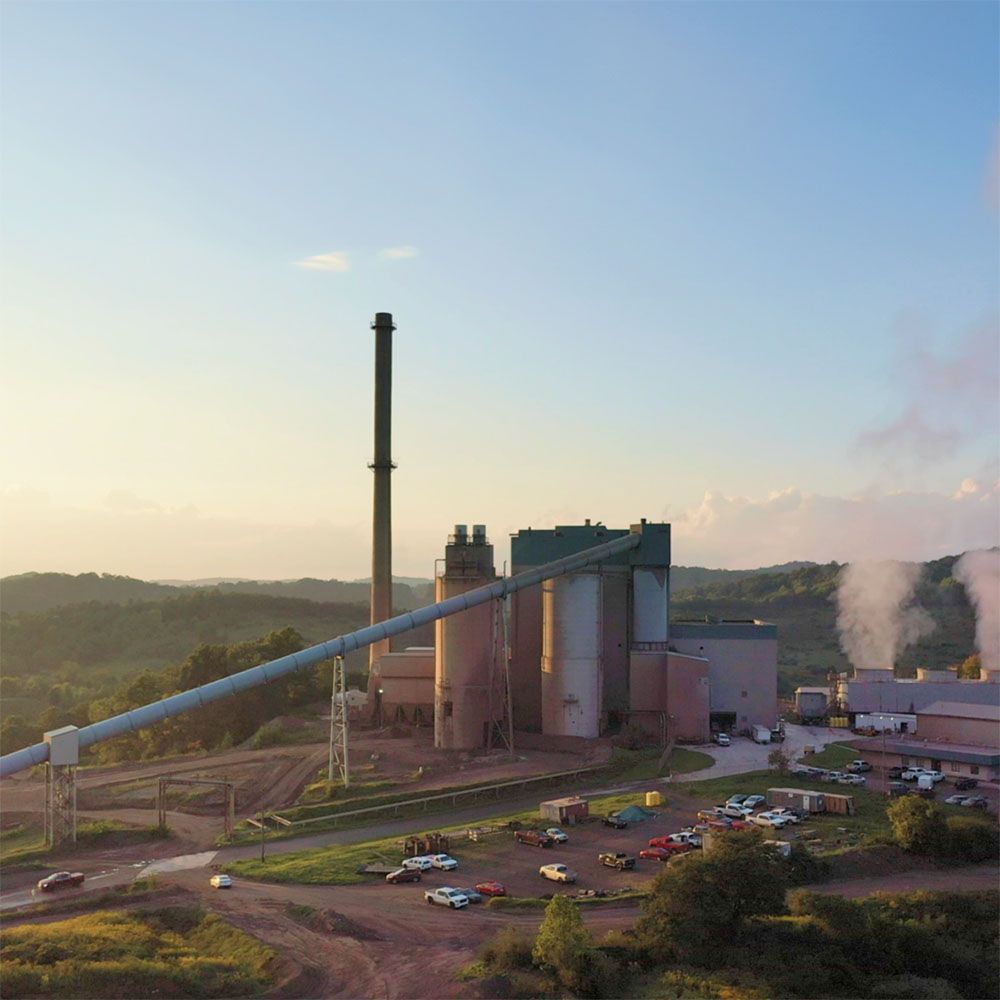
Two months before the Series D closed, Gecko had already announced a multi-year agreement with NAES, which operates the second-largest U.S. fleet of power generation assets at roughly 65 gigawatts. The initial deal was valued above US$100 million, with room to grow past US$250 million. Gecko's own figures claim an 80 percent reduction in reactive maintenance and a doubling of asset lifespan for customers using the platform, numbers the company has not had independently audited in anything I could verify.
The defense side followed the same pattern through 2026. In January, Gecko and Trident Maritime Systems, which runs more than twenty shipbuilding fabrication and integration sites, announced a partnership to place Gecko's robots and Cantilever software directly on Trident's factory floors, targeting at least a 40 percent throughput increase across 20 fabrication facilities. In March, the Navy and the GSA awarded Gecko a five-year contract vehicle with a US$71 million ceiling, an initial award worth up to US$54 million, covering 18 Pacific Fleet ships across destroyers, amphibious warships, and littoral combat vessels. That number deserves a caveat the press releases skip: a contract ceiling is a maximum, not a guaranteed check. Government customers routinely leave IDIQ vehicles partially unfunded. The honest read is that Gecko has won the right to bill up to US$71 million over five years, not that it has already been paid that sum.
Still, the pattern is the signal. A single power utility, a shipbuilding supplier network, and a federal procurement vehicle all chose the same vendor inside fourteen months, for a job with no glamour attached to it: finding cracks before they become casualties.
Teaching a Robot to Stay on a Leash, Not to Think for Itself
In September, Gecko and NVIDIA announced a collaboration built around NVIDIA's Open Agent Safety Platform, using a component called OpenShell to set what the companies describe as enforceable runtime boundaries on what an AI-driven robot can and cannot do. The release frames Gecko's Komodo robot, already deployed with the Navy, as sitting between the AI agent and the physical hardware as an independent enforcement layer: the developer decides what Komodo should attempt, and OpenShell is supposed to make sure it never does anything outside that envelope.
Loosararian's own words on the announcement are worth sitting with: "The idea that losing control of AI is inevitable is a dangerous excuse for inaction." It is a strange thing to read as marketing copy, because it concedes the premise most robotics companies spend their demo budgets trying to erase: that AI-driven hardware needs a leash, not just a bigger vocabulary of tricks.
Humanoid companies sell autonomy as the finish line. Gecko is selling the opposite claim, that the finish line is proving your autonomy stays inside a fence a human built, and it is selling that claim to the one customer type, military and nuclear-adjacent infrastructure operators, who will not buy anything else.
What This Looks Like From an ASEAN Seat
Running a platform that tracks where robots actually get deployed, rather than where a funding announcement says they will, trains you to notice which customer types show up again and again in the filings that matter. Gecko's list, the Navy, the GSA, a Pennsylvania power utility, a Pennsylvania governor's office, is about as specifically American as a customer base can get. None of that transfers directly to a region like mine, where the equivalent buyers, a national grid operator, a state-owned shipyard, a ports authority, run on different procurement law, different capital cycles, and far less defense spending to draw on.
What does transfer is the underlying lesson about where physical AI revenue actually lives right now. It is not in consumer-facing demos. It is in asset classes nobody photographs: power plant boilers, submarine components, forged ship parts, the unglamorous inventory of things that fail quietly and expensively if nobody is watching closely enough. Any Southeast Asian utility, port operator, or heavy-industry group evaluating this category should be asking Gecko's question, not Boston Dynamics': not "can this robot walk like us," but "can this sensor package find the one crack that would have cost us a shutdown." That question has a dollar answer. The other one mostly has a marketing answer.
The Risk Nobody at Gecko Is Pricing in Public
None of this makes Gecko a sure thing. A company whose growth runs through Navy contracts, GSA vehicles, and a single state governor's energy strategy is as exposed to a change in Washington's spending priorities as any defense contractor, and IDIQ ceilings have a long history of being announced at one number and drawn down at a much smaller one. The 80 percent maintenance-reduction and asset-lifespan figures are Gecko's own, not third-party audited, which puts them in the same category as any vendor's efficiency claim until an independent customer publishes its own numbers. And a safety partnership announced the same month as a funding-adjacent product launch is still a product announcement, dressed in more careful language than a demo reel, but a pitch all the same.
What is different is what the pitch is for. By the time most humanoid companies finish explaining why their robot almost folded the towel correctly, Gecko has another signed contract with a ceiling, a fleet number, and a government counterparty attached. That is a less exciting story to read. It has also, so far, been a more durable one to finance.
This analysis draws on Gecko Robotics' own published press releases on its June 2025 Series D, its February 2025 agreement with NAES, its July 2025 partnership with Bechtel Plant Machinery, its January 2026 partnership with Trident Maritime Systems, its March 2026 Navy and GSA contract award, and its September 2026 collaboration with NVIDIA. It is for general information purposes only and does not constitute investment, financial, or professional advice.
Hero image credit: Gecko Robotics, official power-industry facility photography (geckorobotics.com).