China's Self-Driving Capital Is Piling Into Delivery Vans, Not Robotaxis
China's autonomous-driving sector saw a 30% month-over-month funding drop in October 2026 to RMB 15.3 billion, but the decline masks a rotation: capital is concentrating in unmanned delivery vans and closed-site mining trucks, led by Neolix's nearly US$400 million round, while passenger robotaxis went the month without a single disclosed private financing.


China's Self-Driving Capital Is Piling Into Delivery Vans, Not Robotaxis
China's autonomous-driving sector logged at least six disclosed financing events in October, worth a combined RMB 15.3 billion (roughly US$2.2 billion at an exchange rate near 6.88 yuan to the dollar), and industry tracking shows that total down sharply from September's peak. The number that actually matters for anyone sourcing autonomous vehicles out of China is hidden inside it: a single outsized international financing accounted for more than three-quarters of that sum, while the five purely domestic rounds totaled just over RMB 3.7 billion, or roughly US$538 million. Strip out the one outlier and China's own autonomous-driving capital did not retreat so much as concentrate, almost entirely into unmanned delivery vehicles and closed-site mining trucks, segments that already generate revenue, while passenger robotaxis went a month without a single disclosed round.
That split is the real story. A headline funding decline reads as a sector cooling off. A domestic funding pool that shrank in breadth but piled into two commercially proven niches reads as investors making a call about which autonomous-driving business model actually works at scale in China today, and it is not the one built around replacing a human driver in a passenger car.
One Round Did the Heavy Lifting
Neolix, a Beijing-headquartered maker of unmanned delivery vehicles whose boxy, driverless vans handle last-mile parcel and grocery runs for logistics customers across dozens of Chinese cities, closed a Series E round of nearly US$400 million in October. Boyu Capital and a national-level AI industry investment fund jointly led the round, with Alibaba's AEF NextGen Hong Kong Fund, GGV Capital, Vertex Growth (Temasek's growth-investing arm), Meridian Capital, GAC Capital and Jinding Capital among the participants. The round was reportedly oversubscribed against an original target of US$200 million, and it pushes Neolix's cumulative funding past US$1.4 billion, following a Series D of more than US$600 million. Proceeds are earmarked for new regional service hubs, continued autonomous-driving technology development, and an explicit push into overseas markets.
That single deal is larger than every other disclosed domestic round in October combined. It is also the clearest evidence of where institutional conviction in Chinese autonomous driving currently sits: not in robotaxi fleets still waiting on regulatory approval city by city, but in a vehicle category that already has paying logistics customers, a repeatable unit economics story, and a path to overseas expansion that does not require winning over passenger-safety regulators first.
Mining and Last-Mile Delivery Crowd Out the Robotaxi Bet
The pattern holds below Neolix's round. White Rhino, a Beijing-based L4 unmanned-delivery operator, closed a new round in its C series (reported as C2 by some outlets and C+ by others) led by Yinshan Capital, also known in English as Hidden Hill Capital, with Hunan's Xiangtan state-owned capital and South Korea's Woori Financial Group also participating. The round, coming roughly five months after a prior C-series close in May, pushed White Rhino's cumulative C-round funding to about US$100 million and is earmarked for its end-to-end L4 driving stack, further "physical AI" capability work, and expansion of its city-level operations network. Zelos, another unmanned-delivery operator, also closed a round during the month with strategic backing from Xinhua Investment Holdings, though the size was not disclosed.
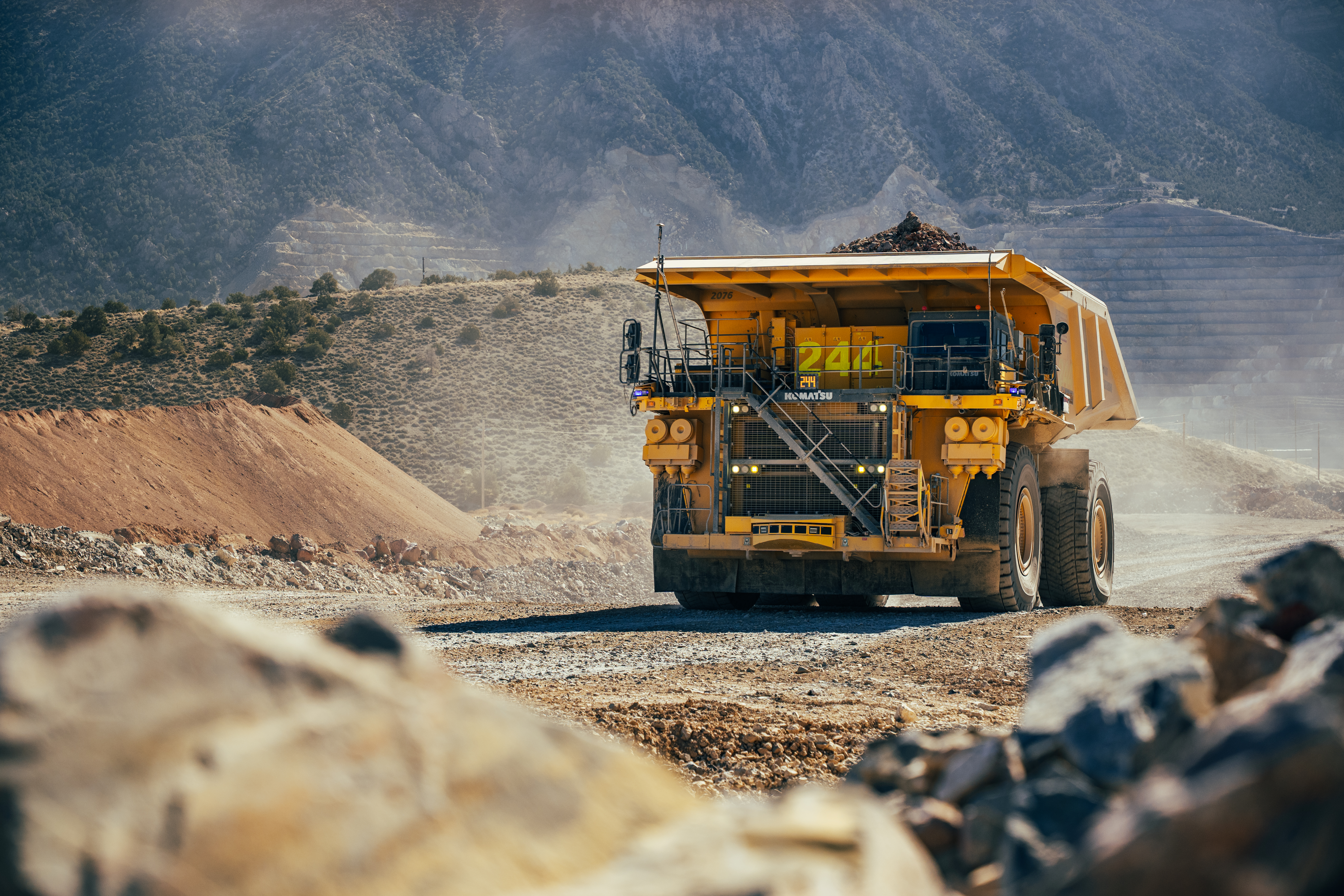
Autonomous mining picked up the rest of the month's attention. Tage Idriver, a specialist in self-driving systems for open-pit mining trucks and one of the more established names in China's mining-automation niche, closed a financing round reported in the hundreds of millions of yuan. ATOMS, described in Chinese coverage as an international physical-AI company, closed a similarly sized round targeting the same closed-scenario mining use case. A drive-by-wire chassis maker, Shangyuan Zhixing, also raised an undisclosed round supplying the underlying hardware that both delivery vans and mining trucks depend on to translate software commands into steering and braking. Robotaxi and long-haul autonomous trucking, by contrast, produced no disclosed financing event in China in October at all.
Closed-Site Autonomy Clears a Lower Regulatory Bar
Tage Idriver and ATOMS, the two mining-automation names that drew financing in October, illustrate why state and industrial capital finds this category easier to underwrite than passenger robotaxis. An open-pit mine or a port container yard is private property with a single operator who controls every vehicle, every road and every piece of equipment on site, which means a mining-truck autonomy vendor negotiates a deployment contract directly with that operator rather than seeking a municipal driverless-testing permit that applies to public roads shared with pedestrians and other traffic. Tage Idriver, one of the more established specialists in self-driving systems built specifically for mining trucks, closed a round reported in the hundreds of millions of yuan during the month, while ATOMS, which Chinese trade coverage describes as an international physical-AI company rather than a China-only vendor, raised a similarly sized round targeting the same closed-scenario use case. Shangyuan Zhixing, a drive-by-wire chassis supplier, also closed an undisclosed round in the same period, supplying the steer-by-wire and brake-by-wire hardware that both the delivery-van and mining-truck categories depend on to translate a software stack's commands into physical vehicle control. A chassis supplier picking up fresh capital alongside two vehicle-level autonomy vendors is a sign the investment is reaching the entire stack, not just the most visible applications.
That operating-site control is precisely what removes the main source of regulatory uncertainty a robotaxi operator still has to manage city by city. A mining company does not need a municipal government to approve a driverless-testing zone before it can run autonomous haul trucks across its own pit; it only needs internal safety sign-off, which is a commercial negotiation rather than a multi-agency regulatory process. That difference does not make mining or delivery autonomy technically easier to build than passenger autonomy, but it does make the investment case easier to underwrite on a fixed timeline, which is exactly the kind of predictability that state-linked and industrial capital tends to prioritize over venture funds chasing a larger, more speculative payoff further out.
Robotaxi's Funding Already Moved to Public Markets
Zero disclosed private robotaxi rounds in China for a full month is less alarming than it first looks, because the subsector's biggest names have largely stopped needing private rounds at all. Pony.ai and WeRide, the two China-founded robotaxi operators with the broadest fleet footprints, both completed Nasdaq listings in 2025, which shifted their primary funding mechanism from venture rounds to public equity and debt markets that this kind of monthly private-financing tracker does not capture. Baidu's Apollo Go, the largest robotaxi fleet operating inside China by ride volume, draws on Baidu's own balance sheet rather than raising independent venture capital at all. A private-funding snapshot that shows robotaxi going quiet in October is, in other words, partly an artifact of where that subsector's capital already moved, not proof that investors have abandoned passenger autonomy outright. What it still shows accurately is that no new private capital chose to bet on a China robotaxi challenger entering the field this month, at a time when two fast-follower categories, delivery and mining, pulled in fresh money without hesitation.
The Investor Roster Is a Signal on Its Own
Look past the deal sizes to who is writing the checks, and a second pattern emerges. State-owned and industrial capital, not pure venture funds, anchored several of October's rounds: a national-level AI industry fund co-led Neolix, Xiangtan's state-owned investment vehicle backed White Rhino, and Xinhua Investment Holdings backed Zelos. Financial sponsors with cross-border reach, Boyu Capital, Alibaba's AEF fund, and Temasek's Vertex Growth among them, are still present, but increasingly alongside government-linked money rather than in place of it.
That combination tends to show up when a technology has moved from speculative bet to infrastructure that local governments want secured domestically. Unmanned delivery vehicles and mining-automation fleets qualify: both already operate inside defined, permitted zones under existing regulatory frameworks, which is precisely the operating condition that makes state and industrial capital comfortable committing at scale. Passenger robotaxis, which still depend on city-by-city driverless permits and ongoing safety scrutiny, do not yet offer that same regulatory certainty, and October's funding pattern suggests investors are pricing that gap accordingly.
The round count itself tells a consolidation story. October produced five domestic deals, not fifteen or twenty, and three of them went to companies, Neolix, White Rhino and Zelos, that already had an established fleet and a prior funding round on record rather than to a first-time entrant. The pattern looks less like a sector broadly short of capital and more like a market where a handful of proven operators are absorbing most of the money while newer, unproven entrants find it harder to get a first check at all. That is consistent with October's aggregate total landing lower than September's, even as the median check size for an established delivery or mining operator appears to be going up rather than down.
What the Rotation Means for Buyers Evaluating China's Autonomous-Vehicle Supply Chain
For a logistics operator, a mining company, or a distributor evaluating which Chinese autonomous-vehicle category to build a sourcing relationship around, October's financing pattern is a usable signal rather than a curiosity. Unmanned delivery and closed-site mining autonomy are the two subsectors currently attracting the deepest, most diversified capital, including the state and industrial money that tends to follow operational traction rather than lead it. A buyer evaluating a delivery-van or mining-truck vendor from this cohort is backing a category that investors have already stress-tested against real deployment data, not a projection.
The inverse holds for robotaxi suppliers. A quiet month of domestic financing does not mean the technology stopped progressing, but it does mean the companies still chasing passenger autonomy in China are currently doing it with less fresh institutional conviction behind them than their counterparts building delivery vans and mining trucks. A procurement team weighing a long-term partnership with a Chinese AV supplier should treat a vendor's funding category, not just its funding total, as part of the due-diligence picture: a company backed by a national AI fund and a logistics-aligned sovereign-growth investor is operating under a different set of expectations and a different timeline than one still raising purely on technology promise.
The two buyer groups should read this differently. An e-commerce or third-party logistics operator sourcing last-mile delivery capacity now has a widening bench of well-capitalized, revenue-generating vendors to negotiate with, which is a buyer's market dynamic even as individual rounds get larger. A mining or heavy-resources operator evaluating autonomous haul trucks is choosing between fewer, more concentrated bets, Tage Idriver and ATOMS chief among October's examples, where vendor selection carries more long-term lock-in risk simply because there are fewer credible alternatives behind them.
China's autonomous-driving capital did not shrink in October so much as it made a choice. It chose vehicles that already generate revenue over vehicles still waiting for a regulatory green light, and it chose investors who answer to governments and logistics balance sheets over investors still betting on a passenger-autonomy breakthrough. That is the sector's actual center of gravity right now, and it sits inside delivery vans and mining trucks, not robotaxis.
This analysis is for general information purposes only and does not constitute investment, legal, or professional advice. It synthesizes company funding announcements, investor disclosures, and public financing-tracking data on China's autonomous-driving sector for October 2026.