
Stratolaunch Talon-A Completes Ten Reusable Autonomous Hypersonic Flights
Stratolaunch has completed more than ten successful hypersonic flights with its fully autonomous, reusable Talon-A testbed, demonstrating a scalable alternative to expendable launch systems for high-speed aerospace development.
Stratolaunch Talon-A Completes Ten Reusable Autonomous Hypersonic Flights
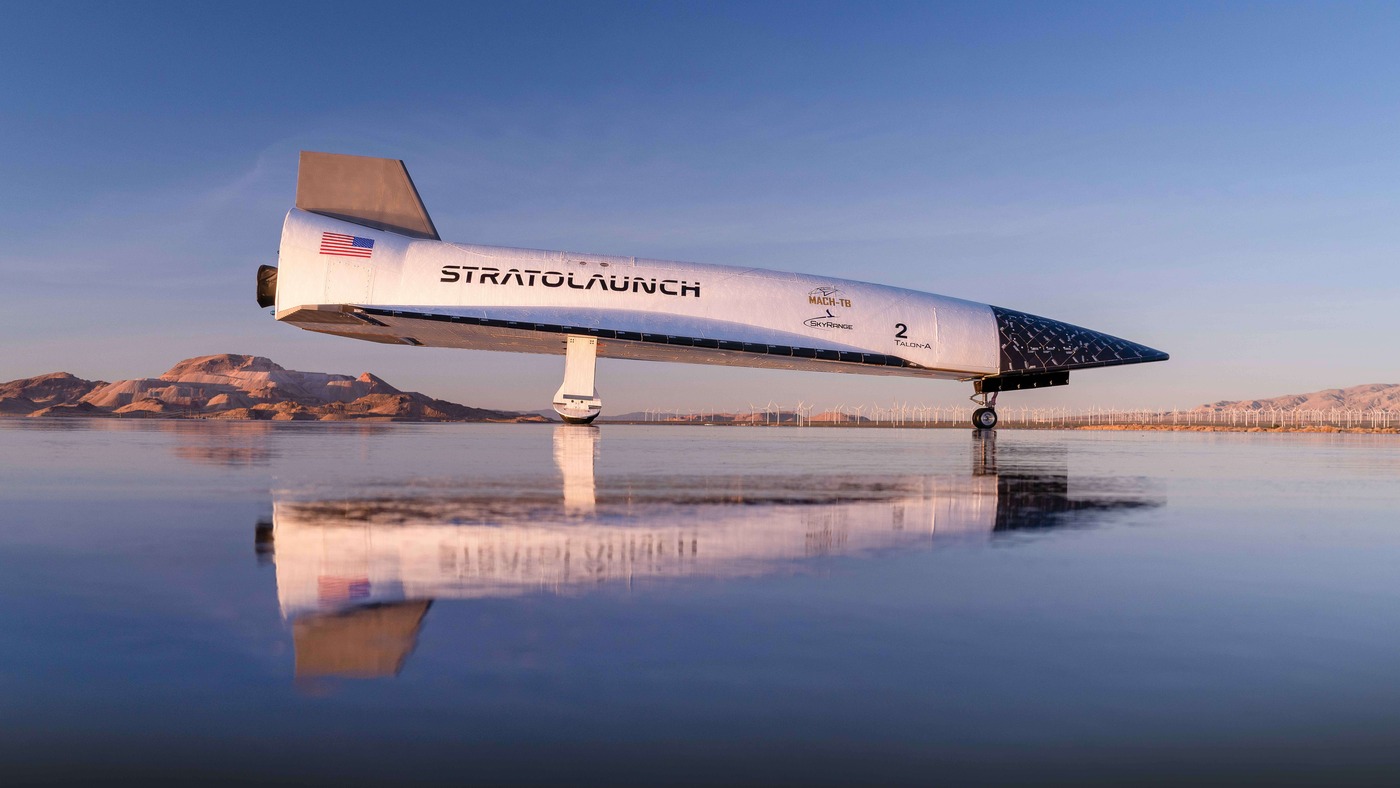
Stratolaunch has completed more than ten successful hypersonic flights with its Talon-A vehicle, validating the operational viability of a fully autonomous, reusable testbed for high-speed aerospace development. The milestone demonstrates that the company can repeatedly launch, fly, and recover a hypersonic platform without an onboard crew, offering a scalable alternative to traditional expendable test systems. Stratolaunch, headquartered in Mojave, California, focuses on providing high-cadence, reliable access to the hypersonic environment, positioning itself as a critical enabler for advanced aerospace research and development. The completion of ten successful flights with the same vehicle architecture marks a transition from experimental proof-of-concept to operational reliability.
The Talon-A is an air-launched, autonomous aircraft designed to exceed Mach 5 and return to a standard runway for refurbishment and reuse. By utilizing a modified Boeing 747-400 carrier aircraft, named Spirit of Mojave, Stratolaunch bypasses the infrastructure constraints of ground-based rocket launches. This approach allows for increased flight frequency and reduced costs per experiment, addressing a critical bottleneck in the maturation of hypersonic technologies for both commercial and defense applications. The ability to conduct routine, on-demand flights accelerates the development cycle for advanced materials, sensors, and propulsion systems, which are essential for next-generation aerospace platforms.
What is the Stratolaunch Talon-A?
The Stratolaunch Talon-A is a fully autonomous, reusable hypersonic flight test platform designed to exceed Mach 5. Air-launched from a carrier aircraft, it operates without human intervention and lands on a standard runway. The system provides a cost-effective environment for testing aerodynamics, propulsion, and advanced flight controls.
The Shift to Scaled Hypersonic Testing
Historically, hypersonic testing has relied on expendable rockets, which are expensive, infrequent, and often result in the loss of the test payload. The Talon-A's reusability fundamentally alters the economics of high-speed research. By recovering the vehicle and its integrated payloads, organizations can conduct iterative testing, gathering comprehensive data across multiple flight profiles. This capability is particularly relevant for programs like the Department of Defense Test Resource Management Center's Multi-Service Advanced Capability Hypersonics Test Bed. The shift from single-use testbeds to reusable platforms mirrors the evolution seen in the broader space launch industry, where reusability has driven down costs and increased launch cadence.
The technical difficulty of hypersonic flight is compounded by the challenge of autonomous recovery. The Talon-A must manage extreme thermal loads and aerodynamic forces while decelerating from Mach 5 to execute a precision landing on a conventional runway. The successful execution of this profile across multiple missions validates Stratolaunch's advanced flight control systems and thermal protection strategies. This repeated success indicates that the underlying technology is robust enough to support sustained, high-frequency operations, a critical requirement for any commercial testing service.
Stratolaunch Chief Executive Officer and President Zachary Krevor said the flight count reflects the team’s work to make hypersonic testing a repeatable service rather than a rare demonstration. The statement emphasizes operating cadence and platform robustness, although buyers still need program-level data on turnaround time, mission availability, and cost.
Reusable Flight Cadence Changes the Test-Market Equation
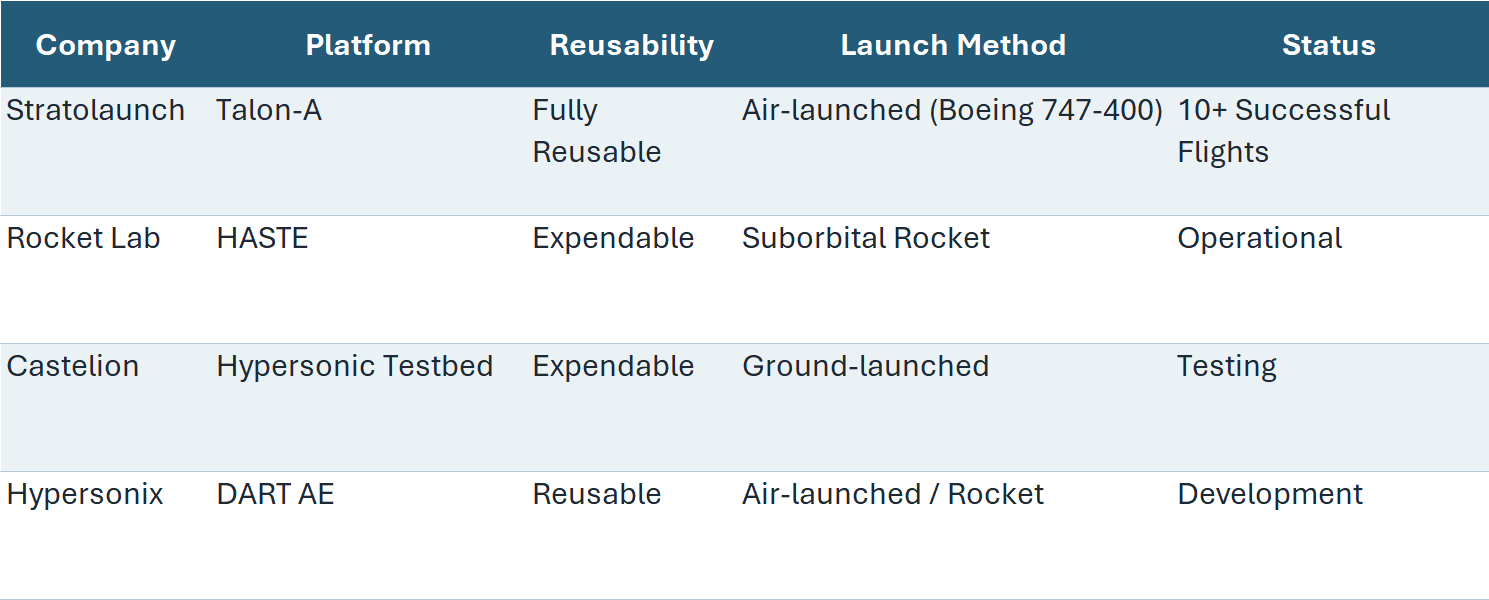
The demand for hypersonic testing infrastructure is growing as both state and commercial actors pursue high-speed capabilities. Stratolaunch's reusable air-launched model competes with several alternative approaches.
While companies like Rocket Lab offer operational expendable solutions, the recurring cost of single-use rockets remains a barrier for high-cadence testing. Stratolaunch's reusable model provides a distinct advantage for programs requiring frequent data collection and payload recovery. However, the reliance on a specialized carrier aircraft introduces its own operational dependencies, contrasting with the flexibility of ground-launched systems. The competitive market is increasingly defined by the ability to offer reliable, cost-effective access to the hypersonic regime, with reusability emerging as a key differentiator.
The integration of autonomous systems into hypersonic platforms also presents unique challenges. The extreme speeds and dynamic environments require control systems capable of making real-time adjustments without human intervention. Stratolaunch's success in demonstrating fully autonomous operations from launch to recovery highlights the maturity of its software and sensor suites. This capability is not only essential for the Talon-A's operation but also provides valuable data for the development of autonomous systems in other high-speed applications.
The Real Constraint in High-Speed Development
The primary bottleneck in hypersonic development is not the theoretical design of vehicles, but the availability of realistic, high-speed flight environments. Ground-based wind tunnels cannot fully replicate the coupled thermodynamic interactions experienced at Mach 5 and above. The gap between simulated performance and deployment reality often leads to costly failures in late-stage development.
By providing a reliable, reusable testbed, Stratolaunch addresses this critical infrastructure deficit. The ability to iterate rapidly in true flight conditions is essential for validating the materials and control systems required for sustained hypersonic operations. As the industry moves toward operational deployment of high-speed platforms, the availability of routine testing services will be a defining factor in the pace of innovation.
1. Assumption that hypersonic testing must inherently rely on expendable systems is increasingly being challenged. The success of the Talon-A demonstrates that reusability is not only feasible but offers significant operational and economic advantages. This shift in paradigm is likely to influence future procurement decisions and shape the development strategies of both government and commercial entities. The focus is moving from achieving one-off speed records to establishing reliable, repeatable testing capabilities.
2. Implications of this capability extend beyond the immediate testing market. The data generated by routine hypersonic flights will inform the design of future commercial and military platforms, accelerating the timeline for their deployment. The ability to rapidly test and iterate on new technologies is a critical component of maintaining a competitive edge in the aerospace sector. Stratolaunch's Talon-A represents a significant step toward realizing this capability, providing a vital tool for the advancement of high-speed flight.
3. Transition from experimental testing to routine operations requires a fundamental shift in how aerospace programs are managed. The availability of a reusable testbed allows for a more iterative, data-driven approach to development, reducing the risk associated with deploying unproven technologies. This capability is particularly important for programs that require extensive validation before entering operational service. The Talon-A's success in demonstrating repeated, autonomous recovery provides a strong foundation for the future of hypersonic testing.
4. Ability to conduct frequent, cost-effective testing is seen as a key enabler for the development of next-generation systems. Stratolaunch's achievement of more than ten successful flights with the Talon-A is a clear indication that this capability is maturing rapidly. The continued success of this program will likely spur further investment and innovation in the hypersonic testing market, driving the development of new technologies and capabilities.
5. Operational viability of the Talon-A also highlights the importance of advanced manufacturing and materials science in the development of hypersonic systems. The ability to withstand the extreme thermal and aerodynamic loads experienced during high-speed flight requires the use of specialized materials and construction techniques. The successful recovery and reuse of the Talon-A demonstrate that these materials can endure the rigors of repeated hypersonic missions, providing valuable data for the design of future platforms.
6. Integration of autonomous systems into the Talon-A is another critical aspect of its success. The ability to operate without a human in the loop simplifies the testing process and reduces the risk associated with high-speed flight. This capability is essential for the development of future autonomous systems, providing a realistic environment for testing and validation. The data generated by the Talon-A's autonomous operations will inform the design of future control systems, accelerating the development of autonomous capabilities across the aerospace sector.
7. Provision of a reliable, reusable testbed, Stratolaunch is addressing a critical bottleneck in the maturation of high-speed systems. The ability to conduct routine, on-demand testing will accelerate the development cycle for advanced materials, sensors, and propulsion systems, driving innovation in the aerospace sector. The continued success of this program will be a key factor in shaping the future of hypersonic flight.
8. Economic implications of reusable hypersonic testing are substantial. The ability to recover and reuse the test vehicle significantly reduces the cost per experiment, making high-speed testing accessible to a wider range of organizations. This democratization of access to the hypersonic environment is likely to spur innovation and accelerate the development of new technologies. The Talon-A's success in demonstrating repeated, autonomous recovery provides a strong foundation for the future of the hypersonic testing market.
9. Strategic importance of hypersonic capabilities cannot be overstated. The ability to operate at speeds exceeding Mach 5 provides a significant advantage in both commercial and military applications. The development of reliable, reusable testing infrastructure is a critical component of maintaining a competitive edge in this rapidly evolving field. Stratolaunch's Talon-A represents a significant step toward realizing this capability, providing a vital tool for the advancement of high-speed flight.
10. Future of hypersonic testing will be defined by the ability to conduct frequent, cost-effective flights. The success of the Talon-A program demonstrates that this capability is within reach. As the industry continues to mature, the availability of routine testing services will become increasingly important. Stratolaunch's achievement of more than ten successful flights with the Talon-A is a clear indication that the era of reusable hypersonic testing has arrived.
11. Development of the Talon-A has required significant investment in both technology and infrastructure. The modification of the Boeing 747-400 carrier aircraft, the development of advanced thermal protection systems, and the integration of autonomous flight controls are all critical components of the program's success. The ability to bring these disparate elements together into a cohesive, operational system is evidence of the engineering capabilities of the Stratolaunch team.
12. Data generated by the Talon-A's flights is invaluable for the development of future hypersonic systems. The ability to collect comprehensive data on aerodynamics, propulsion, and thermal protection in a realistic flight environment is essential for validating theoretical models and improving the design of future platforms. The continued operation of the Talon-A will provide a steady stream of data, accelerating the pace of innovation in the aerospace sector.
13. Importance of public-private partnerships in the development of advanced technologies. The collaboration between Stratolaunch and government organizations like the Department of Defense Test Resource Management Center has been instrumental in the program's success. These partnerships provide the necessary funding and support to advance critical technologies, ensuring that the United States maintains its leadership in the aerospace sector.
14. Transition to reusable hypersonic testing represents a significant shift in the aerospace industry. The ability to conduct frequent, cost-effective flights will accelerate the development of new technologies and capabilities, driving innovation across the sector. Stratolaunch's achievement of more than ten successful flights with the Talon-A is a clear indication that this transition is well underway. The continued success of this program will be a key factor in shaping the future of high-speed flight.
15. Operational experience gained from the Talon-A program will be invaluable for the development of future hypersonic systems. The ability to manage the demanding logistics of air-launched, autonomous operations requires a deep understanding of both the technology and the operational environment. The lessons learned from the Talon-A's flights will inform the design and operation of future platforms, ensuring that they are both reliable and effective.
The future of hypersonic flight is bright, and the Talon-A program is playing a critical role in shaping that future. By providing a reliable, reusable testbed, Stratolaunch is enabling the rapid development and validation of new technologies, accelerating the pace of innovation in the aerospace sector. The continued success of this program will be a key factor in ensuring that the United States maintains its leadership in this critical field.
The impact of the Talon-A program extends beyond the immediate testing market. The technologies and capabilities developed for the Talon-A will have broad applications across the aerospace sector, from commercial aviation to space exploration. The ability to operate reliably at hypersonic speeds will open up new possibilities for transportation and exploration, fundamentally changing the way we interact with the world around us.
This information has been verified against available records. Disclaimer: This article is for informational purposes only and does not constitute investment, legal, safety, or procurement advice. Readers should independently verify specifications, certification scope, pricing, availability, regulatory obligations, and operational suitability with the relevant suppliers and authorities before making decisions.












